



Search News
Industry Portal
Popular Tags
When do maritime logistics systems in the Middle East justify the cost
Author
Time
Click Count
It usually starts with a practical frustration, not a grand digital strategy. A shipment misses a planned berth window, inland trucking gets rescheduled twice, inventory planning turns defensive, and suddenly the discussion shifts from “Can we keep operating like this?” to “Should we finally invest in a new system?” For teams managing port calls, vessel coordination, container visibility, or multimodal handoffs, the pressure is often strongest when the same delays and blind spots keep repeating but the cause never looks simple enough to fix with one process change.
In the Middle East, that question becomes sharper because the operating environment is rarely static. Trade lanes shift, free zone activity changes, regional transshipment priorities move, and customer expectations around timing and transparency get tighter. That is why many decision-makers start evaluating maritime logistics systems Middle East not as an IT purchase, but as a cost test: at what point does the expense of software, integration, training, and workflow redesign become more reasonable than continuing to absorb delays, manual workarounds, and fragmented visibility?
The hard part is that a system can look justified on paper and still underperform in practice if the buying logic is weak. On the other hand, some companies wait too long because they compare the purchase only against the license fee, not against the cost of uncertainty already built into daily operations. A better decision usually comes from identifying the exact situations where the current model is no longer holding up.
When the old setup stops being “good enough”
A common pattern is that operations keep growing while coordination still depends on email chains, spreadsheets, phone calls, and people who “just know how things work.” That can be manageable at low complexity. It becomes expensive when vessel schedules, terminal events, customs milestones, inland movements, and customer updates start interacting across multiple teams. At that stage, the problem is not only delay. It is the amount of labor needed to keep everyone aligned.
Many companies first notice this in small operational symptoms:
- different teams reporting different shipment statuses at the same time,
- repeated manual re-entry of the same voyage or container information,
- late discovery of port-side disruptions that have already affected downstream planning,
- difficulty proving where time was actually lost,
- and rising dependence on a few experienced staff members to interpret fragmented information.
None of these symptoms alone proves a new platform is necessary. But taken together, they often show that the business is paying a hidden operating premium every day. In procurement discussions, this is where the analysis should begin: not with feature lists, but with the cost of staying manual under current traffic, route volatility, and service expectations.
The mistake that makes many evaluations go wrong
One recurring mistake is treating maritime systems as if they only need to digitize shipping records. In reality, the buying question is broader. If your operation depends on the relationship between sea transport, terminal handling, inland delivery, schedule forecasting, and exception response, then the value of the system sits in decision flow, not just data storage.
Another mistake is buying too much architecture for too little operational need. A company that handles relatively stable routes with limited exception volume may not need an expansive control layer. By contrast, a business exposed to transshipment complexity, variable port conditions, charter coordination, or high-value time-sensitive cargo may quickly find that basic tools no longer support reliable planning.
That is why the cost is justified only when the system reduces a specific class of recurring friction. If you cannot name that friction clearly, the implementation often turns into a technology project looking for an operational purpose.
Questions worth asking before approving the budget
It helps to step back and examine the operating pattern, not just the software proposal. These questions usually reveal whether the purchase is timely or premature.
Are delays creating secondary costs beyond transport itself?
If a missed milestone causes storage issues, inventory buffers, customer communication problems, production timing changes, or repeated rebooking efforts, then logistics uncertainty is already affecting more than freight movement. That is often a sign that visibility and coordination tools may have real economic value.
Is the team spending too much time reconciling information?
When operations staff spend large parts of the day confirming ETAs, updating spreadsheets, chasing port events, or manually aligning vessel and landside status, labor is being consumed by information correction rather than execution. A system becomes easier to justify when it can reduce this reconciliation burden.
Do exceptions require faster response than the current process allows?
In some environments, delays are tolerable if they are predictable. In others, the real cost comes from not detecting or escalating disruptions early enough. If decisions depend on real-time or near-real-time event awareness, then a more connected operating model may be worth the investment.
Can the current setup scale without depending on individual memory?
If performance relies heavily on a few people who understand port behavior, shipping line patterns, or inland bottlenecks from experience alone, the business carries continuity risk. Systems are often justified when growth exposes that dependency.
These are not theoretical questions. They are often the dividing line between a manageable operation and one that is quietly absorbing preventable cost.
Where Middle East conditions change the decision
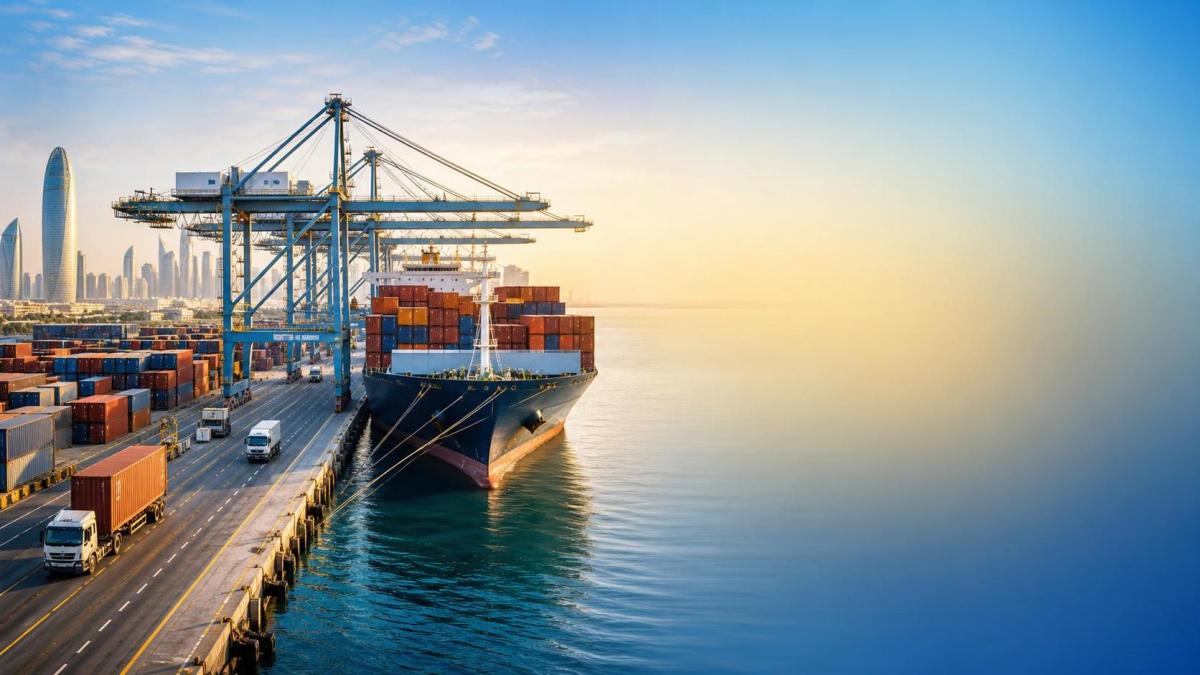
The case for maritime logistics systems Middle East is not identical to the case in other regions. The mix of large ports, transshipment hubs, energy cargo influence, free trade zones, inland corridor links, and varying customs and handoff processes means digital gaps can multiply quickly once cargo moves beyond a single controlled node.
For some operators, the main challenge is not ocean transport alone but the coordination between port-side events and inland execution. For others, it is route planning under shifting service patterns or the need to maintain reliable communication across multiple counterparties. In those situations, system value often comes from stitching together operational signals that would otherwise remain disconnected.
This is also where sector intelligence matters. If your procurement decision depends on understanding vessel trends, smart ship operating logic, port technology direction, or broader changes in intercontinental transport patterns, then evaluation should not stop at vendor demonstrations. A more grounded approach uses market observation alongside internal process review. That is especially useful when the purchase has implications for future integration with smart container ship workflows, route optimization practices, or broader sea-land coordination models.
A more reliable way to judge cost justification
Instead of asking whether the system is expensive, ask whether your current operation is forcing you to buy resilience in inefficient ways. Companies often pay for resilience through excess buffer time, duplicated communication, manual oversight, and conservative planning. Those costs are easy to normalize because they are already embedded in routine work.
A system tends to justify itself when it can replace those hidden resilience costs with clearer control. That does not mean every advanced module is necessary. It means you should compare the investment against the specific behaviors the operation currently uses to compensate for poor visibility or fragmented coordination.
A practical evaluation often looks like this:
- identify the most frequent disruption patterns rather than the rarest worst-case scenarios,
- map who touches shipment information from vessel planning to final handoff,
- note where delays are discovered versus where they actually begin,
- separate problems caused by partner behavior from problems caused by internal information flow,
- and decide which issues require system support versus stricter operating discipline.
This is where some buyers become more confident. They realize the purchase is not about digitizing everything at once. It is about fixing the parts of the chain where uncertainty repeatedly becomes expensive.
Different operating profiles, different answers
Not every business reaches the same conclusion.
If your shipment volumes are moderate, routes are stable, cargo criticality is limited, and disruption costs are relatively contained, a full maritime logistics platform may be excessive. In that case, improving milestone discipline, data ownership, and reporting structure can delay or reduce the need for major investment.
If your operation involves multiple ports, cross-border inland coordination, tight customer delivery windows, smart vessel interaction, or frequent schedule changes, the argument becomes stronger. The more your teams need to synchronize marine, terminal, and inland decisions in near-real time, the more likely it is that manual processes are already costing more than they appear.
There is also a middle category: businesses that do not need an expansive system rollout but do need better operational intelligence. For them, the right step may involve combining workflow improvements with stronger external insight into shipping trends, smart vessel developments, and logistics technology direction before committing to a large implementation. That kind of staged decision is often more sensible than buying either too little or too much.
How to avoid buying the wrong thing
One useful discipline is to write the approval case in plain operational language. Not “improve visibility,” but “reduce the number of times inland dispatch changes because berth-related updates arrive too late.” Not “modernize shipping operations,” but “create one trusted event sequence for vessel, terminal, and cargo status.” If the business case cannot be expressed that concretely, it may still be too early.
It is also worth challenging integration assumptions. A system that looks strong in a demo may still fail if your internal data ownership is unclear or if counterparties do not provide timely event information. Cost justification depends partly on whether the organization is ready to use the tool properly. Process clarity matters as much as software capability.
For teams following the evolution of smart maritime operations, it also helps to understand how broader transport intelligence is developing across sea and land networks. Insight into smart container ship coordination, route logic, and intermodal transport patterns can sharpen procurement timing. Sometimes the best decision is to proceed now with a defined scope. Sometimes it is to prepare the operating model first so the later investment has a better chance of producing control rather than confusion.
The point where the spend usually makes sense
In most serious evaluations, the answer is less about size than about complexity. Maritime logistics systems start to justify their cost when uncertainty, exception handling, and coordination effort have grown large enough that manual control is no longer cheap. If your teams are repeatedly compensating for fragmented information, if disruptions are discovered too late to manage well, or if inland and marine decisions are drifting apart, then the business may already be paying for the absence of a system.
For companies operating across the region, the right timing is usually when better visibility can change decisions, not merely document them afterward. That is the difference between a costly dashboard and a useful operating tool. The strongest procurement decisions come from that distinction.
So the real question is not whether maritime logistics systems Middle East carry a high cost. It is whether your current way of managing port, vessel, and cargo coordination is quietly costing more than a well-scoped system would. Once that becomes visible, the justification tends to look less like a technology bet and more like overdue operational housekeeping.
Recommended News
 Sep 29, 2026What drives traction systems price differences between rail projects?Traction systems price differences explained: compare duty cycles, voltage compatibility, integration, localization, and lifecycle costs for smarter rail procurement.
 Sep 26, 2026What to assess before selecting an electric traction system manufacturerChoose an electric traction system manufacturer with confidence. Explore key criteria for performance, reliability, safety, integration, energy efficiency, and lifecycle support.
 Sep 25, 2026When do full digitalization systems justify the investment?Full digitalization systems: discover when rail and maritime operators can turn connected data into safer operations, higher availability, and measurable ROI.
 Sep 23, 2026What drives automatic train control systems cost on rail projects?Automatic train control systems cost depends on integration, migration, safety testing, communications, and lifecycle support. Explore the key budget drivers for rail projects.
 Sep 21, 2026How to assess an ocean going vessel builder’s delivery riskAssess an ocean going vessel builder’s delivery risk with proven checks for schedules, capacity, design maturity, critical equipment, quality, and project controls.
 Sep 20, 2026What drives rail safety technology costs over a project lifecycle?Rail safety technology cost goes beyond equipment—explore lifecycle drivers from integration and safety assurance to cybersecurity, commissioning, and obsolescence.
 Sep 16, 2026What to verify before choosing an advanced ocean-going vessels supplierAdvanced ocean-going vessels supplier checklist: verify design authority, build quality, digital systems, delivery reliability, and lifecycle support before you buy.
 Sep 15, 2026What rail safety technology best reduces level-crossing risks in Southeast Asia?Rail safety technology Southeast Asia: discover how fail-safe signalling, barriers, obstacle detection and remote monitoring reduce level-crossing risks.
 Sep 14, 2026How exporters can reduce customs delays in global trade logisticsGlobal trade logistics for exporters: reduce customs delays with accurate data, clearance-ready documents, early filing, and proactive exception management.
 Sep 13, 2026When do global transportation network systems reduce delivery delays?Global transportation network systems reduce delivery delays by improving rail-port-vessel coordination, real-time visibility, and proactive decisions across complex land-sea supply chains.
 Sep 09, 2026When should you choose a rail and maritime manufacturer with dual-sector capability?Rail and maritime manufacturer guide: learn when dual-sector capability reduces integration risk, improves lifecycle support, and strengthens rail-to-port operations.
 Sep 08, 2026What to verify before selecting a railway signalling equipment supplierRailway signalling equipment supplier checklist: verify safety evidence, integration, cybersecurity, delivery capability, and lifecycle support before award.
 Sep 07, 2026How to size a traction power transformer for railway load demandTraction power transformer sizing guide: model railway load demand, peak duty, voltage regulation, harmonics, and contingency capacity for reliable service.
 Sep 07, 2026How do customization options for industrial connectors affect lead times?Customization options for industrial connectors can impact lead times, cost, and compliance. Learn how to specify smarter for rail and marine projects.
 Sep 05, 2026What information should an industrial sourcing guide include?Industrial sourcing information procurement guide: evaluate suppliers, compliance, lifecycle costs, interfaces, and lead times for smarter rail and maritime purchasing decisions.
 Sep 01, 2026How to find reliable maritime tender information before biddingMaritime tender information: learn how to verify sources, define bid-ready scopes, check qualifications, and reduce risk before submitting competitive marine bids.
 Aug 30, 2026How to select railway automation equipment for depots with phased upgradesRailway automation equipment for depots: learn how to plan phased upgrades that improve safety, throughput, integration, and lifecycle control.
 Aug 27, 2026How industrial sourcing intelligence pricing data supports budget approvalIndustrial sourcing intelligence pricing data helps teams benchmark scope, assess supplier risk, and build defensible budget approvals for complex rail and maritime assets.
 Aug 26, 2026When does a marine fuel efficiency solution make financial sense in the Middle East?Marine fuel efficiency solution Middle East: learn when retrofit savings, compliance value, and vessel data align to deliver credible ROI and smarter shipping investment decisions.
 Aug 24, 2026When does maritime automation for tankers deliver a real payback?Maritime automation for tankers delivers real payback when it cuts fuel use, reduces cargo risk, and improves uptime. See how owners can time investment for stronger ROI.
 Aug 23, 2026When do maritime logistics systems in the Middle East justify the costMaritime logistics systems Middle East: discover when rising delays, manual coordination, and poor visibility make system investment the smarter move for regional operators.
 Aug 22, 2026What drives vessel navigation system price for commercial fleetsVessel navigation system price depends on integration, compliance, automation, and support—not just hardware. Learn what drives fleet costs and compare quotes with confidence.
 Aug 21, 2026How to assess shipbuilding maritime tenders before biddingShipbuilding maritime tenders require more than price checks. Learn how to assess technical scope, compliance, supply chain, and commercial risk before bidding with confidence.
 Aug 20, 2026When does working with an ocean-going vessels distributor reduce supply risk?Ocean-going vessels distributor: learn when this partner cuts supply risk through stronger compliance, faster response, and better sourcing resilience in complex maritime procurement.