



Search News
Industry Portal
Popular Tags
What to verify before choosing an advanced ocean-going vessels supplier
Author
Time
Click Count
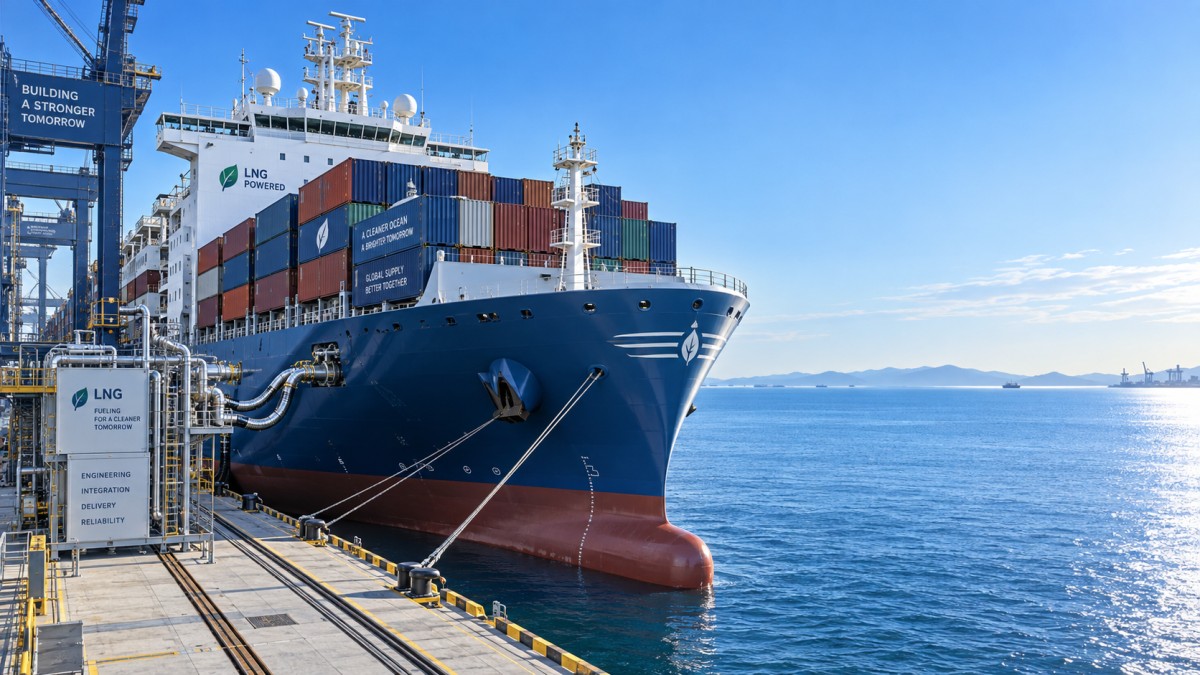
A vessel purchase can look secure on paper until the buyer asks questions that reach beyond the specification sheet: Who owns the critical design decisions? How will the ship perform when equipment alarms conflict with a commercial schedule? Can the builder deliver the promised digital functions without leaving the owner dependent on a closed software ecosystem? These questions matter most when evaluating smart container ships, LNG carriers, and other technically demanding assets intended for long service in international trade.
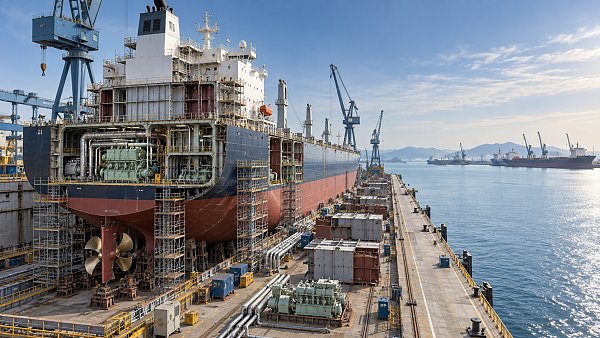
Before choosing an advanced ocean-going vessels supplier, verify more than capacity, quoted price, and headline vessel features. The practical decision is whether the supplier can translate an agreed operational profile into a buildable, class-compliant vessel; control quality across its subcontractors; prove the performance of integrated systems; and remain capable of supporting the ship after handover. A supplier should be assessed as a long-term engineering and delivery partner, not simply as a shipyard or equipment source.
Start with the operating profile, not the vessel brochure
Procurement problems often begin when a buyer compares ships described by type rather than by duty. Two container ships of similar nominal capacity may have very different requirements for route weather, port turnaround, reefer load, fuel strategy, crew availability, cargo mix, and expected digital integration. The same applies to gas carriers: containment technology, boil-off management, loading conditions, terminal interfaces, and propulsion configuration must fit the intended trading pattern.
Write an operational requirement document before asking suppliers for detailed quotations. It does not need to dictate every engineering choice, but it should state the conditions against which a design will be evaluated. Include:
- Expected routes, seasonal sea states, draft limitations, port restrictions, and voyage duration.
- Required cargo capability, including container, reefer, hazardous cargo, LNG, or other specialist handling requirements.
- Target propulsion and energy arrangement, including fuel flexibility, power demand, redundancy expectations, and emissions-related operating constraints.
- Required onboard automation, shore connectivity, cybersecurity boundaries, and ownership of operational data.
- Maintenance philosophy: onboard repair capacity, spare-parts strategy, planned docking intervals, and access to service technicians.
This document gives procurement, naval architecture, operations, finance, and technical management a common reference. Without it, each supplier may price a different interpretation of the vessel, making a low offer difficult to compare with a more complete one.
Verify design authority and engineering maturity
Advanced ships are integration-heavy assets. Hull form, propulsion, electrical distribution, cargo systems, machinery automation, navigational equipment, communications, and monitoring platforms influence one another. A supplier that can assemble familiar equipment is not automatically capable of managing the interfaces between those systems.
Ask who holds responsibility for the basic design, detailed design, production design, and system integration. Some suppliers work from established platforms; others depend heavily on external design houses or vendors. Neither approach is inherently unsuitable, but the ownership of technical decisions must be clear. Where a design change affects fuel consumption, stability, cable routing, machinery access, or class documentation, buyers need to know who has authority to resolve the issue and how changes are controlled.
Questions that expose whether a design is ready to build
- Is the proposed vessel based on a proven reference design, a modified reference design, or a new development?
- Which areas are already frozen, and which remain subject to owner selection or engineering validation?
- Can the supplier provide a structured list of design assumptions, exclusions, interface points, and approval milestones?
- How are weight growth, stability impact, electrical load growth, and equipment-space conflicts managed during detailed engineering?
- What process is used to review maintainability, crew access, escape routes, lifting paths, and replacement of major components?
A mature supplier will not claim that every issue is already solved before the contract is signed. Instead, it will distinguish confirmed design features from open technical items and show a disciplined plan for closing them. Vague assurances are a warning sign, especially where the vessel includes novel fuel systems, complex cargo containment, or extensive automation.
Look beyond certificates when assessing build quality
Class approval and statutory compliance are necessary, but they do not by themselves demonstrate consistent construction quality. The buyer should examine how the supplier controls welding, material traceability, coating application, pipe cleanliness, cable installation, equipment preservation, and commissioning records. These details have a direct effect on corrosion resistance, machinery reliability, leak prevention, electrical faults, and the practical workload faced by the operating crew.
Request access to the supplier’s inspection and test planning for comparable vessel areas. Focus on points where defects are expensive to correct after delivery: cargo tanks, membrane or containment-related interfaces where applicable, cryogenic piping, machinery foundations, shaft alignment, high-voltage spaces, ballast tanks, and integrated bridge or engine-control systems.
It is also useful to ask how non-conformities are recorded and closed. A credible quality process identifies the defect, determines its cause, assigns responsibility, documents corrective action, and verifies closure. A supplier that only presents a final punch-list status may conceal whether repeated problems are being addressed at their source.
Test digital capability as an operational system
“Smart vessel” is not a purchasing criterion unless it is broken down into specific functions. Route optimization, condition monitoring, cargo visibility, fuel-performance analysis, remote diagnostics, and shore reporting can all create value, but only when their data sources, user roles, communications limits, and maintenance obligations are understood.
Ask the supplier to demonstrate the actual system architecture rather than showing generic dashboards. Identify which sensors feed each application, how data quality is checked, where data is stored, what happens during loss of connectivity, and whether the owner can export data in usable formats. A platform that cannot be integrated with an owner’s fleet-management environment may create duplicate workflows instead of reducing them.
Cybersecurity should be reviewed as part of the vessel design rather than as a software add-on. The buyer should understand network separation between operational technology and business systems, remote-access procedures, account management, update responsibility, logging, and recovery arrangements. This is especially important where machinery control, cargo control, navigation support, and shore-based analytics interact.
For LNG carriers and other vessels with complex process systems, digital monitoring must complement—not obscure—the fundamental safety logic. Alarm priorities, manual override arrangements, sensor calibration requirements, and crew response procedures should be assessed during factory acceptance, harbour testing, and sea trials. A large number of alerts is not evidence of better control; it can make critical conditions harder to identify.
Examine the supply chain behind the supplier
Even a technically strong shipbuilder depends on engine manufacturers, containment specialists, automation vendors, steel processors, coating suppliers, electrical contractors, and other partners. Delays often emerge not because the main supplier lacks a production berth, but because a critical package arrives late, arrives incomplete, or requires redesign after installation has begun.
Ask for a package-level procurement plan for long-lead items. It should identify the critical equipment, planned ordering dates, technical approval points, delivery windows, acceptance testing, and the party responsible for each interface. For an advanced vessel, pay close attention to propulsion equipment, cargo handling systems, cryogenic components, control systems, generators, switchboards, shaft-line equipment, and specialist valves.
There is no need to demand disclosure of every commercial relationship. The purpose is to determine whether the supplier has realistic control over its supply chain and alternatives when a component is disrupted. Ask how approved substitutions are evaluated. A substitute part may meet a basic specification while changing maintenance needs, spare-parts commonality, software compatibility, or crew training requirements.
Make delivery reliability measurable in the contract process
A delivery date has little value unless it is connected to an executable production plan. During evaluation, request the intended build sequence: design release, steel cutting, block assembly, major equipment installation, launching or float-out, quay work, harbour acceptance tests, sea trials, documentation handover, and delivery readiness. The goal is not to micromanage the yard but to reveal dependencies that may affect the actual schedule.
Review how the supplier manages design changes after construction starts. Owners may need to alter equipment selections, operational features, or compliance assumptions. The supplier should be able to explain the change-order process, the effect on engineering and procurement, and the method for recording cost and time implications before work proceeds. Uncontrolled changes are a frequent source of disputes because they blur the boundary between an agreed improvement and a late disruption.
Acceptance criteria should be equally explicit. Specify which functions must be demonstrated before delivery, which tests are factory-based, which are completed at berth, and which require sea trials. For performance-sensitive systems, define the relevant conditions, measurement method, tolerances, and treatment of deviations. A buyer should avoid relying on broad phrases such as “industry standard performance” where the vessel’s commercial model depends on a particular capability.
Evaluate lifecycle support before signing the build contract
Delivery is the beginning of the ownership risk period, not the end of the supplier relationship. A vessel may operate across regions where original equipment support is uneven, customs procedures delay parts, and qualified technicians are not immediately available. This makes documentation, spares, training, warranty administration, and remote support central procurement issues.
Confirm what is included in the technical handover: as-built drawings, equipment manuals, software versions, parameter records, spare-parts lists, certificates, test records, and maintenance recommendations. Documents should be searchable, revision-controlled, and aligned with the equipment actually installed. A complete manual for the wrong configuration is of limited use during a breakdown.
Training should address the installed vessel rather than a generic equipment family. Bridge personnel, engine teams, cargo operators, and shore technical staff may need different levels of access and understanding. For complex propulsion or LNG systems, verify how the supplier handles training when software updates, control-logic changes, or equipment substitutions occur before delivery.
Warranty terms deserve technical review as well as legal review. Clarify notification requirements, response channels, defect investigation, attendance responsibilities, repair location, spare-part availability, and the treatment of failures caused by interface issues. When several vendors are involved, the contract should prevent each party from attributing responsibility to another while the vessel remains unavailable.
Use a weighted decision that separates capability from claims
Once the technical and commercial information is collected, avoid selecting solely on purchase price or a single composite score. Separate the evaluation into categories that can be challenged with evidence: design fitness, construction controls, critical equipment integration, digital architecture, schedule credibility, lifecycle support, contractual clarity, and total cost exposure. A supplier may rank highly in one category while presenting material uncertainty in another.
For each major concern, record three things: the evidence received, the remaining assumption, and the action required before contract award. This approach prevents unresolved risks from disappearing into meeting notes. It also creates a cleaner basis for negotiations, whether the answer is a revised specification, an added acceptance test, a documentation requirement, a spare-parts commitment, or a different equipment arrangement.
The strongest choice is rarely the supplier with the most ambitious presentation. It is the one that can show how the proposed vessel will be engineered, built, tested, documented, and supported under the operating conditions that matter to the owner. When those links are verified early, procurement can compare offers on real operational value rather than on promises that become difficult to enforce after steel is cut.
Recommended News
 Sep 29, 2026What drives traction systems price differences between rail projects?Traction systems price differences explained: compare duty cycles, voltage compatibility, integration, localization, and lifecycle costs for smarter rail procurement.
 Sep 26, 2026What to assess before selecting an electric traction system manufacturerChoose an electric traction system manufacturer with confidence. Explore key criteria for performance, reliability, safety, integration, energy efficiency, and lifecycle support.
 Sep 25, 2026When do full digitalization systems justify the investment?Full digitalization systems: discover when rail and maritime operators can turn connected data into safer operations, higher availability, and measurable ROI.
 Sep 23, 2026What drives automatic train control systems cost on rail projects?Automatic train control systems cost depends on integration, migration, safety testing, communications, and lifecycle support. Explore the key budget drivers for rail projects.
 Sep 21, 2026How to assess an ocean going vessel builder’s delivery riskAssess an ocean going vessel builder’s delivery risk with proven checks for schedules, capacity, design maturity, critical equipment, quality, and project controls.
 Sep 20, 2026What drives rail safety technology costs over a project lifecycle?Rail safety technology cost goes beyond equipment—explore lifecycle drivers from integration and safety assurance to cybersecurity, commissioning, and obsolescence.
 Sep 16, 2026What to verify before choosing an advanced ocean-going vessels supplierAdvanced ocean-going vessels supplier checklist: verify design authority, build quality, digital systems, delivery reliability, and lifecycle support before you buy.
 Sep 15, 2026What rail safety technology best reduces level-crossing risks in Southeast Asia?Rail safety technology Southeast Asia: discover how fail-safe signalling, barriers, obstacle detection and remote monitoring reduce level-crossing risks.
 Sep 14, 2026How exporters can reduce customs delays in global trade logisticsGlobal trade logistics for exporters: reduce customs delays with accurate data, clearance-ready documents, early filing, and proactive exception management.
 Sep 13, 2026When do global transportation network systems reduce delivery delays?Global transportation network systems reduce delivery delays by improving rail-port-vessel coordination, real-time visibility, and proactive decisions across complex land-sea supply chains.
 Sep 09, 2026When should you choose a rail and maritime manufacturer with dual-sector capability?Rail and maritime manufacturer guide: learn when dual-sector capability reduces integration risk, improves lifecycle support, and strengthens rail-to-port operations.
 Sep 08, 2026What to verify before selecting a railway signalling equipment supplierRailway signalling equipment supplier checklist: verify safety evidence, integration, cybersecurity, delivery capability, and lifecycle support before award.
 Sep 07, 2026How to size a traction power transformer for railway load demandTraction power transformer sizing guide: model railway load demand, peak duty, voltage regulation, harmonics, and contingency capacity for reliable service.
 Sep 07, 2026How do customization options for industrial connectors affect lead times?Customization options for industrial connectors can impact lead times, cost, and compliance. Learn how to specify smarter for rail and marine projects.
 Sep 05, 2026What information should an industrial sourcing guide include?Industrial sourcing information procurement guide: evaluate suppliers, compliance, lifecycle costs, interfaces, and lead times for smarter rail and maritime purchasing decisions.
 Sep 01, 2026How to find reliable maritime tender information before biddingMaritime tender information: learn how to verify sources, define bid-ready scopes, check qualifications, and reduce risk before submitting competitive marine bids.
 Aug 30, 2026How to select railway automation equipment for depots with phased upgradesRailway automation equipment for depots: learn how to plan phased upgrades that improve safety, throughput, integration, and lifecycle control.
 Aug 27, 2026How industrial sourcing intelligence pricing data supports budget approvalIndustrial sourcing intelligence pricing data helps teams benchmark scope, assess supplier risk, and build defensible budget approvals for complex rail and maritime assets.
 Aug 26, 2026When does a marine fuel efficiency solution make financial sense in the Middle East?Marine fuel efficiency solution Middle East: learn when retrofit savings, compliance value, and vessel data align to deliver credible ROI and smarter shipping investment decisions.
 Aug 24, 2026When does maritime automation for tankers deliver a real payback?Maritime automation for tankers delivers real payback when it cuts fuel use, reduces cargo risk, and improves uptime. See how owners can time investment for stronger ROI.
 Aug 23, 2026When do maritime logistics systems in the Middle East justify the costMaritime logistics systems Middle East: discover when rising delays, manual coordination, and poor visibility make system investment the smarter move for regional operators.
 Aug 22, 2026What drives vessel navigation system price for commercial fleetsVessel navigation system price depends on integration, compliance, automation, and support—not just hardware. Learn what drives fleet costs and compare quotes with confidence.
 Aug 21, 2026How to assess shipbuilding maritime tenders before biddingShipbuilding maritime tenders require more than price checks. Learn how to assess technical scope, compliance, supply chain, and commercial risk before bidding with confidence.
 Aug 20, 2026When does working with an ocean-going vessels distributor reduce supply risk?Ocean-going vessels distributor: learn when this partner cuts supply risk through stronger compliance, faster response, and better sourcing resilience in complex maritime procurement.