



Search News
Industry Portal
Popular Tags
When does a marine fuel efficiency solution make financial sense in the Middle East?
Author
Time
Click Count
When does a marine fuel efficiency solution make financial sense in the Middle East?
For shipowners, operators, and investors, the question is rarely whether fuel efficiency matters. It does. The harder question is when a marine fuel efficiency solution in the Middle East actually justifies capital, downtime, and management attention.
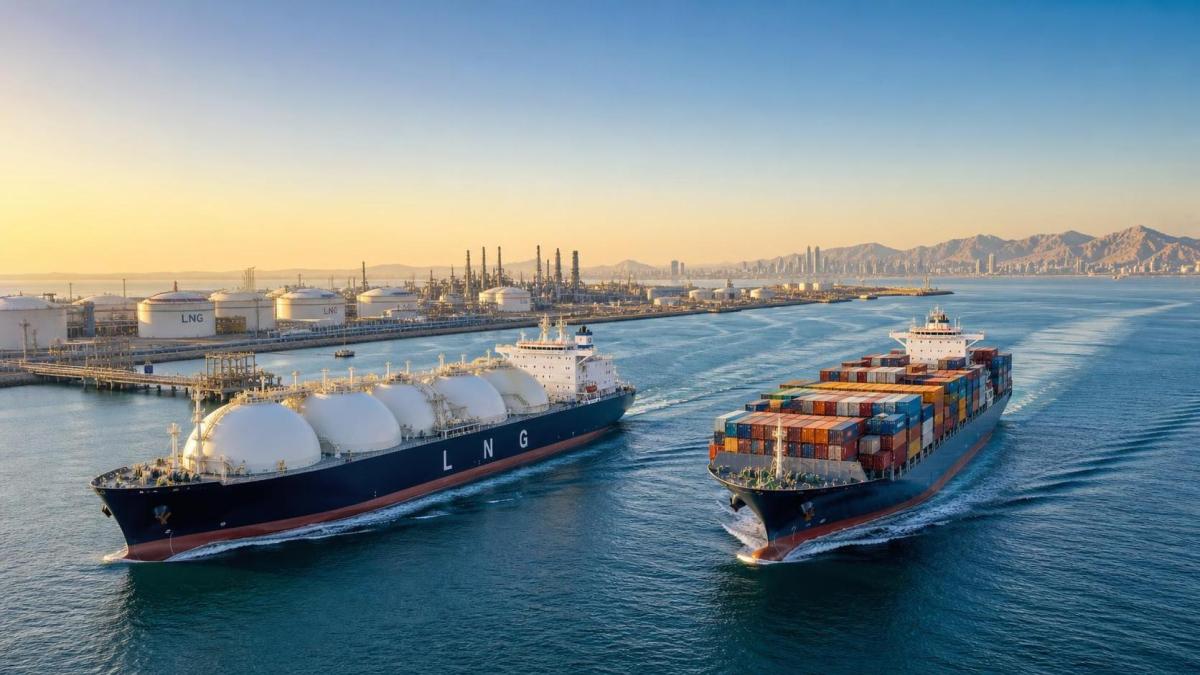
That answer depends less on marketing claims and more on a few operational realities: bunker price exposure, trading pattern, vessel age, charter structure, retrofit complexity, and the growing cost of non-compliance. In the Gulf and wider Middle East, those variables can move quickly. A vessel serving short regional rotations out of Jebel Ali, Dammam, or Sohar faces a different payback profile from an LNG carrier on long-haul routes or a smart container ship running tightly scheduled liner services.
Seen properly, fuel efficiency is not only a technical upgrade. It is an asset allocation decision. The best operators treat it the same way they would assess propulsion redundancy, cargo containment risk, or control-system reliability: by looking at lifecycle economics instead of headline savings.
The Middle East changes the ROI equation
The region has a reputation for energy abundance, but that should not be confused with low-cost shipping operations. Marine fuel costs remain material, especially when vessels face waiting time at congested terminals, high ambient temperatures affecting machinery efficiency, and route structures that leave limited room for operational inefficiency.
There is also a strategic layer. Middle Eastern fleets are closely tied to global trade corridors, energy exports, feeder logistics, and transshipment networks. A fuel efficiency project that looks marginal on a static spreadsheet may look stronger once fleet utilization, schedule reliability, and emissions reporting exposure are included.
This is where GTOT’s cross-sector perspective is useful. A platform that follows not only advanced ocean-going vessels but also railway signal control systems, traction power, braking systems, smart container ships, and LNG carriers tends to view efficiency as a systems problem. In transport, whether on rail or at sea, the real gains often come from stitched-together intelligence: control logic, operating profile, maintenance timing, and digital visibility working together instead of as isolated upgrades.
A fuel efficiency solution makes sense when savings are measurable, not theoretical
A common mistake in procurement is to compare solution cost against a broad percentage claim such as “up to X% fuel savings.” In practice, decision-makers need a narrower question: savings under which speed band, draft condition, sea state, and duty cycle?
For example, a hull optimization measure, air lubrication concept, engine monitoring platform, voyage optimization system, propeller retrofit, or waste heat recovery package will not perform equally across all vessel types. The useful comparison is not solution versus no solution in the abstract. It is solution versus current operating baseline for this vessel, on these routes, with this maintenance standard.
Financial sense usually starts to appear when three conditions are present:
- Fuel consumption is already well measured, so pre- and post-installation performance can be compared credibly.
- The vessel has enough annual operating days and fuel burn for incremental efficiency to compound into meaningful savings.
- The expected payback period fits the owner’s remaining holding period, charter terms, and drydock schedule.
If one of those is missing, the project can still be worth doing, but the investment case becomes less straightforward.
Not all vessels in the region should be treated the same
In the Middle East, vessel profile matters more than many procurement teams initially assume. An LNG carrier, for instance, may evaluate fuel efficiency through boil-off management, propulsion mode, and route stability. A smart container ship may gain more from integrated voyage optimization, port call synchronization, and digital performance analytics. Offshore support vessels, tankers, and regional feeder ships each have different idle-time patterns, load swings, and maintenance windows.
That means the most “efficient” technology on paper is not always the most bankable one. A simpler retrofit with modest but dependable savings may outperform a more ambitious package that requires long off-hire periods or heavy crew adaptation.
This is one reason serious buyers increasingly look beyond single-component procurement. GTOT’s coverage of smart vessels and LNG carriers reflects a broader industry shift: owners are trying to understand how energy efficiency interacts with navigation logic, automation, and the commercial tempo of global supply chains. A device that saves fuel but complicates maintenance planning can weaken the business case. One that improves both visibility and performance tends to age better as an investment.
The four cost questions that usually decide the investment
Before moving forward with a marine fuel efficiency solution Middle East project, buyers usually need clean answers to four cost questions.
1. What is the full installed cost?
Not just equipment. Include engineering, integration, class review where applicable, yard time, commissioning, crew familiarization, spare parts, software licensing if relevant, and the cost of off-hire. For some retrofits, installation economics are favorable only when aligned with scheduled drydock.
2. How stable are the expected savings?
Savings that depend on ideal routing behavior, unusually clean hull condition, or near-perfect sensor inputs should be discounted. A finance team should ask what happens in degraded real-world conditions, not only in modeled operation.
3. Who captures the value?
The answer changes with charter party structure. Under some arrangements, the owner funds the retrofit while the charterer benefits from lower fuel consumption. Unless contracts allocate gains sensibly, even a technically strong project can stall.
4. What happens if regulation tightens faster than expected?
A solution may be justified not only by current savings but also by avoided future cost. Carbon intensity pressure, reporting obligations, and customer scrutiny are all moving in one direction. The exact implications need to be checked against vessel flag, trading area, and applicable frameworks, but the broader trajectory is clear enough to matter in capital planning.
When the payback is usually attractive
In practical terms, the economics tend to improve under a few recognizable conditions.
By contrast, the business case weakens when vessels are nearing disposal, trading patterns shift constantly, maintenance discipline is poor, or baseline performance data is too unreliable to support verification.
What buyers in the Middle East often underestimate
Two issues come up repeatedly.
The first is heat and operating environment. Ambient conditions in the Gulf can affect cooling loads, machinery behavior, and maintenance intervals. A solution proven elsewhere may still need local validation. That does not make the solution unsuitable; it means the technical review should go beyond generic brochures.
The second is data quality. Many efficiency systems depend on sensor accuracy, crew usage, and clean integration with onboard controls or shoreside analytics. If the vessel’s existing data environment is fragmented, expected savings can leak away in calibration issues, incomplete reporting, or poor operational follow-through.
This is where GTOT’s “Strategic Intelligence Center” approach feels timely. Across rail and maritime sectors, high-value assets are increasingly managed through control discipline, not just hardware upgrades. Whether the subject is SIL4 railway signalling, traction stability, or smart ship optimization, the pattern is familiar: efficiency without dependable system intelligence rarely delivers its full financial return.
A reasonable procurement framework
For buyers comparing options, a sensible process is less glamorous than a technology pitch but more useful:
- Establish a clean baseline using recent fuel consumption, speed, draft, weather exposure, and idle-time data.
- Separate operational measures from retrofit measures. Sometimes voyage planning, hull cleaning discipline, or trim management should come first.
- Test the business case under conservative assumptions, not best-case estimates.
- Check yard access, integration burden, and any class or flag implications early.
- Clarify who verifies performance and how savings will be measured after installation.
That last point matters. If savings cannot be tracked in a way finance, operations, and technical management all accept, internal confidence in future projects drops quickly.
So when does it make sense?
A marine fuel efficiency solution makes financial sense in the Middle East when it fits the vessel’s operating profile, can be installed without disproportionate disruption, and produces savings that remain credible after conservative modeling. It also helps when the project supports more than one objective: fuel reduction, compliance resilience, better performance visibility, and stronger long-term asset positioning.
The strongest decisions are usually not driven by fuel price alone. They are driven by alignment. The route pattern is stable enough. The vessel will stay in service long enough. The charter structure does not destroy the incentive. The data is good enough to prove results. And the retrofit can be timed intelligently.
If those pieces are not yet in place, the next step is not necessarily to reject the idea. It may be to tighten the baseline, review drydock timing, examine route-specific performance, and test whether a phased approach makes more sense than a one-shot capex decision. In shipping, as in every part of heavy transport that GTOT follows across land and sea, efficiency becomes bankable when engineering logic and commercial logic finally point in the same direction.
Recommended News
 Sep 29, 2026What drives traction systems price differences between rail projects?Traction systems price differences explained: compare duty cycles, voltage compatibility, integration, localization, and lifecycle costs for smarter rail procurement.
 Sep 26, 2026What to assess before selecting an electric traction system manufacturerChoose an electric traction system manufacturer with confidence. Explore key criteria for performance, reliability, safety, integration, energy efficiency, and lifecycle support.
 Sep 25, 2026When do full digitalization systems justify the investment?Full digitalization systems: discover when rail and maritime operators can turn connected data into safer operations, higher availability, and measurable ROI.
 Sep 23, 2026What drives automatic train control systems cost on rail projects?Automatic train control systems cost depends on integration, migration, safety testing, communications, and lifecycle support. Explore the key budget drivers for rail projects.
 Sep 21, 2026How to assess an ocean going vessel builder’s delivery riskAssess an ocean going vessel builder’s delivery risk with proven checks for schedules, capacity, design maturity, critical equipment, quality, and project controls.
 Sep 20, 2026What drives rail safety technology costs over a project lifecycle?Rail safety technology cost goes beyond equipment—explore lifecycle drivers from integration and safety assurance to cybersecurity, commissioning, and obsolescence.
 Sep 16, 2026What to verify before choosing an advanced ocean-going vessels supplierAdvanced ocean-going vessels supplier checklist: verify design authority, build quality, digital systems, delivery reliability, and lifecycle support before you buy.
 Sep 15, 2026What rail safety technology best reduces level-crossing risks in Southeast Asia?Rail safety technology Southeast Asia: discover how fail-safe signalling, barriers, obstacle detection and remote monitoring reduce level-crossing risks.
 Sep 14, 2026How exporters can reduce customs delays in global trade logisticsGlobal trade logistics for exporters: reduce customs delays with accurate data, clearance-ready documents, early filing, and proactive exception management.
 Sep 13, 2026When do global transportation network systems reduce delivery delays?Global transportation network systems reduce delivery delays by improving rail-port-vessel coordination, real-time visibility, and proactive decisions across complex land-sea supply chains.
 Sep 09, 2026When should you choose a rail and maritime manufacturer with dual-sector capability?Rail and maritime manufacturer guide: learn when dual-sector capability reduces integration risk, improves lifecycle support, and strengthens rail-to-port operations.
 Sep 08, 2026What to verify before selecting a railway signalling equipment supplierRailway signalling equipment supplier checklist: verify safety evidence, integration, cybersecurity, delivery capability, and lifecycle support before award.
 Sep 07, 2026How to size a traction power transformer for railway load demandTraction power transformer sizing guide: model railway load demand, peak duty, voltage regulation, harmonics, and contingency capacity for reliable service.
 Sep 07, 2026How do customization options for industrial connectors affect lead times?Customization options for industrial connectors can impact lead times, cost, and compliance. Learn how to specify smarter for rail and marine projects.
 Sep 05, 2026What information should an industrial sourcing guide include?Industrial sourcing information procurement guide: evaluate suppliers, compliance, lifecycle costs, interfaces, and lead times for smarter rail and maritime purchasing decisions.
 Sep 01, 2026How to find reliable maritime tender information before biddingMaritime tender information: learn how to verify sources, define bid-ready scopes, check qualifications, and reduce risk before submitting competitive marine bids.
 Aug 30, 2026How to select railway automation equipment for depots with phased upgradesRailway automation equipment for depots: learn how to plan phased upgrades that improve safety, throughput, integration, and lifecycle control.
 Aug 27, 2026How industrial sourcing intelligence pricing data supports budget approvalIndustrial sourcing intelligence pricing data helps teams benchmark scope, assess supplier risk, and build defensible budget approvals for complex rail and maritime assets.
 Aug 26, 2026When does a marine fuel efficiency solution make financial sense in the Middle East?Marine fuel efficiency solution Middle East: learn when retrofit savings, compliance value, and vessel data align to deliver credible ROI and smarter shipping investment decisions.
 Aug 24, 2026When does maritime automation for tankers deliver a real payback?Maritime automation for tankers delivers real payback when it cuts fuel use, reduces cargo risk, and improves uptime. See how owners can time investment for stronger ROI.
 Aug 23, 2026When do maritime logistics systems in the Middle East justify the costMaritime logistics systems Middle East: discover when rising delays, manual coordination, and poor visibility make system investment the smarter move for regional operators.
 Aug 22, 2026What drives vessel navigation system price for commercial fleetsVessel navigation system price depends on integration, compliance, automation, and support—not just hardware. Learn what drives fleet costs and compare quotes with confidence.
 Aug 21, 2026How to assess shipbuilding maritime tenders before biddingShipbuilding maritime tenders require more than price checks. Learn how to assess technical scope, compliance, supply chain, and commercial risk before bidding with confidence.
 Aug 20, 2026When does working with an ocean-going vessels distributor reduce supply risk?Ocean-going vessels distributor: learn when this partner cuts supply risk through stronger compliance, faster response, and better sourcing resilience in complex maritime procurement.