



Search News
Industry Portal
Popular Tags
When does working with an ocean-going vessels distributor reduce supply risk?
Author
Time
Click Count
For business evaluators facing volatile freight cycles, compliance pressure, and multi-tier sourcing uncertainty, knowing when to work with an ocean-going vessels distributor can directly affect supply continuity. The right distributor does more than move products—they improve visibility, shorten response time, and buffer procurement against technical, geographic, and market disruption risks across complex maritime supply chains.
When an Ocean-Going Vessels Distributor Becomes a Risk-Control Decision
The core search intent behind “ocean-going vessels distributor” is practical, not academic. Business evaluators want to know when using a distributor lowers supply exposure enough to justify the extra commercial layer.
In most cases, working with an ocean-going vessels distributor reduces supply risk when procurement involves cross-border compliance, specialized vessel specifications, limited OEM access, or unstable delivery conditions that internal teams cannot efficiently manage alone.
That is the central judgment. A distributor is most valuable when supply continuity matters more than achieving the lowest nominal unit price, and when the market is too fragmented or volatile for direct sourcing to stay reliable.
For readers in commercial evaluation, the real issue is not whether distributors exist in the chain. The issue is whether a distributor materially improves resilience, technical match, response speed, and supplier accountability.
This matters especially in vessel-related procurement, where decisions often involve long lead times, classification requirements, retrofit compatibility, regional service constraints, and exposure to fuel-transition or digitalization upgrades.
What Business Evaluators Usually Need to Confirm First
Before comparing channels, evaluators typically ask four questions. Can this sourcing model protect delivery continuity? Can it reduce technical mismatch? Can it improve visibility across suppliers? Can it lower the cost of disruption?
Those questions are more important than headline discounts. In ocean-going vessel programs, the largest losses usually come from delay, rework, non-compliance, and coordination failures rather than from the quoted equipment price itself.
An experienced ocean-going vessels distributor can help by consolidating fragmented vendor relationships, validating specifications earlier, and creating fallback options before a shortage or shipping bottleneck becomes operationally critical.
That said, not every distributor reduces risk. Some simply add margin and paperwork. Evaluators should distinguish between transaction-only intermediaries and technically capable distribution partners with real sourcing reach and maritime domain knowledge.
The value threshold is clear: if the distributor cannot improve control, response, or confidence compared with direct procurement, then the arrangement may increase complexity instead of reducing risk.
Situations Where a Distributor Clearly Reduces Supply Risk
The first strong use case is multi-origin sourcing. If vessel systems or components come from several countries, a distributor can coordinate logistics, documentation, substitution paths, and delivery sequencing more efficiently than scattered internal follow-up.
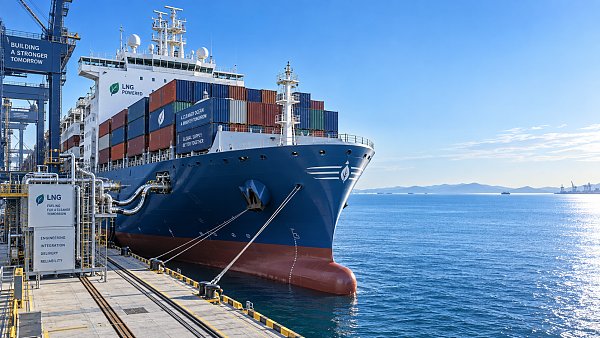
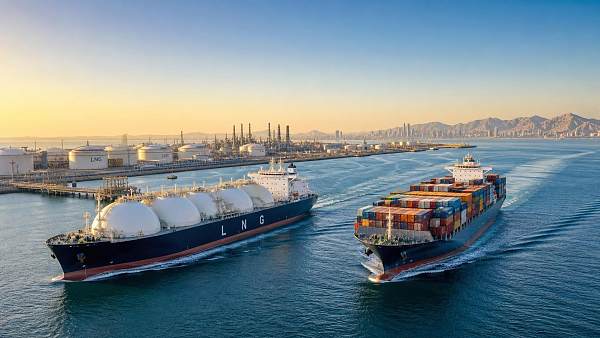
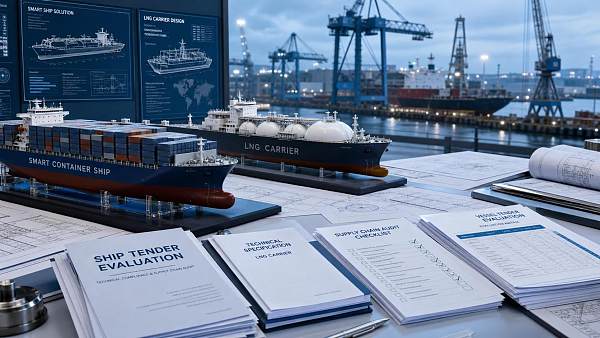
The second use case is technically constrained procurement. Smart container ships, LNG carriers, and advanced retrofit programs often require exact component compatibility, certification support, and supplier screening that general procurement teams may not handle alone.
The third use case is limited supplier access. Some OEMs prioritize large yards, fleet operators, or strategic accounts. A qualified distributor can open channels, aggregate demand, and secure supply attention that smaller buyers may struggle to obtain directly.
The fourth use case is urgent replacement demand. When a vessel faces unplanned maintenance, dry-dock schedule pressure, or route interruption, distributor-held inventory and faster escalation paths can materially reduce downtime risk.
The fifth use case is regional uncertainty. If the buyer operates across ports, jurisdictions, and sanctions-sensitive trade routes, a distributor with established local compliance and logistics capability can reduce border and documentation surprises.
These are the moments when a distributor changes from a convenience option into a risk-management tool. The more operational and regulatory complexity involved, the stronger the business case becomes.
Why Direct Sourcing Is Not Always the Lower-Risk Option
Direct purchasing appears simpler on paper because it removes one commercial layer. But in practice, direct sourcing can create blind spots when buyers underestimate coordination burden, engineering validation needs, and exposure to shipping or customs disruption.
For example, direct contracts with several niche manufacturers may offer lower quoted prices. Yet if none of those suppliers owns end-to-end delivery accountability, the buyer absorbs the integration risk across scheduling, paperwork, and specification alignment.
That burden increases in maritime procurement because many components affect vessel safety, class compliance, operational efficiency, or digital interoperability. Small errors in documentation or model selection can lead to expensive delays later.
Business evaluators should therefore compare total risk cost, not just purchase price. A distributor may be commercially rational if it lowers delay probability, reduces expediting expenses, and limits the cost of supplier failure.
In other words, the right comparison is not distributor margin versus direct discount. The right comparison is controlled continuity versus unmanaged exposure.
What Capabilities Actually Make an Ocean-Going Vessels Distributor Valuable
A distributor reduces supply risk only when it has capabilities that change outcomes. The first is technical fluency. It should understand vessel categories, component criticality, class implications, and retrofit constraints well enough to challenge incorrect assumptions.
The second is supplier network depth. A strong distributor maintains active relationships across OEMs, specialist manufacturers, logistics providers, and regional service partners rather than relying on a single fragile source base.
The third is documentation discipline. Maritime buyers need confidence in certificates, origin records, traceability, version control, and export-related paperwork. Weak document control can undermine the entire procurement timeline.
The fourth is inventory and lead-time intelligence. Evaluators should ask whether the distributor can provide realistic availability data, not generic promises, and whether it can present backup sourcing or substitution options when markets tighten.
The fifth is escalation capability. During disruption, response speed matters more than polished sales communication. A capable distributor can reach decision-makers quickly, re-route supply, and coordinate exceptions across stakeholders.
Finally, commercial transparency matters. Buyers should understand where the distributor adds value, what service scope is included, and how risks are allocated contractually. Hidden dependence creates future fragility.
How to Evaluate Whether the Distributor Will Reduce or Add Risk
Business evaluators should test the distributor against evidence, not claims. Start with supply continuity metrics: historical fill rates, average lead-time variance, emergency response performance, and examples of handling disrupted deliveries.
Then assess technical control. Ask for case evidence involving complex vessel equipment, specification review processes, and the distributor’s role in avoiding incompatibility, re-ordering, or compliance-related rejection.
Next, examine supplier diversification. A distributor that depends on one or two manufacturers may simply concentrate risk. A stronger partner can show realistic alternative paths by geography, maker, and service location.
Documentation capability should also be audited carefully. Review how certificates, revision records, inspection documents, and origin data are managed. For regulated or strategic procurement, administrative weakness is a direct operational risk.
Commercial terms provide another signal. Evaluate liability boundaries, replacement commitments, escalation windows, and communication protocols during delay events. Good distributors define process clearly before a problem occurs.
It is also useful to check whether the distributor supports forecasting and market intelligence. In sectors shaped by shipbuilding cycles, fuel transition investment, and port congestion, forward visibility is itself a form of risk reduction.
Where the ROI Usually Comes From
For commercial evaluators, the return on using an ocean-going vessels distributor often appears indirectly. The savings usually come from avoided disruption, lower expediting costs, fewer technical errors, and better coordination across fragmented suppliers.
There is also decision efficiency. Internal procurement, engineering, and operations teams spend less time chasing status, reconciling specifications, and resolving supplier inconsistency when a capable distributor absorbs that coordination workload.
In complex marine programs, even a small reduction in delay can protect charter commitments, dry-dock schedules, installation windows, and revenue continuity. That economic effect often exceeds the distributor’s added margin.
Distributors may also help buyers improve bid quality in tenders by providing better technical clarity, lead-time realism, and sourcing confidence. For evaluators, that translates into stronger planning assumptions and less downstream uncertainty.
The practical ROI question is simple: does the distributor reduce the expected cost of failure enough to improve total procurement economics? In many high-complexity scenarios, the answer is yes.
When a Distributor Is Less Necessary
There are situations where direct sourcing remains reasonable. If the buyer has strong in-house technical procurement, stable OEM access, predictable demand, and low regulatory complexity, a distributor may add limited value.
The same applies when the item is standardized, lead times are short, and switching costs are low. In such cases, competitive direct purchasing may preserve margin without meaningfully increasing operational exposure.
Evaluators should also be cautious if a distributor cannot demonstrate marine-specific competence, lacks transparent sourcing logic, or avoids sharing how it handles substitutions and compliance requirements.
A weak distributor can create distance from the actual manufacturer while offering little additional control. That is not risk reduction; it is outsourced uncertainty.
A Practical Decision Framework for Business Evaluators
A useful framework is to score the sourcing situation across five dimensions: technical complexity, supply market concentration, time sensitivity, compliance burden, and disruption cost if delivery fails.
If three or more of those dimensions are high, working with an ocean-going vessels distributor is often commercially justified. The distributor’s value increases as supply failure becomes harder and more expensive to recover from.
Then score the distributor itself across five capabilities: technical expertise, alternative sourcing depth, documentation rigor, response speed, and commercial transparency. Only distributors with credible strength across these areas reduce risk in practice.
This approach helps evaluators move beyond generic channel preferences. It connects the sourcing model directly to operational exposure, which is the right basis for procurement judgment in maritime environments.
Conclusion
Working with an ocean-going vessels distributor reduces supply risk when the buying environment is technically demanding, geographically fragmented, compliance-heavy, or highly sensitive to delay. The distributor earns its place by improving control, not by simply standing between buyer and maker.
For business evaluators, the right decision is rarely about lowest visible price. It is about whether the sourcing structure protects continuity, supports sound technical selection, and limits the financial impact of disruption.
In advanced maritime supply chains, especially around smart container ships, LNG carriers, and specialized vessel systems, a capable distributor can be a practical resilience asset. The key is to evaluate real capability, evidence, and accountability before relying on that channel.
Recommended News
 Sep 29, 2026What drives traction systems price differences between rail projects?Traction systems price differences explained: compare duty cycles, voltage compatibility, integration, localization, and lifecycle costs for smarter rail procurement.
 Sep 26, 2026What to assess before selecting an electric traction system manufacturerChoose an electric traction system manufacturer with confidence. Explore key criteria for performance, reliability, safety, integration, energy efficiency, and lifecycle support.
 Sep 25, 2026When do full digitalization systems justify the investment?Full digitalization systems: discover when rail and maritime operators can turn connected data into safer operations, higher availability, and measurable ROI.
 Sep 23, 2026What drives automatic train control systems cost on rail projects?Automatic train control systems cost depends on integration, migration, safety testing, communications, and lifecycle support. Explore the key budget drivers for rail projects.
 Sep 21, 2026How to assess an ocean going vessel builder’s delivery riskAssess an ocean going vessel builder’s delivery risk with proven checks for schedules, capacity, design maturity, critical equipment, quality, and project controls.
 Sep 20, 2026What drives rail safety technology costs over a project lifecycle?Rail safety technology cost goes beyond equipment—explore lifecycle drivers from integration and safety assurance to cybersecurity, commissioning, and obsolescence.
 Sep 16, 2026What to verify before choosing an advanced ocean-going vessels supplierAdvanced ocean-going vessels supplier checklist: verify design authority, build quality, digital systems, delivery reliability, and lifecycle support before you buy.
 Sep 15, 2026What rail safety technology best reduces level-crossing risks in Southeast Asia?Rail safety technology Southeast Asia: discover how fail-safe signalling, barriers, obstacle detection and remote monitoring reduce level-crossing risks.
 Sep 14, 2026How exporters can reduce customs delays in global trade logisticsGlobal trade logistics for exporters: reduce customs delays with accurate data, clearance-ready documents, early filing, and proactive exception management.
 Sep 13, 2026When do global transportation network systems reduce delivery delays?Global transportation network systems reduce delivery delays by improving rail-port-vessel coordination, real-time visibility, and proactive decisions across complex land-sea supply chains.
 Sep 09, 2026When should you choose a rail and maritime manufacturer with dual-sector capability?Rail and maritime manufacturer guide: learn when dual-sector capability reduces integration risk, improves lifecycle support, and strengthens rail-to-port operations.
 Sep 08, 2026What to verify before selecting a railway signalling equipment supplierRailway signalling equipment supplier checklist: verify safety evidence, integration, cybersecurity, delivery capability, and lifecycle support before award.
 Sep 07, 2026How to size a traction power transformer for railway load demandTraction power transformer sizing guide: model railway load demand, peak duty, voltage regulation, harmonics, and contingency capacity for reliable service.
 Sep 07, 2026How do customization options for industrial connectors affect lead times?Customization options for industrial connectors can impact lead times, cost, and compliance. Learn how to specify smarter for rail and marine projects.
 Sep 05, 2026What information should an industrial sourcing guide include?Industrial sourcing information procurement guide: evaluate suppliers, compliance, lifecycle costs, interfaces, and lead times for smarter rail and maritime purchasing decisions.
 Sep 01, 2026How to find reliable maritime tender information before biddingMaritime tender information: learn how to verify sources, define bid-ready scopes, check qualifications, and reduce risk before submitting competitive marine bids.
 Aug 30, 2026How to select railway automation equipment for depots with phased upgradesRailway automation equipment for depots: learn how to plan phased upgrades that improve safety, throughput, integration, and lifecycle control.
 Aug 27, 2026How industrial sourcing intelligence pricing data supports budget approvalIndustrial sourcing intelligence pricing data helps teams benchmark scope, assess supplier risk, and build defensible budget approvals for complex rail and maritime assets.
 Aug 26, 2026When does a marine fuel efficiency solution make financial sense in the Middle East?Marine fuel efficiency solution Middle East: learn when retrofit savings, compliance value, and vessel data align to deliver credible ROI and smarter shipping investment decisions.
 Aug 24, 2026When does maritime automation for tankers deliver a real payback?Maritime automation for tankers delivers real payback when it cuts fuel use, reduces cargo risk, and improves uptime. See how owners can time investment for stronger ROI.
 Aug 23, 2026When do maritime logistics systems in the Middle East justify the costMaritime logistics systems Middle East: discover when rising delays, manual coordination, and poor visibility make system investment the smarter move for regional operators.
 Aug 22, 2026What drives vessel navigation system price for commercial fleetsVessel navigation system price depends on integration, compliance, automation, and support—not just hardware. Learn what drives fleet costs and compare quotes with confidence.
 Aug 21, 2026How to assess shipbuilding maritime tenders before biddingShipbuilding maritime tenders require more than price checks. Learn how to assess technical scope, compliance, supply chain, and commercial risk before bidding with confidence.
 Aug 20, 2026When does working with an ocean-going vessels distributor reduce supply risk?Ocean-going vessels distributor: learn when this partner cuts supply risk through stronger compliance, faster response, and better sourcing resilience in complex maritime procurement.