



Search News
Industry Portal
Popular Tags
When modular rail infrastructure solutions cut project delays
Author
Time
Click Count
On a live rail project, delays rarely begin with a dramatic failure. More often, they start with a possession window that closes too soon, a signaling cabinet that arrives half-configured, a civil team waiting on cable routes, or a supplier lead time that quietly turns a six-week task into a three-month problem. For project managers responsible for keeping upgrades on track, that is exactly why modular rail infrastructure solutions are gaining ground. They do not remove complexity from rail work, but they change where complexity is handled: less on the track, more in controlled environments, and earlier in the project lifecycle.
This shift matters across today’s rail programs, from station renewals and corridor upgrades to signaling modernization, traction power improvement, and depot expansion. In each case, modular delivery can reduce interface risk, compress installation windows, and create a more predictable path through commissioning. For teams balancing safety, budget pressure, traffic disruption, and stakeholder scrutiny, that predictability is often more valuable than speed alone.
Within the wider transport intelligence landscape, this is also where GTOT’s perspective becomes useful. Rail projects increasingly sit at the intersection of high-integrity control systems, traction reliability, braking performance, digital connectivity, and supply-chain resilience. A modular approach is not simply a packaging choice. It is a project execution strategy that affects engineering decisions, procurement timing, testing logic, and the way field teams coordinate under pressure.
Why delays cluster around interfaces, not individual components
Many rail projects are planned around assets: a new interlocking, a power system renewal, a platform extension, a set of switch machines, a signaling room retrofit. But delivery pressure tends to build at the interfaces between those assets. A signaling subsystem may be ready, yet its enclosure is not wired to site power. A traction power skid may be complete, but access constraints delay craning. A modular equipment room may arrive on schedule, yet the telecom integration sequence still depends on another contractor’s testing plan.
That is one reason project leaders are moving beyond the old assumption that every critical system must be assembled and adapted almost entirely on site. Site conditions are noisy, variable, weather-sensitive, and heavily constrained by safety rules and access windows. When too much work is deferred to that environment, every late design clarification or material mismatch becomes a delay multiplier.
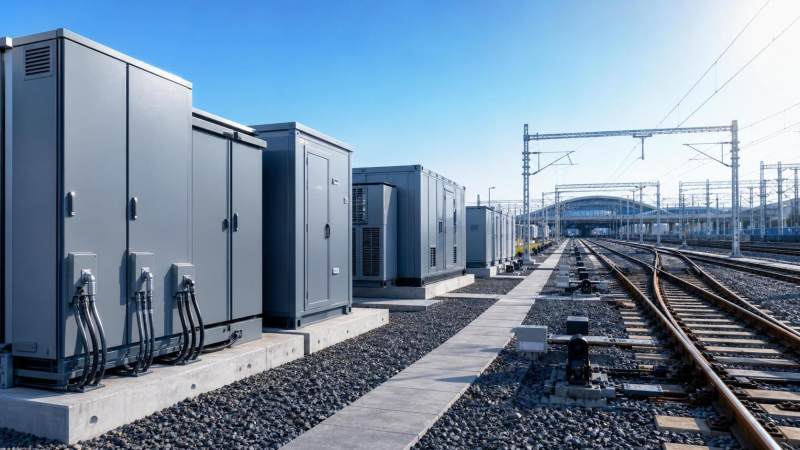
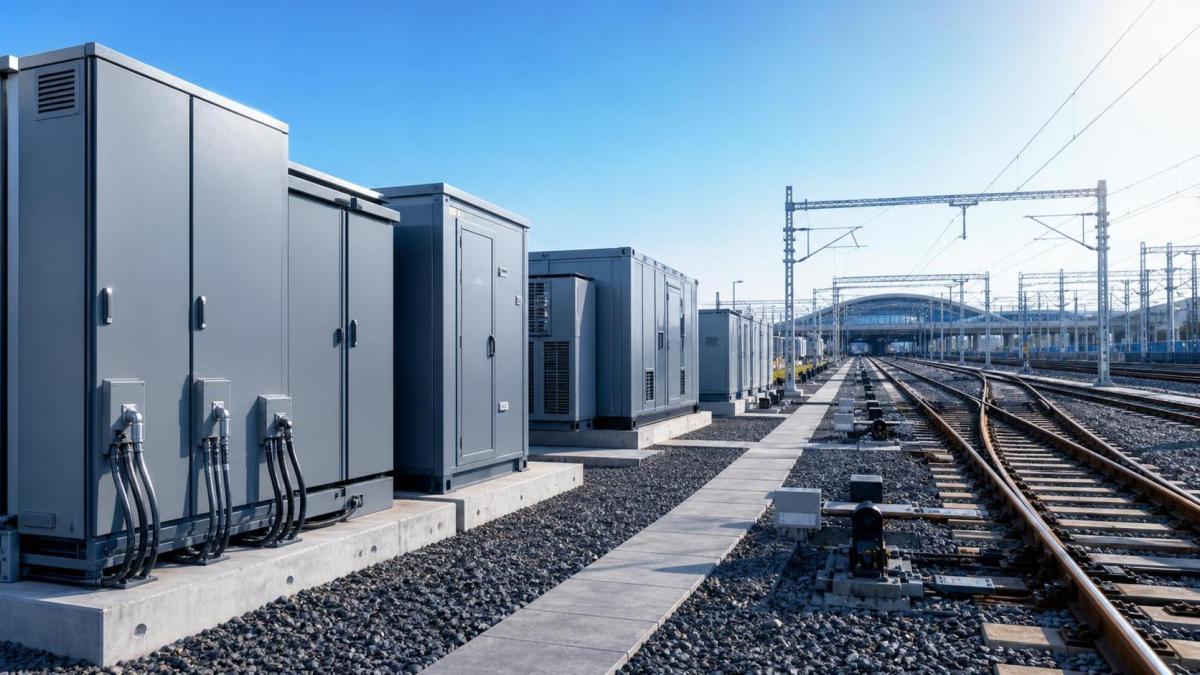
Modular rail infrastructure solutions address this by reducing site-based assembly and converting it into repeatable, pre-engineered units. These may include prefabricated signaling equipment rooms, plug-and-play cable assemblies, integrated power distribution skids, modular platform sections, factory-tested relay or control cabinets, and standard enclosure packages for trackside systems. The real advantage is not just that modules arrive “ready-made.” It is that the interfaces can be defined, tested, and frozen earlier.
Where modularity delivers the biggest time savings
Not every scope benefits equally from modularization. The strongest results usually appear where three conditions exist at once: repeated design logic, constrained access, and high consequences for commissioning delays.
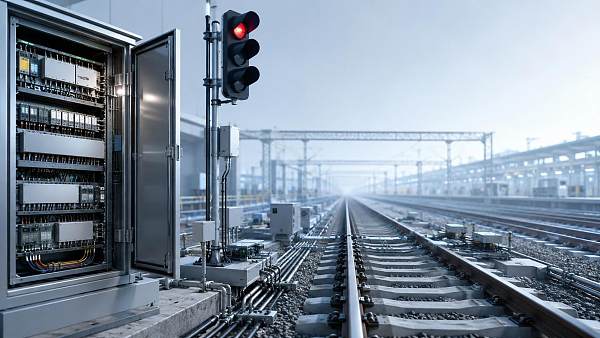
Signaling and control works are a clear example. In railway signal control systems, where SIL4 safety expectations demand disciplined integration and documentation, modular cabinets and equipment rooms allow teams to complete wiring, configuration, and pre-testing before they ever reach the corridor. That shortens the amount of intrusive work required during possessions and helps reduce the number of unresolved faults discovered at the worst possible moment.
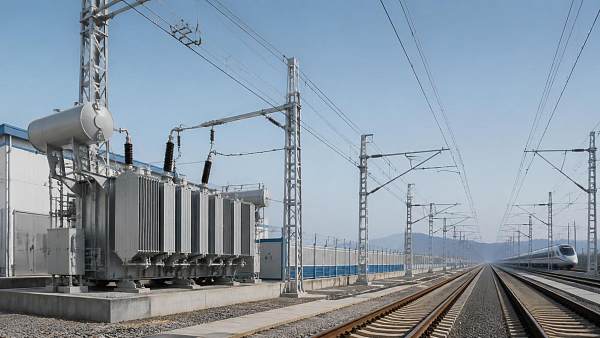
Traction power and overhead line support systems also lend themselves well to modular execution. For high-speed and urban rail, where pantograph performance depends on stable, uninterrupted power collection, upstream infrastructure quality matters. Modular substations, feeder assemblies, and equipment skids can improve installation sequencing and reduce field rework that might otherwise affect energization milestones.
Station and civil packages benefit in a different way. Prefabricated platform elements, service modules, equipment housings, and access structures can ease congestion on urban sites where labor coordination is often more difficult than engineering itself. Instead of multiple trades occupying the same footprint for weeks, modular components allow more work to arrive consolidated and better prepared.
Even braking-related infrastructure and depot systems can benefit indirectly. Rail transit braking systems depend on precise operational environments, including dependable power, control communication, and maintenance access. If modular delivery improves the quality and timing of these supporting systems, rolling stock testing and operational readiness become easier to manage.
What project managers should ask before choosing a modular approach
Modularity is not a cure-all, and some projects adopt it too late to capture its full value. The key question is not “Can this be modularized?” but “Will modularization reduce the specific delay drivers in this project?”
A practical review usually starts with the possession strategy. If the program is constrained by short overnight windows, weekend blocks, or limited shutdown opportunities, off-site assembly becomes far more attractive. Every hour not spent wiring, cutting, adjusting, or troubleshooting beside an active railway is an hour returned to installation certainty.
Then comes interface density. Projects involving multiple contractors, mixed legacy systems, or overlapping work packages often suffer from coordination drag. In those environments, standard modules can help create cleaner boundaries between scopes. But only if the interfaces are documented rigorously. A module with vague cable termination assumptions or undefined communication protocols may simply move confusion upstream rather than solving it.
Transport and access should also be treated as first-order planning issues, not afterthoughts. Large prefabricated units may save weeks in the field while creating delivery constraints related to route clearance, lifting capacity, storage, or site entry restrictions. A smart modular strategy balances factory completion against practical logistics.
Finally, there is the testing philosophy. One of the strongest arguments for modular rail infrastructure solutions is factory acceptance testing under controlled conditions. Yet that value is diluted when project teams fail to align FAT, site acceptance testing, and commissioning criteria from the outset. A module should not arrive as a black box. It should arrive with a clearly understood test pedigree and a defined path into operational validation.
The hidden schedule benefit: fewer decisions made under possession pressure
Experienced project managers know that delays are not caused only by physical work. They are caused by late decisions. On conventional site-built packages, teams are forced to make too many design and installation decisions in the field: routing changes, bracket adjustments, enclosure positioning, spare core allocation, earthing details, software mapping, or sequencing fixes to accommodate another contractor’s delay.
Modularization helps by front-loading those decisions. Design reviews become more consequential, but also more productive. Conflicts surface earlier, when they are cheaper to solve. That is one reason modular rail delivery often feels calmer on site, even when the project itself remains demanding. The uncertainty has not disappeared; it has simply been moved into a phase where engineering, manufacturing, and verification can happen with fewer operational constraints.
This matters especially in rail because the cost of getting decisions wrong late is unusually high. Possession overruns affect operators, passengers, regulators, and downstream trades all at once. A single unresolved interface in signaling or power can hold back broader commissioning. In that context, reducing “live uncertainty” is one of the most practical schedule controls available.
Common mistakes that weaken modular rail infrastructure solutions
One mistake is treating modular delivery as merely a procurement preference. If the engineering baseline is still unstable, pushing fabrication off-site may lock in errors faster rather than prevent them. Good modular execution depends on disciplined design freeze points and realistic change management.
Another is over-customization. Some teams pursue modularization while insisting on one-off configurations for each location, each enclosure, each wiring arrangement. That can erode the repeatability that makes modular systems efficient in the first place. Standardization does not mean forcing identical outcomes everywhere, but it does mean resisting avoidable variation.
A third problem is underestimating digital integration. Modern railway assets increasingly rely on data connectivity, remote diagnostics, software-defined functions, and layered safety logic. A physically complete module that is not digitally ready can still become a commissioning bottleneck. This is particularly relevant in signaling modernization and intelligent traction applications, where hardware readiness and system interoperability must progress together.
There is also a people issue. Site teams may see modules as inflexible if they are brought in too late or without adequate installation input. In reality, the best modular programs involve construction, testing, operations, and maintenance stakeholders early enough to shape the design. That collaboration improves maintainability, access planning, and field practicality, rather than sacrificing them.
How to build modularity into the delivery strategy without losing control
For project leads, the decision is less about buying “modules” and more about structuring the project around manufactured certainty. That usually begins in concept and early design, when teams identify repeatable subsystems and define standard interface rules. The more this work is delayed, the more modular delivery becomes partial and fragmented.
Supplier engagement should come early as well, especially in rail sectors where core components have long qualification cycles. Providers working in control systems, traction equipment, braking-related infrastructure, and high-integrity enclosures can often identify prefabrication opportunities that are invisible in a purely conventional design process. Their input is most useful when it informs architecture, testing strategy, and logistics planning before packages are tendered too rigidly.
This is where intelligence-led planning has real value. A platform like GTOT, which follows developments across railway signal control systems, pantographs, braking technologies, and broader transport supply chains, reflects a simple truth: project delays are no longer just engineering problems. They are ecosystem problems. Component maturity, standards alignment, factory capacity, digital compatibility, and global logistics all shape whether modularization will deliver on its promise.
What success looks like in practice
Success with modular rail infrastructure solutions is not defined by how much of the project is prefabricated. It is defined by whether the critical path becomes shorter, clearer, and less fragile. On a well-planned project, that may mean fewer hours of trackside wiring, cleaner commissioning sequences, earlier defect discovery, tighter handoffs between contractors, and a better chance of completing possession works without drama.
It can also mean something less visible but equally important: a project team that spends more time managing progress and less time absorbing surprises. For engineering project leaders, that shift is significant. Delay reduction is not only about accelerating activity. It is about creating conditions where reliable activity is possible.
Rail infrastructure will never be simple. It is too safety-critical, too interdependent, and too exposed to operational constraints. But complexity does not have to arrive all at once at the worksite gate. When modular thinking is applied thoughtfully, with strong interface discipline and realistic logistics, it gives project managers a better way to protect schedule outcomes in an environment where time is always tight and second chances are rare.
Recommended News
 Sep 29, 2026What drives traction systems price differences between rail projects?Traction systems price differences explained: compare duty cycles, voltage compatibility, integration, localization, and lifecycle costs for smarter rail procurement.
 Sep 26, 2026What to assess before selecting an electric traction system manufacturerChoose an electric traction system manufacturer with confidence. Explore key criteria for performance, reliability, safety, integration, energy efficiency, and lifecycle support.
 Sep 25, 2026When do full digitalization systems justify the investment?Full digitalization systems: discover when rail and maritime operators can turn connected data into safer operations, higher availability, and measurable ROI.
 Sep 23, 2026What drives automatic train control systems cost on rail projects?Automatic train control systems cost depends on integration, migration, safety testing, communications, and lifecycle support. Explore the key budget drivers for rail projects.
 Sep 21, 2026How to assess an ocean going vessel builder’s delivery riskAssess an ocean going vessel builder’s delivery risk with proven checks for schedules, capacity, design maturity, critical equipment, quality, and project controls.
 Sep 20, 2026What drives rail safety technology costs over a project lifecycle?Rail safety technology cost goes beyond equipment—explore lifecycle drivers from integration and safety assurance to cybersecurity, commissioning, and obsolescence.
 Sep 16, 2026What to verify before choosing an advanced ocean-going vessels supplierAdvanced ocean-going vessels supplier checklist: verify design authority, build quality, digital systems, delivery reliability, and lifecycle support before you buy.
 Sep 15, 2026What rail safety technology best reduces level-crossing risks in Southeast Asia?Rail safety technology Southeast Asia: discover how fail-safe signalling, barriers, obstacle detection and remote monitoring reduce level-crossing risks.
 Sep 14, 2026How exporters can reduce customs delays in global trade logisticsGlobal trade logistics for exporters: reduce customs delays with accurate data, clearance-ready documents, early filing, and proactive exception management.
 Sep 13, 2026When do global transportation network systems reduce delivery delays?Global transportation network systems reduce delivery delays by improving rail-port-vessel coordination, real-time visibility, and proactive decisions across complex land-sea supply chains.
 Sep 09, 2026When should you choose a rail and maritime manufacturer with dual-sector capability?Rail and maritime manufacturer guide: learn when dual-sector capability reduces integration risk, improves lifecycle support, and strengthens rail-to-port operations.
 Sep 08, 2026What to verify before selecting a railway signalling equipment supplierRailway signalling equipment supplier checklist: verify safety evidence, integration, cybersecurity, delivery capability, and lifecycle support before award.
 Sep 07, 2026How to size a traction power transformer for railway load demandTraction power transformer sizing guide: model railway load demand, peak duty, voltage regulation, harmonics, and contingency capacity for reliable service.
 Sep 07, 2026How do customization options for industrial connectors affect lead times?Customization options for industrial connectors can impact lead times, cost, and compliance. Learn how to specify smarter for rail and marine projects.
 Sep 05, 2026What information should an industrial sourcing guide include?Industrial sourcing information procurement guide: evaluate suppliers, compliance, lifecycle costs, interfaces, and lead times for smarter rail and maritime purchasing decisions.
 Sep 01, 2026How to find reliable maritime tender information before biddingMaritime tender information: learn how to verify sources, define bid-ready scopes, check qualifications, and reduce risk before submitting competitive marine bids.
 Aug 30, 2026How to select railway automation equipment for depots with phased upgradesRailway automation equipment for depots: learn how to plan phased upgrades that improve safety, throughput, integration, and lifecycle control.
 Aug 27, 2026How industrial sourcing intelligence pricing data supports budget approvalIndustrial sourcing intelligence pricing data helps teams benchmark scope, assess supplier risk, and build defensible budget approvals for complex rail and maritime assets.
 Aug 26, 2026When does a marine fuel efficiency solution make financial sense in the Middle East?Marine fuel efficiency solution Middle East: learn when retrofit savings, compliance value, and vessel data align to deliver credible ROI and smarter shipping investment decisions.
 Aug 24, 2026When does maritime automation for tankers deliver a real payback?Maritime automation for tankers delivers real payback when it cuts fuel use, reduces cargo risk, and improves uptime. See how owners can time investment for stronger ROI.
 Aug 23, 2026When do maritime logistics systems in the Middle East justify the costMaritime logistics systems Middle East: discover when rising delays, manual coordination, and poor visibility make system investment the smarter move for regional operators.
 Aug 22, 2026What drives vessel navigation system price for commercial fleetsVessel navigation system price depends on integration, compliance, automation, and support—not just hardware. Learn what drives fleet costs and compare quotes with confidence.
 Aug 21, 2026How to assess shipbuilding maritime tenders before biddingShipbuilding maritime tenders require more than price checks. Learn how to assess technical scope, compliance, supply chain, and commercial risk before bidding with confidence.
 Aug 20, 2026When does working with an ocean-going vessels distributor reduce supply risk?Ocean-going vessels distributor: learn when this partner cuts supply risk through stronger compliance, faster response, and better sourcing resilience in complex maritime procurement.