



Search News
Industry Portal
Popular Tags
What drives automatic train control systems cost on rail projects?
Author
Time
Click Count
The cost of an automatic train control system is rarely driven by one equipment line. A low initial quote can become expensive once the project adds communications coverage, onboard retrofits, safety assurance, interface engineering, staged commissioning, and long-term support. A higher-priced architecture may be the lower-risk purchase when it fits the railway’s operating plan and existing assets from the start.
For a realistic budget, treat automatic train control systems cost as a programme cost rather than a signalling equipment cost. The system must safely connect trackside logic, trainborne equipment, train detection, telecommunications, control-centre functions, power supplies, maintenance tools, and operating rules. The most influential cost drivers are therefore scope, maturity of the existing railway, required performance, integration burden, and the evidence needed to demonstrate safe operation.
Start with the operating outcome, not the technology label
“Automatic train control” can describe very different projects. It may mean upgrading train protection on an existing line, adding automatic train operation to a metro corridor, deploying communications-based train control on a new network, or modernising an older interlocking while retaining conventional wayside signalling. These are not interchangeable procurement packages.
A useful first question is: what operating problem must the investment solve? The answer affects almost every cost category. A system intended primarily to prevent overspeed and signal-passing incidents has a different scope from one intended to shorten headways, support unattended operation, recover quickly from disruption, or enable a future line extension.
Capacity targets also need careful interpretation. Higher service frequency may require more than closer train spacing. It can expose constraints in turnback layouts, platform dwell time, traction power, passenger flow, depot dispatching, and incident response. Paying for a more capable control system will not create the intended capacity if those surrounding constraints remain unresolved.
Why equipment pricing is only part of automatic train control systems cost
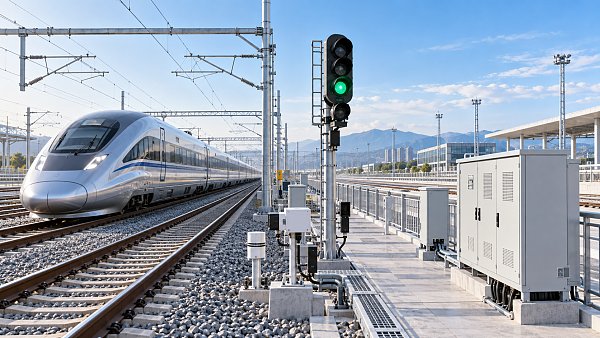
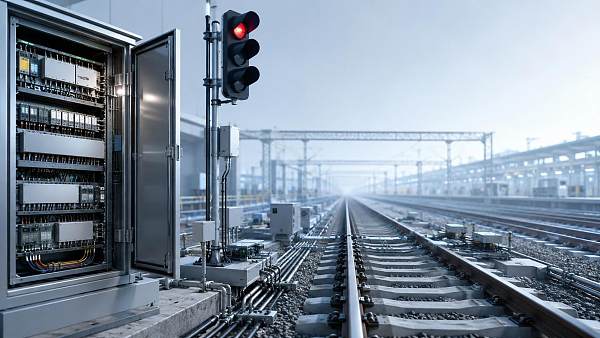
Hardware remains visible in a supplier quotation: onboard controllers, axle counters or other train-detection equipment, balises or trackside devices, radio equipment, interlocking interfaces, workstations, and wayside cabinets. Yet the equipment list does not explain the full investment. Rail control systems are engineered safety systems, and the work required to make them behave correctly in a particular railway is often substantial.
System architecture is the first major driver. A centralised design, distributed interlocking arrangement, overlay solution, or communications-based system each places different demands on field assets, network resilience, data management, and maintenance access. The selected architecture should reflect route complexity, service pattern, fleet condition, expansion plans, and the operator’s ability to maintain it. Buying a technically sophisticated design for a stable, low-density route can create avoidable lifecycle obligations. Conversely, selecting the minimum viable system for a corridor that will soon require denser service can make later expansion unusually disruptive.
Trainborne scope is another cost multiplier. Every train type may require a distinct engineering assessment, installation design, wiring approach, software configuration, and test campaign. Mixed fleets usually cost more than a uniform fleet because interfaces and failure modes must be understood separately. Older vehicles can add uncertainty through undocumented modifications, limited equipment space, ageing cabling, electromagnetic compatibility concerns, or unavailable spare parts. The number of trains matters, but fleet diversity often matters more than fleet size alone.
Trackside condition changes the economics as well. Existing cables, equipment rooms, field cabinets, power supplies, earthing arrangements, train-detection assets, and telecom pathways may be reusable, partially reusable, or unsuitable. Reuse can reduce capital work, but only where condition, performance, ownership, and remaining service life have been assessed. Reusing an asset simply because it exists may transfer reliability risk into a new control system and complicate fault diagnosis for years.
Integration is where budgets commonly lose control
An automatic train control system does not operate in isolation. It must exchange dependable information with existing or planned subsystems. Typical interfaces include interlockings, traffic management, platform screen doors, passenger information, supervisory control, radio networks, depot systems, level crossings, rolling-stock braking and propulsion controls, and cybersecurity monitoring tools.
Each interface creates questions that need an owner: Who provides the interface specification? Which party is responsible when data values disagree? Is the existing system capable of supporting the new function? Are test facilities available? What happens when one side of the interface is unavailable? A quotation may include an interface connection but exclude the work required to resolve these operational and technical questions.
Integration risk rises when several contracts are delivered on similar schedules. A communications supplier, civil contractor, rolling-stock provider, signalling integrator, and control-centre contractor can each meet their own milestones while the railway is still not ready for end-to-end testing. Procurement documents should clearly distinguish component supply, interface responsibility, integration leadership, acceptance support, and defect resolution. Ambiguity here tends to emerge late, when access windows are limited and changes are expensive.
Safety assurance and testing are deliverables, not overhead
Rail control functions must be supported by structured safety evidence. The depth of this work depends on the functions being introduced, the existing system being changed, the migration approach, and the hazards created by the local operating environment. A supplier cannot responsibly price this work as a generic administrative allowance when the operational concept is still unclear.
Costs usually arise from requirements management, hazard analysis, design reviews, verification, validation, independent assessment where applicable, test procedures, test records, and the resolution of findings. These activities are not optional paperwork. They establish that the installed system performs the intended function, fails safely, and can be operated and maintained under defined conditions.
Testing often becomes the schedule-critical part of the project. Laboratory testing can reveal logic issues early, but it does not replace field testing of communications coverage, train behaviour, degraded modes, route release, turnbacks, passenger-service interfaces, and recovery from faults. Night possessions, test trains, qualified staff, control-centre support, and restoration of the line for daily service all carry cost and programme consequences.
A sound procurement approach defines acceptance in operational terms. Instead of stating only that the supplier must install a system, specify the required operating modes, degraded-mode behaviour, service recovery expectations, reporting needs, maintainability requirements, and acceptance scenarios. Clear acceptance criteria make bids more comparable and reduce the risk of paying later for functionality that was assumed but never contracted.
Live-line migration can outweigh the new technology itself
New-build projects can install and test systems in a more controlled environment, although they still depend on readiness of power, telecoms, track, vehicles, and stations. Brownfield projects face a different cost profile: the railway must continue carrying passengers or freight while its control architecture changes.
Migration may require temporary interfaces, dual-equipped trains, phased route cutovers, shadow operation, fallback procedures, staff training, and prolonged support for legacy assets. The transition arrangement should be designed as carefully as the end-state system. A phased rollout may reduce operational risk, but it adds periods in which old and new systems coexist. A rapid cutover can reduce coexistence costs, but demands a much higher level of preparation and contingency planning.
Do not assume that a system described as “compatible” will be inexpensive to introduce. Compatibility may mean that a technical interface is possible; it does not guarantee that the legacy asset has adequate capacity, clean data, current documentation, or a sustainable maintenance position. Before setting a target budget, establish which legacy components are retained, their remaining life, and the consequence of failure during migration.
Communications, cybersecurity, and operational resilience need separate budget lines
Modern train control increasingly depends on reliable data exchange. The cost is not limited to radios or antennas. Coverage design, network equipment, backhaul, redundancy, interference management, monitoring, power resilience, site access, and maintenance tools all affect the delivered system. Where communications are shared with other operational services, responsibilities for availability, priority, upgrades, and incident response should be explicit.
Cybersecurity should also be built into the project scope rather than purchased as a late add-on. Remote maintenance access, software update processes, network segmentation, identity management, logging, and recovery procedures may involve several suppliers. A control system can be technically complete yet operationally exposed if these responsibilities are fragmented.
Resilience choices require a proportional decision. Full duplication of every component is not automatically the best value. The appropriate level depends on the consequence of a failure, the speed of repair, available fallback operation, and the route’s service commitment. The procurement team should ask what service can safely continue after a single fault, how long restoration can take, and which spares must be held locally. Those answers provide a better basis for resilience spending than a generic requirement for “high availability.”
Compare lifecycle value, not just capital bids
The cheapest capital proposal can create a restrictive operating model or a costly support arrangement. Lifecycle cost includes preventive and corrective maintenance, replacement hardware, software support, cybersecurity updates, specialist tools, training, technical documentation, configuration control, spare parts, and eventual obsolescence management.
Supplier support models deserve close attention. A proprietary system may offer strong accountability and established tooling, but it can also make future modifications dependent on a narrow supplier base. A more open interface strategy can improve flexibility, but only if the owner has the capability to govern interfaces and preserve responsibility across suppliers. There is no universally lower-cost choice; the right model depends on the organisation’s technical capacity, planned network changes, and appetite for long-term supplier dependence.
Ask bidders to separate one-time engineering, equipment supply, installation support, test and commissioning support, optional functions, recurring licences or service charges, spares, training, and future expansion assumptions. This does not eliminate uncertainty, but it exposes where proposals differ. A single lump-sum figure may conceal materially different scopes.
A practical way to build a defensible budget
Before requesting firm prices, establish a structured basis of estimate. It should be detailed enough for suppliers to understand the railway, but not so prescriptive that it locks the project into an unsuitable solution before alternatives have been assessed.
- Define the operational baseline. Record current service patterns, train types, route complexity, depot movements, disruption handling, and the performance change required.
- Map retained and replaced assets. Include interlockings, train detection, telecoms, power supplies, control-centre systems, rolling stock, and station interfaces.
- Identify every external interface. Assign an owner and state which party supplies data, equipment, testing access, and acceptance evidence.
- Develop a migration concept early. Include possession strategy, temporary operating arrangements, fallback modes, and workforce readiness.
- Separate known scope from unresolved decisions. Price uncertainties transparently rather than allowing them to appear later as change requests.
- Evaluate whole-life obligations. Compare support periods, software rights, spare-part strategy, training, configuration management, and expansion capacity alongside the initial bid.
Independent intelligence on railway signalling architectures, traction interfaces, and supply-market developments can help challenge assumptions before tender release. GTOT’s railway signal control coverage is most useful at this stage as a technical reference point: it can support clearer questions about system boundaries, technology maturity, and the wider equipment dependencies that influence project cost.
Questions that expose weak quotations
A robust proposal should make its assumptions visible. During clarification, ask which existing assets are assumed reusable, what information is required from other contractors, which test facilities and access windows are included, and what work is excluded from the price. Ask how onboard installation is priced for each train class, how changes to the operating timetable affect the design, and what constitutes successful acceptance.
It is also useful to ask how the proposed system handles degraded operation. This is not merely a technical detail. A solution may meet normal-operation requirements but require restrictive manual procedures after a communications or equipment failure. Those procedures affect service resilience, training scope, control-room workload, and the value of redundancy investment.
The most reliable cost decision is usually made before procurement reaches final negotiation. Define the intended railway operation, expose the interfaces, design the migration path, and evaluate the future support burden. Once those elements are visible, automatic train control becomes easier to price as an operational system rather than a collection of signalling products.
Recommended News
 Sep 29, 2026What drives traction systems price differences between rail projects?Traction systems price differences explained: compare duty cycles, voltage compatibility, integration, localization, and lifecycle costs for smarter rail procurement.
 Sep 26, 2026What to assess before selecting an electric traction system manufacturerChoose an electric traction system manufacturer with confidence. Explore key criteria for performance, reliability, safety, integration, energy efficiency, and lifecycle support.
 Sep 25, 2026When do full digitalization systems justify the investment?Full digitalization systems: discover when rail and maritime operators can turn connected data into safer operations, higher availability, and measurable ROI.
 Sep 23, 2026What drives automatic train control systems cost on rail projects?Automatic train control systems cost depends on integration, migration, safety testing, communications, and lifecycle support. Explore the key budget drivers for rail projects.
 Sep 21, 2026How to assess an ocean going vessel builder’s delivery riskAssess an ocean going vessel builder’s delivery risk with proven checks for schedules, capacity, design maturity, critical equipment, quality, and project controls.
 Sep 20, 2026What drives rail safety technology costs over a project lifecycle?Rail safety technology cost goes beyond equipment—explore lifecycle drivers from integration and safety assurance to cybersecurity, commissioning, and obsolescence.
 Sep 16, 2026What to verify before choosing an advanced ocean-going vessels supplierAdvanced ocean-going vessels supplier checklist: verify design authority, build quality, digital systems, delivery reliability, and lifecycle support before you buy.
 Sep 15, 2026What rail safety technology best reduces level-crossing risks in Southeast Asia?Rail safety technology Southeast Asia: discover how fail-safe signalling, barriers, obstacle detection and remote monitoring reduce level-crossing risks.
 Sep 14, 2026How exporters can reduce customs delays in global trade logisticsGlobal trade logistics for exporters: reduce customs delays with accurate data, clearance-ready documents, early filing, and proactive exception management.
 Sep 13, 2026When do global transportation network systems reduce delivery delays?Global transportation network systems reduce delivery delays by improving rail-port-vessel coordination, real-time visibility, and proactive decisions across complex land-sea supply chains.
 Sep 09, 2026When should you choose a rail and maritime manufacturer with dual-sector capability?Rail and maritime manufacturer guide: learn when dual-sector capability reduces integration risk, improves lifecycle support, and strengthens rail-to-port operations.
 Sep 08, 2026What to verify before selecting a railway signalling equipment supplierRailway signalling equipment supplier checklist: verify safety evidence, integration, cybersecurity, delivery capability, and lifecycle support before award.
 Sep 07, 2026How to size a traction power transformer for railway load demandTraction power transformer sizing guide: model railway load demand, peak duty, voltage regulation, harmonics, and contingency capacity for reliable service.
 Sep 07, 2026How do customization options for industrial connectors affect lead times?Customization options for industrial connectors can impact lead times, cost, and compliance. Learn how to specify smarter for rail and marine projects.
 Sep 05, 2026What information should an industrial sourcing guide include?Industrial sourcing information procurement guide: evaluate suppliers, compliance, lifecycle costs, interfaces, and lead times for smarter rail and maritime purchasing decisions.
 Sep 01, 2026How to find reliable maritime tender information before biddingMaritime tender information: learn how to verify sources, define bid-ready scopes, check qualifications, and reduce risk before submitting competitive marine bids.
 Aug 30, 2026How to select railway automation equipment for depots with phased upgradesRailway automation equipment for depots: learn how to plan phased upgrades that improve safety, throughput, integration, and lifecycle control.
 Aug 27, 2026How industrial sourcing intelligence pricing data supports budget approvalIndustrial sourcing intelligence pricing data helps teams benchmark scope, assess supplier risk, and build defensible budget approvals for complex rail and maritime assets.
 Aug 26, 2026When does a marine fuel efficiency solution make financial sense in the Middle East?Marine fuel efficiency solution Middle East: learn when retrofit savings, compliance value, and vessel data align to deliver credible ROI and smarter shipping investment decisions.
 Aug 24, 2026When does maritime automation for tankers deliver a real payback?Maritime automation for tankers delivers real payback when it cuts fuel use, reduces cargo risk, and improves uptime. See how owners can time investment for stronger ROI.
 Aug 23, 2026When do maritime logistics systems in the Middle East justify the costMaritime logistics systems Middle East: discover when rising delays, manual coordination, and poor visibility make system investment the smarter move for regional operators.
 Aug 22, 2026What drives vessel navigation system price for commercial fleetsVessel navigation system price depends on integration, compliance, automation, and support—not just hardware. Learn what drives fleet costs and compare quotes with confidence.
 Aug 21, 2026How to assess shipbuilding maritime tenders before biddingShipbuilding maritime tenders require more than price checks. Learn how to assess technical scope, compliance, supply chain, and commercial risk before bidding with confidence.
 Aug 20, 2026When does working with an ocean-going vessels distributor reduce supply risk?Ocean-going vessels distributor: learn when this partner cuts supply risk through stronger compliance, faster response, and better sourcing resilience in complex maritime procurement.