



Search News
Industry Portal
Popular Tags
EPC Contractors: Cost, Delay, and Scope Risks to Review Early
Author
Time
Click Count
EPC Contractors: Cost, Delay, and Scope Risks to Review Early
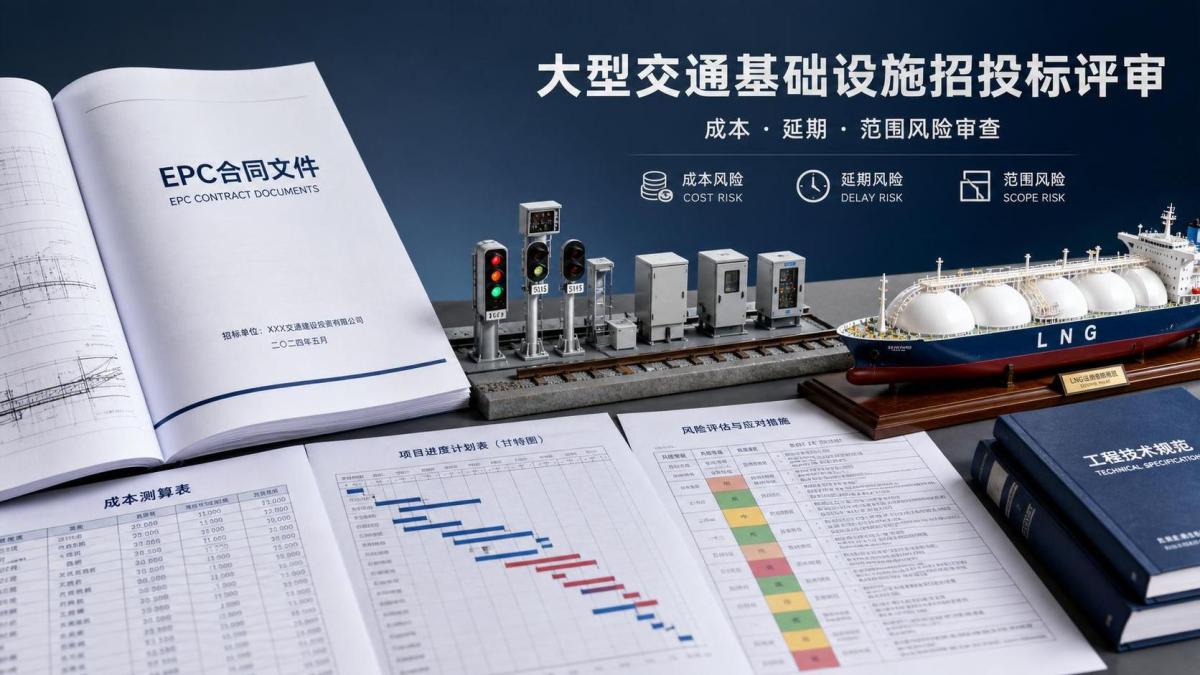
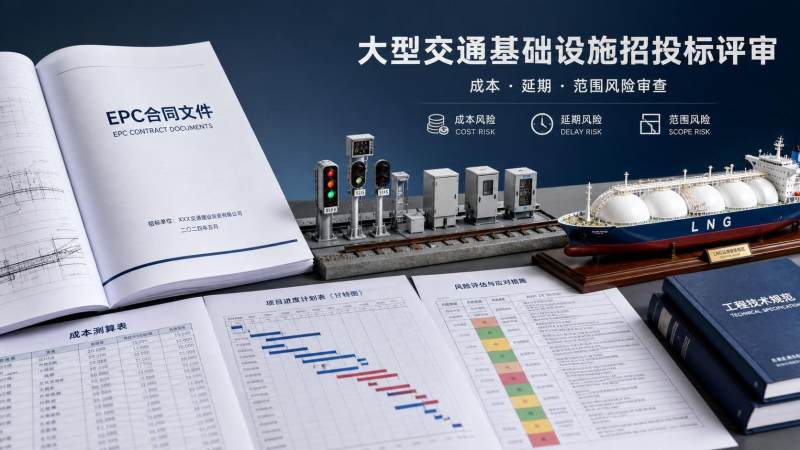
For major rail and maritime programs, early contractor review shapes project economics more than many teams expect.
That is especially true when EPC contractors carry broad design, procurement, integration, and delivery obligations.
A weak early review often hides risk inside interfaces, exclusions, assumptions, and vague acceptance language.
In transport sectors, those gaps can become expensive very quickly.
Complex railway signal systems, braking packages, LNG vessel components, and smart ship platforms rarely fail because of one part alone.
More often, problems start where scope ownership is unclear.
From recent market shifts, the clearer signal is this: buyers need sharper contract discipline before tender award.
That means checking how EPC contractors price risk, define milestones, allocate interfaces, and manage change requests.
Done early, this protects budgets, strengthens compliance, and reduces operational disruption across global supply chains.
Why EPC Contractors Create Early Procurement Risk
EPC contractors simplify accountability on paper, but they can also centralize uncertainty.
When the scope covers engineering, procurement, construction, commissioning, and systems integration, one unclear clause affects many downstream decisions.
This matters in rail and ocean projects with strict safety, certification, and interoperability requirements.
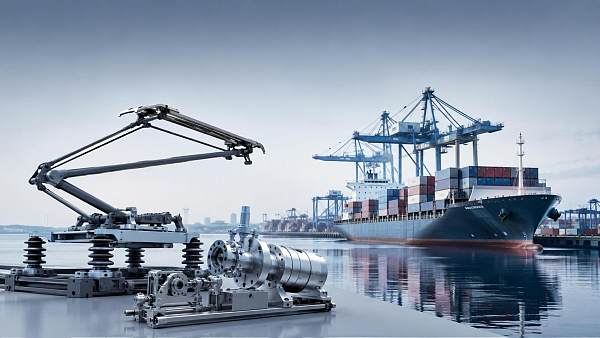
For example, a pantograph supplier may meet component specifications, yet network performance can still fail because interface assumptions were incomplete.
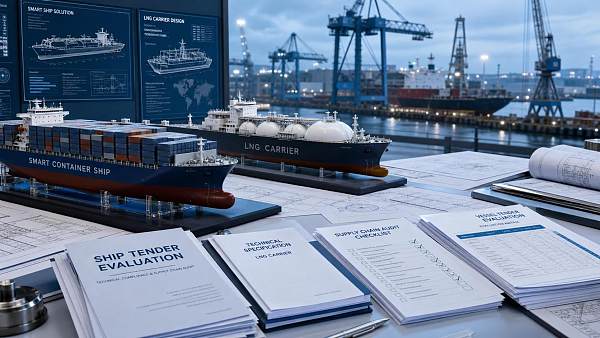
The same pattern appears in LNG carriers, where containment, insulation, and propulsion dependencies cross multiple technical boundaries.
In real procurement work, EPC contractors are not just vendors.
They are commercial architects of risk allocation.
That is why early review should focus less on headline price and more on cost exposure mechanisms.
Common early warning signals
- Broad exclusions hidden in appendices or technical notes.
- Unpriced assumptions linked to approvals, utilities, or site conditions.
- Milestones tied to third parties without realistic schedule buffers.
- Ambiguous performance tests or unclear final acceptance criteria.
- Change-order language favoring the contractor’s interpretation.
Cost Risks to Review Before Award
The first question is not whether EPC contractors are expensive.
The better question is where future cost claims are most likely to emerge.
A competitive bid can still become a high-cost contract if escalation triggers, variation rules, or rework liability remain vague.
This is even more relevant for imported equipment, long-lead control systems, and marine-grade fabrication packages.
Where hidden cost usually sits
- Interface redesign between owner-furnished and contractor-furnished equipment.
- Late compliance changes tied to local codes, SIL targets, or marine classification rules.
- Logistics disruption affecting critical imported modules or specialty materials.
- Commissioning extension caused by software tuning or integrated system failures.
- Spare parts, training, or documentation omitted from the original commercial baseline.
One practical way to assess EPC contractors is to build a cost-risk map before negotiation closes.
List each major package, its dependencies, and who pays when assumptions fail.
This simple exercise often reveals that the cheapest bidder carries the highest claim potential.
Cost review questions worth asking
- Which items are fixed price, and which depend on assumptions?
- What exchange rate, steel, fuel, or freight exposure remains open?
- Who owns redesign cost if interfaces change after detailed engineering?
- Are testing, certification, and authority approvals fully priced?
- What documentation proves that lifecycle support is included?
Delay Risks That Start Long Before Construction
Schedule risk often looks like a site problem, but it usually begins in planning logic.
Many EPC contractors present aggressive milestone charts that assume perfect approvals, stable supply, and immediate design decisions.
That may support bid competitiveness, yet it rarely reflects project reality.
For rail control and maritime equipment, the delay chain can be especially unforgiving.
One late interface document can block factory testing, shipment, installation, and final commissioning.
A more useful review checks schedule credibility instead of only promised completion dates.
Look at float ownership, approval durations, hold points, and dependency on single-source components.
This also means reviewing whether EPC contractors have realistic recovery plans for supply chain interruptions.
Delay drivers that deserve early review
- Long-lead electronics, traction parts, valves, and control cabinets.
- Third-party approvals from regulators, certifiers, or classification societies.
- Incomplete design freeze before procurement release.
- Insufficient installation windows on operating rail or port assets.
- Software integration dependencies across multiple vendors.
If liquidated damages exist, confirm they actually motivate performance.
Some EPC contractors cap delay exposure so low that the remedy has limited value.
That does not remove delay risk. It only transfers its commercial burden back to the buyer.
Scope Gaps That Turn Into Claims
Scope risk is where many EPC contractors quietly protect margin.
Not always through bad faith, but often through selective wording.
A phrase like “as required for operation” can seem complete, yet it may not define engineering depth, data formats, or integration duties.
In transport systems, that ambiguity creates expensive argument later.
This is common where signaling, braking, propulsion, navigation, and monitoring platforms exchange critical data.
Scope items frequently missed
- Temporary works, access systems, and installation aids.
- Interface drawings for owner systems and legacy assets.
- Cybersecurity hardening for connected control platforms.
- Data migration, software licenses, and update rights.
- Operator training, maintenance manuals, and digital twin records.
A reliable approach is to test scope by scenario, not by headline description.
Ask what happens if a legacy interface fails, if software must be retested, or if class approval requires a material substitution.
The answers show whether EPC contractors truly own functional delivery or only partial supply.
How to Evaluate EPC Contractors More Rigorously
A stronger procurement process does not need to be complicated.
It needs to be disciplined, comparable, and evidence-based.
The goal is to compare EPC contractors on real delivery strength, not polished presentations.
A practical review framework
For high-spec rail and maritime projects, technical credibility matters as much as commercial leverage.
A contractor familiar with signaling integrity, cryogenic constraints, ship automation, or traction performance will usually expose risks earlier.
That early visibility helps teams negotiate from facts, not assumptions.
Early Review Priorities That Protect Budget and Delivery
The strongest results usually come from a short list of early checks.
Keep the review focused, but do not keep it superficial.
- Validate every exclusion against operational needs and end-use performance.
- Map technical interfaces across suppliers, owner systems, and authorities.
- Stress-test milestone logic against realistic approvals and logistics timing.
- Define change control before detailed engineering begins.
- Link payment milestones to measurable deliverables, not vague progress claims.
- Confirm that EPC contractors carry responsibility through testing and acceptance.
In today’s transport environment, budgets face pressure from volatility, certification complexity, and integrated digital systems.
That makes early review of EPC contractors a commercial necessity, not a legal formality.
The practical next move is straightforward: review cost triggers, schedule assumptions, and scope boundaries before commitment hardens.
When those issues are clarified early, complex rail and maritime procurement decisions become far safer, far more predictable, and much easier to defend.
Recommended News
 Sep 29, 2026What drives traction systems price differences between rail projects?Traction systems price differences explained: compare duty cycles, voltage compatibility, integration, localization, and lifecycle costs for smarter rail procurement.
 Sep 26, 2026What to assess before selecting an electric traction system manufacturerChoose an electric traction system manufacturer with confidence. Explore key criteria for performance, reliability, safety, integration, energy efficiency, and lifecycle support.
 Sep 25, 2026When do full digitalization systems justify the investment?Full digitalization systems: discover when rail and maritime operators can turn connected data into safer operations, higher availability, and measurable ROI.
 Sep 23, 2026What drives automatic train control systems cost on rail projects?Automatic train control systems cost depends on integration, migration, safety testing, communications, and lifecycle support. Explore the key budget drivers for rail projects.
 Sep 21, 2026How to assess an ocean going vessel builder’s delivery riskAssess an ocean going vessel builder’s delivery risk with proven checks for schedules, capacity, design maturity, critical equipment, quality, and project controls.
 Sep 20, 2026What drives rail safety technology costs over a project lifecycle?Rail safety technology cost goes beyond equipment—explore lifecycle drivers from integration and safety assurance to cybersecurity, commissioning, and obsolescence.
 Sep 16, 2026What to verify before choosing an advanced ocean-going vessels supplierAdvanced ocean-going vessels supplier checklist: verify design authority, build quality, digital systems, delivery reliability, and lifecycle support before you buy.
 Sep 15, 2026What rail safety technology best reduces level-crossing risks in Southeast Asia?Rail safety technology Southeast Asia: discover how fail-safe signalling, barriers, obstacle detection and remote monitoring reduce level-crossing risks.
 Sep 14, 2026How exporters can reduce customs delays in global trade logisticsGlobal trade logistics for exporters: reduce customs delays with accurate data, clearance-ready documents, early filing, and proactive exception management.
 Sep 13, 2026When do global transportation network systems reduce delivery delays?Global transportation network systems reduce delivery delays by improving rail-port-vessel coordination, real-time visibility, and proactive decisions across complex land-sea supply chains.
 Sep 09, 2026When should you choose a rail and maritime manufacturer with dual-sector capability?Rail and maritime manufacturer guide: learn when dual-sector capability reduces integration risk, improves lifecycle support, and strengthens rail-to-port operations.
 Sep 08, 2026What to verify before selecting a railway signalling equipment supplierRailway signalling equipment supplier checklist: verify safety evidence, integration, cybersecurity, delivery capability, and lifecycle support before award.
 Sep 07, 2026How to size a traction power transformer for railway load demandTraction power transformer sizing guide: model railway load demand, peak duty, voltage regulation, harmonics, and contingency capacity for reliable service.
 Sep 07, 2026How do customization options for industrial connectors affect lead times?Customization options for industrial connectors can impact lead times, cost, and compliance. Learn how to specify smarter for rail and marine projects.
 Sep 05, 2026What information should an industrial sourcing guide include?Industrial sourcing information procurement guide: evaluate suppliers, compliance, lifecycle costs, interfaces, and lead times for smarter rail and maritime purchasing decisions.
 Sep 01, 2026How to find reliable maritime tender information before biddingMaritime tender information: learn how to verify sources, define bid-ready scopes, check qualifications, and reduce risk before submitting competitive marine bids.
 Aug 30, 2026How to select railway automation equipment for depots with phased upgradesRailway automation equipment for depots: learn how to plan phased upgrades that improve safety, throughput, integration, and lifecycle control.
 Aug 27, 2026How industrial sourcing intelligence pricing data supports budget approvalIndustrial sourcing intelligence pricing data helps teams benchmark scope, assess supplier risk, and build defensible budget approvals for complex rail and maritime assets.
 Aug 26, 2026When does a marine fuel efficiency solution make financial sense in the Middle East?Marine fuel efficiency solution Middle East: learn when retrofit savings, compliance value, and vessel data align to deliver credible ROI and smarter shipping investment decisions.
 Aug 24, 2026When does maritime automation for tankers deliver a real payback?Maritime automation for tankers delivers real payback when it cuts fuel use, reduces cargo risk, and improves uptime. See how owners can time investment for stronger ROI.
 Aug 23, 2026When do maritime logistics systems in the Middle East justify the costMaritime logistics systems Middle East: discover when rising delays, manual coordination, and poor visibility make system investment the smarter move for regional operators.
 Aug 22, 2026What drives vessel navigation system price for commercial fleetsVessel navigation system price depends on integration, compliance, automation, and support—not just hardware. Learn what drives fleet costs and compare quotes with confidence.
 Aug 21, 2026How to assess shipbuilding maritime tenders before biddingShipbuilding maritime tenders require more than price checks. Learn how to assess technical scope, compliance, supply chain, and commercial risk before bidding with confidence.
 Aug 20, 2026When does working with an ocean-going vessels distributor reduce supply risk?Ocean-going vessels distributor: learn when this partner cuts supply risk through stronger compliance, faster response, and better sourcing resilience in complex maritime procurement.