



Search News
Industry Portal
Popular Tags
Compliance-Aware Product Selection: How to Compare Risk and Lifecycle Cost

Author
Time
Click Count
Compliance-aware product selection has become a practical discipline, not a box-ticking exercise. In rail systems, smart shipping, and LNG transport, one weak compliance assumption can distort total cost, delay commissioning, and erode asset value long after contract award.
That is why risk and lifecycle cost now need to be compared together. A lower bid may still carry higher exposure if certification, maintainability, software assurance, or documentation readiness are weak. In high-consequence sectors, the real question is whether a solution remains operable, auditable, and defensible over time.
Why Compliance Has Moved to the Center of Product Evaluation
Across global transport infrastructure, regulatory pressure is becoming more layered. Safety, cybersecurity, emissions, traceability, localization rules, and tender qualification standards increasingly overlap in one procurement decision.

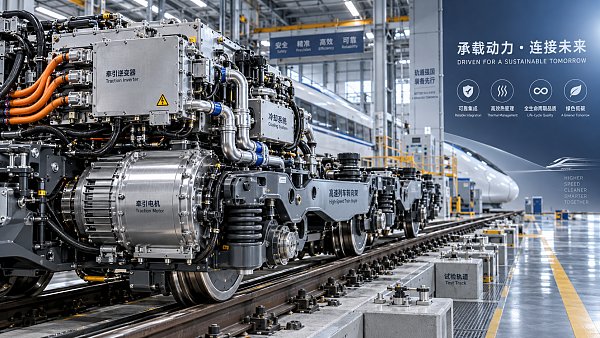
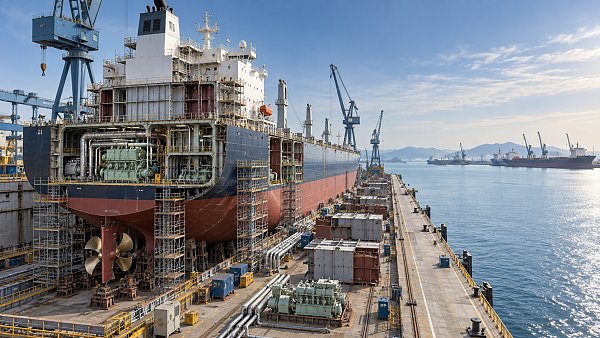
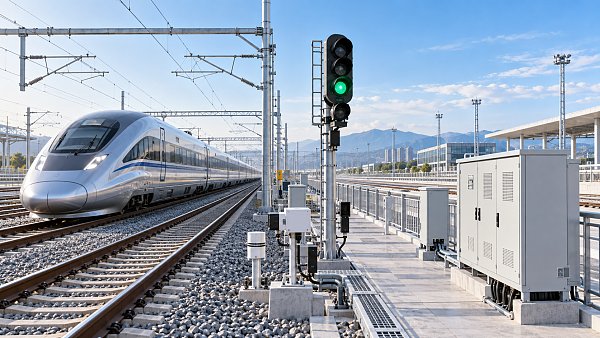
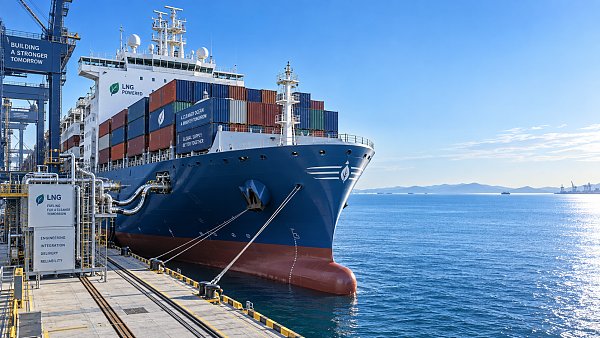
This is especially visible in GTOT’s core fields. Railway signal control systems must prove safety integrity and interface discipline. Pantographs and braking systems face reliability and performance scrutiny under extreme operating conditions. Smart container ships and LNG carriers add class, environmental, digital, and fuel-system compliance layers.
In this environment, compliance-aware product selection means evaluating whether a product can meet legal, technical, contractual, and operational obligations without creating hidden cost later.
What Compliance-Aware Product Selection Really Means
The term goes beyond checking certificates in a bid package. It asks how compliance is built into design, validation, manufacturing controls, service support, and change management.
A product may be technically impressive yet still carry procurement risk. Common gaps include incomplete homologation evidence, unclear software revision control, limited spare parts traceability, or dependence on one restricted sub-supplier.
Seen this way, compliance-aware product selection is a method for testing resilience. It measures whether the solution can survive audits, cross-border deployment, lifecycle upgrades, and incident review without major disruption.
Compliance Is Not the Same as Initial Qualification
Initial approval matters, but sustained compliance matters more. A component approved today may become costly tomorrow if firmware updates trigger recertification, if documentation is weak, or if service teams cannot support field modifications consistently.
That distinction is critical in long-life assets. Rail and marine platforms often operate for decades, so procurement decisions must anticipate the full regulatory life of the equipment.
How Risk and Lifecycle Cost Interact
Lifecycle cost is often treated as maintenance plus replacement. In reality, compliance failures introduce several additional cost channels that are easy to underestimate during tender comparison.
This is where compliance-aware product selection becomes financially useful. It helps compare not only purchase price, but also the probability and cost of operational friction.
The Decision Areas That Matter Most
Not every procurement category carries the same compliance profile. Still, several decision areas repeatedly shape outcome quality across rail and maritime systems.
Safety-Critical Architecture
For interlocking, braking, and traction-related systems, safety evidence must be reviewed as part of commercial comparison. SIL claims, fail-safe logic, validation coverage, and interface control should be tested against the intended operating environment.
Environmental and Performance Envelope
Pantographs, braking components, shipboard systems, and cryogenic equipment often perform well on paper but differ sharply under vibration, salt exposure, wind load, thermal cycling, or low-temperature stress.
Compliance-aware product selection should therefore compare validated operating envelopes, not only nominal specifications.
Digital and Cyber Readiness
Smart vessels and connected rail assets increasingly depend on software governance. Remote diagnostics, route optimization, LTE-M integration, and data interfaces improve performance, but they also widen audit scope.
Cybersecurity evidence, patch governance, and secure configuration management now influence lifecycle cost as much as hardware durability.
A Practical Comparison Framework
A useful evaluation model combines technical fit, compliance exposure, and cost over time. It does not need to be complicated, but it does need discipline.
- Map mandatory standards, certifications, and client-specific tender conditions before shortlisting.
- Separate confirmed compliance evidence from supplier declarations and future commitments.
- Score lifecycle support, including spares, field service, engineering response, and obsolescence planning.
- Test integration burden with existing platforms, control logic, and digital systems.
- Quantify downside scenarios, such as delayed acceptance, recertification, or forced redesign.
This framework makes compliance-aware product selection more objective. It also creates a record that can support internal approval, tender defense, and post-award governance.
Ask for Evidence That Survives Review
Strong suppliers usually provide more than brochures. They can show configuration baselines, test protocols, service histories, deviation logs, materials traceability, and change-control discipline.
That evidence becomes valuable when comparing advanced rail components or marine systems entering restricted tenders. GTOT’s intelligence approach is relevant here because market access often depends on how well technical credibility is documented, not merely claimed.
Typical Scenarios Where the Wrong Choice Looks Cheap
Several patterns appear repeatedly across transport equipment sourcing.
- A braking subsystem has an attractive unit price, but wear behavior under real thermal loads increases maintenance intervals and pad replacement cost.
- A smart ship control package offers advanced optimization, but integration with class documentation and cybersecurity controls is immature.
- A signalling component passes basic qualification, yet software updates require repeated validation that slows network deployment.
- An LNG-related subsystem meets headline specifications, but membrane stress support data and cryogenic service references are thin.
In each case, lifecycle cost rises because compliance confidence was overstated during selection.
How to Build Better Judgement Over Time
The strongest procurement decisions usually come from better information structure. Market intelligence, technical trend tracking, and tender lessons should feed back into the next sourcing cycle.
For sectors like those covered by GTOT, this means watching more than price movement. It means following railway automation standards, traction reliability trends, composite brake material behavior, vessel digitalization, cryogenic containment performance, and shifting shipbuilding cycles.
Compliance-aware product selection improves when commercial teams understand the engineering context behind a claim. It also improves when technical teams understand the tender and asset-value consequences of weak compliance posture.
Where to Focus Next
A sound next step is to review current supplier comparison tools and check whether compliance risk is being measured as rigorously as price and delivery. If not, the cost model is incomplete.
From there, refine the shortlist criteria, define evidence thresholds, and build scenario-based lifecycle comparisons for critical categories. That approach makes compliance-aware product selection more than a policy phrase. It turns it into a repeatable decision standard for complex rail and maritime assets.
Recommended News
 Sep 29, 2026What drives traction systems price differences between rail projects?Traction systems price differences explained: compare duty cycles, voltage compatibility, integration, localization, and lifecycle costs for smarter rail procurement.
 Sep 26, 2026What to assess before selecting an electric traction system manufacturerChoose an electric traction system manufacturer with confidence. Explore key criteria for performance, reliability, safety, integration, energy efficiency, and lifecycle support.
 Sep 25, 2026When do full digitalization systems justify the investment?Full digitalization systems: discover when rail and maritime operators can turn connected data into safer operations, higher availability, and measurable ROI.
 Sep 23, 2026What drives automatic train control systems cost on rail projects?Automatic train control systems cost depends on integration, migration, safety testing, communications, and lifecycle support. Explore the key budget drivers for rail projects.
 Sep 21, 2026How to assess an ocean going vessel builder’s delivery riskAssess an ocean going vessel builder’s delivery risk with proven checks for schedules, capacity, design maturity, critical equipment, quality, and project controls.
 Sep 20, 2026What drives rail safety technology costs over a project lifecycle?Rail safety technology cost goes beyond equipment—explore lifecycle drivers from integration and safety assurance to cybersecurity, commissioning, and obsolescence.
 Sep 16, 2026What to verify before choosing an advanced ocean-going vessels supplierAdvanced ocean-going vessels supplier checklist: verify design authority, build quality, digital systems, delivery reliability, and lifecycle support before you buy.
 Sep 15, 2026What rail safety technology best reduces level-crossing risks in Southeast Asia?Rail safety technology Southeast Asia: discover how fail-safe signalling, barriers, obstacle detection and remote monitoring reduce level-crossing risks.
 Sep 14, 2026How exporters can reduce customs delays in global trade logisticsGlobal trade logistics for exporters: reduce customs delays with accurate data, clearance-ready documents, early filing, and proactive exception management.
 Sep 13, 2026When do global transportation network systems reduce delivery delays?Global transportation network systems reduce delivery delays by improving rail-port-vessel coordination, real-time visibility, and proactive decisions across complex land-sea supply chains.
 Sep 09, 2026When should you choose a rail and maritime manufacturer with dual-sector capability?Rail and maritime manufacturer guide: learn when dual-sector capability reduces integration risk, improves lifecycle support, and strengthens rail-to-port operations.
 Sep 08, 2026What to verify before selecting a railway signalling equipment supplierRailway signalling equipment supplier checklist: verify safety evidence, integration, cybersecurity, delivery capability, and lifecycle support before award.
 Sep 07, 2026How to size a traction power transformer for railway load demandTraction power transformer sizing guide: model railway load demand, peak duty, voltage regulation, harmonics, and contingency capacity for reliable service.
 Sep 07, 2026How do customization options for industrial connectors affect lead times?Customization options for industrial connectors can impact lead times, cost, and compliance. Learn how to specify smarter for rail and marine projects.
 Sep 05, 2026What information should an industrial sourcing guide include?Industrial sourcing information procurement guide: evaluate suppliers, compliance, lifecycle costs, interfaces, and lead times for smarter rail and maritime purchasing decisions.
 Sep 01, 2026How to find reliable maritime tender information before biddingMaritime tender information: learn how to verify sources, define bid-ready scopes, check qualifications, and reduce risk before submitting competitive marine bids.
 Aug 30, 2026How to select railway automation equipment for depots with phased upgradesRailway automation equipment for depots: learn how to plan phased upgrades that improve safety, throughput, integration, and lifecycle control.
 Aug 27, 2026How industrial sourcing intelligence pricing data supports budget approvalIndustrial sourcing intelligence pricing data helps teams benchmark scope, assess supplier risk, and build defensible budget approvals for complex rail and maritime assets.
 Aug 26, 2026When does a marine fuel efficiency solution make financial sense in the Middle East?Marine fuel efficiency solution Middle East: learn when retrofit savings, compliance value, and vessel data align to deliver credible ROI and smarter shipping investment decisions.
 Aug 24, 2026When does maritime automation for tankers deliver a real payback?Maritime automation for tankers delivers real payback when it cuts fuel use, reduces cargo risk, and improves uptime. See how owners can time investment for stronger ROI.
 Aug 23, 2026When do maritime logistics systems in the Middle East justify the costMaritime logistics systems Middle East: discover when rising delays, manual coordination, and poor visibility make system investment the smarter move for regional operators.
 Aug 22, 2026What drives vessel navigation system price for commercial fleetsVessel navigation system price depends on integration, compliance, automation, and support—not just hardware. Learn what drives fleet costs and compare quotes with confidence.
 Aug 21, 2026How to assess shipbuilding maritime tenders before biddingShipbuilding maritime tenders require more than price checks. Learn how to assess technical scope, compliance, supply chain, and commercial risk before bidding with confidence.
 Aug 20, 2026When does working with an ocean-going vessels distributor reduce supply risk?Ocean-going vessels distributor: learn when this partner cuts supply risk through stronger compliance, faster response, and better sourcing resilience in complex maritime procurement.