



Search News
Industry Portal
Popular Tags
How Global Supplier Solution References Help Compare Delivery Risk and Fit
Author
Time
Click Count
How Global Supplier Solution References Help Compare Delivery Risk and Fit
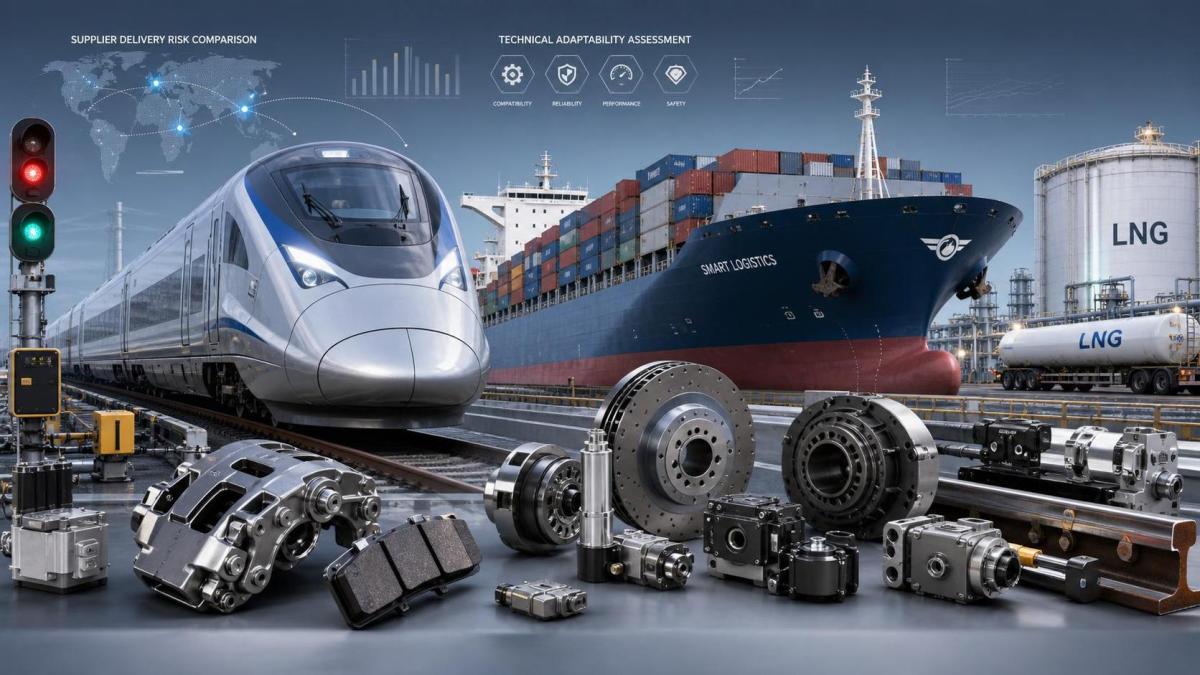
For business evaluators comparing complex rail and maritime suppliers, global supplier solution references offer a practical way to assess delivery risk, technical fit, and long-term reliability.
In sectors where signal control, traction, braking, smart vessels, and LNG systems demand precision, reference cases turn vendor claims into evidence.
That matters even more when project timelines are tight, compliance requirements are strict, and a poor supplier match can delay operations for months.
A strong set of global supplier solution references does not just show where a supplier sold before.
It shows how that supplier performed under similar technical demands, regional rules, integration pressure, and delivery constraints.
In practical procurement work, this creates a faster path from broad market scanning to a defensible shortlist.
Why references matter more in rail and maritime procurement
Complex transport equipment rarely succeeds on product specs alone.
Delivery performance depends on engineering discipline, interface management, certification readiness, after-sales capability, and stability across long project cycles.
That is why global supplier solution references carry real weight in supplier evaluation.
A railway signal control supplier may look strong on paper, but references reveal whether it has handled SIL4 expectations in dense operating environments.
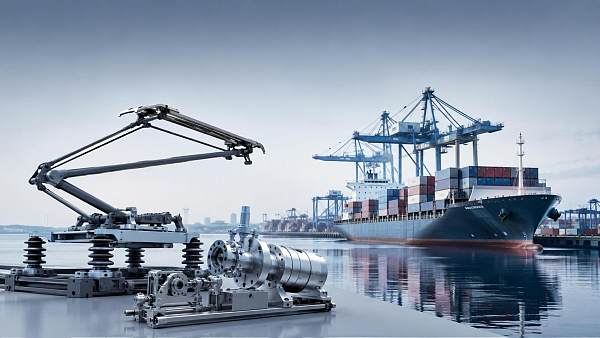
A pantograph maker may claim high-speed performance, yet reference projects show whether stable current collection was maintained above 350 km/h.
The same logic applies to braking systems, smart container ships, and LNG carriers.
In each case, fit depends on more than capability.
It depends on whether the supplier has already delivered in comparable conditions, with comparable complexity, and with acceptable operational results.
What global supplier solution references actually help you compare
The best references support side-by-side comparison, not just background comfort.
They make supplier differences visible in areas that often stay hidden during early sales discussions.
1. Delivery risk
Global supplier solution references help verify schedule realism.
Look for actual delivery dates, factory acceptance timing, commissioning speed, and delay causes across similar projects.
If a supplier repeatedly delivered late during multi-country projects, that pattern matters.
2. Technical fit
References show whether a solution worked within similar operating temperatures, vibration ranges, signaling architectures, propulsion systems, or port environments.
This helps separate true fit from broad but vague capability claims.
3. Integration readiness
Many failures happen at interfaces.
Global supplier solution references often show how well a vendor coordinated with rolling stock builders, EPCs, shipyards, software teams, and third-party certifiers.
4. Service resilience
A credible supplier reference should indicate what happened after handover.
Were spare parts available quickly? Were software updates controlled well? Did field teams respond fast enough?
How to read reference cases without taking them at face value
Not all references are equally useful.
Some are polished marketing examples. Others are decision-grade evidence.
The difference usually comes down to relevance, depth, and verifiability.
- Match the application. A metro signaling case is not enough for high-speed rail control.
- Match the scale. A pilot shipboard system does not equal a fleet-wide deployment.
- Match the region. Compliance success in one jurisdiction may not transfer cleanly to another.
- Match the integration burden. Standalone supply is easier than system-level coordination.
- Check operating results. Uptime, fault rates, maintenance intervals, and retrofit records matter.
This is where global supplier solution references become especially valuable.
When read carefully, they help turn comparison from a brochure exercise into a structured risk review.
Reference signals that often predict future delivery problems
From recent market changes, the stronger signal is not only whether a supplier won projects.
It is whether those projects were delivered smoothly under pressure.
Several warning signs tend to appear early in weak global supplier solution references.
- References stay generic and avoid naming operators, shipyards, routes, or system boundaries.
- Project dates are unclear, making performance freshness impossible to judge.
- Case studies emphasize installation, but say little about commissioning or long-term operation.
- Regional references exist, but none involve similar standards or tender complexity.
- The supplier relies heavily on partner credentials rather than its own execution track record.
In actual evaluation work, these details save time.
They help eliminate attractive but risky options before technical clarification consumes too many internal resources.
Using references across GTOT focus sectors
The value of global supplier solution references becomes clearer when applied to specific transport domains.
Railway signal control systems
Focus on automation density, fail-safe design history, interface testing, and operational incident records.
References should show proven control reliability, not only lab compliance.
Pantographs
Look for performance in high crosswind areas, icing conditions, tunnel transitions, and sustained high-speed service.
Reference depth here directly supports technical fit decisions.
Rail braking systems
Useful references include stopping consistency, wear rates, thermal fade performance, and maintenance response in heavy-duty cycles.
Smart container ships
Here, global supplier solution references should show software stability, route optimization results, ship-to-shore data quality, and cyber management maturity.
LNG carriers
Review cryogenic containment behavior, insulation durability, dual-fuel system coordination, and records from comparable voyage profiles.
This also means references should connect engineering data with real operating context.
A practical scoring method for supplier comparison
A simple scoring structure helps keep global supplier solution references consistent across teams.
This kind of framework keeps discussions grounded.
It also makes internal approval easier because the role of global supplier solution references becomes visible and measurable.
How to use references to build a stronger shortlist
A better shortlist usually comes from better filtering, not more supplier meetings.
Start by asking each supplier for three to five references closest to your target use case.
Then test those references against the same criteria.
- Define the must-match technical conditions before reviewing supplier material.
- Separate delivery evidence from sales narrative.
- Ask where the solution underperformed, not only where it succeeded.
- Check if the reference is recent enough to reflect current manufacturing and service capacity.
- Use global supplier solution references to compare risk exposure, not just technical breadth.
This approach works especially well in sectors tracked by GTOT, where performance, safety, and cross-border execution all shape procurement outcomes.
Conclusion
Global supplier solution references are one of the clearest tools for comparing delivery risk and solution fit in advanced transport procurement.
They help reveal whether a supplier can do the job, deliver the job, and support the job after commissioning.
For rail control systems, traction components, braking platforms, smart vessels, and LNG assets, that distinction is critical.
Used well, global supplier solution references reduce uncertainty, sharpen comparison, and improve shortlist quality before final negotiation begins.
The practical next step is simple: build your evaluation around comparable references first, then let technical clarification and pricing follow that evidence.
Recommended News
 Sep 29, 2026What drives traction systems price differences between rail projects?Traction systems price differences explained: compare duty cycles, voltage compatibility, integration, localization, and lifecycle costs for smarter rail procurement.
 Sep 26, 2026What to assess before selecting an electric traction system manufacturerChoose an electric traction system manufacturer with confidence. Explore key criteria for performance, reliability, safety, integration, energy efficiency, and lifecycle support.
 Sep 25, 2026When do full digitalization systems justify the investment?Full digitalization systems: discover when rail and maritime operators can turn connected data into safer operations, higher availability, and measurable ROI.
 Sep 23, 2026What drives automatic train control systems cost on rail projects?Automatic train control systems cost depends on integration, migration, safety testing, communications, and lifecycle support. Explore the key budget drivers for rail projects.
 Sep 21, 2026How to assess an ocean going vessel builder’s delivery riskAssess an ocean going vessel builder’s delivery risk with proven checks for schedules, capacity, design maturity, critical equipment, quality, and project controls.
 Sep 20, 2026What drives rail safety technology costs over a project lifecycle?Rail safety technology cost goes beyond equipment—explore lifecycle drivers from integration and safety assurance to cybersecurity, commissioning, and obsolescence.
 Sep 16, 2026What to verify before choosing an advanced ocean-going vessels supplierAdvanced ocean-going vessels supplier checklist: verify design authority, build quality, digital systems, delivery reliability, and lifecycle support before you buy.
 Sep 15, 2026What rail safety technology best reduces level-crossing risks in Southeast Asia?Rail safety technology Southeast Asia: discover how fail-safe signalling, barriers, obstacle detection and remote monitoring reduce level-crossing risks.
 Sep 14, 2026How exporters can reduce customs delays in global trade logisticsGlobal trade logistics for exporters: reduce customs delays with accurate data, clearance-ready documents, early filing, and proactive exception management.
 Sep 13, 2026When do global transportation network systems reduce delivery delays?Global transportation network systems reduce delivery delays by improving rail-port-vessel coordination, real-time visibility, and proactive decisions across complex land-sea supply chains.
 Sep 09, 2026When should you choose a rail and maritime manufacturer with dual-sector capability?Rail and maritime manufacturer guide: learn when dual-sector capability reduces integration risk, improves lifecycle support, and strengthens rail-to-port operations.
 Sep 08, 2026What to verify before selecting a railway signalling equipment supplierRailway signalling equipment supplier checklist: verify safety evidence, integration, cybersecurity, delivery capability, and lifecycle support before award.
 Sep 07, 2026How to size a traction power transformer for railway load demandTraction power transformer sizing guide: model railway load demand, peak duty, voltage regulation, harmonics, and contingency capacity for reliable service.
 Sep 07, 2026How do customization options for industrial connectors affect lead times?Customization options for industrial connectors can impact lead times, cost, and compliance. Learn how to specify smarter for rail and marine projects.
 Sep 05, 2026What information should an industrial sourcing guide include?Industrial sourcing information procurement guide: evaluate suppliers, compliance, lifecycle costs, interfaces, and lead times for smarter rail and maritime purchasing decisions.
 Sep 01, 2026How to find reliable maritime tender information before biddingMaritime tender information: learn how to verify sources, define bid-ready scopes, check qualifications, and reduce risk before submitting competitive marine bids.
 Aug 30, 2026How to select railway automation equipment for depots with phased upgradesRailway automation equipment for depots: learn how to plan phased upgrades that improve safety, throughput, integration, and lifecycle control.
 Aug 27, 2026How industrial sourcing intelligence pricing data supports budget approvalIndustrial sourcing intelligence pricing data helps teams benchmark scope, assess supplier risk, and build defensible budget approvals for complex rail and maritime assets.
 Aug 26, 2026When does a marine fuel efficiency solution make financial sense in the Middle East?Marine fuel efficiency solution Middle East: learn when retrofit savings, compliance value, and vessel data align to deliver credible ROI and smarter shipping investment decisions.
 Aug 24, 2026When does maritime automation for tankers deliver a real payback?Maritime automation for tankers delivers real payback when it cuts fuel use, reduces cargo risk, and improves uptime. See how owners can time investment for stronger ROI.
 Aug 23, 2026When do maritime logistics systems in the Middle East justify the costMaritime logistics systems Middle East: discover when rising delays, manual coordination, and poor visibility make system investment the smarter move for regional operators.
 Aug 22, 2026What drives vessel navigation system price for commercial fleetsVessel navigation system price depends on integration, compliance, automation, and support—not just hardware. Learn what drives fleet costs and compare quotes with confidence.
 Aug 21, 2026How to assess shipbuilding maritime tenders before biddingShipbuilding maritime tenders require more than price checks. Learn how to assess technical scope, compliance, supply chain, and commercial risk before bidding with confidence.
 Aug 20, 2026When does working with an ocean-going vessels distributor reduce supply risk?Ocean-going vessels distributor: learn when this partner cuts supply risk through stronger compliance, faster response, and better sourcing resilience in complex maritime procurement.