



Search News
Industry Portal
Popular Tags
Land-Sea Interconnection Solutions: Key Cost Drivers for Port-Rail Projects
Author
Time
Click Count
Why do land-sea interconnection solutions attract such close cost scrutiny?
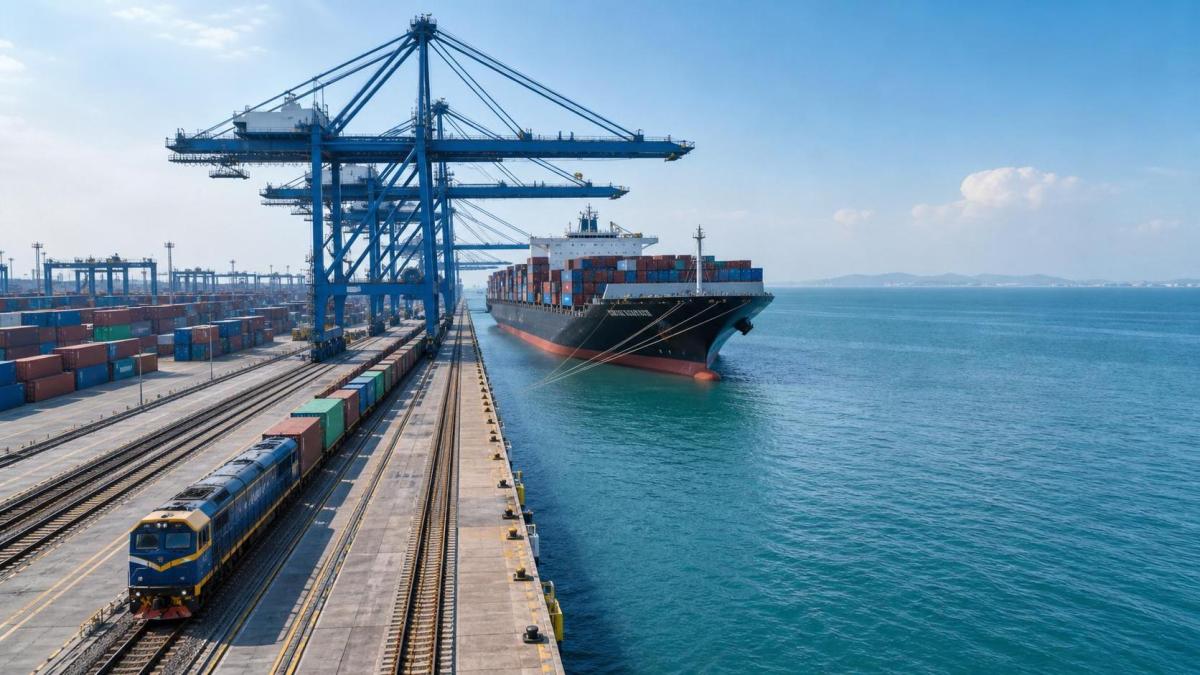
Port-rail schemes look impressive on paper, but budgets rarely fail on headline equipment alone.
The real pressure comes from interfaces, operating constraints, and the price of getting rail and maritime systems to behave as one network.
That is why land-sea interconnection solutions matter in procurement reviews. They shape throughput, resilience, and the predictability of long-term operating cost.
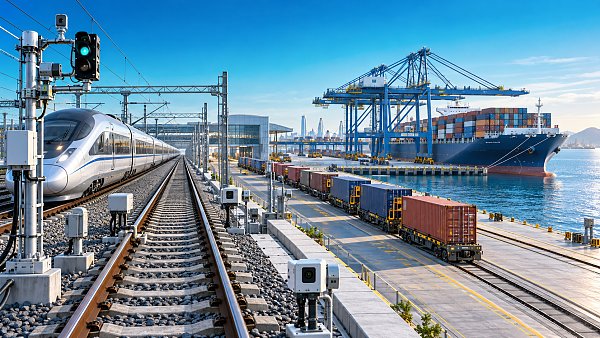
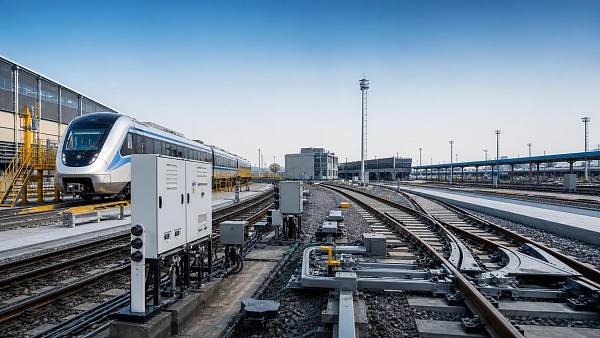
In practical terms, a port-rail project is not only about track and cranes.
It often includes signalling logic, traction power interfaces, terminal automation, berth access, data visibility, and vessel-to-yard coordination.
If one layer is under-scoped, the total investment can drift through redesign, delays, or weak asset utilization.
This explains why market observers such as GTOT focus on both railway control systems and advanced ocean-going vessels.
The cost story sits at that intersection, where safety standards, digital control, and global trade flows meet.
What actually drives the cost of port-rail land-sea interconnection solutions?
Most buyers expect civil works to dominate. In reality, five cost drivers usually decide whether the business case stays healthy.
- System integration depth, especially between port operating software, signalling, and dispatch platforms.
- Capacity design assumptions, including train length, berth productivity, and peak-hour stacking needs.
- Safety and compliance requirements, such as SIL4 signalling, hazardous cargo rules, and marine control redundancy.
- Energy and traction architecture, where electrification, pantograph performance, and braking needs affect lifecycle expense.
- Automation scope, from gate systems to smart vessel coordination and yard equipment telemetry.
The hidden issue is not any single line item. It is the cost of misalignment between them.
For example, an efficient quay can still underperform if rail dispatch windows are poorly synchronized.
Likewise, a strong signalling package may not deliver value if vessel arrivals remain volatile and yard logic stays manual.
Well-scoped land-sea interconnection solutions reduce that mismatch by treating rail, terminal, and marine assets as one operating chain.
A quick cost-check table before approval
A compact review table helps separate strategic spending from avoidable overruns.
Which expenses are underestimated most often?
The most underestimated expense is usually integration engineering, not hardware.
Teams may budget for track, cranes, and software licenses, yet miss the cost of making them interoperable under real operating pressure.
Commissioning is another common blind spot. A port-rail corridor cannot be tested like an isolated railway siding.
It must be validated across dispatching rules, berth timing, yard movements, and contingency scenarios.
Training also grows faster than expected when automation levels rise.
Operators need to understand exception handling, not only normal workflows.
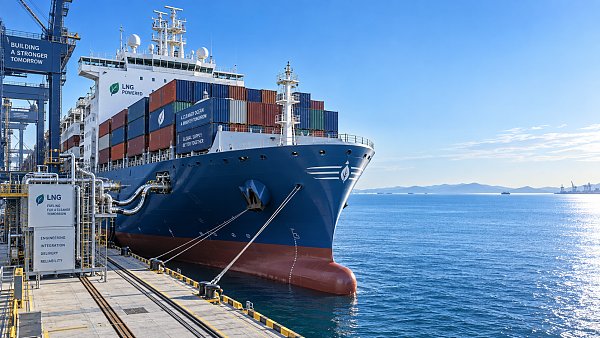
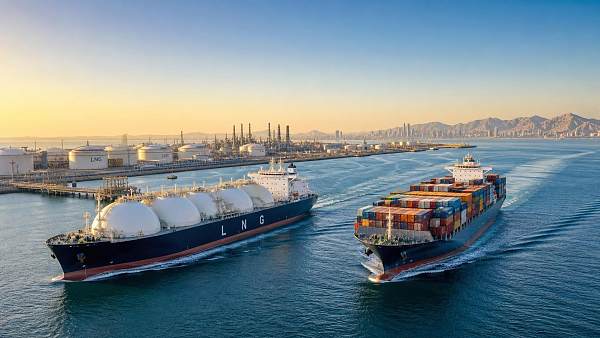
This is especially relevant when projects include smart container ship links or LNG-related terminal interfaces.
Those environments demand stronger data discipline, higher safety awareness, and more rigorous maintenance planning.
GTOT’s coverage of signalling, braking, pantographs, and advanced vessels highlights a useful lesson.
Specialized components create value only when the surrounding control logic is equally mature.
How should competing land-sea interconnection solutions be compared?
A lower bid price is not the same as a lower project cost.
The more reliable comparison is to test each option against a shared operational model.
That model should include peak train arrivals, vessel bunching, maintenance windows, and recovery after disruption.
When reviewing land-sea interconnection solutions, four questions usually separate robust proposals from attractive but fragile ones.
- Can the design scale without replacing core control architecture?
- Does the supplier define clear responsibility for each interface?
- How much of the software stack is configurable rather than custom-built?
- What evidence supports uptime, recovery speed, and maintenance availability?
This is where lifecycle thinking becomes practical rather than theoretical.
A system with stronger interoperability may cost more upfront, yet save more through fewer schedule conflicts and less manual intervention.
In many ports, the winning design is not the most automated one.
It is the one that matches actual cargo patterns and future expansion logic.
Where do the biggest financial risks usually hide?
The largest risks usually hide in assumptions that look reasonable during planning.
One example is forecasting steady vessel arrivals in markets that are visibly volatile.
Another is assuming rail control requirements will stay simple even when hazardous cargo or mixed traffic grows later.
A third is treating decarbonization as a future add-on rather than a present design variable.
Electrification upgrades, energy monitoring, and cleaner vessel interfaces can become expensive if left outside the first budget cycle.
There is also contract risk. Multi-vendor projects often fail when interface accountability is shared too vaguely.
If a signalling delay affects crane productivity, or a terminal system blocks train release, who owns the loss?
That answer should be visible before approval, not after a claim appears.
Well-framed land-sea interconnection solutions reduce this risk by defining data ownership, testing sequence, and acceptance criteria with precision.
What should be confirmed before moving from concept to approval?
A strong approval file usually answers operational questions before it debates price.
That sounds simple, but it changes the quality of cost control.
The most useful confirmation points are often these:
- Define target throughput by train, vessel, and yard hour rather than annual averages alone.
- Map every major interface between rail control, marine scheduling, and terminal execution systems.
- Test whether safety, redundancy, and compliance requirements are already priced.
- Model spare parts, maintenance access, and training cost over the full asset life.
- Check whether future digitalization or decarbonization upgrades need reserved capacity today.
This is also where external intelligence becomes useful.
GTOT’s land-and-sea perspective is relevant because procurement decisions now cross technical boundaries.
Rail signalling standards, traction reliability, smart vessel trends, and supply chain shifts increasingly affect the same investment case.
In other words, good land-sea interconnection solutions are not defined by engineering ambition alone.
They are defined by whether cost, risk, and operational value stay aligned over time.
A final check before the numbers go forward
The best approvals usually come from asking sharper questions, not from requesting thicker proposals.
For port-rail investments, land-sea interconnection solutions should be judged on interface clarity, lifecycle support, scalability, and disruption recovery.
If those points are clear, cost discussions become more grounded and less reactive.
The next practical step is to build a comparison sheet around throughput assumptions, integration scope, safety obligations, and long-term maintenance exposure.
That approach makes it easier to compare land-sea interconnection solutions on real asset value, not just bid appearance.
Recommended News
 Sep 29, 2026What drives traction systems price differences between rail projects?Traction systems price differences explained: compare duty cycles, voltage compatibility, integration, localization, and lifecycle costs for smarter rail procurement.
 Sep 26, 2026What to assess before selecting an electric traction system manufacturerChoose an electric traction system manufacturer with confidence. Explore key criteria for performance, reliability, safety, integration, energy efficiency, and lifecycle support.
 Sep 25, 2026When do full digitalization systems justify the investment?Full digitalization systems: discover when rail and maritime operators can turn connected data into safer operations, higher availability, and measurable ROI.
 Sep 23, 2026What drives automatic train control systems cost on rail projects?Automatic train control systems cost depends on integration, migration, safety testing, communications, and lifecycle support. Explore the key budget drivers for rail projects.
 Sep 21, 2026How to assess an ocean going vessel builder’s delivery riskAssess an ocean going vessel builder’s delivery risk with proven checks for schedules, capacity, design maturity, critical equipment, quality, and project controls.
 Sep 20, 2026What drives rail safety technology costs over a project lifecycle?Rail safety technology cost goes beyond equipment—explore lifecycle drivers from integration and safety assurance to cybersecurity, commissioning, and obsolescence.
 Sep 16, 2026What to verify before choosing an advanced ocean-going vessels supplierAdvanced ocean-going vessels supplier checklist: verify design authority, build quality, digital systems, delivery reliability, and lifecycle support before you buy.
 Sep 15, 2026What rail safety technology best reduces level-crossing risks in Southeast Asia?Rail safety technology Southeast Asia: discover how fail-safe signalling, barriers, obstacle detection and remote monitoring reduce level-crossing risks.
 Sep 14, 2026How exporters can reduce customs delays in global trade logisticsGlobal trade logistics for exporters: reduce customs delays with accurate data, clearance-ready documents, early filing, and proactive exception management.
 Sep 13, 2026When do global transportation network systems reduce delivery delays?Global transportation network systems reduce delivery delays by improving rail-port-vessel coordination, real-time visibility, and proactive decisions across complex land-sea supply chains.
 Sep 09, 2026When should you choose a rail and maritime manufacturer with dual-sector capability?Rail and maritime manufacturer guide: learn when dual-sector capability reduces integration risk, improves lifecycle support, and strengthens rail-to-port operations.
 Sep 08, 2026What to verify before selecting a railway signalling equipment supplierRailway signalling equipment supplier checklist: verify safety evidence, integration, cybersecurity, delivery capability, and lifecycle support before award.
 Sep 07, 2026How to size a traction power transformer for railway load demandTraction power transformer sizing guide: model railway load demand, peak duty, voltage regulation, harmonics, and contingency capacity for reliable service.
 Sep 07, 2026How do customization options for industrial connectors affect lead times?Customization options for industrial connectors can impact lead times, cost, and compliance. Learn how to specify smarter for rail and marine projects.
 Sep 05, 2026What information should an industrial sourcing guide include?Industrial sourcing information procurement guide: evaluate suppliers, compliance, lifecycle costs, interfaces, and lead times for smarter rail and maritime purchasing decisions.
 Sep 01, 2026How to find reliable maritime tender information before biddingMaritime tender information: learn how to verify sources, define bid-ready scopes, check qualifications, and reduce risk before submitting competitive marine bids.
 Aug 30, 2026How to select railway automation equipment for depots with phased upgradesRailway automation equipment for depots: learn how to plan phased upgrades that improve safety, throughput, integration, and lifecycle control.
 Aug 27, 2026How industrial sourcing intelligence pricing data supports budget approvalIndustrial sourcing intelligence pricing data helps teams benchmark scope, assess supplier risk, and build defensible budget approvals for complex rail and maritime assets.
 Aug 26, 2026When does a marine fuel efficiency solution make financial sense in the Middle East?Marine fuel efficiency solution Middle East: learn when retrofit savings, compliance value, and vessel data align to deliver credible ROI and smarter shipping investment decisions.
 Aug 24, 2026When does maritime automation for tankers deliver a real payback?Maritime automation for tankers delivers real payback when it cuts fuel use, reduces cargo risk, and improves uptime. See how owners can time investment for stronger ROI.
 Aug 23, 2026When do maritime logistics systems in the Middle East justify the costMaritime logistics systems Middle East: discover when rising delays, manual coordination, and poor visibility make system investment the smarter move for regional operators.
 Aug 22, 2026What drives vessel navigation system price for commercial fleetsVessel navigation system price depends on integration, compliance, automation, and support—not just hardware. Learn what drives fleet costs and compare quotes with confidence.
 Aug 21, 2026How to assess shipbuilding maritime tenders before biddingShipbuilding maritime tenders require more than price checks. Learn how to assess technical scope, compliance, supply chain, and commercial risk before bidding with confidence.
 Aug 20, 2026When does working with an ocean-going vessels distributor reduce supply risk?Ocean-going vessels distributor: learn when this partner cuts supply risk through stronger compliance, faster response, and better sourcing resilience in complex maritime procurement.