



Search News
Industry Portal
Popular Tags
How to Use an Industrial Category Reference to Shortlist Suppliers
Author
Time
Click Count
For procurement teams handling technically demanding rail and maritime purchases, an industrial category reference is not just a directory. It is a practical screening framework that helps you move from a broad market scan to a shortlist that can withstand internal review, technical validation, and supplier risk checks.
When buyers search for guidance on using an industrial category reference, their core intent is usually transactional and evaluative. They want to identify relevant suppliers faster, remove weak candidates earlier, and build a shortlist that fits product scope, compliance needs, and delivery realities.
What matters most to this audience is not a generic definition. Procurement teams want to know which filters to apply first, how to compare suppliers across categories, what evidence to request, and how to avoid spending weeks on vendors that were never a realistic fit.
The most helpful approach is therefore practical. Instead of treating the reference as a static list, buyers should use it as a structured decision tool that connects category fit, technical capability, certification status, manufacturing depth, and commercial reliability.
Why an Industrial Category Reference Matters in Complex Procurement
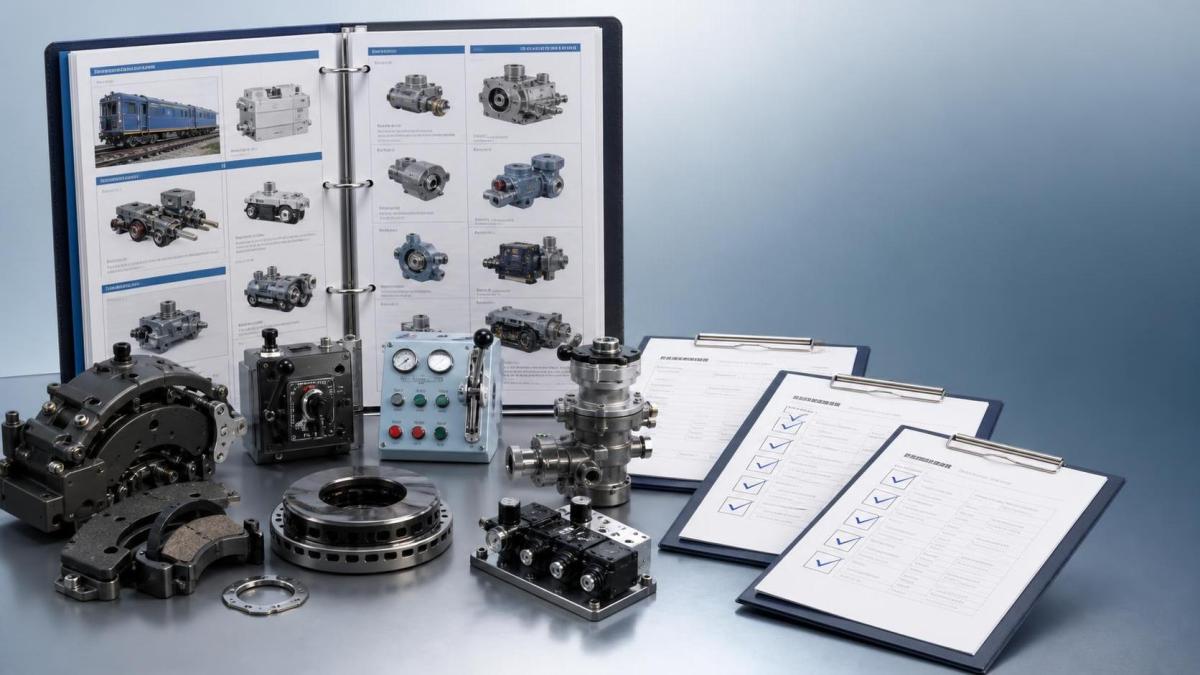
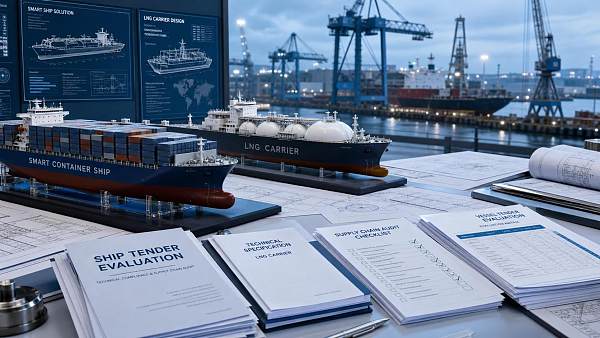
In high-spec sectors such as railway control systems, braking components, pantographs, smart container ships, and LNG carriers, supplier selection is rarely straightforward. A vendor may appear strong on paper yet lack the exact approvals, engineering range, or production discipline your project requires.
An industrial category reference helps reduce that ambiguity. It groups suppliers by product domain, application area, capability level, and in some cases by standards or end-use industry, making it easier to compare like with like instead of reviewing every vendor from scratch.
For procurement professionals, that matters because the first risk in sourcing is often classification error. If you start with the wrong universe of suppliers, every later step becomes inefficient, from request for information to technical evaluation, audits, and commercial negotiation.
This is especially relevant in rail and maritime purchasing, where product categories are highly specialized. A company experienced in general electrical assemblies may not be suitable for SIL4 signalling subsystems, just as a fabricator for conventional vessels may not meet LNG containment or cryogenic handling requirements.
Using a reliable reference early in the process creates discipline. It helps your team align internal stakeholders around the actual market structure, reduces subjective supplier additions, and gives engineers, quality managers, and sourcing leads a common basis for discussion.
What Procurement Teams Are Really Trying to Achieve
Most buyers do not simply want a long supplier list. They want a defensible shortlist that balances technical compatibility, compliance confidence, supply continuity, and commercial feasibility. That is the real use case behind the keyword industrial category reference.
In practice, procurement teams are usually trying to answer five questions. Which suppliers actually serve this product category. Which of them meet mandatory technical requirements. Which have proven delivery capability. Which create unacceptable qualification risk. Which deserve deeper engagement.
That means the value of the reference depends on how well it supports elimination as much as discovery. A good shortlist process should not just help you find candidates. It should help you reject irrelevant or weak-fit suppliers quickly and with documented reasoning.
For complex industrial buying, this also supports internal governance. When the sourcing decision affects safety, uptime, regulatory exposure, or project schedule, buyers need evidence that the shortlist came from a disciplined method rather than personal preference or incomplete market knowledge.
How to Use an Industrial Category Reference Step by Step
The most effective method is to use the reference in stages. Start broad enough to capture the real market, then narrow using filters that reflect your technical and operational priorities. This prevents premature exclusion while still keeping the process efficient.
Step one is to define the category precisely. Do not start with a vague label such as rail parts or marine equipment. Identify the exact product family, critical function, application environment, and integration context that the supplier must support.
For example, pantographs for high-speed rail should not be grouped with low-speed urban current collection devices without further segmentation. Likewise, smart container ship systems may require different supplier criteria than traditional propulsion, hull, or navigation packages.
Step two is to separate mandatory requirements from preference-based criteria. Mandatory filters may include certification, safety level, material performance, class approval, testing capability, export compliance, or prior supply to comparable platforms and operators.
Preference criteria may include geographic proximity, multilingual support, digital integration readiness, shorter lead times, stronger after-sales service, or broader customization capacity. Keeping these categories separate prevents a useful supplier from being rejected too early for noncritical reasons.
Step three is to map suppliers from the industrial category reference into clear tiers. A simple structure works well: direct fit, possible fit pending validation, and low-probability fit. This allows your team to prioritize outreach and avoid treating every listed company equally.
Step four is to request evidence against the category criteria. That may include product data sheets, certification records, reference projects, manufacturing process details, test reports, quality system documentation, and customer application history within the relevant segment.
Step five is to score suppliers using a weighted matrix. Procurement teams often make the mistake of relying on narrative impressions. A weighted approach creates transparency and helps reconcile different stakeholder priorities, especially when engineering and sourcing teams evaluate suppliers differently.
Which Filters Should Come First When Building a Shortlist
The right starting filters are the ones that remove the largest risk earliest. In industrial procurement, category fit should come before price discussion. A low-cost supplier outside the true category scope is rarely a good sourcing option once qualification effort is considered.
The first filter is product and application relevance. Ask whether the supplier genuinely operates in the same functional category, not just an adjacent one. This is essential for components where safety, environmental conditions, or system integration requirements are unforgiving.
The second filter is standards and compliance. In rail, this could involve safety integrity, fire and smoke, interoperability, or operator approval expectations. In maritime sectors, it may include class society requirements, cryogenic performance, emissions rules, and vessel-specific compliance frameworks.
The third filter is manufacturing and engineering capability. Buyers should confirm whether the supplier actually designs, tests, and manufactures the product, or merely trades it. In critical categories, that difference strongly affects responsiveness, root-cause analysis, and lifecycle support.
The fourth filter is referenceability. Suppliers should be able to demonstrate delivery into similar projects, not just general industrial experience. Comparable references help buyers judge whether claimed capability has been proven under realistic operating conditions.
The fifth filter is supply risk. Evaluate plant location, capacity utilization, dependence on single-source materials, financial stability, geopolitical exposure, and after-sales support structure. A technically qualified supplier can still be a weak shortlist candidate if continuity risk is high.
How to Compare Suppliers Across Rail and Maritime Categories
One challenge with any industrial category reference is that supplier data can look inconsistent. Some vendors publish detailed engineering credentials, while others offer limited public information. Procurement teams need a common comparison framework to avoid bias toward better marketers.
A useful model is to compare suppliers across four dimensions: technical fit, proof of execution, operational resilience, and commercial alignment. These dimensions work across both railway and maritime sourcing, even though the underlying evidence may differ by category.
Technical fit asks whether the supplier’s product architecture, testing envelope, material selection, and integration capability match your use case. This is the area where engineering input is indispensable and should be embedded early in the shortlist process.
Proof of execution focuses on real-world references, certification history, and documented performance in similar environments. For a braking system supplier, this may mean stopping performance and thermal behavior evidence. For LNG applications, it may mean cryogenic reliability and containment support data.
Operational resilience covers manufacturing maturity, quality systems, traceability, service response, and supply continuity. In strategic transport sectors, procurement is not only buying a component. It is buying confidence that the supplier can support the asset through demanding operating cycles.
Commercial alignment includes lead time realism, total cost structure, contract flexibility, localization support, and willingness to engage in technical clarification. The cheapest quote from a weakly aligned supplier often creates the highest hidden cost over the project lifecycle.
Common Mistakes When Using an Industrial Category Reference
A frequent mistake is treating all listed suppliers as equally relevant. Category references are starting points, not endorsements. Procurement teams still need to verify actual fit, because classification alone does not prove capability depth or current operational readiness.
Another mistake is using overly broad categories. When categories are too loose, the shortlist becomes crowded with adjacent suppliers that increase workload without improving competition. Precision at the category-definition stage saves time later and improves the quality of supplier conversations.
Some teams also overvalue certifications without checking scope. A supplier may hold a recognized certification, but it may not cover the exact product family, process, or operating context you need. Certification should support qualification, not replace technical verification.
There is also a tendency to delay stakeholder alignment. If engineering, quality, and procurement do not agree early on what makes a supplier shortlist-worthy, the process becomes political. The industrial category reference works best when everyone uses the same filtering logic from the start.
Finally, buyers sometimes ignore future requirements. A supplier that fits today’s specification may not fit tomorrow’s roadmap. In sectors moving toward digitalization, automation, decarbonization, and higher safety demands, shortlist decisions should account for forward capability as well as current delivery.
What a Strong Shortlist Should Look Like
A strong shortlist is not the longest possible list. It is a focused group of suppliers that can realistically satisfy technical requirements, pass qualification review, and compete on meaningful commercial terms. In many cases, three to five well-vetted candidates are enough.
Each shortlisted supplier should have a documented reason for inclusion. That reason may be category leadership, strong reference projects, certified compliance, manufacturing depth, or strategic fit with your operating region and service model. Clear inclusion logic improves downstream decision quality.
The shortlist should also preserve optionality. Avoid filling it with suppliers that all share the same risk profile, geography, or supply chain dependency. A better approach is to combine strong incumbents with credible alternatives that expand resilience and negotiation leverage.
For procurement leaders in rail and maritime environments, the goal is not only to place an order. It is to build a supply base capable of supporting safety, uptime, and growth across long asset lifecycles. That makes shortlist quality far more important than shortlist volume.
Conclusion
An industrial category reference is most valuable when procurement teams use it as a structured screening tool rather than a passive directory. Done well, it helps buyers identify true category-fit suppliers, remove weak candidates early, and create a shortlist backed by evidence.
For sectors such as railway signalling, pantographs, braking systems, smart container ships, and LNG carriers, this disciplined approach is especially important. Technical complexity, compliance demands, and supply risk leave little room for casual supplier selection.
The practical takeaway is simple. Define the category precisely, apply the right filters in the right order, validate claims with evidence, and score suppliers against clear criteria. That is how an industrial category reference becomes a faster path to better sourcing decisions.
When used this way, the reference does more than organize the market. It gives procurement teams a defensible method for building supplier shortlists that are aligned with performance needs, qualification standards, and long-term operational reliability.
Recommended News
 Sep 29, 2026What drives traction systems price differences between rail projects?Traction systems price differences explained: compare duty cycles, voltage compatibility, integration, localization, and lifecycle costs for smarter rail procurement.
 Sep 26, 2026What to assess before selecting an electric traction system manufacturerChoose an electric traction system manufacturer with confidence. Explore key criteria for performance, reliability, safety, integration, energy efficiency, and lifecycle support.
 Sep 25, 2026When do full digitalization systems justify the investment?Full digitalization systems: discover when rail and maritime operators can turn connected data into safer operations, higher availability, and measurable ROI.
 Sep 23, 2026What drives automatic train control systems cost on rail projects?Automatic train control systems cost depends on integration, migration, safety testing, communications, and lifecycle support. Explore the key budget drivers for rail projects.
 Sep 21, 2026How to assess an ocean going vessel builder’s delivery riskAssess an ocean going vessel builder’s delivery risk with proven checks for schedules, capacity, design maturity, critical equipment, quality, and project controls.
 Sep 20, 2026What drives rail safety technology costs over a project lifecycle?Rail safety technology cost goes beyond equipment—explore lifecycle drivers from integration and safety assurance to cybersecurity, commissioning, and obsolescence.
 Sep 16, 2026What to verify before choosing an advanced ocean-going vessels supplierAdvanced ocean-going vessels supplier checklist: verify design authority, build quality, digital systems, delivery reliability, and lifecycle support before you buy.
 Sep 15, 2026What rail safety technology best reduces level-crossing risks in Southeast Asia?Rail safety technology Southeast Asia: discover how fail-safe signalling, barriers, obstacle detection and remote monitoring reduce level-crossing risks.
 Sep 14, 2026How exporters can reduce customs delays in global trade logisticsGlobal trade logistics for exporters: reduce customs delays with accurate data, clearance-ready documents, early filing, and proactive exception management.
 Sep 13, 2026When do global transportation network systems reduce delivery delays?Global transportation network systems reduce delivery delays by improving rail-port-vessel coordination, real-time visibility, and proactive decisions across complex land-sea supply chains.
 Sep 09, 2026When should you choose a rail and maritime manufacturer with dual-sector capability?Rail and maritime manufacturer guide: learn when dual-sector capability reduces integration risk, improves lifecycle support, and strengthens rail-to-port operations.
 Sep 08, 2026What to verify before selecting a railway signalling equipment supplierRailway signalling equipment supplier checklist: verify safety evidence, integration, cybersecurity, delivery capability, and lifecycle support before award.
 Sep 07, 2026How to size a traction power transformer for railway load demandTraction power transformer sizing guide: model railway load demand, peak duty, voltage regulation, harmonics, and contingency capacity for reliable service.
 Sep 07, 2026How do customization options for industrial connectors affect lead times?Customization options for industrial connectors can impact lead times, cost, and compliance. Learn how to specify smarter for rail and marine projects.
 Sep 05, 2026What information should an industrial sourcing guide include?Industrial sourcing information procurement guide: evaluate suppliers, compliance, lifecycle costs, interfaces, and lead times for smarter rail and maritime purchasing decisions.
 Sep 01, 2026How to find reliable maritime tender information before biddingMaritime tender information: learn how to verify sources, define bid-ready scopes, check qualifications, and reduce risk before submitting competitive marine bids.
 Aug 30, 2026How to select railway automation equipment for depots with phased upgradesRailway automation equipment for depots: learn how to plan phased upgrades that improve safety, throughput, integration, and lifecycle control.
 Aug 27, 2026How industrial sourcing intelligence pricing data supports budget approvalIndustrial sourcing intelligence pricing data helps teams benchmark scope, assess supplier risk, and build defensible budget approvals for complex rail and maritime assets.
 Aug 26, 2026When does a marine fuel efficiency solution make financial sense in the Middle East?Marine fuel efficiency solution Middle East: learn when retrofit savings, compliance value, and vessel data align to deliver credible ROI and smarter shipping investment decisions.
 Aug 24, 2026When does maritime automation for tankers deliver a real payback?Maritime automation for tankers delivers real payback when it cuts fuel use, reduces cargo risk, and improves uptime. See how owners can time investment for stronger ROI.
 Aug 23, 2026When do maritime logistics systems in the Middle East justify the costMaritime logistics systems Middle East: discover when rising delays, manual coordination, and poor visibility make system investment the smarter move for regional operators.
 Aug 22, 2026What drives vessel navigation system price for commercial fleetsVessel navigation system price depends on integration, compliance, automation, and support—not just hardware. Learn what drives fleet costs and compare quotes with confidence.
 Aug 21, 2026How to assess shipbuilding maritime tenders before biddingShipbuilding maritime tenders require more than price checks. Learn how to assess technical scope, compliance, supply chain, and commercial risk before bidding with confidence.
 Aug 20, 2026When does working with an ocean-going vessels distributor reduce supply risk?Ocean-going vessels distributor: learn when this partner cuts supply risk through stronger compliance, faster response, and better sourcing resilience in complex maritime procurement.