



Search News
Industry Portal
Popular Tags
Application Guidance for Industrial Products in Automation: How to Match Products to Load, Duty Cycle, and Control Requirements
Author
Time
Click Count
For technical evaluators working across rail, marine, and other automation-intensive sectors, effective application guidance for industrial products in automation starts with accurate matching. Product selection must align with load characteristics, duty cycle, environmental stress, and control architecture to avoid underperformance, premature wear, or safety risks. This article outlines a practical evaluation framework to help you compare components with greater precision and support reliable, high-value automation decisions.
What Is the Real Selection Problem in Industrial Automation?
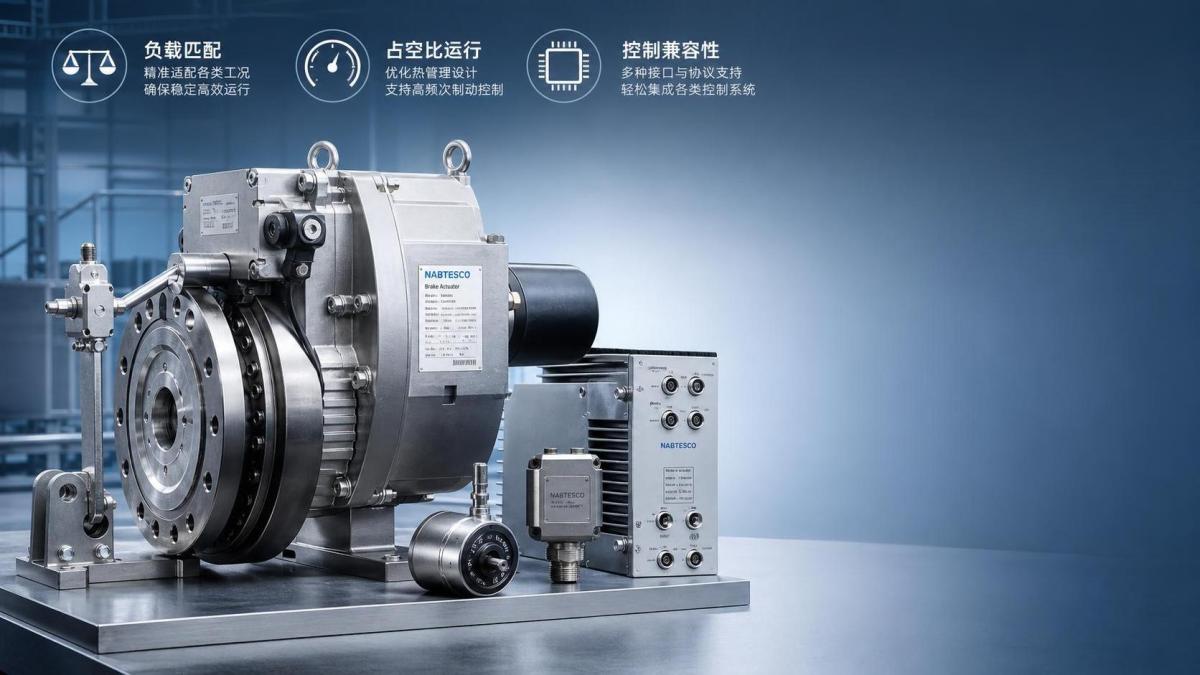
Technical evaluators rarely struggle because too few products exist. The real problem is that many products appear acceptable on paper, yet fail when load, runtime, or control conditions become specific.
That is why application guidance for industrial products in automation cannot stop at catalog ratings. A component may meet nominal specifications and still underdeliver in stability, lifecycle cost, safety margin, or control response.
In transport-grade sectors such as rail systems, braking assemblies, shipboard automation, and propulsion support equipment, a mismatch often creates consequences beyond maintenance inconvenience. It can affect asset uptime, certification confidence, and operational risk.
The first practical conclusion is simple: selection should begin with operating reality, not with product families. Evaluators need to define actual duty, stress, and control expectations before comparing vendors or architectures.
Start with the Load Profile, Not the Product Datasheet
Load is the first filter because it determines whether the product is fundamentally suitable. Yet many evaluations still use only peak load or nameplate load, which is rarely enough.
Technical assessment should separate static load, dynamic load, shock load, cyclic variation, and overload events. These conditions influence sizing, thermal behavior, fatigue life, and control stability in very different ways.
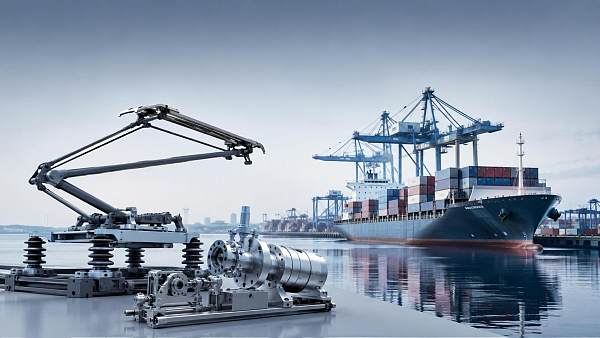
For example, a rail braking actuator or pantograph subassembly may experience repeated vibration and transient force spikes rather than a smooth, continuous load. A marine automation module may face wave-induced oscillation and long-duration stress.
When the load profile is unclear, evaluators should ask four basic questions. What is the normal operating load, what is the peak frequency, how fast does the load change, and what abnormal events are credible?
These questions help distinguish a product that is merely strong enough from one that is structurally and functionally appropriate. In industrial automation, that difference often decides long-term reliability.
How Duty Cycle Changes the Right Product Choice
Duty cycle is often underestimated because products with similar rated output may behave very differently under different run-rest patterns. In practice, time under load matters almost as much as load magnitude.
A motor, actuator, relay, converter, sensor, or controller selected for intermittent use may degrade quickly in near-continuous service. Thermal accumulation, lubrication breakdown, and switching wear can emerge long before nominal life expectations.
Technical evaluators should map duty cycle using operating duration, start-stop frequency, ramp behavior, idle intervals, and seasonal or route-based variation. This is especially important where equipment usage changes by geography or fleet assignment.
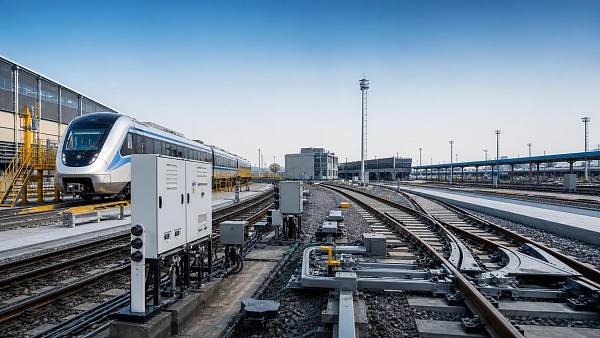
For instance, railway signaling modules in dense urban networks may cycle far more frequently than similar units in lower-density regional systems. Likewise, marine auxiliary automation may face long, uninterrupted voyages with limited maintenance access.
Strong application guidance for industrial products in automation therefore connects rated duty class to actual use intensity. Without that step, lifecycle estimates remain theoretical and procurement comparisons become misleading.
Environmental Stress Is Not a Secondary Variable
After load and duty cycle, environment is usually the next reason products underperform. Temperature, humidity, salt exposure, conductive dust, vibration, electromagnetic interference, and pressure variation all reshape field behavior.
In railway and ocean-going applications, environmental stress is particularly severe because performance must remain stable across extended operating windows. Components are not merely installed; they are repeatedly challenged by changing external conditions.
A control cabinet component that performs well in a clean indoor test setup may behave differently near traction equipment, coastal air, or enclosed marine machinery spaces. Material stability, sealing quality, and insulation strategy become decisive.
Evaluators should therefore review derating curves, ingress protection, corrosion resistance, vibration class, EMC tolerance, and thermal management assumptions. These factors deserve the same attention as output ratings and footprint compatibility.
The key judgement is whether the product was designed for the real environment or only adapted to it. A product that needs extensive protective compensation may carry hidden integration and maintenance cost.
Control Requirements Often Decide Whether a Product Truly Fits
Even when mechanical and environmental fit look acceptable, control mismatch can still undermine the application. This is common in complex automation systems where timing, feedback quality, and communication behavior affect the whole asset.
Technical evaluators should verify response time, positioning accuracy, repeatability, fault logic, communication protocol support, diagnostic depth, and fail-safe behavior. These are not optional extras in high-consequence automation environments.
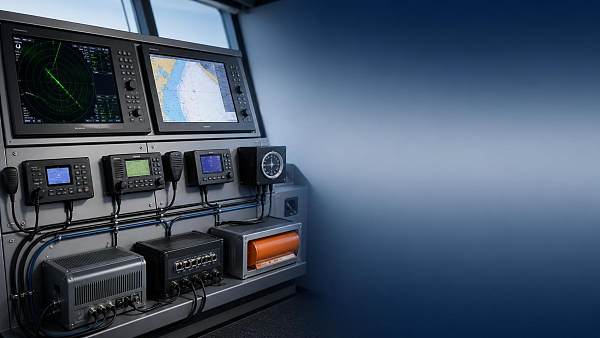
In railway signaling and braking systems, for example, deterministic control and validated fault handling are central to safety assurance. In smart vessels, automation components must cooperate across distributed monitoring and supervisory layers.
Products that cannot integrate cleanly into the target control architecture usually create extra engineering work. Gateway layers, custom logic, or signal conversion may solve compatibility issues, but they also increase validation burden.
Good application guidance for industrial products in automation should therefore connect the component not only to the machine, but also to the control philosophy. That includes command structure, data visibility, redundancy, and recovery behavior.
A Practical Evaluation Framework for Technical Review Teams
To compare products consistently, review teams need a structured method rather than informal discussion. A practical framework should score suitability across load fit, duty fit, environmental fit, control fit, and serviceability.
Start by defining hard acceptance criteria. These include required load margins, duty class, environmental certifications, protocol compatibility, safety level expectations, and allowable maintenance intervals.
Then define comparison criteria for products that pass the minimum threshold. These may include energy efficiency, diagnostic capability, ease of commissioning, spare parts availability, lifecycle data quality, and field support responsiveness.
A weighted matrix is useful when multiple stakeholders are involved, especially in procurement projects spanning engineering, operations, and compliance functions. It reduces bias toward initial price or familiar brands.
However, the matrix only works if input assumptions are credible. The underlying operating profile must come from actual use cases, not generic templates copied from unrelated projects.
Questions Evaluators Should Ask Suppliers Before Approval
Supplier conversations are often too general. Strong evaluations depend on pointed technical questions that reveal whether the vendor understands the application or is only promoting a broad product line.
Ask how the product performs under the exact duty cycle you expect, not under standard laboratory conditions. Request evidence for overload tolerance, thermal stability, and degradation behavior across operating extremes.
Ask what control systems the product commonly integrates with and whether deterministic response, redundancy logic, or safety functions have been proven in comparable deployments. Field references matter when the environment is demanding.
Ask how diagnostics are exposed to operators and maintenance teams. In modern automation, visibility into warnings, drift, wear indicators, and fault history can influence both uptime and total cost of ownership.
Finally, ask what assumptions sit behind the supplier's service life claims. If those assumptions do not match your actual operating profile, the headline lifecycle number has limited decision value.
Why Lowest Purchase Cost Is Often the Wrong Decision Signal
Technical evaluators are often asked to support cost-conscious procurement, but the cheapest option can become the most expensive once integration effort, downtime risk, and premature replacement are included.
A lower-cost component may require more shielding, cooling, programming adaptation, inspection frequency, or spare inventory. These hidden burdens rarely appear in first-pass quotations, yet they materially shape project economics.
In sectors such as rail transit and marine systems, the financial impact of service interruption is high. A modest upfront saving can disappear quickly if reliability margins are thin or troubleshooting becomes complex.
This does not mean premium products are automatically better. It means evaluators should frame value in terms of application fit, supportability, and risk-adjusted lifecycle performance rather than purchase price alone.
That approach gives procurement teams a defensible basis for approval, especially in tenders where technical credibility matters as much as commercial competitiveness.
Where Mismatch Risks Are Highest in Transport-Grade Automation
Some applications carry unusually high sensitivity to selection errors. These deserve deeper scrutiny because a seemingly minor mismatch can propagate through the wider system.
Railway signal control components demand strict alignment with safety logic, communications integrity, and operating redundancy. Pantograph-related systems require tolerance for vibration, speed-related aerodynamic effects, and sustained electrical consistency.
Braking automation introduces another layer of complexity because timing, thermal behavior, and fail-safe response directly affect stopping performance. In these cases, component suitability is inseparable from operational assurance.
On the maritime side, smart container ships and LNG carriers combine harsh environments with long operational cycles and high integration density. Control devices, sensors, actuators, and power interfaces must remain dependable far from maintenance hubs.
For technical evaluators in these sectors, application guidance for industrial products in automation should always be scenario-specific. Broad industrial suitability is not enough where transport safety and continuity are central.
How to Turn Product Selection into a Stronger Technical Decision
The most effective evaluators do not treat product selection as a catalog exercise. They translate operating conditions into technical decision criteria and then test products against that reality.
That means documenting load behavior clearly, mapping real duty cycle, accounting for environmental stress, confirming control compatibility, and challenging unsupported lifecycle claims. Each step reduces uncertainty before procurement and integration begin.
It also improves communication across engineering, sourcing, and operations teams. When the rationale is explicit, approval decisions become easier to defend and post-installation surprises become less frequent.
For organizations operating across rail, marine, and other automation-heavy environments, this discipline creates more than better component choices. It builds stronger technical credibility in projects where reliability, safety, and continuity carry strategic weight.
In the end, the core principle is straightforward: the right product is not the one with the broadest specification sheet, but the one that best matches the real application. That is the foundation of reliable automation performance.
Recommended News
 Sep 29, 2026What drives traction systems price differences between rail projects?Traction systems price differences explained: compare duty cycles, voltage compatibility, integration, localization, and lifecycle costs for smarter rail procurement.
 Sep 26, 2026What to assess before selecting an electric traction system manufacturerChoose an electric traction system manufacturer with confidence. Explore key criteria for performance, reliability, safety, integration, energy efficiency, and lifecycle support.
 Sep 25, 2026When do full digitalization systems justify the investment?Full digitalization systems: discover when rail and maritime operators can turn connected data into safer operations, higher availability, and measurable ROI.
 Sep 23, 2026What drives automatic train control systems cost on rail projects?Automatic train control systems cost depends on integration, migration, safety testing, communications, and lifecycle support. Explore the key budget drivers for rail projects.
 Sep 21, 2026How to assess an ocean going vessel builder’s delivery riskAssess an ocean going vessel builder’s delivery risk with proven checks for schedules, capacity, design maturity, critical equipment, quality, and project controls.
 Sep 20, 2026What drives rail safety technology costs over a project lifecycle?Rail safety technology cost goes beyond equipment—explore lifecycle drivers from integration and safety assurance to cybersecurity, commissioning, and obsolescence.
 Sep 16, 2026What to verify before choosing an advanced ocean-going vessels supplierAdvanced ocean-going vessels supplier checklist: verify design authority, build quality, digital systems, delivery reliability, and lifecycle support before you buy.
 Sep 15, 2026What rail safety technology best reduces level-crossing risks in Southeast Asia?Rail safety technology Southeast Asia: discover how fail-safe signalling, barriers, obstacle detection and remote monitoring reduce level-crossing risks.
 Sep 14, 2026How exporters can reduce customs delays in global trade logisticsGlobal trade logistics for exporters: reduce customs delays with accurate data, clearance-ready documents, early filing, and proactive exception management.
 Sep 13, 2026When do global transportation network systems reduce delivery delays?Global transportation network systems reduce delivery delays by improving rail-port-vessel coordination, real-time visibility, and proactive decisions across complex land-sea supply chains.
 Sep 09, 2026When should you choose a rail and maritime manufacturer with dual-sector capability?Rail and maritime manufacturer guide: learn when dual-sector capability reduces integration risk, improves lifecycle support, and strengthens rail-to-port operations.
 Sep 08, 2026What to verify before selecting a railway signalling equipment supplierRailway signalling equipment supplier checklist: verify safety evidence, integration, cybersecurity, delivery capability, and lifecycle support before award.
 Sep 07, 2026How to size a traction power transformer for railway load demandTraction power transformer sizing guide: model railway load demand, peak duty, voltage regulation, harmonics, and contingency capacity for reliable service.
 Sep 07, 2026How do customization options for industrial connectors affect lead times?Customization options for industrial connectors can impact lead times, cost, and compliance. Learn how to specify smarter for rail and marine projects.
 Sep 05, 2026What information should an industrial sourcing guide include?Industrial sourcing information procurement guide: evaluate suppliers, compliance, lifecycle costs, interfaces, and lead times for smarter rail and maritime purchasing decisions.
 Sep 01, 2026How to find reliable maritime tender information before biddingMaritime tender information: learn how to verify sources, define bid-ready scopes, check qualifications, and reduce risk before submitting competitive marine bids.
 Aug 30, 2026How to select railway automation equipment for depots with phased upgradesRailway automation equipment for depots: learn how to plan phased upgrades that improve safety, throughput, integration, and lifecycle control.
 Aug 27, 2026How industrial sourcing intelligence pricing data supports budget approvalIndustrial sourcing intelligence pricing data helps teams benchmark scope, assess supplier risk, and build defensible budget approvals for complex rail and maritime assets.
 Aug 26, 2026When does a marine fuel efficiency solution make financial sense in the Middle East?Marine fuel efficiency solution Middle East: learn when retrofit savings, compliance value, and vessel data align to deliver credible ROI and smarter shipping investment decisions.
 Aug 24, 2026When does maritime automation for tankers deliver a real payback?Maritime automation for tankers delivers real payback when it cuts fuel use, reduces cargo risk, and improves uptime. See how owners can time investment for stronger ROI.
 Aug 23, 2026When do maritime logistics systems in the Middle East justify the costMaritime logistics systems Middle East: discover when rising delays, manual coordination, and poor visibility make system investment the smarter move for regional operators.
 Aug 22, 2026What drives vessel navigation system price for commercial fleetsVessel navigation system price depends on integration, compliance, automation, and support—not just hardware. Learn what drives fleet costs and compare quotes with confidence.
 Aug 21, 2026How to assess shipbuilding maritime tenders before biddingShipbuilding maritime tenders require more than price checks. Learn how to assess technical scope, compliance, supply chain, and commercial risk before bidding with confidence.
 Aug 20, 2026When does working with an ocean-going vessels distributor reduce supply risk?Ocean-going vessels distributor: learn when this partner cuts supply risk through stronger compliance, faster response, and better sourcing resilience in complex maritime procurement.