



Search News
Industry Portal
Popular Tags
Choosing an Overhead Current Collection Systems Factory
Author
Time
Click Count
Choosing an Overhead Current Collection Systems Factory
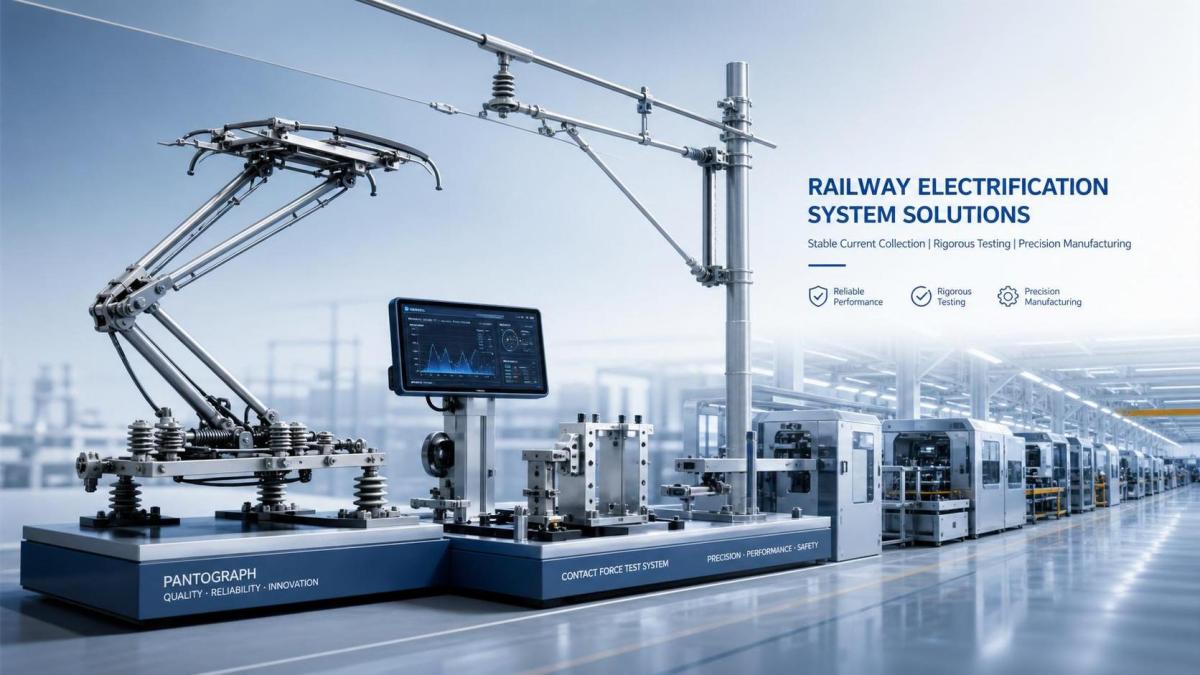
For procurement teams evaluating an overhead current collection systems factory, the right choice goes far beyond price. It requires proven engineering stability, consistent power collection performance, strict quality control, and the capacity to support demanding rail applications.
This guide helps buyers identify reliable manufacturing strengths, reduce sourcing risks, and select partners that can meet long-term operational and project expectations.
In today’s rail market, an overhead current collection systems factory is no longer judged only by output volume. Buyers now look at lifecycle cost, product consistency, certification depth, and delivery resilience.
That shift is easy to understand. Urban transit expansion, high-speed upgrades, and tighter safety compliance have raised the cost of choosing the wrong supplier.
A weak factory can create unstable current collection, premature wear, maintenance delays, and difficult warranty disputes. In practical terms, that means more downtime and less budget control.
Why Factory Selection Matters More Than Unit Price
An overhead current collection systems factory influences far more than the purchase order. It shapes network reliability, service intervals, and long-term operating cost.
Overhead current collection systems work under constant mechanical stress. They also face vibration, temperature shifts, wind load, and varying contact wire conditions.
Because of that, factory capability matters at the design stage and at the process stage. A low quote can look attractive, but hidden costs often appear later.
These costs usually include higher carbon strip wear, unstable uplift force, replacement delays, and field adjustment issues. None of them stay small once fleets scale.
A dependable overhead current collection systems factory should show evidence that its products perform consistently across batch production, not only in a single prototype test.
Core Capabilities to Check in an Overhead Current Collection Systems Factory
Start with engineering depth. A capable overhead current collection systems factory should understand contact dynamics, aerodynamic behavior, and integration with rolling stock platforms.
Ask how the factory validates current collection stability at different speeds. This matters even more for metro, intercity, and high-speed applications with mixed operating profiles.
Then review manufacturing control. Good drawings are not enough if tolerances drift during welding, assembly, spring calibration, or surface treatment.
A strong supplier should be able to explain its process discipline in plain terms. If answers stay vague, risk is usually higher than the quotation suggests.
- Design capability for pantograph and current collection system matching
- In-house testing for contact force, vibration, endurance, and insulation
- Stable sourcing of key materials and wear components
- Controlled assembly procedures with traceable production records
- Field service support for commissioning, tuning, and fault analysis
This is where many buyers separate a true manufacturing partner from a basic fabricator. The difference becomes obvious once projects move from approval to operation.
Quality Standards, Testing, and Compliance Signals
An overhead current collection systems factory should provide more than a certificate list. Buyers need to see how quality systems work in production reality.
Ask for process inspection records, final test reports, and nonconformity handling procedures. These documents reveal whether quality control is active or merely decorative.
From a sourcing perspective, three areas deserve close attention. They affect safety, consistency, and acceptance risk during project execution.
- Type testing: Confirm the design has passed required performance validation.
- Routine testing: Check whether each production batch follows the same inspection logic.
- Traceability: Ensure every key component can be linked to material and process records.
In recent tenders, stronger attention is also going to fatigue life and environmental durability. That includes corrosion resistance, sealing performance, and long-cycle stability.
A mature overhead current collection systems factory will usually welcome technical audits. Reluctance or incomplete documentation often signals deeper operational weakness.
How to Compare Cost Without Missing Risk
Cost comparison should move beyond ex-works pricing. For an overhead current collection systems factory, total value depends on service life, spare parts demand, and maintenance burden.
A lower initial price may still produce a higher ownership cost. That usually happens when wear rates are higher or replacement cycles are shorter than promised.
Use a structured comparison model during procurement review. It keeps commercial discussion grounded in measurable operating outcomes.
This approach usually leads to better decisions than simple bid ranking. It also gives internal stakeholders a clearer basis for approval.
Questions to Ask Before Shortlisting a Factory
A serious overhead current collection systems factory should answer detailed questions without hiding behind general claims. Procurement quality improves when interviews are structured.
Focus on evidence, repeatability, and project fit. That keeps discussions tied to actual delivery capability.
- Which rail projects use your overhead current collection systems today?
- What operating speeds and voltage environments have you validated?
- Which components are produced in-house, and which are outsourced?
- How do you control consistency in spring force and head geometry?
- What is your warranty response process for urgent fleet issues?
- Can you support localized standards, documentation, and spare planning?
The most useful answers are specific. They include data, sample reports, customer references, and realistic lead-time commitments.
Common Warning Signs During Supplier Evaluation
Not every overhead current collection systems factory that looks strong on paper can support demanding rail programs. Some weaknesses only appear during technical review.
More obvious warning signs include inconsistent drawings, incomplete test evidence, and unclear material sourcing. These often point to unstable process control.
Another risk appears when the supplier promises broad customization without engineering discussion. That usually means timelines and validation work are being underestimated.
Watch for these signals during audits and quotation reviews:
- Unclear ownership of design changes
- Weak response to failure mode questions
- Large price gaps with little technical explanation
- No practical spare parts forecast support
- Limited field service footprint after delivery
In real sourcing work, these issues rarely stay isolated. They usually expand into delivery, quality, or claim management problems later.
A Practical Selection Framework
A practical framework helps compare each overhead current collection systems factory fairly. It also reduces internal debate based on incomplete impressions.
- Define operating conditions, approval standards, and project delivery needs.
- Screen suppliers using certifications, references, and product scope.
- Run technical clarification based on testing, design logic, and service support.
- Audit factory processes, supply chain control, and traceability systems.
- Compare total cost, not just purchase price.
- Set contract terms around quality claims, lead time, and spare parts response.
This kind of method is especially useful in cross-border rail procurement. It brings technical, commercial, and operational priorities into one decision path.
Final Takeaway
Choosing an overhead current collection systems factory is really a decision about reliability, risk control, and long-term value. Price matters, but it should never stand alone.
The strongest factory is usually the one that combines tested engineering, disciplined production, transparent documentation, and responsive support after shipment.
When sourcing teams apply a structured review process, they make better choices and avoid expensive surprises. That is the practical path to selecting an overhead current collection systems factory that can truly support demanding rail operations.
Recommended News
 Sep 29, 2026What drives traction systems price differences between rail projects?Traction systems price differences explained: compare duty cycles, voltage compatibility, integration, localization, and lifecycle costs for smarter rail procurement.
 Sep 26, 2026What to assess before selecting an electric traction system manufacturerChoose an electric traction system manufacturer with confidence. Explore key criteria for performance, reliability, safety, integration, energy efficiency, and lifecycle support.
 Sep 25, 2026When do full digitalization systems justify the investment?Full digitalization systems: discover when rail and maritime operators can turn connected data into safer operations, higher availability, and measurable ROI.
 Sep 23, 2026What drives automatic train control systems cost on rail projects?Automatic train control systems cost depends on integration, migration, safety testing, communications, and lifecycle support. Explore the key budget drivers for rail projects.
 Sep 21, 2026How to assess an ocean going vessel builder’s delivery riskAssess an ocean going vessel builder’s delivery risk with proven checks for schedules, capacity, design maturity, critical equipment, quality, and project controls.
 Sep 20, 2026What drives rail safety technology costs over a project lifecycle?Rail safety technology cost goes beyond equipment—explore lifecycle drivers from integration and safety assurance to cybersecurity, commissioning, and obsolescence.
 Sep 16, 2026What to verify before choosing an advanced ocean-going vessels supplierAdvanced ocean-going vessels supplier checklist: verify design authority, build quality, digital systems, delivery reliability, and lifecycle support before you buy.
 Sep 15, 2026What rail safety technology best reduces level-crossing risks in Southeast Asia?Rail safety technology Southeast Asia: discover how fail-safe signalling, barriers, obstacle detection and remote monitoring reduce level-crossing risks.
 Sep 14, 2026How exporters can reduce customs delays in global trade logisticsGlobal trade logistics for exporters: reduce customs delays with accurate data, clearance-ready documents, early filing, and proactive exception management.
 Sep 13, 2026When do global transportation network systems reduce delivery delays?Global transportation network systems reduce delivery delays by improving rail-port-vessel coordination, real-time visibility, and proactive decisions across complex land-sea supply chains.
 Sep 09, 2026When should you choose a rail and maritime manufacturer with dual-sector capability?Rail and maritime manufacturer guide: learn when dual-sector capability reduces integration risk, improves lifecycle support, and strengthens rail-to-port operations.
 Sep 08, 2026What to verify before selecting a railway signalling equipment supplierRailway signalling equipment supplier checklist: verify safety evidence, integration, cybersecurity, delivery capability, and lifecycle support before award.
 Sep 07, 2026How to size a traction power transformer for railway load demandTraction power transformer sizing guide: model railway load demand, peak duty, voltage regulation, harmonics, and contingency capacity for reliable service.
 Sep 07, 2026How do customization options for industrial connectors affect lead times?Customization options for industrial connectors can impact lead times, cost, and compliance. Learn how to specify smarter for rail and marine projects.
 Sep 05, 2026What information should an industrial sourcing guide include?Industrial sourcing information procurement guide: evaluate suppliers, compliance, lifecycle costs, interfaces, and lead times for smarter rail and maritime purchasing decisions.
 Sep 01, 2026How to find reliable maritime tender information before biddingMaritime tender information: learn how to verify sources, define bid-ready scopes, check qualifications, and reduce risk before submitting competitive marine bids.
 Aug 30, 2026How to select railway automation equipment for depots with phased upgradesRailway automation equipment for depots: learn how to plan phased upgrades that improve safety, throughput, integration, and lifecycle control.
 Aug 27, 2026How industrial sourcing intelligence pricing data supports budget approvalIndustrial sourcing intelligence pricing data helps teams benchmark scope, assess supplier risk, and build defensible budget approvals for complex rail and maritime assets.
 Aug 26, 2026When does a marine fuel efficiency solution make financial sense in the Middle East?Marine fuel efficiency solution Middle East: learn when retrofit savings, compliance value, and vessel data align to deliver credible ROI and smarter shipping investment decisions.
 Aug 24, 2026When does maritime automation for tankers deliver a real payback?Maritime automation for tankers delivers real payback when it cuts fuel use, reduces cargo risk, and improves uptime. See how owners can time investment for stronger ROI.
 Aug 23, 2026When do maritime logistics systems in the Middle East justify the costMaritime logistics systems Middle East: discover when rising delays, manual coordination, and poor visibility make system investment the smarter move for regional operators.
 Aug 22, 2026What drives vessel navigation system price for commercial fleetsVessel navigation system price depends on integration, compliance, automation, and support—not just hardware. Learn what drives fleet costs and compare quotes with confidence.
 Aug 21, 2026How to assess shipbuilding maritime tenders before biddingShipbuilding maritime tenders require more than price checks. Learn how to assess technical scope, compliance, supply chain, and commercial risk before bidding with confidence.
 Aug 20, 2026When does working with an ocean-going vessels distributor reduce supply risk?Ocean-going vessels distributor: learn when this partner cuts supply risk through stronger compliance, faster response, and better sourcing resilience in complex maritime procurement.