



Search News
Industry Portal
Popular Tags
How to Verify Electronics Supplier References Without Missing Risk Signals
Author
Time
Click Count
Why do electronics supplier references matter so much in high-risk sourcing?
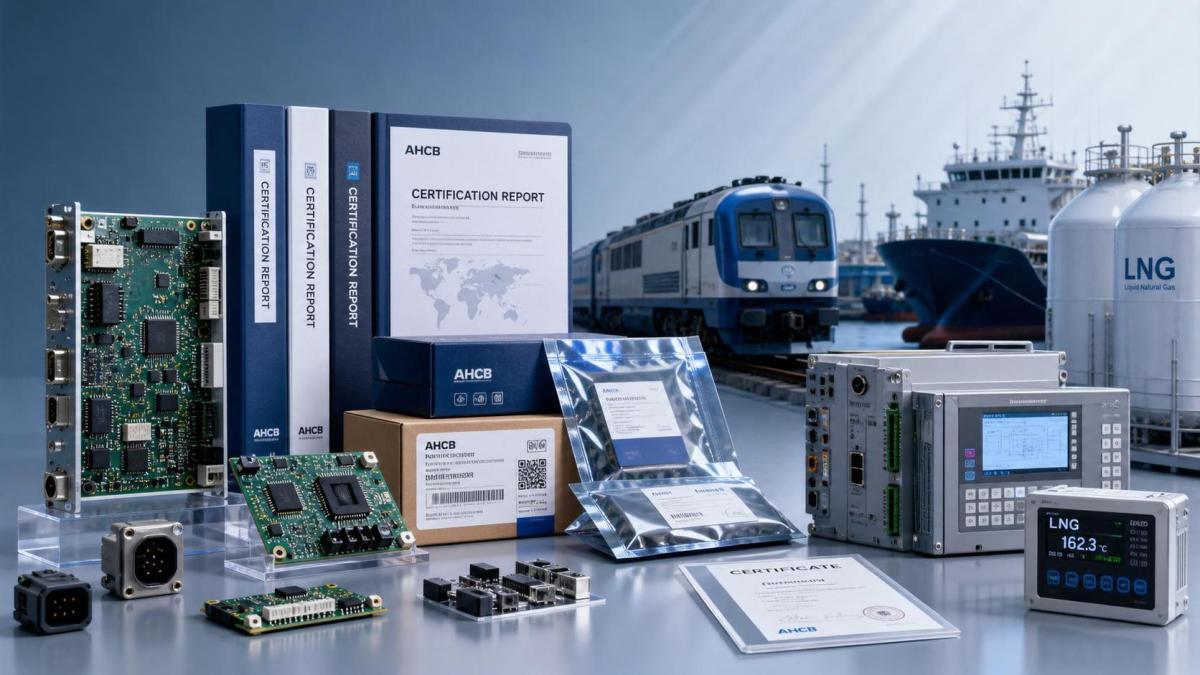
When electronics enter rail control, braking, vessel automation, or LNG monitoring, a weak supplier can create expensive downstream problems.
That is why electronics supplier references should be treated as evidence, not as a courtesy step.
In practice, reference checks help confirm whether a supplier performs well under pressure, not only during a polished sales presentation.
A vendor may show strong brochures, certifications, and sample reports, yet still struggle with revision control, traceability, or on-time recovery.
For sectors tracked by GTOT, those gaps are not minor.
Signal control systems, pantographs, traction electronics, smart ships, and LNG carriers all depend on stable component behavior and disciplined supply execution.
A reference check gives context that paper qualifications often miss.
Simple questions can reveal if the supplier handled engineering changes cleanly, protected lead times, or supported failure analysis after shipment.
That is the real value of verifying electronics supplier references.
What should a solid reference check actually confirm?
A useful check goes beyond asking whether the supplier is “good.”
More often, the better approach is to test repeatability across quality, delivery, technical support, and compliance behavior.
The most informative electronics supplier references usually confirm five areas:
- Whether delivered parts matched approved drawings, firmware, and revision levels.
- How often the supplier shipped late, split orders, or changed dates after order confirmation.
- How the supplier reacted when defects, field failures, or nonconformance reports appeared.
- Whether compliance documents were accurate, current, and easy to trace.
- How stable pricing and communication remained during shortages or demand spikes.
This matters even more for long-cycle transport programs.
A supplier that performs well for consumer electronics may fail in rail signalling or marine controls, where lifecycle discipline is stricter.
When reviewing electronics supplier references, ask about the application environment, not just the product category.
A board used in a warehouse device is not exposed to the same vibration, safety documentation, or downtime consequences as one used offshore.
A quick reference evaluation table
The table below helps separate surface-level praise from operational proof.
Which questions reveal the hidden risk signals fastest?
Not every reference call needs to be long.
What matters is asking questions that force concrete answers.
Open praise sounds reassuring, but numbers and incidents are more useful.
Try asking these instead:
- What was the supplier’s worst delivery quarter, and how was recovery handled?
- Did any unauthorized material, firmware, or component substitutions occur?
- How many serious quality escapes reached production or field service?
- What happened when urgent engineering support was needed outside normal working hours?
- Would you place a larger order with the same supplier today, under the same risk profile?
These questions work because they test memory, specificity, and confidence.
If a reference hesitates, answers in slogans, or avoids examples, that itself is a signal.
A strong reference usually shares balanced feedback.
They may mention problems, but they can also explain how the supplier responded and whether improvement held over time.
That balance is often more credible than perfect praise.
When are electronics supplier references not enough on their own?
References are valuable, but they should not carry the full decision.
This is especially true when the sourced electronics support safety, propulsion, automation, or cryogenic operating environments.
In those cases, electronics supplier references should be cross-checked with documents and observable process evidence.
For example, if a supplier claims strength in railway signal control, ask whether references align with SIL-related documentation discipline.
If the application is onboard vessel systems, confirm evidence around vibration endurance, marine approvals, and software change records.
A useful pattern is to compare references against three independent sources:
- Audit findings or supplier assessment reports.
- Recent corrective action history.
- Shipment performance over the last twelve months.
This is where industry intelligence becomes useful.
Platforms such as GTOT help add macro context, especially when a supplier serves rail and marine programs affected by infrastructure cycles or shipbuilding demand swings.
A supplier may have acceptable references but still face capacity strain because of sudden demand in smart vessels or transport electrification projects.
References tell you how they performed before.
Market intelligence helps judge whether they can keep performing under the next cycle.
How do you judge cost, timing, and effort without slowing the sourcing cycle?
One common concern is that verifying electronics supplier references takes too long.
In reality, the cost of a focused review is small compared with the cost of one failed supplier launch.
A practical approach is to scale the effort by risk exposure.
For low-impact parts, two verified references and a document check may be enough.
For critical electronics, more structure is justified.
That can include reference interviews, plant audit review, PPAP-style evidence, and a limited pilot order.
A simple way to scale the process
This keeps the process proportionate.
It also prevents overchecking commodity items while underchecking high-consequence parts.
What mistakes cause teams to miss obvious warning signs?
The biggest mistake is accepting only the references selected by the supplier and stopping there.
Those contacts may still be useful, but they rarely show the full picture.
Another common mistake is treating all electronics supplier references as equal.
A positive review from a low-volume buyer does not fully translate to a multi-site transport program.
It also helps to avoid these traps:
- Focusing only on unit price while ignoring support response quality.
- Ignoring regional delivery complexity for sea and rail projects.
- Failing to ask whether the reference relationship is still active.
- Accepting compliance claims without traceable document dates.
- Not checking whether the supplier’s best performance came before a capacity expansion or ownership change.
The best reference work is not adversarial.
It is simply structured enough to detect inconsistency before cost, schedule, or reputation are exposed.
So what is the smartest next step before awarding business?
Start by defining what failure would look like in your application.
If the biggest risk is field downtime, your electronics supplier references should focus on service response and root-cause speed.
If the biggest risk is certification exposure, document control and traceability should lead the check.
Then build a short verification sheet that every candidate supplier is measured against in the same way.
That makes side-by-side comparison easier and reduces bias from polished sales narratives.
For complex rail and marine programs, it also helps to pair supplier-level reference checks with broader industry intelligence.
GTOT’s coverage of signalling systems, traction components, smart vessels, and LNG shipping trends is useful in that sense.
Not as promotion, but as context.
A reference says how a supplier performed with past customers.
Market and technology intelligence helps you judge whether that performance is likely to hold in the next sourcing cycle.
In the end, verifying electronics supplier references is less about collecting praise and more about reducing avoidable surprises.
A careful review now can protect cost, timeline, compliance, and operational continuity later.
Before moving forward, compare reference feedback against actual risk priorities, confirm missing evidence, and test the supplier where failure would hurt most.
Recommended News
 Sep 29, 2026What drives traction systems price differences between rail projects?Traction systems price differences explained: compare duty cycles, voltage compatibility, integration, localization, and lifecycle costs for smarter rail procurement.
 Sep 26, 2026What to assess before selecting an electric traction system manufacturerChoose an electric traction system manufacturer with confidence. Explore key criteria for performance, reliability, safety, integration, energy efficiency, and lifecycle support.
 Sep 25, 2026When do full digitalization systems justify the investment?Full digitalization systems: discover when rail and maritime operators can turn connected data into safer operations, higher availability, and measurable ROI.
 Sep 23, 2026What drives automatic train control systems cost on rail projects?Automatic train control systems cost depends on integration, migration, safety testing, communications, and lifecycle support. Explore the key budget drivers for rail projects.
 Sep 21, 2026How to assess an ocean going vessel builder’s delivery riskAssess an ocean going vessel builder’s delivery risk with proven checks for schedules, capacity, design maturity, critical equipment, quality, and project controls.
 Sep 20, 2026What drives rail safety technology costs over a project lifecycle?Rail safety technology cost goes beyond equipment—explore lifecycle drivers from integration and safety assurance to cybersecurity, commissioning, and obsolescence.
 Sep 16, 2026What to verify before choosing an advanced ocean-going vessels supplierAdvanced ocean-going vessels supplier checklist: verify design authority, build quality, digital systems, delivery reliability, and lifecycle support before you buy.
 Sep 15, 2026What rail safety technology best reduces level-crossing risks in Southeast Asia?Rail safety technology Southeast Asia: discover how fail-safe signalling, barriers, obstacle detection and remote monitoring reduce level-crossing risks.
 Sep 14, 2026How exporters can reduce customs delays in global trade logisticsGlobal trade logistics for exporters: reduce customs delays with accurate data, clearance-ready documents, early filing, and proactive exception management.
 Sep 13, 2026When do global transportation network systems reduce delivery delays?Global transportation network systems reduce delivery delays by improving rail-port-vessel coordination, real-time visibility, and proactive decisions across complex land-sea supply chains.
 Sep 09, 2026When should you choose a rail and maritime manufacturer with dual-sector capability?Rail and maritime manufacturer guide: learn when dual-sector capability reduces integration risk, improves lifecycle support, and strengthens rail-to-port operations.
 Sep 08, 2026What to verify before selecting a railway signalling equipment supplierRailway signalling equipment supplier checklist: verify safety evidence, integration, cybersecurity, delivery capability, and lifecycle support before award.
 Sep 07, 2026How to size a traction power transformer for railway load demandTraction power transformer sizing guide: model railway load demand, peak duty, voltage regulation, harmonics, and contingency capacity for reliable service.
 Sep 07, 2026How do customization options for industrial connectors affect lead times?Customization options for industrial connectors can impact lead times, cost, and compliance. Learn how to specify smarter for rail and marine projects.
 Sep 05, 2026What information should an industrial sourcing guide include?Industrial sourcing information procurement guide: evaluate suppliers, compliance, lifecycle costs, interfaces, and lead times for smarter rail and maritime purchasing decisions.
 Sep 01, 2026How to find reliable maritime tender information before biddingMaritime tender information: learn how to verify sources, define bid-ready scopes, check qualifications, and reduce risk before submitting competitive marine bids.
 Aug 30, 2026How to select railway automation equipment for depots with phased upgradesRailway automation equipment for depots: learn how to plan phased upgrades that improve safety, throughput, integration, and lifecycle control.
 Aug 27, 2026How industrial sourcing intelligence pricing data supports budget approvalIndustrial sourcing intelligence pricing data helps teams benchmark scope, assess supplier risk, and build defensible budget approvals for complex rail and maritime assets.
 Aug 26, 2026When does a marine fuel efficiency solution make financial sense in the Middle East?Marine fuel efficiency solution Middle East: learn when retrofit savings, compliance value, and vessel data align to deliver credible ROI and smarter shipping investment decisions.
 Aug 24, 2026When does maritime automation for tankers deliver a real payback?Maritime automation for tankers delivers real payback when it cuts fuel use, reduces cargo risk, and improves uptime. See how owners can time investment for stronger ROI.
 Aug 23, 2026When do maritime logistics systems in the Middle East justify the costMaritime logistics systems Middle East: discover when rising delays, manual coordination, and poor visibility make system investment the smarter move for regional operators.
 Aug 22, 2026What drives vessel navigation system price for commercial fleetsVessel navigation system price depends on integration, compliance, automation, and support—not just hardware. Learn what drives fleet costs and compare quotes with confidence.
 Aug 21, 2026How to assess shipbuilding maritime tenders before biddingShipbuilding maritime tenders require more than price checks. Learn how to assess technical scope, compliance, supply chain, and commercial risk before bidding with confidence.
 Aug 20, 2026When does working with an ocean-going vessels distributor reduce supply risk?Ocean-going vessels distributor: learn when this partner cuts supply risk through stronger compliance, faster response, and better sourcing resilience in complex maritime procurement.