



Search News
Industry Portal
Popular Tags
Application Guidance for Industrial Equipment in Harsh Operating Conditions

Author
Time
Click Count
Application Guidance for Industrial Equipment in Harsh Operating Conditions

In harsh environments, even advanced machinery can fail without the right strategy.
This application guidance for industrial equipment focuses on keeping performance stable when temperature, vibration, corrosion, and load all rise together.
That matters across rail networks, traction platforms, braking assemblies, smart container ships, and LNG carriers.
In real operations, failures rarely come from one factor alone.
More often, heat, moisture, salt, shock, and duty cycle interact until a small weakness becomes a shutdown event.
This is where practical application guidance for industrial equipment becomes valuable.
It helps translate engineering limits into daily operating choices, inspection routines, and maintenance priorities that actually reduce risk.
For operators working with mission-critical transport assets, the goal is simple.
Protect equipment life, maintain safety margins, and avoid unplanned stoppages that disrupt schedules, cargo flow, or energy delivery.
Why Harsh Conditions Change Equipment Behavior
A machine can pass factory testing and still struggle in the field.
The reason is exposure time, combined stress, and uneven operating patterns.
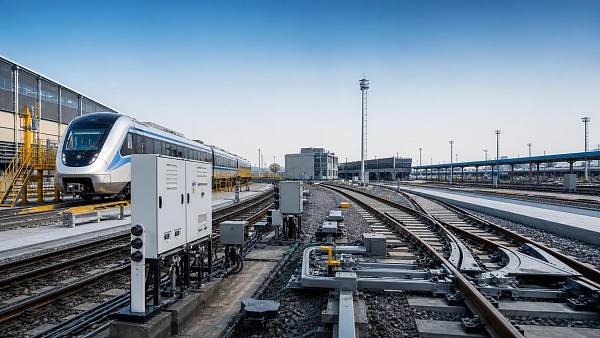
In railway signal control systems, temperature swings can affect enclosure integrity, connector resistance, and board-level stability.
For pantographs, vibration and wind loading increase wear at contact surfaces and joints.
In braking systems, thermal cycling can change friction performance and stopping precision.
At sea, salt spray, humidity, and constant motion accelerate corrosion, fatigue, and sensor drift.
For LNG carriers, deep-cryogenic conditions add another layer of material stress and insulation sensitivity.
Good application guidance for industrial equipment starts by identifying which stress factor becomes dominant in each asset zone.
- Heat: degrades seals, insulation, electronics, and lubricants.
- Cold: reduces flexibility, affects pressure response, and raises brittleness risk.
- Vibration: loosens fasteners, damages connectors, and changes alignment.
- Corrosion: weakens surfaces, contacts, and structural interfaces.
- Heavy duty cycles: shorten maintenance windows and speed up hidden wear.
Once those patterns are mapped, application decisions become far more precise.
Core Application Guidance for Industrial Equipment
A reliable strategy is built on selection, protection, monitoring, and response.
These four areas decide whether equipment survives harsh operating conditions or slowly drifts toward failure.
1. Match Ratings to Real Exposure
Do not select equipment only by nominal output or design speed.
Check operating temperature range, ingress protection, vibration tolerance, corrosion resistance, and fatigue life.
For high-speed rail components, contact stability under strong airflow matters as much as electrical capacity.
For marine systems, material compatibility with salt, humidity, and cleaning chemicals must be verified early.
2. Control the Local Environment
Harsh conditions cannot always be avoided, but local exposure can often be reduced.
Use sealing, drainage, shielding, ventilation, insulation, anti-condensation measures, and protective coatings where they matter most.
This application guidance for industrial equipment is especially relevant around cabinets, cable entries, braking surfaces, and deck-mounted modules.
3. Monitor Degradation Before Failure
Waiting for visible damage is too late in most critical systems.
Track temperature rise, current fluctuation, vibration trend, corrosion points, braking response, and insulation condition.
Even a small shift can reveal a larger pattern when measured over time.
4. Adjust Maintenance by Risk, Not Calendar Alone
Fixed intervals are useful, but harsh-duty assets need condition-based attention.
Recent operating history should influence inspection depth, parts replacement, and shutdown planning.
That approach keeps resources focused on the components most likely to fail first.
Practical Guidance by Equipment Scenario
Different systems face different combinations of stress.
The most useful application guidance for industrial equipment stays specific to the operating context.
Railway Signal Control Systems
Signal systems demand stable performance under dust, heat, moisture, and continuous uptime pressure.
Focus on sealed enclosures, redundant power paths, connector integrity, and thermal management inside control cabinets.
In SIL4 environments, small reliability losses can create serious operational consequences.
Pantographs and Traction Interfaces
At speeds above 350 km/h, vibration and aerodynamic loading become critical.
Check contact strip wear, arm alignment, spring response, and fastener security more frequently after severe weather runs.
Here, application guidance for industrial equipment must link electrical stability with mechanical durability.
Rail Transit Braking Systems
Braking systems suffer from thermal load, repeated friction cycles, and contamination from dust or moisture.
Watch for thermal fade, uneven pad wear, actuator lag, and sensor inconsistency.
Reliable stopping depends on consistent response, not just rated braking force.
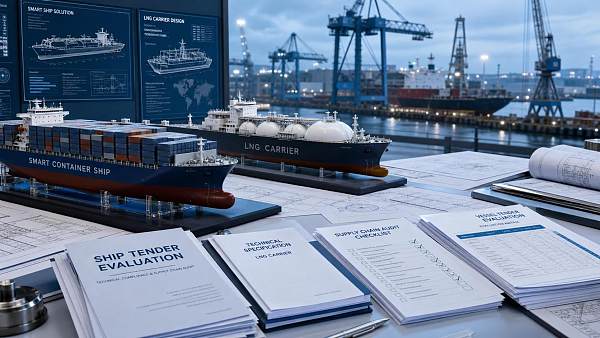
Smart Container Ships and LNG Carriers
Marine assets deal with salt, humidity, motion, long deployment periods, and complex automation layers.
Prioritize anti-corrosion treatment, watertight electrical protection, sensor verification, and routine checks around exposed structural interfaces.
For LNG carriers, insulation health and cryogenic material behavior require tighter monitoring than standard cargo vessels.
A Simple Field Checklist That Works
In day-to-day work, a usable checklist is often more valuable than a long theory document.
This application guidance for industrial equipment can be translated into a repeatable field routine.
- Review the last operating cycle and note unusual load, weather, or route conditions.
- Inspect high-risk points first, especially seals, connectors, fasteners, friction surfaces, and exposed metal edges.
- Compare live readings with recent trends, not only with alarm thresholds.
- Clean, tighten, lubricate, or isolate issues before they spread into nearby systems.
- Record findings in a way that supports the next maintenance decision.
This routine is simple, but it builds consistency across shifts and sites.
Common Mistakes That Increase Failure Risk
Harsh-condition failures are often linked to preventable decisions.
In many cases, the best application guidance for industrial equipment is simply better discipline around these basics.
How GTOT Supports Better Application Decisions
GTOT follows the operating realities behind core rail and marine equipment, not only the market headlines.
Its focus on railway signal control systems, pantographs, braking systems, smart container ships, and LNG carriers gives technical context to harsh-condition performance.
That includes intelligence on LTE-M adoption in rail transit, composite brake pad thermal fade, and membrane containment stress in LNG transport.
From a practical view, this helps connect application guidance for industrial equipment with asset selection, lifecycle planning, and operating risk control.
For organizations moving across land and sea transport systems, that wider view supports faster and more defensible decisions.
Final Takeaway
Harsh operating conditions do not automatically lead to poor reliability.
The bigger issue is whether equipment is applied, protected, and monitored with enough realism.
Strong application guidance for industrial equipment starts with the actual environment, not the catalog description.
When selection criteria, inspections, and maintenance routines reflect real exposure, equipment life becomes more predictable.
That means safer rail movement, steadier marine operations, fewer service interruptions, and better value from every critical asset.
The next step is straightforward: review the harshest operating zone first, identify the dominant stress factor, and build action around that reality.
Recommended News
 Sep 29, 2026What drives traction systems price differences between rail projects?Traction systems price differences explained: compare duty cycles, voltage compatibility, integration, localization, and lifecycle costs for smarter rail procurement.
 Sep 26, 2026What to assess before selecting an electric traction system manufacturerChoose an electric traction system manufacturer with confidence. Explore key criteria for performance, reliability, safety, integration, energy efficiency, and lifecycle support.
 Sep 25, 2026When do full digitalization systems justify the investment?Full digitalization systems: discover when rail and maritime operators can turn connected data into safer operations, higher availability, and measurable ROI.
 Sep 23, 2026What drives automatic train control systems cost on rail projects?Automatic train control systems cost depends on integration, migration, safety testing, communications, and lifecycle support. Explore the key budget drivers for rail projects.
 Sep 21, 2026How to assess an ocean going vessel builder’s delivery riskAssess an ocean going vessel builder’s delivery risk with proven checks for schedules, capacity, design maturity, critical equipment, quality, and project controls.
 Sep 20, 2026What drives rail safety technology costs over a project lifecycle?Rail safety technology cost goes beyond equipment—explore lifecycle drivers from integration and safety assurance to cybersecurity, commissioning, and obsolescence.
 Sep 16, 2026What to verify before choosing an advanced ocean-going vessels supplierAdvanced ocean-going vessels supplier checklist: verify design authority, build quality, digital systems, delivery reliability, and lifecycle support before you buy.
 Sep 15, 2026What rail safety technology best reduces level-crossing risks in Southeast Asia?Rail safety technology Southeast Asia: discover how fail-safe signalling, barriers, obstacle detection and remote monitoring reduce level-crossing risks.
 Sep 14, 2026How exporters can reduce customs delays in global trade logisticsGlobal trade logistics for exporters: reduce customs delays with accurate data, clearance-ready documents, early filing, and proactive exception management.
 Sep 13, 2026When do global transportation network systems reduce delivery delays?Global transportation network systems reduce delivery delays by improving rail-port-vessel coordination, real-time visibility, and proactive decisions across complex land-sea supply chains.
 Sep 09, 2026When should you choose a rail and maritime manufacturer with dual-sector capability?Rail and maritime manufacturer guide: learn when dual-sector capability reduces integration risk, improves lifecycle support, and strengthens rail-to-port operations.
 Sep 08, 2026What to verify before selecting a railway signalling equipment supplierRailway signalling equipment supplier checklist: verify safety evidence, integration, cybersecurity, delivery capability, and lifecycle support before award.
 Sep 07, 2026How to size a traction power transformer for railway load demandTraction power transformer sizing guide: model railway load demand, peak duty, voltage regulation, harmonics, and contingency capacity for reliable service.
 Sep 07, 2026How do customization options for industrial connectors affect lead times?Customization options for industrial connectors can impact lead times, cost, and compliance. Learn how to specify smarter for rail and marine projects.
 Sep 05, 2026What information should an industrial sourcing guide include?Industrial sourcing information procurement guide: evaluate suppliers, compliance, lifecycle costs, interfaces, and lead times for smarter rail and maritime purchasing decisions.
 Sep 01, 2026How to find reliable maritime tender information before biddingMaritime tender information: learn how to verify sources, define bid-ready scopes, check qualifications, and reduce risk before submitting competitive marine bids.
 Aug 30, 2026How to select railway automation equipment for depots with phased upgradesRailway automation equipment for depots: learn how to plan phased upgrades that improve safety, throughput, integration, and lifecycle control.
 Aug 27, 2026How industrial sourcing intelligence pricing data supports budget approvalIndustrial sourcing intelligence pricing data helps teams benchmark scope, assess supplier risk, and build defensible budget approvals for complex rail and maritime assets.
 Aug 26, 2026When does a marine fuel efficiency solution make financial sense in the Middle East?Marine fuel efficiency solution Middle East: learn when retrofit savings, compliance value, and vessel data align to deliver credible ROI and smarter shipping investment decisions.
 Aug 24, 2026When does maritime automation for tankers deliver a real payback?Maritime automation for tankers delivers real payback when it cuts fuel use, reduces cargo risk, and improves uptime. See how owners can time investment for stronger ROI.
 Aug 23, 2026When do maritime logistics systems in the Middle East justify the costMaritime logistics systems Middle East: discover when rising delays, manual coordination, and poor visibility make system investment the smarter move for regional operators.
 Aug 22, 2026What drives vessel navigation system price for commercial fleetsVessel navigation system price depends on integration, compliance, automation, and support—not just hardware. Learn what drives fleet costs and compare quotes with confidence.
 Aug 21, 2026How to assess shipbuilding maritime tenders before biddingShipbuilding maritime tenders require more than price checks. Learn how to assess technical scope, compliance, supply chain, and commercial risk before bidding with confidence.
 Aug 20, 2026When does working with an ocean-going vessels distributor reduce supply risk?Ocean-going vessels distributor: learn when this partner cuts supply risk through stronger compliance, faster response, and better sourcing resilience in complex maritime procurement.