Search News
Industry Portal
Popular Tags
Railway Safety Technology: Key Systems That Reduce Operational Risk
Author
Time
Click Count
Why does railway safety technology matter more than ever?
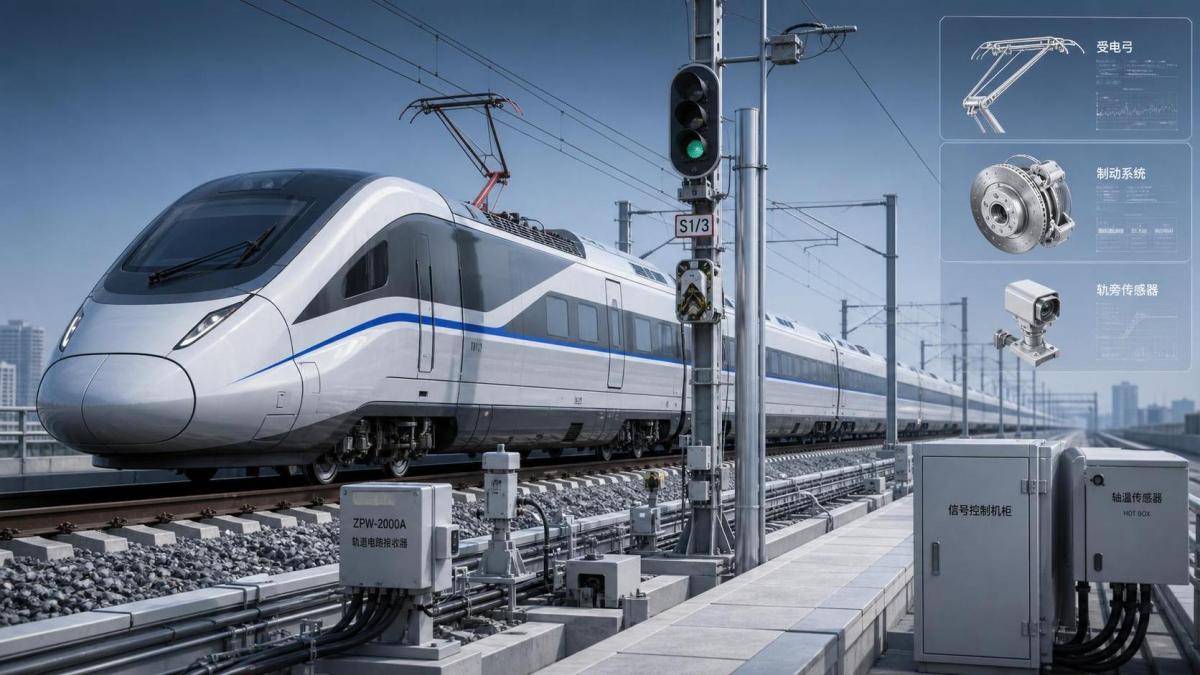
Rail networks carry dense traffic, tight schedules, and growing compliance pressure. That is why railway safety technology sits at the center of operational reliability.
It is not only about preventing accidents. In daily operations, it also helps detect hidden faults, reduce service disruption, and support traceable decision-making.
A useful way to view railway safety technology is as a connected safety chain. Signalling, braking, traction power, onboard diagnostics, and maintenance analytics all influence each other.
When one link is weak, risk does not stay local. A small sensor drift can become a braking delay, a timetable conflict, or an infrastructure shutdown.
This is also why industry intelligence platforms such as GTOT pay close attention to rail control components, pantographs, braking systems, and digital monitoring trends.
The broader transport sector is becoming more integrated. Lessons from high-speed rail control, smart shipping, and mission-critical monitoring now shape how risk is evaluated across land and sea systems.
Which systems reduce operational risk most directly?
People often search for one “best” safety system. In practice, railway safety technology works through several critical layers, each handling a different type of risk.
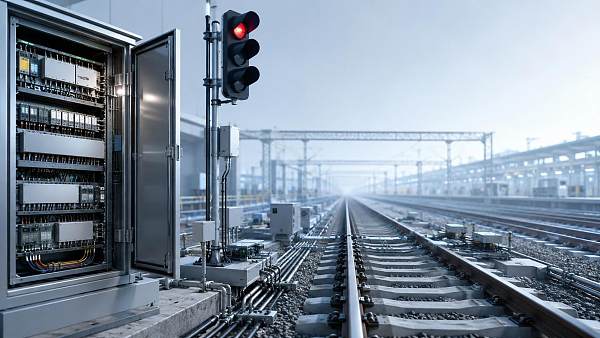
Signal control and interlocking
This is the core protection layer. It prevents conflicting train movements, manages route authority, and supports safe operations in high-density corridors.
In advanced networks, SIL4-oriented design is often the benchmark. The goal is simple: fail safely, even under abnormal conditions.
Braking control systems
Braking performance determines whether a train can stop within the expected distance under heat, load, weather, and adhesion changes.
Modern railway safety technology links mechanical braking with microelectronic control, condition monitoring, and fault logging. That makes response more predictable and easier to audit.
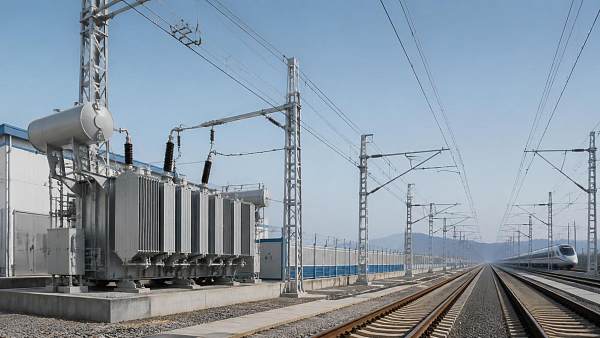
Traction power and pantograph monitoring
Power instability is often underestimated as a safety issue. Yet arcing, contact loss, or excessive vibration can trigger cascading failures.
For high-speed lines, stable current collection is essential. GTOT often tracks this area because pantograph behavior strongly affects both equipment life and operating safety.
Real-time diagnostics and communication
The newer layer is digital visibility. Sensors, onboard recorders, LTE-M applications, and remote diagnostics help teams identify abnormal trends before a failure becomes operationally critical.
How can you tell whether a safety system is truly reducing risk?
A system is not safer just because it is newer. The more reliable judgement is based on measurable control points, response consistency, and failure traceability.
The table below works as a quick FAQ-style reference when reviewing railway safety technology in real projects.
In other words, good railway safety technology should lower uncertainty, not add another black box that nobody can interpret after an event.
What mistakes appear most often during selection and implementation?
One common mistake is evaluating systems only by specification sheets. A braking module may look strong on paper, yet behave differently under repeated thermal cycles.
Another issue is treating subsystems separately. Railway safety technology delivers value when signalling, power collection, braking, and diagnostics share usable data.
There is also a tendency to underweight maintainability. Complex systems with weak documentation or difficult calibration routines often create hidden operational risk later.
In practical reviews, the following warning signs deserve extra attention:
- Alarm volume is high, but prioritization is poor.
- Failure logs exist, but root causes remain unclear.
- Subsystem interfaces depend on custom fixes.
- Inspection cycles are frequent without better prediction accuracy.
- Safety claims rely heavily on vendor demos, not operating evidence.
This is where sector intelligence becomes valuable. GTOT’s coverage of control architecture, composite brake pad behavior, and traction monitoring helps frame better technical questions before deployment.
Is digital monitoring replacing traditional protection systems?
Not really. Digital tools do not replace core protection logic. They strengthen railway safety technology by making failure patterns visible earlier and decisions easier to verify.
Traditional systems such as interlocking and braking remain the hard safety barrier. Digital monitoring adds awareness, trend analysis, and planning support around that barrier.
A useful comparison is this: protection systems stop unsafe movement now, while diagnostic systems help prevent the next unsafe condition from developing.
That distinction matters in integrated transport environments. As rail and maritime infrastructure become more data-driven, operators need both deterministic safety logic and predictive intelligence.
The strongest setups usually combine:
- Certified control layers for immediate protection
- Condition monitoring for wear, drift, and abnormal load
- Data connectivity for faster incident review
- Decision dashboards that translate data into maintenance action
What should be reviewed before the next upgrade or audit?
If the goal is lower operational risk, start by mapping where uncertainty still exists. That usually reveals more than a simple checklist of installed equipment.
Review whether signal control events, braking exceptions, pantograph anomalies, and diagnostic alerts can be correlated across one timeline. If not, risk analysis stays fragmented.
It also helps to compare safety effort with asset criticality. Busy corridors, high-speed sections, and aging fleets rarely need the same monitoring depth.
Before committing to any upgrade, confirm these points:
- Which failure mode causes the highest operational exposure
- Whether the chosen railway safety technology addresses that exact mode
- How implementation affects inspection routines and downtime windows
- What evidence will prove the risk reduction after launch
The most practical next step is not to chase every new tool. It is to build a clear evaluation standard around control integrity, traceability, maintainability, and real operating conditions.
That approach makes railway safety technology easier to compare, easier to justify, and far more likely to deliver measurable safety results over time.
Recommended News
 Sep 29, 2026What drives traction systems price differences between rail projects?Traction systems price differences explained: compare duty cycles, voltage compatibility, integration, localization, and lifecycle costs for smarter rail procurement.
 Sep 26, 2026What to assess before selecting an electric traction system manufacturerChoose an electric traction system manufacturer with confidence. Explore key criteria for performance, reliability, safety, integration, energy efficiency, and lifecycle support.
 Sep 25, 2026When do full digitalization systems justify the investment?Full digitalization systems: discover when rail and maritime operators can turn connected data into safer operations, higher availability, and measurable ROI.
 Sep 23, 2026What drives automatic train control systems cost on rail projects?Automatic train control systems cost depends on integration, migration, safety testing, communications, and lifecycle support. Explore the key budget drivers for rail projects.
 Sep 21, 2026How to assess an ocean going vessel builder’s delivery riskAssess an ocean going vessel builder’s delivery risk with proven checks for schedules, capacity, design maturity, critical equipment, quality, and project controls.
 Sep 20, 2026What drives rail safety technology costs over a project lifecycle?Rail safety technology cost goes beyond equipment—explore lifecycle drivers from integration and safety assurance to cybersecurity, commissioning, and obsolescence.
 Sep 16, 2026What to verify before choosing an advanced ocean-going vessels supplierAdvanced ocean-going vessels supplier checklist: verify design authority, build quality, digital systems, delivery reliability, and lifecycle support before you buy.
 Sep 15, 2026What rail safety technology best reduces level-crossing risks in Southeast Asia?Rail safety technology Southeast Asia: discover how fail-safe signalling, barriers, obstacle detection and remote monitoring reduce level-crossing risks.
 Sep 14, 2026How exporters can reduce customs delays in global trade logisticsGlobal trade logistics for exporters: reduce customs delays with accurate data, clearance-ready documents, early filing, and proactive exception management.
 Sep 13, 2026When do global transportation network systems reduce delivery delays?Global transportation network systems reduce delivery delays by improving rail-port-vessel coordination, real-time visibility, and proactive decisions across complex land-sea supply chains.
 Sep 09, 2026When should you choose a rail and maritime manufacturer with dual-sector capability?Rail and maritime manufacturer guide: learn when dual-sector capability reduces integration risk, improves lifecycle support, and strengthens rail-to-port operations.
 Sep 08, 2026What to verify before selecting a railway signalling equipment supplierRailway signalling equipment supplier checklist: verify safety evidence, integration, cybersecurity, delivery capability, and lifecycle support before award.
 Sep 07, 2026How to size a traction power transformer for railway load demandTraction power transformer sizing guide: model railway load demand, peak duty, voltage regulation, harmonics, and contingency capacity for reliable service.
 Sep 07, 2026How do customization options for industrial connectors affect lead times?Customization options for industrial connectors can impact lead times, cost, and compliance. Learn how to specify smarter for rail and marine projects.
 Sep 05, 2026What information should an industrial sourcing guide include?Industrial sourcing information procurement guide: evaluate suppliers, compliance, lifecycle costs, interfaces, and lead times for smarter rail and maritime purchasing decisions.
 Sep 01, 2026How to find reliable maritime tender information before biddingMaritime tender information: learn how to verify sources, define bid-ready scopes, check qualifications, and reduce risk before submitting competitive marine bids.
 Aug 30, 2026How to select railway automation equipment for depots with phased upgradesRailway automation equipment for depots: learn how to plan phased upgrades that improve safety, throughput, integration, and lifecycle control.
 Aug 27, 2026How industrial sourcing intelligence pricing data supports budget approvalIndustrial sourcing intelligence pricing data helps teams benchmark scope, assess supplier risk, and build defensible budget approvals for complex rail and maritime assets.
 Aug 26, 2026When does a marine fuel efficiency solution make financial sense in the Middle East?Marine fuel efficiency solution Middle East: learn when retrofit savings, compliance value, and vessel data align to deliver credible ROI and smarter shipping investment decisions.
 Aug 24, 2026When does maritime automation for tankers deliver a real payback?Maritime automation for tankers delivers real payback when it cuts fuel use, reduces cargo risk, and improves uptime. See how owners can time investment for stronger ROI.
 Aug 23, 2026When do maritime logistics systems in the Middle East justify the costMaritime logistics systems Middle East: discover when rising delays, manual coordination, and poor visibility make system investment the smarter move for regional operators.
 Aug 22, 2026What drives vessel navigation system price for commercial fleetsVessel navigation system price depends on integration, compliance, automation, and support—not just hardware. Learn what drives fleet costs and compare quotes with confidence.
 Aug 21, 2026How to assess shipbuilding maritime tenders before biddingShipbuilding maritime tenders require more than price checks. Learn how to assess technical scope, compliance, supply chain, and commercial risk before bidding with confidence.
 Aug 20, 2026When does working with an ocean-going vessels distributor reduce supply risk?Ocean-going vessels distributor: learn when this partner cuts supply risk through stronger compliance, faster response, and better sourcing resilience in complex maritime procurement.