



Search News
Industry Portal
Popular Tags
How to Evaluate Advanced Ocean-Going Vessels Equipment for Fuel Efficiency and Reliability

Author
Time
Click Count
How to Evaluate Advanced Ocean-Going Vessels Equipment for Fuel Efficiency and Reliability
For technical evaluators, assessing advanced ocean-going vessels equipment requires more than checking specifications. Fuel efficiency and reliability depend on how propulsion, navigation, energy management, and onboard control systems perform under real operating conditions. This guide outlines practical evaluation criteria, helping professionals compare technologies, reduce lifecycle risk, and identify solutions that support safer, smarter, and more cost-effective maritime operations.
When people compare advanced ocean-going vessels equipment, they often start with the brochure headline: lower fuel burn, smarter automation, better uptime. That is fine as a first filter. It is not enough for a decision. In actual vessel projects, the wrong choice usually shows up later, in unstable load response, hard-to-maintain auxiliary systems, sensor faults that trigger nuisance alarms, or promised efficiency numbers that only worked in a narrow test condition.
A useful evaluation checklist has to answer a harder question: how will this equipment behave over years of service, across route changes, varying fuel quality, crew turnover, and uneven maintenance discipline? That is the level where fuel efficiency and reliability stop being sales claims and become engineering outcomes.
Start with the operating profile, not the equipment list
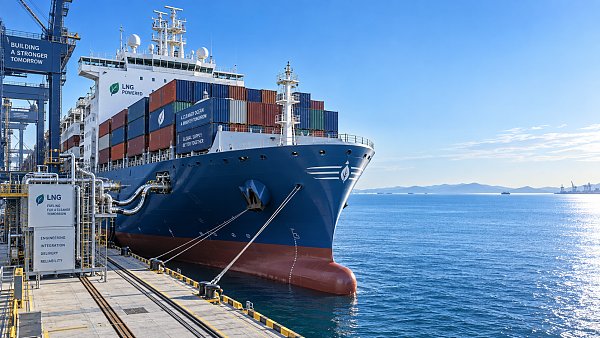
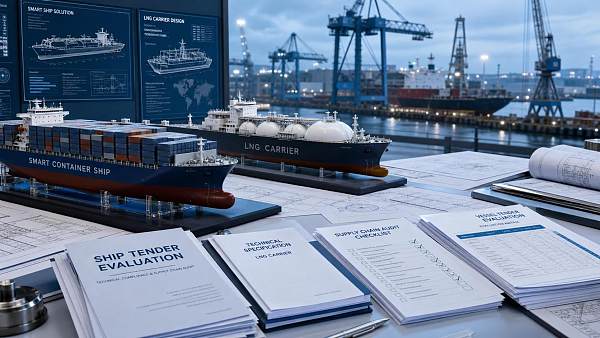
Before comparing makers or models, pin down the vessel’s real duty cycle. A smart container ship on fixed liner routes will not value the same things as an LNG carrier running under stricter cargo handling and propulsion constraints. If the mission profile is vague, the selection process usually drifts toward oversized systems and optimistic efficiency assumptions.
- Look at average and peak engine loading, not just design speed.
- Check whether the vessel spends long periods at slow steaming, maneuvering, port standby, or dynamic operational modes.
- Confirm ambient conditions: tropical routes, cold-region operation, high salinity exposure, and heavy-weather frequency all matter.
- Ask how often the vessel will switch fuel modes or power configurations.
This sounds basic, but it is where many evaluations go soft. Equipment that looks efficient at one steady-state point may be weak in partial-load operation, and partial load is where many vessels live for long stretches.
Treat fuel efficiency as a system question
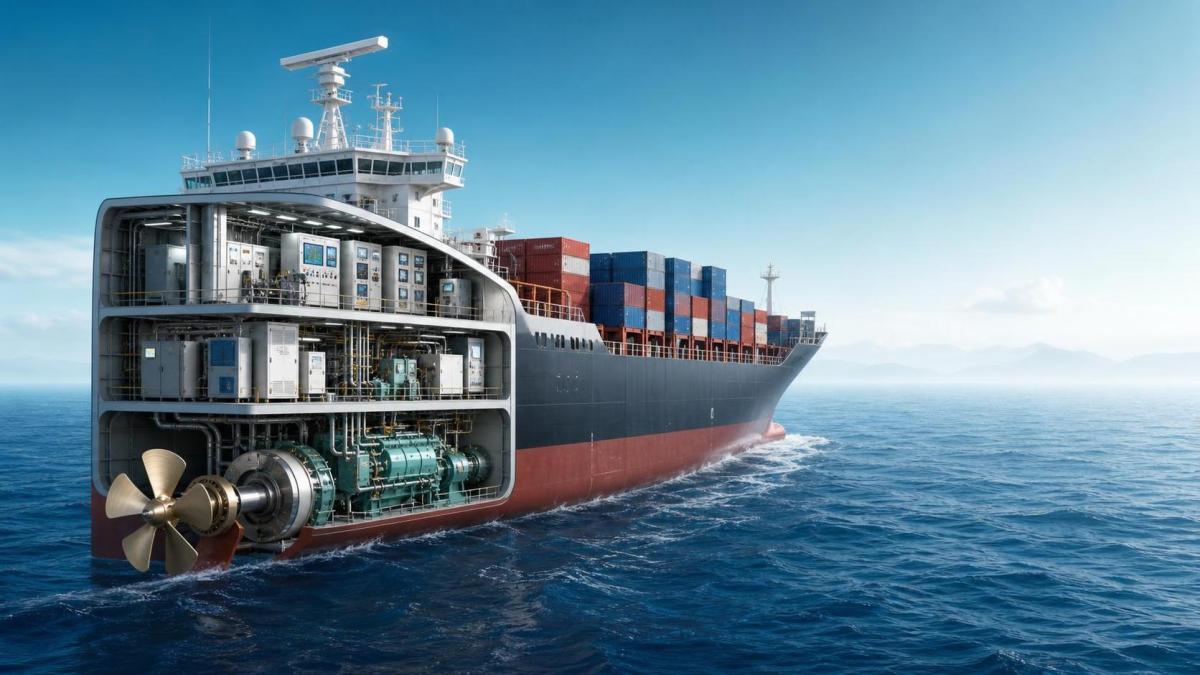
Do not isolate the prime mover from the rest of the ship. For advanced ocean-going vessels equipment, fuel efficiency comes from interaction: propulsion, hull condition, power management, voyage optimization, heat recovery, and control logic.
A practical review should include these checks:
- Engine and propulsion matching. Ask for the efficiency map across the likely operating envelope, not only the best-point figure. If a supplier cannot show part-load behavior clearly, that is a warning.
- Power management logic. On vessels with hybrid features, shaft generators, batteries, or advanced load sharing, control quality matters as much as hardware rating. Poor sequencing can cancel out theoretical savings.
- Auxiliary load discipline. Pumps, HVAC, cargo systems, and hotel loads can erode gains that looked impressive on propulsion-only calculations.
- Waste heat and energy recovery integration. Valuable where applicable, but only if maintenance burden and failure modes are understood.
One useful habit: ask the supplier what assumptions sit behind the claimed savings. Sea state, draft condition, fouling level, fuel quality, route stability, software tuning, and crew behavior can all distort the number. If those assumptions are buried in footnotes, read them slowly.
Reliability is not MTBF alone
Suppliers like to present reliability as a clean statistic. In vessel service, reliability is messier. It includes fault tolerance, ease of diagnosis, spare parts lead time, software stability, and how gracefully the system degrades when one subsystem fails.
Ask what happens if a sensor drifts instead of fails outright. Ask whether the control system can continue in a limited but safe mode. Ask how alarms are prioritized. On complex ships, crews do not struggle only with breakdowns. They struggle with ambiguous warnings, repeated resets, and equipment that requires shore support for every abnormal event.
If you can, request service history from comparable vessel classes. Not marketing references. Actual maintenance patterns, recurring faults, and average restoration times. Suppliers may not disclose everything, but their willingness to discuss recurring issues tells you a lot.
Check integration risk early
Some equipment performs well on its own and becomes troublesome once connected to other onboard systems. That is common with navigation suites, vessel energy management platforms, cargo automation, engine controls, and remote monitoring tools.
A few questions worth asking before shortlisting anything:
- Which protocols and interfaces are standard, and which are vendor-proprietary?
- How are data ownership and access handled for performance monitoring?
- Can critical functions continue if the optimization layer or remote link goes down?
- Who is responsible when performance loss comes from cross-system interaction?
This last point becomes commercial very quickly. In mixed-vendor projects, everyone agrees on integration during bidding and starts drawing lines later when something misbehaves offshore.
Do not ignore maintainability just because the equipment is “smart”
A highly automated system can still be a poor operational choice if crew diagnostics are weak or replacement parts require long international lead times. Technical evaluators should look beyond the hardware package and inspect the support model around it.
Check spare parts philosophy. Are critical components modular? Can they be replaced onboard without special alignment tools? Are there regionally available service points in the vessel’s normal trading areas? For LNG carriers and other specialized vessels, these questions become even more important because downtime can spill into cargo handling, charter obligations, and safety reviews.
Training also deserves a harder look than it usually gets. A supplier may offer commissioning support, but that is not the same as giving engineers and operators enough depth to handle abnormal conditions six months later.
Verify compliance, but do not stop at certificates
For marine equipment, class approval and statutory compliance are baseline requirements, not proof of operational suitability. Depending on the equipment scope, you may need to review class society approvals, IMO-related requirements, emissions compliance implications, and cybersecurity expectations. Exact applicability depends on vessel type, flag, route, and installation boundary, so document review should stay specific and avoid assumptions.
Two cautions here. One, approval on a component level does not guarantee smooth integration at vessel level. Two, an equipment package can be compliant and still create maintenance or fuel penalties because of tuning, interface limitations, or environmental sensitivity.
If a vendor cites future compliance readiness, mark it as 【待核实】 until there is documentation tied to the specific configuration being offered.
Look for evidence from sea service, not only factory tests
Factory acceptance tests matter. Harbor and sea trials matter more. Even then, short trials can miss the issues that show up after thermal cycling, vibration exposure, software updates, and months of operator interaction.
When reviewing evidence, separate these layers:
- Factory performance under controlled conditions.
- Sea trial confirmation on the target vessel type or a close equivalent.
- Operational data over time, including fault events and corrective actions.
If only the first layer exists, do not treat efficiency and reliability promises as proven. Treat them as preliminary.
Compare total cost of ownership in a realistic way
Selection teams sometimes overfocus on acquisition price because it is visible and easy to rank. For advanced ocean-going vessels equipment, the more meaningful comparison usually sits in lifecycle cost: fuel consumption over the expected operating profile, maintenance intervals, software licensing, spare inventory, retrofit complexity, service call response, and unplanned downtime exposure.
Make the supplier walk through the cost stack. If the claimed fuel savings depend on premium service contracts, frequent recalibration, or proprietary digital subscriptions, that has to be visible in the decision model. Hidden operating dependencies are common.
A short decision checklist that catches common mistakes
- Do the efficiency claims reflect your vessel’s actual load profile?
- Can the supplier explain degraded-mode operation clearly?
- Is there proof of stable integration with adjacent ship systems?
- Are critical spare parts and service support aligned with trading routes?
- Are software, cybersecurity, and update responsibilities contractually defined?
- Have all future-looking compliance claims been marked for verification?
- Does the lifecycle model include maintenance burden, not only fuel savings?
Good equipment selection in this field is rarely about finding the most advanced specification on paper. It is about finding the package that continues to work well when exposed to real voyages, imperfect conditions, and ordinary shipboard constraints. If your evaluation method can expose where efficiency disappears and where reliability starts to crack, you are already ahead of most procurement processes.
For teams working across smart container ships, LNG carriers, or other digitally intensive vessel platforms, that discipline matters more than the marketing language around innovation. The right decision usually looks less dramatic on day one and much better after three years at sea.
Recommended News
 Sep 29, 2026What drives traction systems price differences between rail projects?Traction systems price differences explained: compare duty cycles, voltage compatibility, integration, localization, and lifecycle costs for smarter rail procurement.
 Sep 26, 2026What to assess before selecting an electric traction system manufacturerChoose an electric traction system manufacturer with confidence. Explore key criteria for performance, reliability, safety, integration, energy efficiency, and lifecycle support.
 Sep 25, 2026When do full digitalization systems justify the investment?Full digitalization systems: discover when rail and maritime operators can turn connected data into safer operations, higher availability, and measurable ROI.
 Sep 23, 2026What drives automatic train control systems cost on rail projects?Automatic train control systems cost depends on integration, migration, safety testing, communications, and lifecycle support. Explore the key budget drivers for rail projects.
 Sep 21, 2026How to assess an ocean going vessel builder’s delivery riskAssess an ocean going vessel builder’s delivery risk with proven checks for schedules, capacity, design maturity, critical equipment, quality, and project controls.
 Sep 20, 2026What drives rail safety technology costs over a project lifecycle?Rail safety technology cost goes beyond equipment—explore lifecycle drivers from integration and safety assurance to cybersecurity, commissioning, and obsolescence.
 Sep 16, 2026What to verify before choosing an advanced ocean-going vessels supplierAdvanced ocean-going vessels supplier checklist: verify design authority, build quality, digital systems, delivery reliability, and lifecycle support before you buy.
 Sep 15, 2026What rail safety technology best reduces level-crossing risks in Southeast Asia?Rail safety technology Southeast Asia: discover how fail-safe signalling, barriers, obstacle detection and remote monitoring reduce level-crossing risks.
 Sep 14, 2026How exporters can reduce customs delays in global trade logisticsGlobal trade logistics for exporters: reduce customs delays with accurate data, clearance-ready documents, early filing, and proactive exception management.
 Sep 13, 2026When do global transportation network systems reduce delivery delays?Global transportation network systems reduce delivery delays by improving rail-port-vessel coordination, real-time visibility, and proactive decisions across complex land-sea supply chains.
 Sep 09, 2026When should you choose a rail and maritime manufacturer with dual-sector capability?Rail and maritime manufacturer guide: learn when dual-sector capability reduces integration risk, improves lifecycle support, and strengthens rail-to-port operations.
 Sep 08, 2026What to verify before selecting a railway signalling equipment supplierRailway signalling equipment supplier checklist: verify safety evidence, integration, cybersecurity, delivery capability, and lifecycle support before award.
 Sep 07, 2026How to size a traction power transformer for railway load demandTraction power transformer sizing guide: model railway load demand, peak duty, voltage regulation, harmonics, and contingency capacity for reliable service.
 Sep 07, 2026How do customization options for industrial connectors affect lead times?Customization options for industrial connectors can impact lead times, cost, and compliance. Learn how to specify smarter for rail and marine projects.
 Sep 05, 2026What information should an industrial sourcing guide include?Industrial sourcing information procurement guide: evaluate suppliers, compliance, lifecycle costs, interfaces, and lead times for smarter rail and maritime purchasing decisions.
 Sep 01, 2026How to find reliable maritime tender information before biddingMaritime tender information: learn how to verify sources, define bid-ready scopes, check qualifications, and reduce risk before submitting competitive marine bids.
 Aug 30, 2026How to select railway automation equipment for depots with phased upgradesRailway automation equipment for depots: learn how to plan phased upgrades that improve safety, throughput, integration, and lifecycle control.
 Aug 27, 2026How industrial sourcing intelligence pricing data supports budget approvalIndustrial sourcing intelligence pricing data helps teams benchmark scope, assess supplier risk, and build defensible budget approvals for complex rail and maritime assets.
 Aug 26, 2026When does a marine fuel efficiency solution make financial sense in the Middle East?Marine fuel efficiency solution Middle East: learn when retrofit savings, compliance value, and vessel data align to deliver credible ROI and smarter shipping investment decisions.
 Aug 24, 2026When does maritime automation for tankers deliver a real payback?Maritime automation for tankers delivers real payback when it cuts fuel use, reduces cargo risk, and improves uptime. See how owners can time investment for stronger ROI.
 Aug 23, 2026When do maritime logistics systems in the Middle East justify the costMaritime logistics systems Middle East: discover when rising delays, manual coordination, and poor visibility make system investment the smarter move for regional operators.
 Aug 22, 2026What drives vessel navigation system price for commercial fleetsVessel navigation system price depends on integration, compliance, automation, and support—not just hardware. Learn what drives fleet costs and compare quotes with confidence.
 Aug 21, 2026How to assess shipbuilding maritime tenders before biddingShipbuilding maritime tenders require more than price checks. Learn how to assess technical scope, compliance, supply chain, and commercial risk before bidding with confidence.
 Aug 20, 2026When does working with an ocean-going vessels distributor reduce supply risk?Ocean-going vessels distributor: learn when this partner cuts supply risk through stronger compliance, faster response, and better sourcing resilience in complex maritime procurement.