



Search News
Industry Portal
Popular Tags
Heavy Industry Equipment Downtime: 7 Causes and Practical Fixes
Author
Time
Click Count
Heavy Industry Equipment Downtime: 7 Causes and Practical Fixes
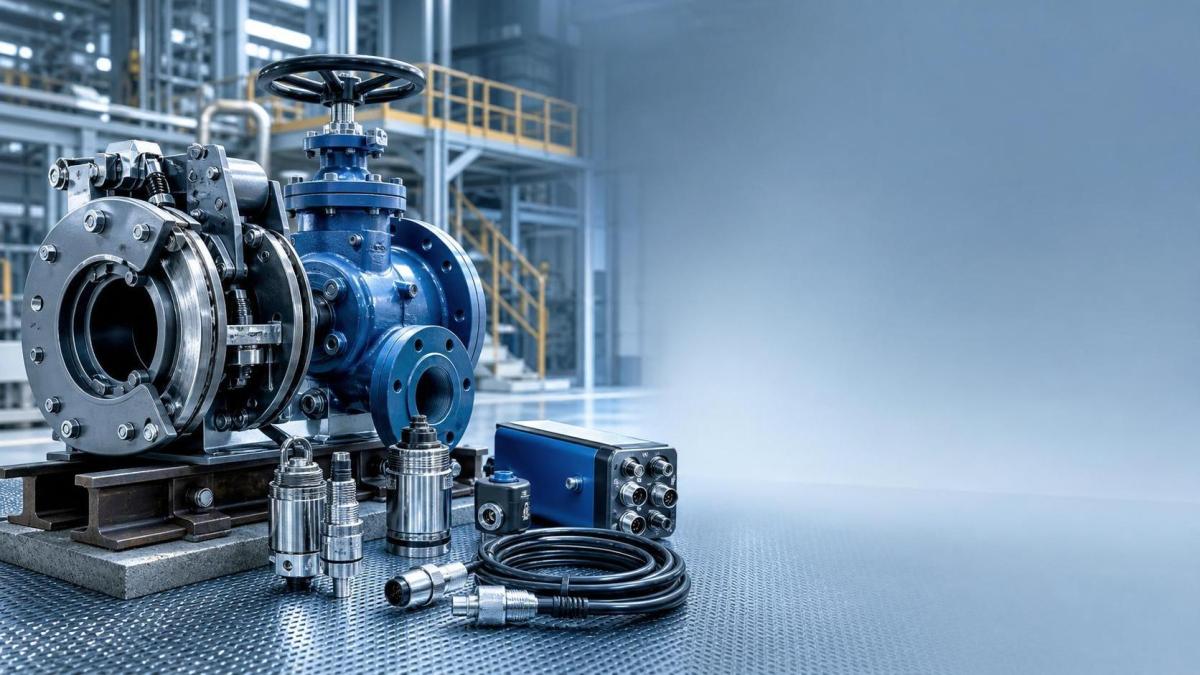
Heavy industry equipment downtime can break delivery plans fast. It also drives up repair spend, parts waste, and operational risk across rail and marine assets.
For maintenance work, the real challenge is rarely the failure alone. The bigger issue is how quickly the root cause is found and fixed.
That matters even more in systems like braking units, pantographs, signal control hardware, smart container ships, and LNG carriers, where delays carry safety and commercial consequences.
This guide looks at seven common causes of heavy industry equipment downtime and gives practical fixes that can be applied in the field and during planned service windows.
1. Poor Preventive Maintenance Timing
A surprising amount of heavy industry equipment downtime starts with maintenance that was either too late or done on the wrong interval.
Fixed calendars often miss actual duty conditions. A pantograph in extreme wind, for example, ages differently from one in stable service.
The same applies to vessel pumps, brake actuators, and onboard power modules exposed to changing load cycles.
Practical fix
- Shift from calendar-only service to condition-based triggers.
- Track vibration, thermal drift, wear rate, and current draw by asset type.
- Group components by actual duty severity, not just model number.
- Review intervals after every repeated failure pattern.
This reduces unnecessary stops while catching early degradation before it turns into serious heavy industry equipment downtime.
2. Missed Early Warning Signs in Data
Many failures are visible in data long before they appear in alarms. The problem is that weak signals are often ignored during busy service cycles.
A slight rise in brake response time, motor temperature, or insulation leakage may seem minor. In practice, those small shifts often mark the start of a larger event.
From recent field trends, more operators are seeing downtime linked to poor alarm filtering and weak trend analysis.
Practical fix
- Build alert thresholds around change rate, not only absolute values.
- Compare live readings with known healthy baselines.
- Flag repeat micro-faults across shifts and routes.
- Escalate combined symptoms, even when each one looks small alone.
Better interpretation of service data can cut heavy industry equipment downtime before the failure becomes visible to operations.
3. Harsh Operating Environments
Heavy industry equipment rarely works in gentle conditions. Salt spray, dust, shock, moisture, heat, cryogenic exposure, and voltage fluctuation all speed up damage.
Marine electronics face corrosion pressure. Rail assets face vibration, impact, and weather swings. LNG systems add extreme low-temperature stress to seals and containment parts.
When environmental loads are underestimated, heavy industry equipment downtime follows sooner than expected.
Practical fix
- Match inspection points to the environment, such as seals, coatings, connectors, and cable entries.
- Use corrosion mapping and contamination logs during routine checks.
- Confirm that replacement parts meet the same protection and material grade.
- Tighten cleaning and preservation steps after severe weather or long idle periods.
This is especially useful for mixed fleets where operating context changes faster than maintenance manuals do.
4. Spare Parts Problems
Sometimes the failure is straightforward, but recovery drags because the right spare is missing, delayed, or incorrectly specified.
This issue hits critical assets hard. A single unavailable relay module, sensor, valve kit, or control board can extend heavy industry equipment downtime by days.
In actual service networks, stock errors often come from poor failure history, weak part coding, or overreliance on generic substitutes.
Practical fix
Treat spare strategy as a reliability tool, not only a purchasing task.
Faster parts access directly reduces heavy industry equipment downtime and keeps troubleshooting from turning into a supply chain problem.
5. Incomplete Root Cause Analysis
A quick reset can restore operation, but it does not always solve the failure. Repeating faults usually mean the real cause was never removed.
This is common in control systems. A signal loss may look like a bad module, while the actual source is grounding, moisture ingress, or unstable power quality.
When teams stop at symptom level, heavy industry equipment downtime returns in cycles.
Practical fix
- Separate trigger, failure mode, and root cause in every report.
- Collect event logs, environment notes, and part condition photos before replacement.
- Use five-why reviews for repeat events across the same subsystem.
- Close the case only after verifying stable operation under normal load.
The goal is simple: stop treating recurrence as a new fault when it is really the old fault returning.
6. Skills Gaps and Inconsistent Field Procedures
As heavy industry equipment becomes more digital, mechanical knowledge alone is no longer enough. Teams now need confidence with diagnostics, software logic, and data interpretation.
The gap is wider on advanced assets such as SIL4 signalling components, traction systems, smart vessel control platforms, and LNG monitoring equipment.
More importantly, even skilled people lose time when procedures differ by shift, depot, or vessel.
Practical fix
- Standardize diagnostic flow for top downtime events.
- Use short job aids for fault isolation, measurements, and restart checks.
- Train across mechanical, electrical, and control layers together.
- Review difficult cases in brief post-repair sessions.
This creates repeatable field decisions and lowers avoidable heavy industry equipment downtime during high-pressure service calls.
7. Weak Coordination Between Service, Operations, and Intelligence
The last cause is often overlooked. Downtime grows when service teams, operators, planners, and technical intelligence work from separate information.
One team sees alarms, another sees route conditions, and another holds design updates. Without a joined view, the same issue gets treated in fragments.
That is why leading organizations increasingly connect field service with strategic intelligence and fleet-level trend tracking.
Practical fix
Build a shared review loop around the most costly failures.
- Link service records with operating context and asset history.
- Track failure clusters by route, port, weather band, or load pattern.
- Push design feedback into maintenance standards quickly.
- Use intelligence reports to prepare for likely failure waves.
For companies working across rail and ocean assets, this connected approach is becoming a practical advantage rather than a nice extra.
How to Reduce Heavy Industry Equipment Downtime Faster
If heavy industry equipment downtime is rising, start with the basics: timing, data, environment, parts, analysis, skills, and coordination.
Do not try to fix everything at once. Rank failures by safety exposure, restart difficulty, and commercial impact, then act in that order.
In real operations, the biggest gains usually come from better detection and better decisions, not from replacing the most hardware.
For rail and marine systems alike, steady reliability comes from combining field evidence with strong technical intelligence. That is where downtime turns into usable insight.
Use these seven fixes as a working checklist, then refine them by asset class. That step-by-step discipline is what keeps critical heavy industry equipment available, safer, and easier to recover.
Recommended News
 Sep 29, 2026What drives traction systems price differences between rail projects?Traction systems price differences explained: compare duty cycles, voltage compatibility, integration, localization, and lifecycle costs for smarter rail procurement.
 Sep 26, 2026What to assess before selecting an electric traction system manufacturerChoose an electric traction system manufacturer with confidence. Explore key criteria for performance, reliability, safety, integration, energy efficiency, and lifecycle support.
 Sep 25, 2026When do full digitalization systems justify the investment?Full digitalization systems: discover when rail and maritime operators can turn connected data into safer operations, higher availability, and measurable ROI.
 Sep 23, 2026What drives automatic train control systems cost on rail projects?Automatic train control systems cost depends on integration, migration, safety testing, communications, and lifecycle support. Explore the key budget drivers for rail projects.
 Sep 21, 2026How to assess an ocean going vessel builder’s delivery riskAssess an ocean going vessel builder’s delivery risk with proven checks for schedules, capacity, design maturity, critical equipment, quality, and project controls.
 Sep 20, 2026What drives rail safety technology costs over a project lifecycle?Rail safety technology cost goes beyond equipment—explore lifecycle drivers from integration and safety assurance to cybersecurity, commissioning, and obsolescence.
 Sep 16, 2026What to verify before choosing an advanced ocean-going vessels supplierAdvanced ocean-going vessels supplier checklist: verify design authority, build quality, digital systems, delivery reliability, and lifecycle support before you buy.
 Sep 15, 2026What rail safety technology best reduces level-crossing risks in Southeast Asia?Rail safety technology Southeast Asia: discover how fail-safe signalling, barriers, obstacle detection and remote monitoring reduce level-crossing risks.
 Sep 14, 2026How exporters can reduce customs delays in global trade logisticsGlobal trade logistics for exporters: reduce customs delays with accurate data, clearance-ready documents, early filing, and proactive exception management.
 Sep 13, 2026When do global transportation network systems reduce delivery delays?Global transportation network systems reduce delivery delays by improving rail-port-vessel coordination, real-time visibility, and proactive decisions across complex land-sea supply chains.
 Sep 09, 2026When should you choose a rail and maritime manufacturer with dual-sector capability?Rail and maritime manufacturer guide: learn when dual-sector capability reduces integration risk, improves lifecycle support, and strengthens rail-to-port operations.
 Sep 08, 2026What to verify before selecting a railway signalling equipment supplierRailway signalling equipment supplier checklist: verify safety evidence, integration, cybersecurity, delivery capability, and lifecycle support before award.
 Sep 07, 2026How to size a traction power transformer for railway load demandTraction power transformer sizing guide: model railway load demand, peak duty, voltage regulation, harmonics, and contingency capacity for reliable service.
 Sep 07, 2026How do customization options for industrial connectors affect lead times?Customization options for industrial connectors can impact lead times, cost, and compliance. Learn how to specify smarter for rail and marine projects.
 Sep 05, 2026What information should an industrial sourcing guide include?Industrial sourcing information procurement guide: evaluate suppliers, compliance, lifecycle costs, interfaces, and lead times for smarter rail and maritime purchasing decisions.
 Sep 01, 2026How to find reliable maritime tender information before biddingMaritime tender information: learn how to verify sources, define bid-ready scopes, check qualifications, and reduce risk before submitting competitive marine bids.
 Aug 30, 2026How to select railway automation equipment for depots with phased upgradesRailway automation equipment for depots: learn how to plan phased upgrades that improve safety, throughput, integration, and lifecycle control.
 Aug 27, 2026How industrial sourcing intelligence pricing data supports budget approvalIndustrial sourcing intelligence pricing data helps teams benchmark scope, assess supplier risk, and build defensible budget approvals for complex rail and maritime assets.
 Aug 26, 2026When does a marine fuel efficiency solution make financial sense in the Middle East?Marine fuel efficiency solution Middle East: learn when retrofit savings, compliance value, and vessel data align to deliver credible ROI and smarter shipping investment decisions.
 Aug 24, 2026When does maritime automation for tankers deliver a real payback?Maritime automation for tankers delivers real payback when it cuts fuel use, reduces cargo risk, and improves uptime. See how owners can time investment for stronger ROI.
 Aug 23, 2026When do maritime logistics systems in the Middle East justify the costMaritime logistics systems Middle East: discover when rising delays, manual coordination, and poor visibility make system investment the smarter move for regional operators.
 Aug 22, 2026What drives vessel navigation system price for commercial fleetsVessel navigation system price depends on integration, compliance, automation, and support—not just hardware. Learn what drives fleet costs and compare quotes with confidence.
 Aug 21, 2026How to assess shipbuilding maritime tenders before biddingShipbuilding maritime tenders require more than price checks. Learn how to assess technical scope, compliance, supply chain, and commercial risk before bidding with confidence.
 Aug 20, 2026When does working with an ocean-going vessels distributor reduce supply risk?Ocean-going vessels distributor: learn when this partner cuts supply risk through stronger compliance, faster response, and better sourcing resilience in complex maritime procurement.