



Search News
Industry Portal
Popular Tags
How to Evaluate a Digital Transport Systems Supplier in 2026
Author
Time
Click Count
How to Evaluate a Digital Transport Systems Supplier in 2026
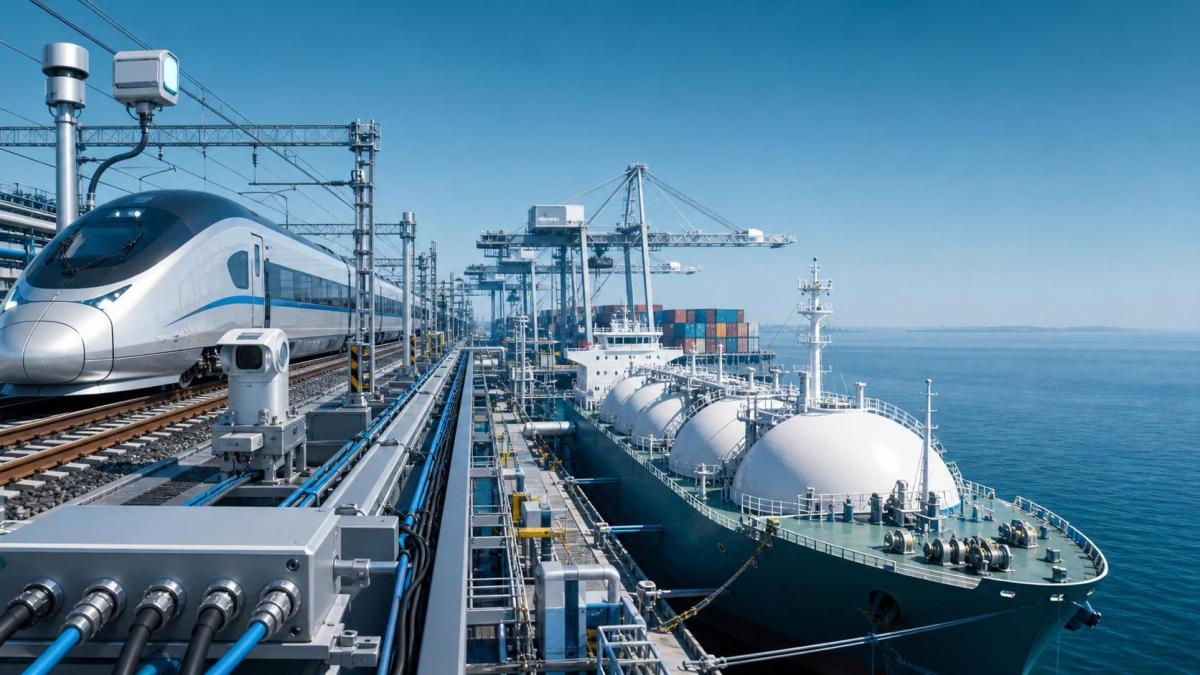
Choosing the right digital transport systems supplier in 2026 is no longer just a procurement task. It shapes safety, uptime, compliance, and long-term competitiveness.
Across rail, maritime, and integrated logistics, the market looks more complex than it did even two years ago. More vendors claim full-stack capability. Fewer can prove it.
That gap matters. A weak digital transport systems supplier can expose operations to delays, cyber risk, integration failures, and expensive retrofit cycles.
A strong supplier does the opposite. It supports resilient operations, cleaner asset performance, better data visibility, and faster decision-making across land and sea networks.
For organizations watching rail signaling, traction systems, braking intelligence, smart vessels, and LNG shipping, evaluation now needs a sharper framework.
This is especially true as digitalization and decarbonization move from strategy decks into hard technical requirements. In practice, every supplier claim should be tested against operational evidence.
Why 2026 Changes the Supplier Evaluation Process
From recent market shifts, one signal stands out. Transport systems are no longer judged only by hardware quality or project delivery speed.
Now, the digital layer matters just as much. That includes software architecture, data integrity, interoperability, edge intelligence, and lifecycle support.
In rail, SIL4 safety demands continue to tighten system validation expectations. In shipping, route optimization, fuel efficiency, and remote diagnostics are becoming standard decision points.
This also means a digital transport systems supplier must be evaluated as a technology partner, not simply a component provider.
The supplier should understand how control logic, onboard equipment, cloud platforms, and compliance reporting connect in daily operations.
For complex assets like pantographs, braking systems, smart container ships, and LNG carriers, this integrated view is now essential.
Start With Operational Fit, Not Vendor Slides
The first filter is simple. Can the digital transport systems supplier support the real operating model, not a generic one?
A supplier may look strong in presentations, yet still struggle with mixed fleets, aging infrastructure, or cross-border compliance conditions.
Ask for evidence tied to operating environments close to your own. That includes asset type, route density, safety level, energy profile, and maintenance structure.
In actual projects, the most useful questions are often operational:
- Has the supplier deployed similar systems at comparable scale?
- Can it integrate with existing signaling, propulsion, or vessel management systems?
- How does it handle low-latency control and high-volume telemetry together?
- What happened in past failures, and how quickly were they resolved?
A reliable digital transport systems supplier will answer with architecture details, measurable outcomes, and references. Vague claims usually indicate shallow delivery depth.
Assess Core Technical Capability in Layers
A useful evaluation separates capability into layers. This avoids getting distracted by polished dashboards or isolated pilot results.
1. Control and Safety Logic
For rail and marine operations, control logic is the foundation. Review fail-safe behavior, redundancy design, alarm prioritization, and recovery pathways.
If the digital transport systems supplier works in signaling or braking, safety certification and validation discipline should be easy to verify.
2. Data and Connectivity Architecture
Look at how data moves from sensors to control systems, edge devices, enterprise platforms, and reporting tools. Latency, resilience, and traceability matter.
This is where many suppliers overpromise. A capable digital transport systems supplier can explain protocol support, API strategy, storage logic, and data ownership rules clearly.
3. Analytics and Decision Support
Predictive maintenance, route optimization, and energy management are valuable only when model outputs are usable by operations teams.
Check whether recommendations are explainable, auditable, and tied to maintenance planning, dispatch decisions, or voyage economics.
4. Lifecycle Engineering
A strong digital transport systems supplier plans for updates, obsolescence, cybersecurity patches, and configuration drift over ten years or more.
That long view is often what separates scalable programs from expensive digital dead ends.
Check Interoperability Before You Check Price
Interoperability is where hidden cost usually lives. A cheaper proposal can become the most expensive choice after integration starts.
This is even more obvious in mixed environments. Rail operators often combine legacy signaling with newer traction and monitoring platforms. Ship operators do something similar onboard.
A qualified digital transport systems supplier should support open standards where possible and define closed interfaces honestly where necessary.
Ask for a practical interface map covering:
- existing control systems
- ERP and asset management platforms
- condition monitoring tools
- cybersecurity monitoring layers
- shore-side or control-center applications
If integration dependencies remain unclear after technical workshops, treat that as a real risk signal.
Audit Cybersecurity and Compliance Depth
By 2026, cybersecurity can no longer sit in the appendix of a supplier proposal. It belongs near the top of the decision matrix.
A digital transport systems supplier should show secure development practices, vulnerability response processes, access control design, and incident escalation routines.
For regulated sectors, compliance depth also matters. That includes railway safety standards, marine class requirements, environmental reporting, and regional data rules.
GTOT’s coverage of rail control components and advanced vessels highlights a consistent reality. Safety-critical hardware and digital intelligence must be reviewed together, not separately.
When a supplier cannot explain how software updates affect certified behavior, the risk is already visible.
Examine Service Capacity, Not Just Product Capability
Even a technically strong digital transport systems supplier can fail at execution if service capacity is thin.
Look beyond the sales team. Review engineering bench strength, regional support coverage, spare strategy, training resources, and escalation ownership.
In real operations, response quality matters most when something breaks at speed, at sea, or during high-density scheduling windows.
Useful service checks include:
- Named technical contacts for implementation and post-launch support.
- Clear SLAs for fault response, remote diagnostics, and patch release timing.
- Training plans for operators, maintainers, and control-center teams.
- A roadmap for upgrades without disrupting live operations.
This part often looks less exciting than technology demos. It usually matters more after contract award.
Use a Weighted Evaluation Scorecard
A disciplined scorecard helps compare suppliers on facts, not impressions. It also protects the decision process from internal bias.
The exact weighting should reflect the operating model. Still, most digital transport systems supplier evaluations benefit from a balanced structure.
This framework keeps the digital transport systems supplier conversation anchored in measurable criteria, especially during final-stage negotiations.
Red Flags That Should Slow the Decision
Some warning signs are easy to miss because they arrive wrapped in confident messaging. Slowing down at this stage can prevent years of operational drag.
- No clear separation between proven functions and roadmap features.
- Limited reference projects in safety-critical or mission-critical environments.
- Unclear ownership of data interfaces and upgrade responsibilities.
- Cybersecurity answers handled only by sales staff.
- Low upfront price paired with vague lifecycle support terms.
- Weak explanation of how the system performs during degraded conditions.
A credible digital transport systems supplier does not need to sound flawless. It needs to sound specific, transparent, and operationally mature.
Final Decision: Choose for Resilience, Not Just Features
The best digital transport systems supplier in 2026 is rarely the one with the longest feature list. It is the one that can keep critical transport systems safe, connected, adaptable, and supportable over time.
That decision becomes stronger when evaluation covers operational fit, layered technical depth, interoperability, cybersecurity, and service execution together.
For sectors shaped by rail intelligence, high-speed power control, advanced braking, smart shipping, and LNG vessel performance, the standard should be high.
Use the shortlist process to pressure-test claims. Request architecture reviews, scenario simulations, reference calls, and lifecycle cost models before final commitment.
When the evaluation is rigorous, the result is more than a supplier choice. It becomes a foundation for resilient transport growth in a harder, more connected 2026 market.
Recommended News
 Sep 29, 2026What drives traction systems price differences between rail projects?Traction systems price differences explained: compare duty cycles, voltage compatibility, integration, localization, and lifecycle costs for smarter rail procurement.
 Sep 26, 2026What to assess before selecting an electric traction system manufacturerChoose an electric traction system manufacturer with confidence. Explore key criteria for performance, reliability, safety, integration, energy efficiency, and lifecycle support.
 Sep 25, 2026When do full digitalization systems justify the investment?Full digitalization systems: discover when rail and maritime operators can turn connected data into safer operations, higher availability, and measurable ROI.
 Sep 23, 2026What drives automatic train control systems cost on rail projects?Automatic train control systems cost depends on integration, migration, safety testing, communications, and lifecycle support. Explore the key budget drivers for rail projects.
 Sep 21, 2026How to assess an ocean going vessel builder’s delivery riskAssess an ocean going vessel builder’s delivery risk with proven checks for schedules, capacity, design maturity, critical equipment, quality, and project controls.
 Sep 20, 2026What drives rail safety technology costs over a project lifecycle?Rail safety technology cost goes beyond equipment—explore lifecycle drivers from integration and safety assurance to cybersecurity, commissioning, and obsolescence.
 Sep 16, 2026What to verify before choosing an advanced ocean-going vessels supplierAdvanced ocean-going vessels supplier checklist: verify design authority, build quality, digital systems, delivery reliability, and lifecycle support before you buy.
 Sep 15, 2026What rail safety technology best reduces level-crossing risks in Southeast Asia?Rail safety technology Southeast Asia: discover how fail-safe signalling, barriers, obstacle detection and remote monitoring reduce level-crossing risks.
 Sep 14, 2026How exporters can reduce customs delays in global trade logisticsGlobal trade logistics for exporters: reduce customs delays with accurate data, clearance-ready documents, early filing, and proactive exception management.
 Sep 13, 2026When do global transportation network systems reduce delivery delays?Global transportation network systems reduce delivery delays by improving rail-port-vessel coordination, real-time visibility, and proactive decisions across complex land-sea supply chains.
 Sep 09, 2026When should you choose a rail and maritime manufacturer with dual-sector capability?Rail and maritime manufacturer guide: learn when dual-sector capability reduces integration risk, improves lifecycle support, and strengthens rail-to-port operations.
 Sep 08, 2026What to verify before selecting a railway signalling equipment supplierRailway signalling equipment supplier checklist: verify safety evidence, integration, cybersecurity, delivery capability, and lifecycle support before award.
 Sep 07, 2026How to size a traction power transformer for railway load demandTraction power transformer sizing guide: model railway load demand, peak duty, voltage regulation, harmonics, and contingency capacity for reliable service.
 Sep 07, 2026How do customization options for industrial connectors affect lead times?Customization options for industrial connectors can impact lead times, cost, and compliance. Learn how to specify smarter for rail and marine projects.
 Sep 05, 2026What information should an industrial sourcing guide include?Industrial sourcing information procurement guide: evaluate suppliers, compliance, lifecycle costs, interfaces, and lead times for smarter rail and maritime purchasing decisions.
 Sep 01, 2026How to find reliable maritime tender information before biddingMaritime tender information: learn how to verify sources, define bid-ready scopes, check qualifications, and reduce risk before submitting competitive marine bids.
 Aug 30, 2026How to select railway automation equipment for depots with phased upgradesRailway automation equipment for depots: learn how to plan phased upgrades that improve safety, throughput, integration, and lifecycle control.
 Aug 27, 2026How industrial sourcing intelligence pricing data supports budget approvalIndustrial sourcing intelligence pricing data helps teams benchmark scope, assess supplier risk, and build defensible budget approvals for complex rail and maritime assets.
 Aug 26, 2026When does a marine fuel efficiency solution make financial sense in the Middle East?Marine fuel efficiency solution Middle East: learn when retrofit savings, compliance value, and vessel data align to deliver credible ROI and smarter shipping investment decisions.
 Aug 24, 2026When does maritime automation for tankers deliver a real payback?Maritime automation for tankers delivers real payback when it cuts fuel use, reduces cargo risk, and improves uptime. See how owners can time investment for stronger ROI.
 Aug 23, 2026When do maritime logistics systems in the Middle East justify the costMaritime logistics systems Middle East: discover when rising delays, manual coordination, and poor visibility make system investment the smarter move for regional operators.
 Aug 22, 2026What drives vessel navigation system price for commercial fleetsVessel navigation system price depends on integration, compliance, automation, and support—not just hardware. Learn what drives fleet costs and compare quotes with confidence.
 Aug 21, 2026How to assess shipbuilding maritime tenders before biddingShipbuilding maritime tenders require more than price checks. Learn how to assess technical scope, compliance, supply chain, and commercial risk before bidding with confidence.
 Aug 20, 2026When does working with an ocean-going vessels distributor reduce supply risk?Ocean-going vessels distributor: learn when this partner cuts supply risk through stronger compliance, faster response, and better sourcing resilience in complex maritime procurement.