



Search News
Industry Portal
Popular Tags
How to Evaluate Shipbuilding Maritime Tenders Without Missing Cost Risks
Author
Time
Click Count
How to Evaluate Shipbuilding Maritime Tenders Without Missing Cost Risks
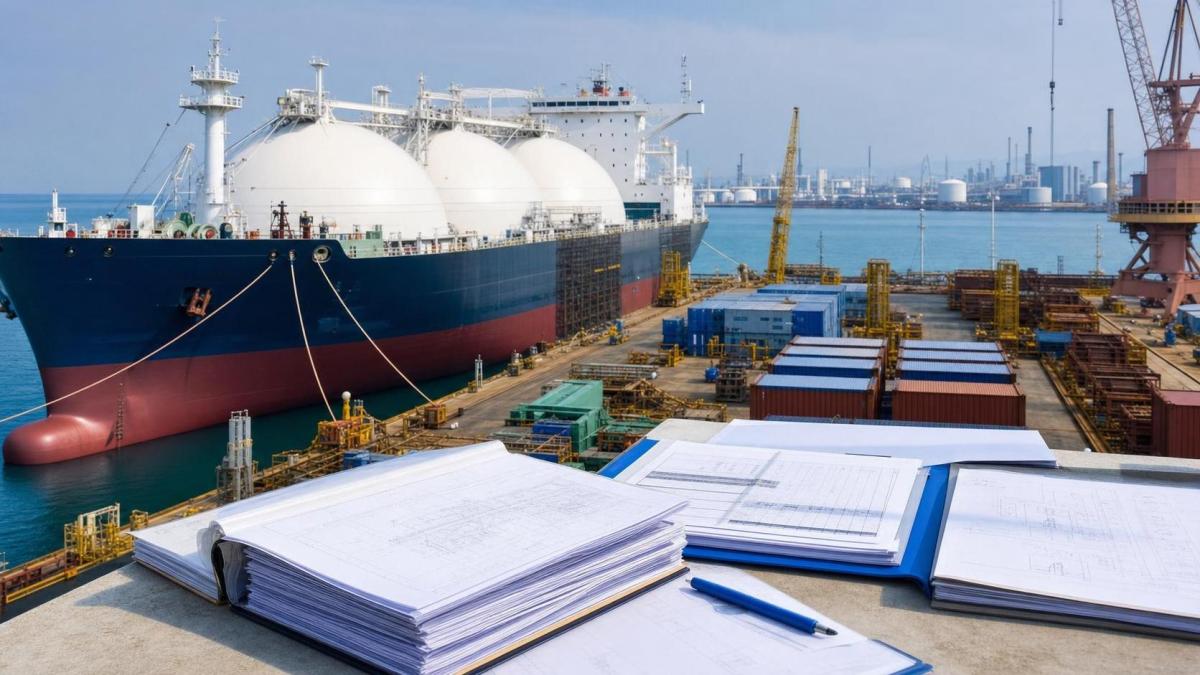
Evaluating shipbuilding maritime tenders is rarely a price-only exercise.
A low bid can still become the highest-cost option after change orders, delays, fuel inefficiency, or compliance upgrades.
That is why strong tender evaluation starts with cost visibility across the full vessel lifecycle.
For shipbuilding maritime tenders, the real question is simple.
Which offer protects operational value while keeping technical, contractual, and schedule risk under control?
In practice, this means comparing not only shipyard pricing, but also design maturity, propulsion choices, supplier strength, and after-delivery support.
The more complex the vessel, the more these hidden factors shape total project cost.
This is especially true in smart container ships, LNG carriers, and other advanced fleets.
A disciplined review framework helps turn dense tender files into usable decision signals.
Start With the Full Cost Structure
Many shipbuilding maritime tenders look competitive because the headline build price is tight.
But the commercial picture changes once technical clarifications and lifecycle expenses are added.
A practical first step is to divide the offer into five cost blocks.
- Base construction price and milestone payment schedule
- Owner-furnished equipment and interface costs
- Commissioning, sea trials, and acceptance adjustment exposure
- Operating costs such as fuel, maintenance, and spares
- Compliance, retrofit, and warranty-related financial risk
This structure makes shipbuilding maritime tenders easier to compare on a like-for-like basis.
It also exposes bids that look cheap only because key obligations sit outside the quoted scope.
From recent market shifts, this has become a more visible pattern in international vessel procurement.
Shipyards under margin pressure may narrow inclusions and rely on post-award adjustments.
Questions That Reveal Hidden Cost Risk
When reviewing shipbuilding maritime tenders, ask direct cost-risk questions early.
- Are major equipment specifications fixed, or still subject to yard standard substitution?
- What assumptions sit behind steel price, cable quantity, and outfitting scope?
- Which tests are included, and which could trigger variation claims later?
- Does the offer include software integration, cybersecurity measures, and data interfaces?
- How are fuel performance guarantees measured, corrected, and enforced?
These questions sharpen procurement decisions and reduce blind spots before negotiation starts.
Check Technical Compliance Beyond the Bid Summary
A common mistake in shipbuilding maritime tenders is relying too heavily on the executive summary.
The real risk often hides in exceptions, notes, and cross-references inside technical appendices.
This matters even more for advanced vessel programs with digital, environmental, and safety performance targets.
Smart ships, for example, may need integrated navigation logic, shore connectivity, remote diagnostics, and AI-supported optimization tools.
If those interfaces are loosely defined, future integration cost can escalate quickly.
A useful approach is to score technical compliance in three layers.
- Mandatory compliance with class, flag, emissions, and contract requirements
- Functional performance against operational mission needs
- Expandability for digital upgrades, maintenance access, and future regulations
This layered method prevents technical evaluation from becoming a simple box-ticking exercise.
It also creates a stronger record for award justification when bids are close on price.
Where Technical Gaps Usually Appear
In actual tender reviews, several problem areas appear again and again.
- Propulsion efficiency claims without clear reference conditions
- Automation architecture missing redundancy detail
- Cargo handling systems with limited proven references
- LNG containment or cryogenic support systems with unclear inspection scope
- Cybersecurity compliance stated broadly but not contractually anchored
In shipbuilding maritime tenders, each unresolved technical gap tends to convert into later cost pressure.
Assess Delivery and Supply Chain Reliability
Cost risk is not only about engineering or contract language.
Delivery slippage can create charter loss, financing pressure, and downstream operational disruption.
That is why shipbuilding maritime tenders should be tested against schedule realism, not schedule promises.
Look at the yard’s current berth loading, labor stability, and dependence on critical imported systems.
Then compare that with the proposed build timeline and delivery buffer.
More telling signals often come from supplier concentration.
If one propulsion package, control platform, or cargo system vendor holds too much schedule influence, contingency needs to be priced in.
A Simple Reliability Screen
This kind of screen makes shipbuilding maritime tenders easier to rank by execution confidence.
Review Contract Terms With a Cost Lens
Even technically strong shipbuilding maritime tenders can fail the value test because of weak contract allocation.
Contract review should focus on where cost can leak after award.
Liquidated damages, warranty triggers, change-order mechanisms, and acceptance criteria deserve close attention.
The same applies to governing law, dispute procedure, and force majeure wording.
These terms often look secondary during commercial comparison, but they directly affect cost recovery.
A practical contract review checklist includes the following points.
- Are performance guarantees measurable and independently testable?
- Is there a clear cap on owner exposure for approved variations?
- Do delay damages meaningfully offset commercial loss?
- Are spare parts, manuals, and training linked to final acceptance?
- Does warranty language cover recurring software and system faults?
In real procurement work, these details often separate an acceptable tender from a costly one.
Build a Weighted Evaluation Model That Reflects Actual Risk
The final decision on shipbuilding maritime tenders should not rest on narrative discussion alone.
A weighted model helps translate complex judgment into a defendable award recommendation.
But the model must reflect actual procurement risk, not internal habit.
For advanced vessels, weighting price too heavily can distort the outcome.
A balanced structure may include price, technical compliance, lifecycle operating cost, delivery certainty, and contract robustness.
Supporting intelligence also matters here.
Platforms such as GTOT help procurement teams read market direction behind the tender itself.
That includes supplier credibility, technology maturity, shipbuilding cycles, and demand shifts in smart vessels or LNG carriers.
This wider context is useful when two bids appear similar on paper but differ in strategic resilience.
A Practical Decision Flow
- Normalize each tender scope before comparing price.
- Remove non-compliant bids or score their deviation cost explicitly.
- Estimate lifecycle and execution risk in monetary terms where possible.
- Apply weighted scoring with documented assumptions.
- Test the result through negotiation scenarios and sensitivity analysis.
This approach makes shipbuilding maritime tenders easier to defend internally and externally.
Conclusion: Better Tender Decisions Come From Better Risk Visibility
The strongest evaluation of shipbuilding maritime tenders does not chase the lowest visible number.
It identifies where cost risk is hiding, how likely it is to materialize, and which bidder can absorb complexity best.
That means reading pricing, engineering, schedule, and contract terms as one connected decision set.
In practical procurement work, that discipline protects budget, delivery, and long-term asset value.
For teams handling shipbuilding maritime tenders, the most reliable next step is clear.
Use a structured evaluation model, challenge every hidden assumption, and turn market intelligence into a real cost advantage.
Recommended News
 Sep 29, 2026What drives traction systems price differences between rail projects?Traction systems price differences explained: compare duty cycles, voltage compatibility, integration, localization, and lifecycle costs for smarter rail procurement.
 Sep 26, 2026What to assess before selecting an electric traction system manufacturerChoose an electric traction system manufacturer with confidence. Explore key criteria for performance, reliability, safety, integration, energy efficiency, and lifecycle support.
 Sep 25, 2026When do full digitalization systems justify the investment?Full digitalization systems: discover when rail and maritime operators can turn connected data into safer operations, higher availability, and measurable ROI.
 Sep 23, 2026What drives automatic train control systems cost on rail projects?Automatic train control systems cost depends on integration, migration, safety testing, communications, and lifecycle support. Explore the key budget drivers for rail projects.
 Sep 21, 2026How to assess an ocean going vessel builder’s delivery riskAssess an ocean going vessel builder’s delivery risk with proven checks for schedules, capacity, design maturity, critical equipment, quality, and project controls.
 Sep 20, 2026What drives rail safety technology costs over a project lifecycle?Rail safety technology cost goes beyond equipment—explore lifecycle drivers from integration and safety assurance to cybersecurity, commissioning, and obsolescence.
 Sep 16, 2026What to verify before choosing an advanced ocean-going vessels supplierAdvanced ocean-going vessels supplier checklist: verify design authority, build quality, digital systems, delivery reliability, and lifecycle support before you buy.
 Sep 15, 2026What rail safety technology best reduces level-crossing risks in Southeast Asia?Rail safety technology Southeast Asia: discover how fail-safe signalling, barriers, obstacle detection and remote monitoring reduce level-crossing risks.
 Sep 14, 2026How exporters can reduce customs delays in global trade logisticsGlobal trade logistics for exporters: reduce customs delays with accurate data, clearance-ready documents, early filing, and proactive exception management.
 Sep 13, 2026When do global transportation network systems reduce delivery delays?Global transportation network systems reduce delivery delays by improving rail-port-vessel coordination, real-time visibility, and proactive decisions across complex land-sea supply chains.
 Sep 09, 2026When should you choose a rail and maritime manufacturer with dual-sector capability?Rail and maritime manufacturer guide: learn when dual-sector capability reduces integration risk, improves lifecycle support, and strengthens rail-to-port operations.
 Sep 08, 2026What to verify before selecting a railway signalling equipment supplierRailway signalling equipment supplier checklist: verify safety evidence, integration, cybersecurity, delivery capability, and lifecycle support before award.
 Sep 07, 2026How to size a traction power transformer for railway load demandTraction power transformer sizing guide: model railway load demand, peak duty, voltage regulation, harmonics, and contingency capacity for reliable service.
 Sep 07, 2026How do customization options for industrial connectors affect lead times?Customization options for industrial connectors can impact lead times, cost, and compliance. Learn how to specify smarter for rail and marine projects.
 Sep 05, 2026What information should an industrial sourcing guide include?Industrial sourcing information procurement guide: evaluate suppliers, compliance, lifecycle costs, interfaces, and lead times for smarter rail and maritime purchasing decisions.
 Sep 01, 2026How to find reliable maritime tender information before biddingMaritime tender information: learn how to verify sources, define bid-ready scopes, check qualifications, and reduce risk before submitting competitive marine bids.
 Aug 30, 2026How to select railway automation equipment for depots with phased upgradesRailway automation equipment for depots: learn how to plan phased upgrades that improve safety, throughput, integration, and lifecycle control.
 Aug 27, 2026How industrial sourcing intelligence pricing data supports budget approvalIndustrial sourcing intelligence pricing data helps teams benchmark scope, assess supplier risk, and build defensible budget approvals for complex rail and maritime assets.
 Aug 26, 2026When does a marine fuel efficiency solution make financial sense in the Middle East?Marine fuel efficiency solution Middle East: learn when retrofit savings, compliance value, and vessel data align to deliver credible ROI and smarter shipping investment decisions.
 Aug 24, 2026When does maritime automation for tankers deliver a real payback?Maritime automation for tankers delivers real payback when it cuts fuel use, reduces cargo risk, and improves uptime. See how owners can time investment for stronger ROI.
 Aug 23, 2026When do maritime logistics systems in the Middle East justify the costMaritime logistics systems Middle East: discover when rising delays, manual coordination, and poor visibility make system investment the smarter move for regional operators.
 Aug 22, 2026What drives vessel navigation system price for commercial fleetsVessel navigation system price depends on integration, compliance, automation, and support—not just hardware. Learn what drives fleet costs and compare quotes with confidence.
 Aug 21, 2026How to assess shipbuilding maritime tenders before biddingShipbuilding maritime tenders require more than price checks. Learn how to assess technical scope, compliance, supply chain, and commercial risk before bidding with confidence.
 Aug 20, 2026When does working with an ocean-going vessels distributor reduce supply risk?Ocean-going vessels distributor: learn when this partner cuts supply risk through stronger compliance, faster response, and better sourcing resilience in complex maritime procurement.