



Search News
Industry Portal
Popular Tags
High Speed Rail Equipment: How to Compare Reliability Beyond Spec Sheets
Author
Time
Click Count
High Speed Rail Equipment: How to Compare Reliability Beyond Spec Sheets
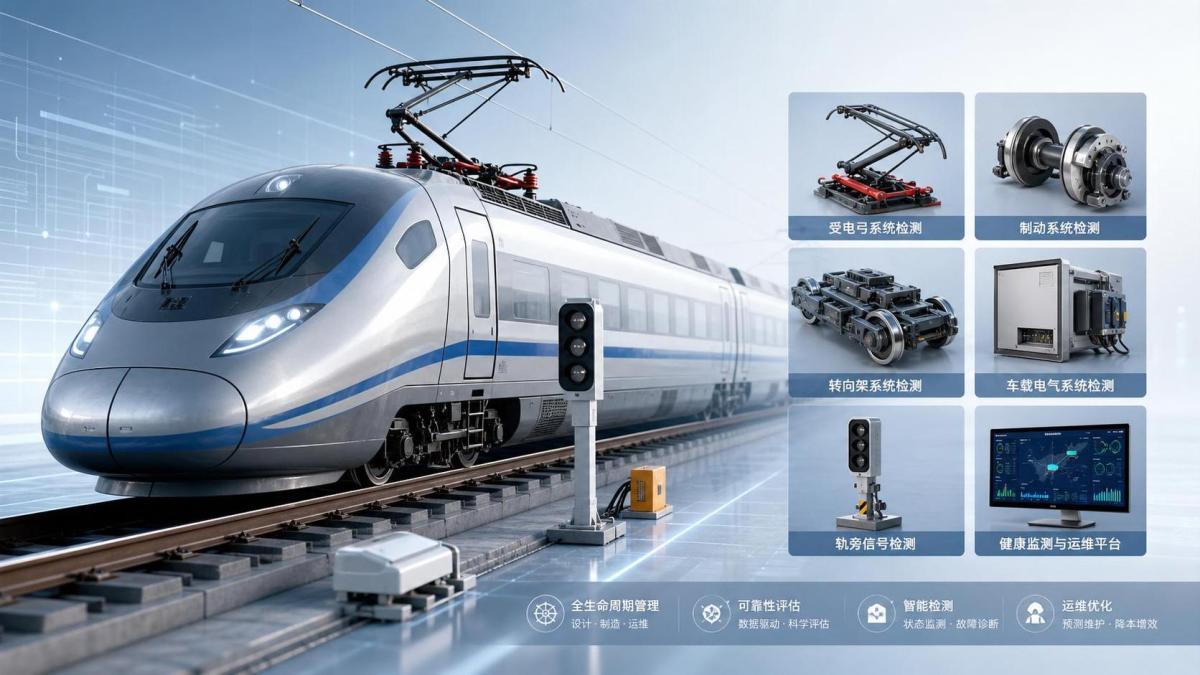
When evaluating high speed rail equipment, polished brochures rarely tell the full story. Rated output, speed limits, and compliance marks are only the starting point.
Real reliability appears in daily operations. It shows up in failure rates, maintenance windows, spare parts access, and supplier response when something goes wrong.
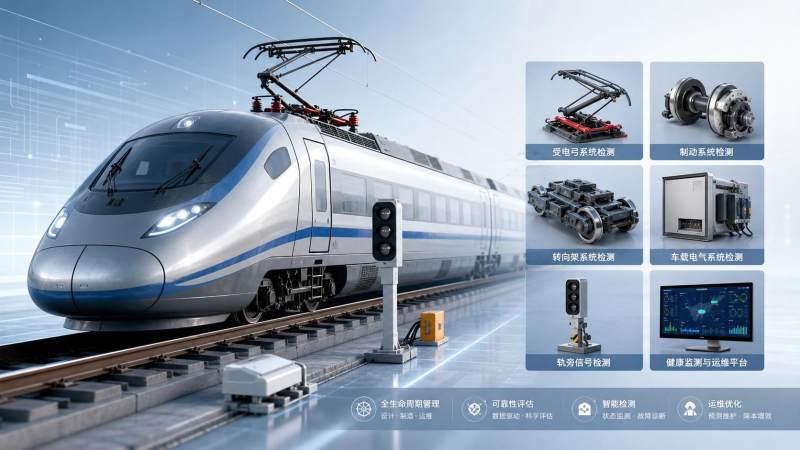
That matters even more for high speed rail equipment used in signalling, pantographs, braking systems, and traction-related assemblies. A small weakness can become a network-wide disruption.
From a sourcing perspective, the goal is not to buy the most impressive data sheet. The goal is to select high speed rail equipment that performs reliably across its full lifecycle.
This is where a deeper evaluation model becomes useful. It helps compare technical credibility, operating resilience, and supplier maturity with far more confidence.
Why spec sheets are not enough
Most spec sheets are designed to present best-case performance. They summarize nominal values under controlled conditions, not under long-term service stress.
For high speed rail equipment, reliability depends on vibration, temperature swings, dust exposure, power quality, maintenance discipline, and route intensity.
Two suppliers can meet the same standard yet deliver very different field results. One may fail less often. The other may recover faster after failure.
This also means compliance alone is not a strong differentiator. Standards confirm a baseline. They do not fully predict operational reliability or lifecycle efficiency.
In practical buying decisions, the stronger question is simple. How does this high speed rail equipment behave after years of real service, not after a lab demonstration?
Start with lifecycle reliability data
The first filter should be lifecycle evidence. Ask suppliers for installed base data, mean time between failures, overhaul intervals, and service life assumptions.
For high speed rail equipment, raw numbers alone are not enough. The operating context behind those numbers matters just as much.
A braking subsystem running on a moderate climate line cannot be compared directly with one serving heavy gradients and dense operating cycles.
Request segmented field data by speed range, annual mileage, environment, and maintenance regime. That makes reliability claims much easier to trust.
It is also wise to check whether the supplier tracks failure trends over time. Mature manufacturers can explain whether reliability improves after design revisions.
Key lifecycle questions to ask
- What is the proven service life of the high speed rail equipment in comparable networks?
- How often do critical parts require replacement or refurbishment?
- Which failure modes appear most often after three, five, and eight years?
- How much field data comes from routes above 300 km/h?
- What design changes were introduced after in-service lessons?
Look closely at failure behavior, not just failure frequency
A low failure rate looks attractive, but severity matters too. Some faults create small delays. Others trigger major safety procedures or fleet withdrawal.
That is why high speed rail equipment should be assessed through failure mode behavior. Buyers need to know how the system degrades and how safely it fails.
For example, signalling hardware with graceful fallback logic is often more valuable than a component with slightly better nominal performance.
The same thinking applies to pantographs and braking units. Controlled degradation can protect operations, reduce secondary damage, and simplify maintenance planning.
In actual business reviews, this is often the clearer signal. The best high speed rail equipment is not only durable. It is predictable under stress.
Useful failure analysis checkpoints
- Does the component fail safe, fail soft, or fail abruptly?
- Can onboard diagnostics identify the root cause quickly?
- Will a single fault spread into adjacent systems?
- How long does recovery take after an in-service event?
Maintenance access often decides long-term value
Many teams underestimate maintainability during the tender stage. Later, that oversight turns into longer downtime, higher labor hours, and expensive possession windows.
High speed rail equipment should be reviewed for access, modularity, tooling requirements, calibration needs, and training complexity.
A component with good reliability but poor service access may still create a weak business case. Ease of repair strongly affects whole-life cost.
More importantly, maintenance data should be verified against actual workshop practice. Supplier manuals are helpful, but frontline teams reveal the real workload.
This also influences spare strategy. If high speed rail equipment needs specialized tools or unique parts, inventory risk rises quickly.
What to compare in maintainability reviews
- Time required for inspection, removal, and reinstallation.
- Need for proprietary tools, software keys, or factory-only support.
- Availability of local technical training and troubleshooting guides.
- Common spare parts lead times and minimum stocking levels.
Interoperability is a hidden reliability factor
A component can be technically sound and still perform poorly if integration is weak. Reliability is heavily shaped by interfaces.
For high speed rail equipment, interoperability includes software protocols, control logic compatibility, mechanical fit, electrical tolerance, and data traceability.
This is especially important in mixed fleets or upgrade programs. Legacy systems often expose integration issues that brochures never mention.
Ask for examples of similar retrofit or cross-platform projects. Proven integration history reduces commissioning surprises and lowers operational risk.
A good supplier can clearly define interface responsibilities. That clarity prevents blame gaps when performance issues appear after deployment.
Supplier responsiveness matters as much as engineering quality
Even the best high speed rail equipment will eventually need support. The real test is how fast and how well the supplier responds.
Response capability includes technical escalation speed, field engineering coverage, spare parts resilience, and willingness to share root cause findings.
From recent market shifts, this has become even more important. Global logistics volatility can turn ordinary replacement parts into critical path risks.
A capable partner should explain local inventory planning, repair turnaround, and contingency actions during disruption. These details directly affect operational continuity.
In vendor comparisons, support maturity often separates a safe decision from a risky one. It deserves a formal score, not an informal impression.
Support indicators worth scoring
- Guaranteed response time for critical service incidents.
- Regional spare inventory and repair center coverage.
- Transparency in failure reports and corrective actions.
- Ability to support upgrades across the equipment lifecycle.
Build a practical evaluation framework
A useful sourcing decision needs more than a price comparison table. It needs a weighted framework that reflects operating reality.
For high speed rail equipment, many teams use a blended model covering technical fit, lifecycle reliability, maintainability, interoperability, and supplier support.
The weighting should match project priorities. A brownfield upgrade may favor integration. A new high-speed corridor may prioritize lifecycle performance and safety assurance.
This also helps internal alignment. Engineering, operations, maintenance, and commercial teams can compare the same high speed rail equipment through one shared structure.
Questions that strengthen sourcing decisions
Before final selection, ask for evidence that can be verified. That keeps high speed rail equipment evaluation grounded in facts rather than presentation quality.
- Can the supplier provide references from comparable high-speed operations?
- What failures occurred in the last major fleet deployment?
- How were those failures corrected, and how quickly?
- Which parts have the longest replenishment risk?
- What local capabilities exist for diagnostics and repair?
- How will interoperability be validated before full rollout?
These questions may feel detailed, but they reveal whether the supplier truly understands operational accountability. That is usually where better decisions start.
Final takeaway
Choosing high speed rail equipment is not just a technical exercise. It is a long-term risk decision with direct impact on safety, availability, and lifecycle cost.
The most reliable option is rarely the one with the most polished specification sheet. It is the one supported by credible field data, maintainable design, stable integration, and responsive service.
In real projects, that broader view creates better procurement outcomes. It reduces hidden risk and improves confidence before contracts are signed.
Use reliability evidence, failure behavior, maintainability, interoperability, and supplier support as a single decision lens. That approach leads to smarter high speed rail equipment selection and stronger long-term value.
Recommended News
 Sep 29, 2026What drives traction systems price differences between rail projects?Traction systems price differences explained: compare duty cycles, voltage compatibility, integration, localization, and lifecycle costs for smarter rail procurement.
 Sep 26, 2026What to assess before selecting an electric traction system manufacturerChoose an electric traction system manufacturer with confidence. Explore key criteria for performance, reliability, safety, integration, energy efficiency, and lifecycle support.
 Sep 25, 2026When do full digitalization systems justify the investment?Full digitalization systems: discover when rail and maritime operators can turn connected data into safer operations, higher availability, and measurable ROI.
 Sep 23, 2026What drives automatic train control systems cost on rail projects?Automatic train control systems cost depends on integration, migration, safety testing, communications, and lifecycle support. Explore the key budget drivers for rail projects.
 Sep 21, 2026How to assess an ocean going vessel builder’s delivery riskAssess an ocean going vessel builder’s delivery risk with proven checks for schedules, capacity, design maturity, critical equipment, quality, and project controls.
 Sep 20, 2026What drives rail safety technology costs over a project lifecycle?Rail safety technology cost goes beyond equipment—explore lifecycle drivers from integration and safety assurance to cybersecurity, commissioning, and obsolescence.
 Sep 16, 2026What to verify before choosing an advanced ocean-going vessels supplierAdvanced ocean-going vessels supplier checklist: verify design authority, build quality, digital systems, delivery reliability, and lifecycle support before you buy.
 Sep 15, 2026What rail safety technology best reduces level-crossing risks in Southeast Asia?Rail safety technology Southeast Asia: discover how fail-safe signalling, barriers, obstacle detection and remote monitoring reduce level-crossing risks.
 Sep 14, 2026How exporters can reduce customs delays in global trade logisticsGlobal trade logistics for exporters: reduce customs delays with accurate data, clearance-ready documents, early filing, and proactive exception management.
 Sep 13, 2026When do global transportation network systems reduce delivery delays?Global transportation network systems reduce delivery delays by improving rail-port-vessel coordination, real-time visibility, and proactive decisions across complex land-sea supply chains.
 Sep 09, 2026When should you choose a rail and maritime manufacturer with dual-sector capability?Rail and maritime manufacturer guide: learn when dual-sector capability reduces integration risk, improves lifecycle support, and strengthens rail-to-port operations.
 Sep 08, 2026What to verify before selecting a railway signalling equipment supplierRailway signalling equipment supplier checklist: verify safety evidence, integration, cybersecurity, delivery capability, and lifecycle support before award.
 Sep 07, 2026How to size a traction power transformer for railway load demandTraction power transformer sizing guide: model railway load demand, peak duty, voltage regulation, harmonics, and contingency capacity for reliable service.
 Sep 07, 2026How do customization options for industrial connectors affect lead times?Customization options for industrial connectors can impact lead times, cost, and compliance. Learn how to specify smarter for rail and marine projects.
 Sep 05, 2026What information should an industrial sourcing guide include?Industrial sourcing information procurement guide: evaluate suppliers, compliance, lifecycle costs, interfaces, and lead times for smarter rail and maritime purchasing decisions.
 Sep 01, 2026How to find reliable maritime tender information before biddingMaritime tender information: learn how to verify sources, define bid-ready scopes, check qualifications, and reduce risk before submitting competitive marine bids.
 Aug 30, 2026How to select railway automation equipment for depots with phased upgradesRailway automation equipment for depots: learn how to plan phased upgrades that improve safety, throughput, integration, and lifecycle control.
 Aug 27, 2026How industrial sourcing intelligence pricing data supports budget approvalIndustrial sourcing intelligence pricing data helps teams benchmark scope, assess supplier risk, and build defensible budget approvals for complex rail and maritime assets.
 Aug 26, 2026When does a marine fuel efficiency solution make financial sense in the Middle East?Marine fuel efficiency solution Middle East: learn when retrofit savings, compliance value, and vessel data align to deliver credible ROI and smarter shipping investment decisions.
 Aug 24, 2026When does maritime automation for tankers deliver a real payback?Maritime automation for tankers delivers real payback when it cuts fuel use, reduces cargo risk, and improves uptime. See how owners can time investment for stronger ROI.
 Aug 23, 2026When do maritime logistics systems in the Middle East justify the costMaritime logistics systems Middle East: discover when rising delays, manual coordination, and poor visibility make system investment the smarter move for regional operators.
 Aug 22, 2026What drives vessel navigation system price for commercial fleetsVessel navigation system price depends on integration, compliance, automation, and support—not just hardware. Learn what drives fleet costs and compare quotes with confidence.
 Aug 21, 2026How to assess shipbuilding maritime tenders before biddingShipbuilding maritime tenders require more than price checks. Learn how to assess technical scope, compliance, supply chain, and commercial risk before bidding with confidence.
 Aug 20, 2026When does working with an ocean-going vessels distributor reduce supply risk?Ocean-going vessels distributor: learn when this partner cuts supply risk through stronger compliance, faster response, and better sourcing resilience in complex maritime procurement.