



Search News
Industry Portal
Popular Tags
How to Write Specification-Oriented Product Content for HMI Panels
Author
Time
Click Count
How to Write Specification-Oriented Product Content for HMI Panels
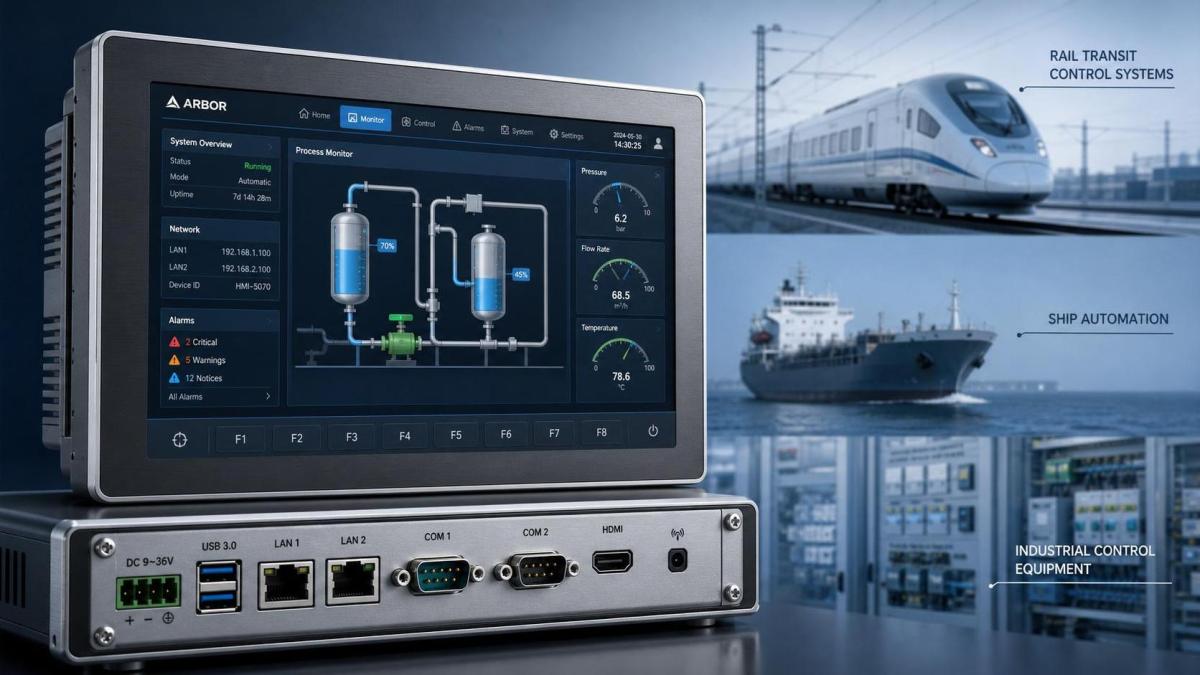
For technical evaluators, specification-oriented product content for HMI panels is not a branding exercise. It is a decision tool used to compare capability, risk, and integration fit.
That matters even more in transport, marine, and industrial control environments. A vague product page slows review cycles and creates unnecessary clarification work.
Clear specification-oriented product content for HMI panels helps teams verify performance boundaries, compliance status, interface options, and lifecycle suitability before procurement moves forward.
In practical terms, good content answers technical questions early. It also shows whether the panel is suitable for rail control rooms, smart vessel systems, port automation, or heavy-duty field equipment.
Why Specification-Oriented Product Content for HMI Panels Matters
Most HMI panel buyers already know the product category. What they need is usable evidence.
A technically strong page reduces uncertainty around processor capability, display readability, communication protocols, environmental durability, and software support. That shortens internal evaluation time.
From recent market shifts, one signal is becoming clearer. HMI panels are no longer judged only on screen size and touch response.
Now, technical teams expect specification-oriented product content for HMI panels to cover cybersecurity, network interoperability, temperature tolerance, long-term parts availability, and standards compliance.
This is especially relevant for sectors observed by GTOT. Railway signal systems and ocean-going control platforms both rely on stable human-machine interfaces under strict operational conditions.
Start with the Decision Context
Before writing, define how the HMI panel will be evaluated. This step shapes the content structure.
In many projects, reviewers are comparing multiple panel options across several technical layers. They want fast access to facts, not generic product promises.
A useful framework is to organize specification-oriented product content for HMI panels around five decision areas:
- Core hardware performance
- Display and interaction reliability
- Industrial communication compatibility
- Compliance and environmental endurance
- Maintenance lifecycle and deployment risk
This structure reflects how real evaluations happen. It also prevents content from becoming scattered or repetitive.
Lead with Core Specifications, Not Marketing Claims
The first technical block should present measurable specifications. Avoid opening with broad statements like “high performance” or “rugged design.”
Instead, state the parameters that directly affect deployment and system behavior.
What to include first
- Display size, resolution, brightness, and viewing angle
- Touch type, response method, and glove or wet-hand support
- CPU, memory, storage, and boot behavior
- Power input range and consumption
- Mounting format and enclosure rating
This approach makes specification-oriented product content for HMI panels easier to scan. It also helps reviewers identify disqualifying gaps in minutes.
In rail or marine applications, visibility and input reliability are not cosmetic details. They affect operator accuracy, downtime exposure, and safety margins.
Explain Interface and Protocol Fit Clearly
One of the weakest areas in many product pages is connectivity detail. Yet integration risk often decides whether a product passes technical review.
Specification-oriented product content for HMI panels should clearly list communication interfaces and supported protocols. That includes both current support and optional expansion.
Typical details reviewers expect
- Ethernet ports and switching options
- Serial interfaces such as RS-232, RS-422, and RS-485
- USB host and device support
- Fieldbus or industrial Ethernet compatibility
- Protocol support such as Modbus, PROFINET, EtherNet/IP, or CAN-based options
Be precise about protocol versions, licensing limits, and controller interoperability. General language creates false confidence and can trigger rework later.
In transport infrastructure, mixed-vendor environments are common. That means interface transparency is a key part of specification-oriented product content for HMI panels.
Cover Environmental and Compliance Data Without Gaps
A panel may look technically strong on paper and still fail the actual application. Environmental and regulatory data prevent that mistake.
This is where specification-oriented product content for HMI panels needs discipline. Reviewers should not need a second document to confirm basic suitability.
Essential compliance and durability fields
- Operating and storage temperature range
- Humidity tolerance and condensation limits
- Shock and vibration resistance
- Ingress protection such as IP65 or IP66
- EMC, CE, UL, RoHS, marine, or rail-related certifications where applicable
If the panel is intended for onboard marine systems or rail-side equipment, say so directly. Then support the claim with standards and test references.
This is also where GTOT-aligned sectors raise the bar. High-speed rail and advanced vessels both demand predictable interface behavior under vibration, temperature stress, and power variation.
Show Lifecycle Value, Not Just Initial Capability
In actual procurement, initial specifications are only part of the decision. Lifecycle risk often has equal weight.
That means specification-oriented product content for HMI panels should address software maintenance, spare parts availability, firmware update policy, and expected product longevity.
A short lifecycle section can answer several high-value questions:
- How long is the model planned to remain active?
- Are replacement parts backward compatible?
- How are security patches delivered?
- What remote diagnostics functions are available?
- Is engineering software version-locked or upgradeable?
This makes the content more credible. It also aligns with long-service assets such as rail systems, terminal infrastructure, and ocean-going vessels.
Use Tables to Make Comparison Easier
Well-structured tables improve readability and reduce ambiguity. They are especially useful when specification-oriented product content for HMI panels includes many numeric values.
A table should not replace explanation. It should make the explanation easier to validate.
Common Mistakes in Specification-Oriented Product Content for HMI Panels
Several patterns repeatedly weaken technical content. Most of them are easy to fix once they are recognized.
- Using adjectives where numeric data is required.
- Listing protocols without version or scope details.
- Claiming industrial suitability without environmental proof.
- Ignoring software and maintenance limitations.
- Mixing brochure language with incomplete specifications.
The result is predictable. Reviewers must ask follow-up questions, compare external PDFs, and delay approval.
Better specification-oriented product content for HMI panels removes those friction points before they appear.
A Practical Writing Sequence That Works
A simple writing sequence keeps content clear and technically useful.
- Define the target application and control environment.
- List measurable hardware and display specifications first.
- Add communication, protocol, and software compatibility details.
- Confirm environmental ratings and compliance evidence.
- Close with lifecycle, maintenance, and support information.
This sequence matches how evaluators review risk. It also keeps the page natural, readable, and commercially useful.
For companies serving rail, marine, or other critical sectors, the message is straightforward. Strong specification content builds technical credibility before a meeting even starts.
Final Takeaway
Good specification-oriented product content for HMI panels makes technical review faster, cleaner, and more defensible. It turns scattered product data into a practical evaluation asset.
The most effective pages are specific, structured, and honest about limits. They show where the panel fits, where it does not, and why.
When writing your next HMI panel page, start from the specification logic behind the buying decision. That is what makes the content useful, searchable, and trusted.
Recommended News
 Sep 29, 2026What drives traction systems price differences between rail projects?Traction systems price differences explained: compare duty cycles, voltage compatibility, integration, localization, and lifecycle costs for smarter rail procurement.
 Sep 26, 2026What to assess before selecting an electric traction system manufacturerChoose an electric traction system manufacturer with confidence. Explore key criteria for performance, reliability, safety, integration, energy efficiency, and lifecycle support.
 Sep 25, 2026When do full digitalization systems justify the investment?Full digitalization systems: discover when rail and maritime operators can turn connected data into safer operations, higher availability, and measurable ROI.
 Sep 23, 2026What drives automatic train control systems cost on rail projects?Automatic train control systems cost depends on integration, migration, safety testing, communications, and lifecycle support. Explore the key budget drivers for rail projects.
 Sep 21, 2026How to assess an ocean going vessel builder’s delivery riskAssess an ocean going vessel builder’s delivery risk with proven checks for schedules, capacity, design maturity, critical equipment, quality, and project controls.
 Sep 20, 2026What drives rail safety technology costs over a project lifecycle?Rail safety technology cost goes beyond equipment—explore lifecycle drivers from integration and safety assurance to cybersecurity, commissioning, and obsolescence.
 Sep 16, 2026What to verify before choosing an advanced ocean-going vessels supplierAdvanced ocean-going vessels supplier checklist: verify design authority, build quality, digital systems, delivery reliability, and lifecycle support before you buy.
 Sep 15, 2026What rail safety technology best reduces level-crossing risks in Southeast Asia?Rail safety technology Southeast Asia: discover how fail-safe signalling, barriers, obstacle detection and remote monitoring reduce level-crossing risks.
 Sep 14, 2026How exporters can reduce customs delays in global trade logisticsGlobal trade logistics for exporters: reduce customs delays with accurate data, clearance-ready documents, early filing, and proactive exception management.
 Sep 13, 2026When do global transportation network systems reduce delivery delays?Global transportation network systems reduce delivery delays by improving rail-port-vessel coordination, real-time visibility, and proactive decisions across complex land-sea supply chains.
 Sep 09, 2026When should you choose a rail and maritime manufacturer with dual-sector capability?Rail and maritime manufacturer guide: learn when dual-sector capability reduces integration risk, improves lifecycle support, and strengthens rail-to-port operations.
 Sep 08, 2026What to verify before selecting a railway signalling equipment supplierRailway signalling equipment supplier checklist: verify safety evidence, integration, cybersecurity, delivery capability, and lifecycle support before award.
 Sep 07, 2026How to size a traction power transformer for railway load demandTraction power transformer sizing guide: model railway load demand, peak duty, voltage regulation, harmonics, and contingency capacity for reliable service.
 Sep 07, 2026How do customization options for industrial connectors affect lead times?Customization options for industrial connectors can impact lead times, cost, and compliance. Learn how to specify smarter for rail and marine projects.
 Sep 05, 2026What information should an industrial sourcing guide include?Industrial sourcing information procurement guide: evaluate suppliers, compliance, lifecycle costs, interfaces, and lead times for smarter rail and maritime purchasing decisions.
 Sep 01, 2026How to find reliable maritime tender information before biddingMaritime tender information: learn how to verify sources, define bid-ready scopes, check qualifications, and reduce risk before submitting competitive marine bids.
 Aug 30, 2026How to select railway automation equipment for depots with phased upgradesRailway automation equipment for depots: learn how to plan phased upgrades that improve safety, throughput, integration, and lifecycle control.
 Aug 27, 2026How industrial sourcing intelligence pricing data supports budget approvalIndustrial sourcing intelligence pricing data helps teams benchmark scope, assess supplier risk, and build defensible budget approvals for complex rail and maritime assets.
 Aug 26, 2026When does a marine fuel efficiency solution make financial sense in the Middle East?Marine fuel efficiency solution Middle East: learn when retrofit savings, compliance value, and vessel data align to deliver credible ROI and smarter shipping investment decisions.
 Aug 24, 2026When does maritime automation for tankers deliver a real payback?Maritime automation for tankers delivers real payback when it cuts fuel use, reduces cargo risk, and improves uptime. See how owners can time investment for stronger ROI.
 Aug 23, 2026When do maritime logistics systems in the Middle East justify the costMaritime logistics systems Middle East: discover when rising delays, manual coordination, and poor visibility make system investment the smarter move for regional operators.
 Aug 22, 2026What drives vessel navigation system price for commercial fleetsVessel navigation system price depends on integration, compliance, automation, and support—not just hardware. Learn what drives fleet costs and compare quotes with confidence.
 Aug 21, 2026How to assess shipbuilding maritime tenders before biddingShipbuilding maritime tenders require more than price checks. Learn how to assess technical scope, compliance, supply chain, and commercial risk before bidding with confidence.
 Aug 20, 2026When does working with an ocean-going vessels distributor reduce supply risk?Ocean-going vessels distributor: learn when this partner cuts supply risk through stronger compliance, faster response, and better sourcing resilience in complex maritime procurement.