



Search News
Industry Portal
Popular Tags
Ocean Going Cargo Vessels: Key Cost Drivers in Fleet Planning
Author
Time
Click Count
Why do ocean going cargo vessels demand a different cost mindset?
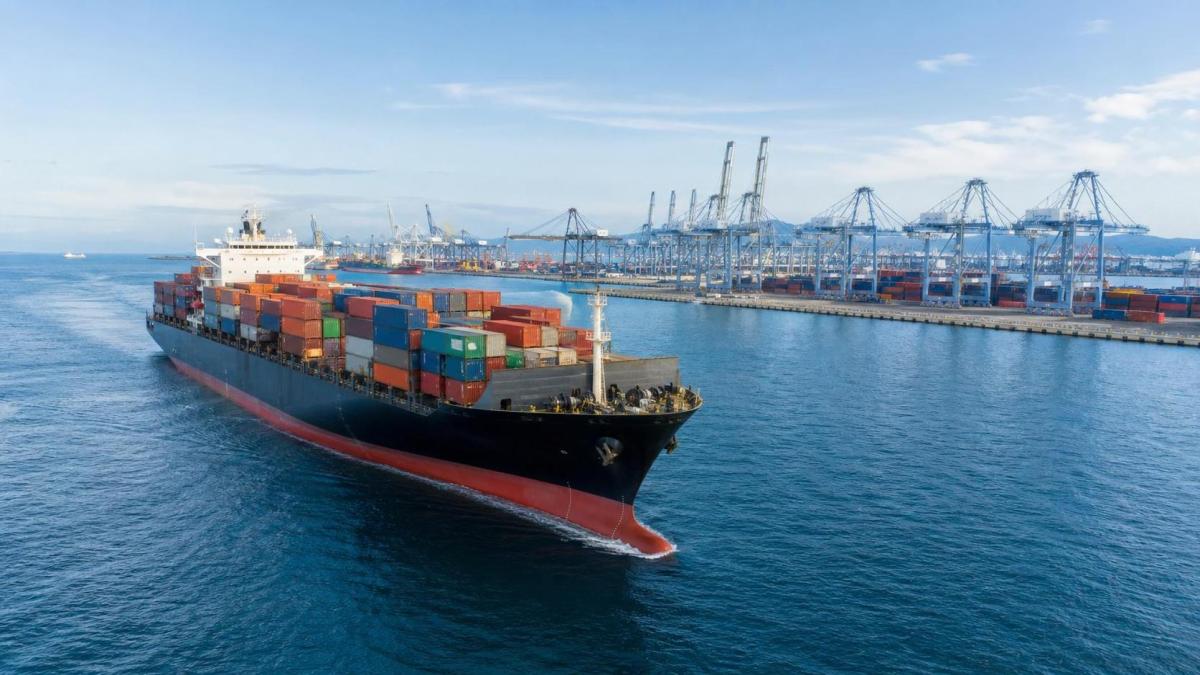
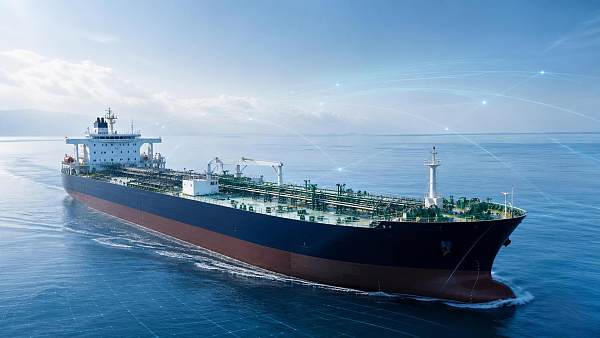
Fleet planning for ocean going cargo vessels is rarely about hull price alone. The larger cost story begins years before delivery and continues through fuel cycles, port access, regulation, and resale value.
That is why cost evaluation has shifted from single-asset budgeting to whole-network economics. A vessel that looks cheaper on paper can become expensive when routes change, fuel spreads widen, or emissions rules tighten.
In practice, the strongest decisions connect ship capability with trade corridor logic. GTOT often frames this through a wider land-sea lens, where port turnaround, inland rail interfaces, and digital control quality influence marine asset value.
So the useful question is not simply, “What does the ship cost?” It is closer to, “What operating model will this vessel support over the next ten to fifteen years?”
Which cost drivers usually shape the biggest budget differences?
Several drivers consistently move total spend. Some are visible during procurement. Others only surface after the vessel enters service and starts meeting real schedules.
The first is vessel size and configuration. Larger ocean going cargo vessels may lower unit transport cost, but only when cargo volumes, berth limits, and turnaround systems are aligned.
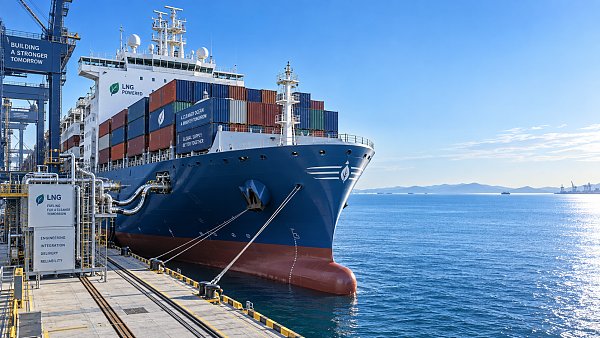
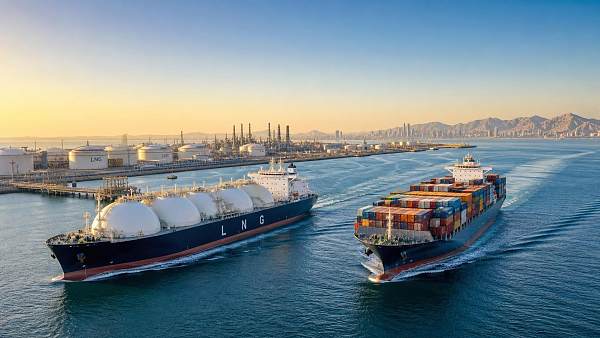
The second is propulsion and fuel choice. Conventional fuels, dual-fuel systems, LNG readiness, and future retrofit paths each alter capex, bunker strategy, maintenance needs, and emissions exposure.
A third driver is onboard technology. Smart navigation, condition monitoring, route optimization, and cargo visibility platforms increase upfront cost, yet often reduce delays, fuel waste, and unplanned repair events.
Then there is compliance. Class requirements, ballast water treatment, CII and EEXI responses, cybersecurity expectations, and regional emissions rules can significantly reshape both build scope and lifecycle spending.
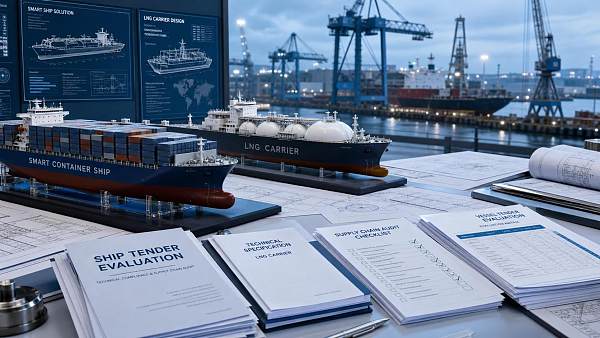
A simple comparison table helps separate visible cost from embedded cost.
For ocean going cargo vessels, the most expensive mistake is often underestimating interaction between these factors. One decision can easily reshape three other cost lines.
Does a larger vessel always deliver lower cost per ton?
Not always. Scale helps, but only under the right network conditions. If draft restrictions, crane productivity, or backhaul imbalance limit utilization, a larger ship can dilute returns instead of improving them.
This is where many fleet plans become too linear. They assume rising capacity automatically means better economics. More often, the answer depends on route frequency, cargo seasonality, and berth availability.
A practical way to judge size is to test the vessel against corridor constraints:
- Average and peak load factor on the intended trade lane.
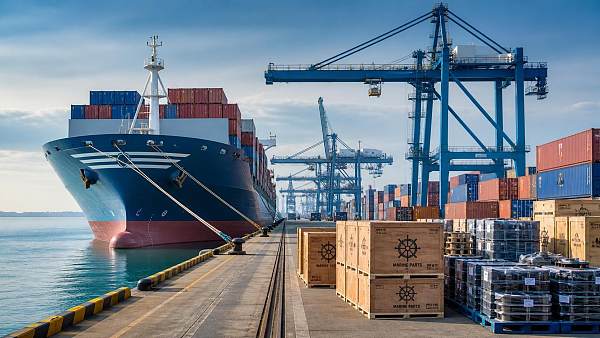
- Port depth, turning basin, crane reach, and berth windows.
- Expected waiting time versus sailing time.
- Rail or inland transfer capacity after discharge.
That last point matters more than it used to. GTOT’s broader transport view highlights that ship efficiency can be lost quickly when inland systems cannot absorb cargo flow at the same pace.
So when evaluating ocean going cargo vessels, size should be treated as a network variable, not only a naval architecture variable.
How should fuel strategy be judged when regulations keep moving?
Fuel strategy is now one of the most sensitive cost decisions in fleet planning. It affects capex, charter attractiveness, compliance exposure, and future retrofit timing.
The usual comparison starts with conventional fuel against dual-fuel or LNG-capable designs. That is useful, but still incomplete. The better question is how much optionality the vessel preserves under uncertain fuel economics.
For example, LNG-related solutions may carry a higher entry cost, yet they can improve emissions positioning and hedge some future regulatory pressure. Still, the benefit depends on bunker availability and route geography.
More conservative buyers sometimes prefer a vessel prepared for later conversion rather than immediate adoption. That can be sensible, provided the retrofit path is technically credible and not just a sales phrase.
When reviewing ocean going cargo vessels, confirm these points early:
- Expected fuel spread under at least three market scenarios.
- Tank space impact on cargo economics.
- Engine maintenance intervals and technician availability.
- Exposure to carbon pricing and emissions reporting costs.
A flexible fuel strategy does not eliminate risk. It simply gives the fleet more room to adapt without forcing a premature asset write-down.
Are smart systems worth the added cost on ocean going cargo vessels?
Usually yes, but only when the data generated can support an operating decision. Buying digital features without a process behind them often creates dashboard noise rather than measurable savings.
The stronger case appears in three areas. First, route optimization can lower fuel burn and improve schedule reliability. Second, condition monitoring can reduce unplanned failures. Third, cargo and voyage visibility can sharpen commercial control.
This is also where GTOT’s intelligence approach is relevant. In both rail and maritime systems, the highest-value technology is not isolated hardware. It is the ability to convert operating signals into faster, safer decisions.
A useful test is to ask whether each smart feature changes one of these outcomes:
- Fuel consumed per voyage.
- Days lost to breakdown or inspection delay.
- Port stay duration and sequencing quality.
- Accuracy of maintenance planning and spare inventory.
If the answer is unclear, the feature may still be interesting, but it should not be treated as a core cost lever.
Where do buyers most often misread total ownership cost?
The first blind spot is assuming the lowest shipyard quote represents the lowest lifecycle cost. Contract gaps, delivery slippage, weak warranty support, and spare parts delays can erase early savings quickly.
Another frequent mistake is treating compliance as a fixed line item. In reality, environmental rules, cybersecurity controls, and reporting requirements evolve. A vessel that barely meets today’s standard may become tomorrow’s retrofit candidate.
There is also a financing misconception. Some plans focus heavily on capex and interest cost while underweighting utilization risk. Idle time, speed loss, and port congestion usually destroy value faster than spreadsheet assumptions suggest.
The checklist below is often more revealing than a simple price comparison.
For ocean going cargo vessels, total ownership cost is best read as a moving system. It is not a single number captured at contract signature.
What is the practical next step before committing capital?
Start by narrowing the fleet plan to a few route-backed scenarios. That makes it easier to compare vessel size, fuel pathway, compliance package, and digital scope on equal terms.
Then build a decision matrix using realistic assumptions for utilization, bunker cost, port delay, maintenance intervals, and retrofit exposure. Sensitivity testing usually reveals more than headline pricing.
It also helps to review marine assets in the same strategic frame used for other critical transport systems. GTOT’s cross-sector intelligence model is useful here because efficient shipping rarely stands apart from rail transfer, terminal control, and broader supply chain timing.
The main takeaway is straightforward. Ocean going cargo vessels create value when specification, route logic, and regulatory resilience move together. When one of those elements is ignored, fleet cost usually rises later, not sooner.
Before proceeding, confirm the operating profile, stress-test lifecycle assumptions, compare support capability between builders, and identify which costs remain flexible after delivery. That is where stronger fleet decisions usually begin.
Recommended News
 Sep 29, 2026What drives traction systems price differences between rail projects?Traction systems price differences explained: compare duty cycles, voltage compatibility, integration, localization, and lifecycle costs for smarter rail procurement.
 Sep 26, 2026What to assess before selecting an electric traction system manufacturerChoose an electric traction system manufacturer with confidence. Explore key criteria for performance, reliability, safety, integration, energy efficiency, and lifecycle support.
 Sep 25, 2026When do full digitalization systems justify the investment?Full digitalization systems: discover when rail and maritime operators can turn connected data into safer operations, higher availability, and measurable ROI.
 Sep 23, 2026What drives automatic train control systems cost on rail projects?Automatic train control systems cost depends on integration, migration, safety testing, communications, and lifecycle support. Explore the key budget drivers for rail projects.
 Sep 21, 2026How to assess an ocean going vessel builder’s delivery riskAssess an ocean going vessel builder’s delivery risk with proven checks for schedules, capacity, design maturity, critical equipment, quality, and project controls.
 Sep 20, 2026What drives rail safety technology costs over a project lifecycle?Rail safety technology cost goes beyond equipment—explore lifecycle drivers from integration and safety assurance to cybersecurity, commissioning, and obsolescence.
 Sep 16, 2026What to verify before choosing an advanced ocean-going vessels supplierAdvanced ocean-going vessels supplier checklist: verify design authority, build quality, digital systems, delivery reliability, and lifecycle support before you buy.
 Sep 15, 2026What rail safety technology best reduces level-crossing risks in Southeast Asia?Rail safety technology Southeast Asia: discover how fail-safe signalling, barriers, obstacle detection and remote monitoring reduce level-crossing risks.
 Sep 14, 2026How exporters can reduce customs delays in global trade logisticsGlobal trade logistics for exporters: reduce customs delays with accurate data, clearance-ready documents, early filing, and proactive exception management.
 Sep 13, 2026When do global transportation network systems reduce delivery delays?Global transportation network systems reduce delivery delays by improving rail-port-vessel coordination, real-time visibility, and proactive decisions across complex land-sea supply chains.
 Sep 09, 2026When should you choose a rail and maritime manufacturer with dual-sector capability?Rail and maritime manufacturer guide: learn when dual-sector capability reduces integration risk, improves lifecycle support, and strengthens rail-to-port operations.
 Sep 08, 2026What to verify before selecting a railway signalling equipment supplierRailway signalling equipment supplier checklist: verify safety evidence, integration, cybersecurity, delivery capability, and lifecycle support before award.
 Sep 07, 2026How to size a traction power transformer for railway load demandTraction power transformer sizing guide: model railway load demand, peak duty, voltage regulation, harmonics, and contingency capacity for reliable service.
 Sep 07, 2026How do customization options for industrial connectors affect lead times?Customization options for industrial connectors can impact lead times, cost, and compliance. Learn how to specify smarter for rail and marine projects.
 Sep 05, 2026What information should an industrial sourcing guide include?Industrial sourcing information procurement guide: evaluate suppliers, compliance, lifecycle costs, interfaces, and lead times for smarter rail and maritime purchasing decisions.
 Sep 01, 2026How to find reliable maritime tender information before biddingMaritime tender information: learn how to verify sources, define bid-ready scopes, check qualifications, and reduce risk before submitting competitive marine bids.
 Aug 30, 2026How to select railway automation equipment for depots with phased upgradesRailway automation equipment for depots: learn how to plan phased upgrades that improve safety, throughput, integration, and lifecycle control.
 Aug 27, 2026How industrial sourcing intelligence pricing data supports budget approvalIndustrial sourcing intelligence pricing data helps teams benchmark scope, assess supplier risk, and build defensible budget approvals for complex rail and maritime assets.
 Aug 26, 2026When does a marine fuel efficiency solution make financial sense in the Middle East?Marine fuel efficiency solution Middle East: learn when retrofit savings, compliance value, and vessel data align to deliver credible ROI and smarter shipping investment decisions.
 Aug 24, 2026When does maritime automation for tankers deliver a real payback?Maritime automation for tankers delivers real payback when it cuts fuel use, reduces cargo risk, and improves uptime. See how owners can time investment for stronger ROI.
 Aug 23, 2026When do maritime logistics systems in the Middle East justify the costMaritime logistics systems Middle East: discover when rising delays, manual coordination, and poor visibility make system investment the smarter move for regional operators.
 Aug 22, 2026What drives vessel navigation system price for commercial fleetsVessel navigation system price depends on integration, compliance, automation, and support—not just hardware. Learn what drives fleet costs and compare quotes with confidence.
 Aug 21, 2026How to assess shipbuilding maritime tenders before biddingShipbuilding maritime tenders require more than price checks. Learn how to assess technical scope, compliance, supply chain, and commercial risk before bidding with confidence.
 Aug 20, 2026When does working with an ocean-going vessels distributor reduce supply risk?Ocean-going vessels distributor: learn when this partner cuts supply risk through stronger compliance, faster response, and better sourcing resilience in complex maritime procurement.