



Search News
Industry Portal
Popular Tags
How to Evaluate Maritime Tenders Without Missing Cost Risks

Author
Time
Click Count
Evaluating maritime tenders is no longer just about comparing headline prices. For teams dealing with volatile freight rates, tight technical specs, and cross-border delivery pressure, small review gaps can create very large downstream costs.
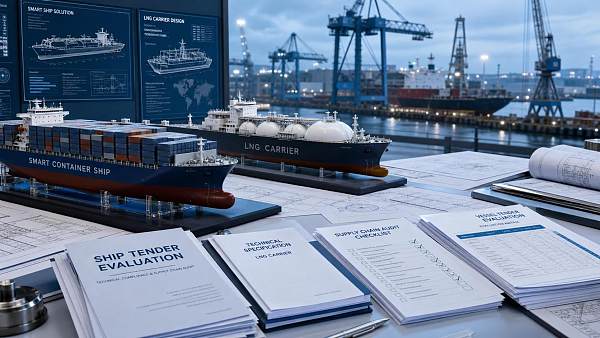
A strong tender review should connect price, vessel capability, compliance, and operating efficiency. That matters even more in today’s integrated transport environment, where smart ships, LNG logistics, port systems, and inland transport all affect total value.
Drawing on the broader land-sea intelligence perspective seen in GTOT, this article breaks down how to evaluate maritime tenders without overlooking hidden cost risks. The goal is simple: make better decisions before contract signing, not after problems start.
Start With the Real Cost Structure
Before comparing suppliers, define what “lowest cost” actually means for the project. In many maritime tenders, the visible price is only one part of the commercial exposure.
A vessel, shipping package, or marine equipment offer may look competitive at submission stage, yet become expensive once fuel efficiency, port fees, class requirements, spare parts, and schedule reliability are added.
The first pass should separate base price from lifecycle cost. That single step often removes the most misleading offers early.
[Image 01: Cost comparison framework for maritime tenders across bid price, compliance, operations, maintenance, and schedule risk]
- Break the offer into base price, logistics, commissioning, training, maintenance, fuel or energy use, and likely variation claims before ranking any maritime tenders.
- Check whether quoted costs include class approvals, testing, insurance, port handling, and document certification, because these items are often moved outside the tendered price.
- Ask suppliers to state cost assumptions clearly, including exchange rate, bunker price basis, route conditions, and delivery window, so bid comparisons stay realistic.
- Model best case, expected case, and stressed case totals to see which maritime tenders remain commercially stable when market or operating conditions change.
A quick warning on headline discounts
Aggressive discounts can hide scope gaps. A lower price sometimes reflects excluded software integration, reduced onboard redundancy, thinner support coverage, or delayed spare parts availability.
That is especially relevant for smart container ships and LNG-linked systems, where technical reliability affects uptime, safety, and long-term operating expense.
Test Technical Compliance Beyond the Bid Sheet
Many maritime tenders look compliant on paper because suppliers answer “yes” to every requirement. The real question is whether the offer can perform under actual operating conditions.
This is where deeper technical verification matters. GTOT’s land-sea perspective is useful here, because the same principle applies across railway signaling, braking systems, and advanced vessels: performance claims must be validated against demanding real-world conditions.
- Review technical deviations line by line, and flag every “equivalent” specification that may affect endurance, emissions, automation performance, or safety margins later.
- Verify performance evidence, such as sea trial data, class records, route references, and operating history in similar temperature, load, and weather conditions.
- Confirm digital integration scope, especially for smart vessel systems, because weak data interfaces often create hidden retrofit costs after award.
- Check maintainability early, including spare part commonality, technician access, training needs, and software support terms over the equipment life.
A supplier may meet the minimum specification but still create expensive operating friction. In practice, hard-to-maintain systems usually become a budget issue within the first service cycle.
Look Closely at Supplier Capability and Delivery Risk
Not all cost risk sits inside the equipment itself. In maritime tenders, supplier execution ability can be just as important as the technical offer.
A strong bidder should show manufacturing discipline, stable subcontractor control, clear documentation practice, and credible after-sales support. If one of those areas is weak, total cost usually rises later.
- Check whether key systems are built in-house or outsourced, because layered subcontracting often reduces accountability and increases quality variation.
- Review past delivery performance, including delays, warranty issues, retrofit frequency, and claim disputes on comparable marine projects.
- Assess service network coverage near operating regions, since weak local support can turn minor defects into expensive downtime.
- Request named project resources and escalation contacts, not just company credentials, so execution capability is tied to actual people.
When the route is complex, capability matters more
For routes involving sensitive cargo, cold-chain demands, LNG infrastructure, or congested ports, even small delivery errors become costly. Documentation mistakes, delayed approvals, or interface gaps can stop an entire chain.
That is why robust supplier capability should be scored as a cost control factor, not only as a qualification issue.
Map the Hidden Risks Often Missed in Maritime Tenders
Some of the most expensive problems in maritime tenders are not hidden by design. They are simply buried in assumptions, annexes, exclusions, or interface boundaries.
A careful review should force every hidden item into a visible risk register before final evaluation.
- Do not accept vague wording around exclusions; every excluded item should have an owner, a budget estimate, and a timing assumption.
- Scrutinize warranty language carefully, because narrow warranty triggers can shift repair cost back after only minor operating changes.
- Review interface responsibilities between vessel systems, port infrastructure, and third-party software to avoid costly disputes during commissioning.
- Track regulatory change exposure, especially in emissions and digital security, since compliant maritime tenders today may need upgrades tomorrow.
Adjust Evaluation by Operating Scenario
Not all maritime tenders should be scored the same way. The best evaluation model depends on the operating scenario, cargo sensitivity, route volatility, and technical integration level.
For smart container ship projects
Data connectivity, route optimization, and ship-to-shore coordination deserve heavier weighting. A cheap offer becomes expensive if the digital layer is unstable or incompatible with terminal systems.
In this case, compare automation maturity, software update policy, cybersecurity controls, and onboard sensor reliability alongside price.
For LNG-related vessel or equipment packages
Safety, cryogenic performance, and fuel system reliability should dominate the review. Technical weakness here does not just raise cost. It can also threaten schedule, compliance, and asset value.
Check insulation performance data, dual-fuel system support, emergency response capability, and proven experience in comparable operating environments.
For integrated land-sea logistics programs
The evaluation should go beyond the vessel itself. Port timing, inland transfer links, signaling coordination, and cargo handling efficiency all affect total cost.
This is where GTOT’s cross-sector view is practical. Lessons from rail control, traction stability, and braking precision translate well into evaluating reliability, timing discipline, and systems integration at sea.
Use a Scoring Method That Prevents Bias
Good decisions on maritime tenders need structure. If evaluation criteria are too loose, teams often overvalue price and undervalue risk.
A weighted model works best when it is tied to business consequences, not just tender formality.
- Assign separate scores for commercial price, technical fit, lifecycle cost, delivery confidence, and support capability, then define clear pass-fail thresholds.
- Apply risk-adjusted scoring by adding cost penalties for weak warranty, uncertain interfaces, or limited operating references in similar conditions.
- Use clarification rounds to close major assumptions before final ranking, otherwise maritime tenders may look comparable when they are not.
- Document why a higher-priced bid may offer lower total exposure, especially where uptime, compliance, or energy efficiency materially affect value.
This approach also helps internal alignment. When the scoring logic is visible, commercial and technical teams can challenge assumptions early instead of debating outcomes late.
What to Do Before Final Award
Before closing any maritime tenders, pause for one final review. This is the point where hidden risk should be converted into negotiation points, contract protections, or disqualification triggers.
- Run a final exception review covering scope gaps, assumptions, compliance evidence, service obligations, and unresolved technical deviations.
- Turn key risks into contract language, including liquidated damages, response times, spare stock commitments, and milestone-based acceptance rules.
- Validate that budget approval reflects total evaluated cost, not just tender price, so later additions do not surprise the business.
- Keep a short post-award monitoring list, because the first delays and claims usually emerge from issues already visible during tender review.
The most reliable way to evaluate maritime tenders is to treat them as operating decisions, not just buying events. When price, technical proof, delivery capability, and lifecycle exposure are reviewed together, hidden cost risks become much easier to spot.
In a market shaped by smart vessels, LNG expansion, and tighter intermodal coordination, sharper tender evaluation protects more than budget. It protects schedule, compliance, and long-term asset performance. That is the right place to start before the next bid reaches final review.
Recommended News
 Sep 29, 2026What drives traction systems price differences between rail projects?Traction systems price differences explained: compare duty cycles, voltage compatibility, integration, localization, and lifecycle costs for smarter rail procurement.
 Sep 26, 2026What to assess before selecting an electric traction system manufacturerChoose an electric traction system manufacturer with confidence. Explore key criteria for performance, reliability, safety, integration, energy efficiency, and lifecycle support.
 Sep 25, 2026When do full digitalization systems justify the investment?Full digitalization systems: discover when rail and maritime operators can turn connected data into safer operations, higher availability, and measurable ROI.
 Sep 23, 2026What drives automatic train control systems cost on rail projects?Automatic train control systems cost depends on integration, migration, safety testing, communications, and lifecycle support. Explore the key budget drivers for rail projects.
 Sep 21, 2026How to assess an ocean going vessel builder’s delivery riskAssess an ocean going vessel builder’s delivery risk with proven checks for schedules, capacity, design maturity, critical equipment, quality, and project controls.
 Sep 20, 2026What drives rail safety technology costs over a project lifecycle?Rail safety technology cost goes beyond equipment—explore lifecycle drivers from integration and safety assurance to cybersecurity, commissioning, and obsolescence.
 Sep 16, 2026What to verify before choosing an advanced ocean-going vessels supplierAdvanced ocean-going vessels supplier checklist: verify design authority, build quality, digital systems, delivery reliability, and lifecycle support before you buy.
 Sep 15, 2026What rail safety technology best reduces level-crossing risks in Southeast Asia?Rail safety technology Southeast Asia: discover how fail-safe signalling, barriers, obstacle detection and remote monitoring reduce level-crossing risks.
 Sep 14, 2026How exporters can reduce customs delays in global trade logisticsGlobal trade logistics for exporters: reduce customs delays with accurate data, clearance-ready documents, early filing, and proactive exception management.
 Sep 13, 2026When do global transportation network systems reduce delivery delays?Global transportation network systems reduce delivery delays by improving rail-port-vessel coordination, real-time visibility, and proactive decisions across complex land-sea supply chains.
 Sep 09, 2026When should you choose a rail and maritime manufacturer with dual-sector capability?Rail and maritime manufacturer guide: learn when dual-sector capability reduces integration risk, improves lifecycle support, and strengthens rail-to-port operations.
 Sep 08, 2026What to verify before selecting a railway signalling equipment supplierRailway signalling equipment supplier checklist: verify safety evidence, integration, cybersecurity, delivery capability, and lifecycle support before award.
 Sep 07, 2026How to size a traction power transformer for railway load demandTraction power transformer sizing guide: model railway load demand, peak duty, voltage regulation, harmonics, and contingency capacity for reliable service.
 Sep 07, 2026How do customization options for industrial connectors affect lead times?Customization options for industrial connectors can impact lead times, cost, and compliance. Learn how to specify smarter for rail and marine projects.
 Sep 05, 2026What information should an industrial sourcing guide include?Industrial sourcing information procurement guide: evaluate suppliers, compliance, lifecycle costs, interfaces, and lead times for smarter rail and maritime purchasing decisions.
 Sep 01, 2026How to find reliable maritime tender information before biddingMaritime tender information: learn how to verify sources, define bid-ready scopes, check qualifications, and reduce risk before submitting competitive marine bids.
 Aug 30, 2026How to select railway automation equipment for depots with phased upgradesRailway automation equipment for depots: learn how to plan phased upgrades that improve safety, throughput, integration, and lifecycle control.
 Aug 27, 2026How industrial sourcing intelligence pricing data supports budget approvalIndustrial sourcing intelligence pricing data helps teams benchmark scope, assess supplier risk, and build defensible budget approvals for complex rail and maritime assets.
 Aug 26, 2026When does a marine fuel efficiency solution make financial sense in the Middle East?Marine fuel efficiency solution Middle East: learn when retrofit savings, compliance value, and vessel data align to deliver credible ROI and smarter shipping investment decisions.
 Aug 24, 2026When does maritime automation for tankers deliver a real payback?Maritime automation for tankers delivers real payback when it cuts fuel use, reduces cargo risk, and improves uptime. See how owners can time investment for stronger ROI.
 Aug 23, 2026When do maritime logistics systems in the Middle East justify the costMaritime logistics systems Middle East: discover when rising delays, manual coordination, and poor visibility make system investment the smarter move for regional operators.
 Aug 22, 2026What drives vessel navigation system price for commercial fleetsVessel navigation system price depends on integration, compliance, automation, and support—not just hardware. Learn what drives fleet costs and compare quotes with confidence.
 Aug 21, 2026How to assess shipbuilding maritime tenders before biddingShipbuilding maritime tenders require more than price checks. Learn how to assess technical scope, compliance, supply chain, and commercial risk before bidding with confidence.
 Aug 20, 2026When does working with an ocean-going vessels distributor reduce supply risk?Ocean-going vessels distributor: learn when this partner cuts supply risk through stronger compliance, faster response, and better sourcing resilience in complex maritime procurement.