



Search News
Industry Portal
Popular Tags
When is nickel steel containment needed for cryogenic storage?
Author
Time
Click Count
Nickel steel containment is needed when a cryogenic storage system must retain a liquid at temperatures low enough to make ordinary carbon steel brittle, while also carrying structural loads, thermal movement, and repeated operating stresses. The decision is most common in LNG storage and transport, but the same logic applies to other liquefied gases where a loss of ductility could turn a small defect, impact, or weld imperfection into a crack.
The material choice should not be made from storage temperature alone. A containment system must be evaluated as a complete load path: the stored product, lowest credible metal temperature, tank geometry, insulation arrangement, pressure behavior, support structure, filling cycles, inspection access, and the consequences of leakage all matter. Nickel-bearing steels are selected because they retain useful toughness at very low temperatures. That property is valuable only when the containment design actually exposes the steel to cryogenic service.
Start with the minimum metal temperature, not the nominal product temperature
The first screening question is simple: what is the lowest temperature the containment material can reach in normal operation, abnormal operation, cooldown, and fault conditions? The product may be cryogenic, but insulation can keep the outer tank wall, hull structure, or secondary barrier at a much higher temperature. Conversely, a local insulation failure, liquid spill, thermal bridge, or rapid cooldown event can expose a structural component to far lower temperatures than its nominal design case suggests.
Nickel steel containment becomes a serious requirement when the primary tank wall, a secondary containment barrier, or another load-bearing boundary is expected to operate at temperatures beyond the safe toughness range of conventional structural steel. At low temperature, ordinary carbon steel can lose ductility. Instead of deforming and redistributing stress, it may fracture with limited warning. Nickel additions improve low-temperature toughness, making nickel steel a practical option where the containment boundary cannot be reliably isolated from the cryogenic liquid.
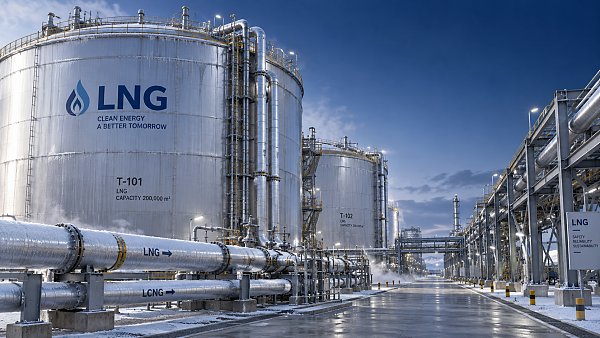
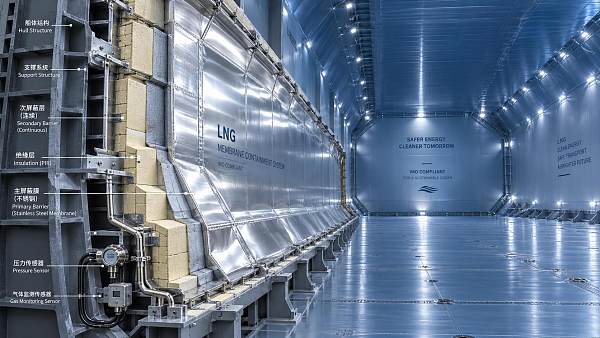
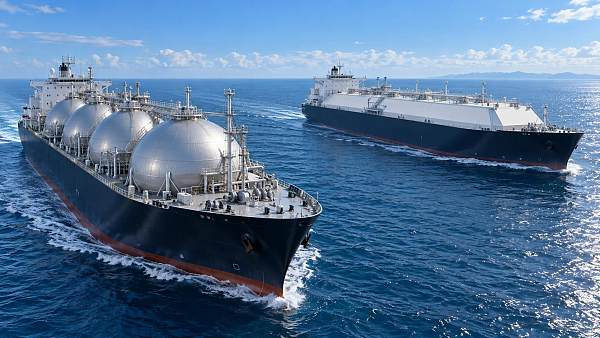
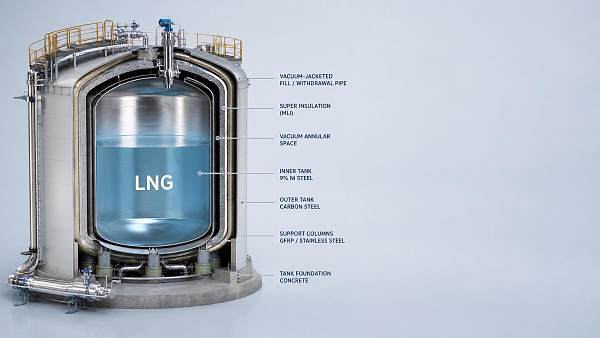
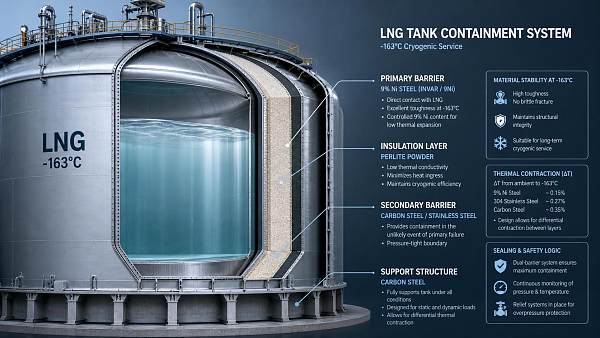
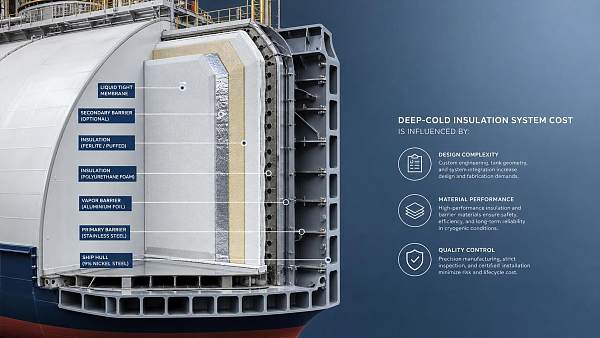
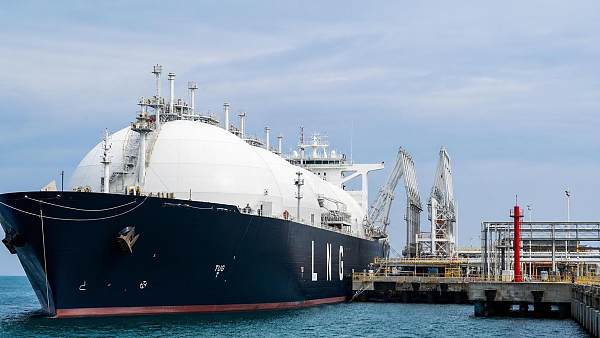
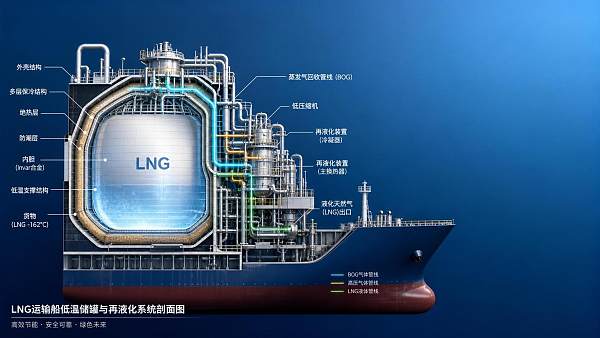
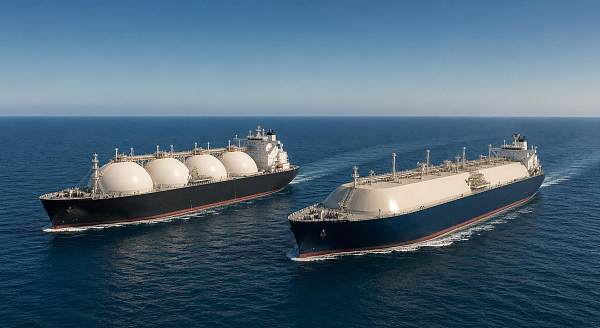
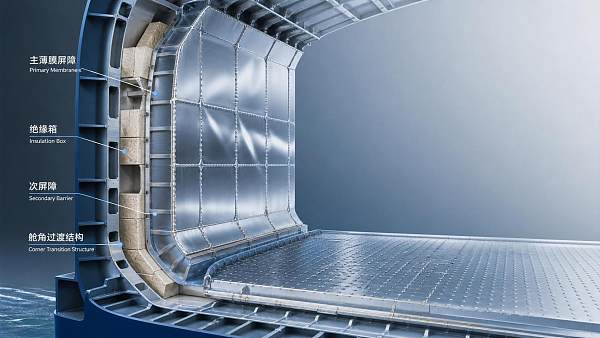
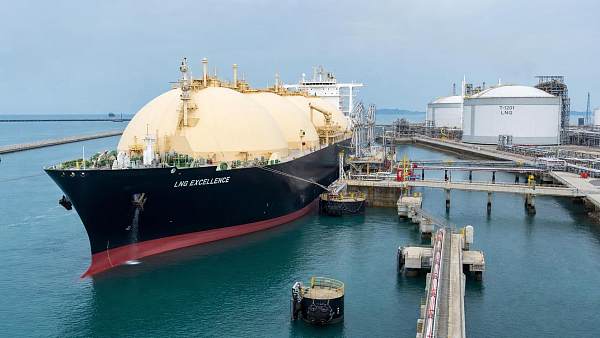
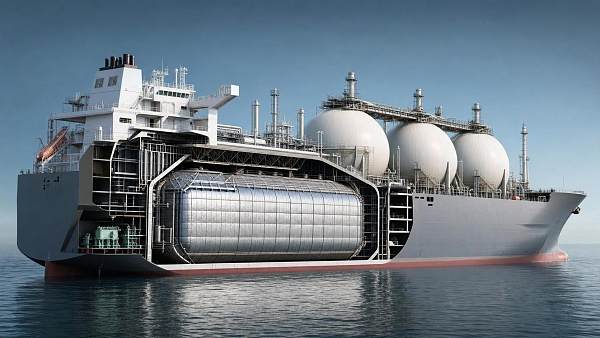
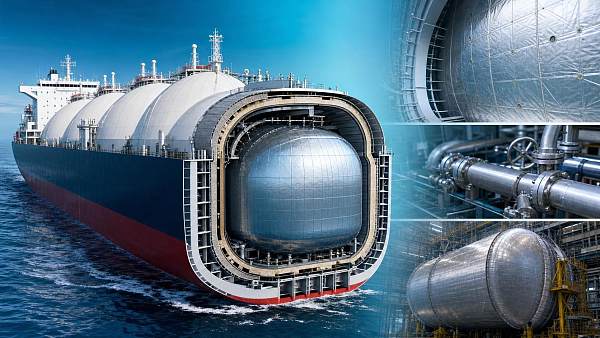
For LNG systems, the reference condition is particularly demanding because LNG is stored at approximately minus 163 degrees Celsius. Whether nickel steel is needed depends on the tank concept. In a self-supporting tank, the tank shell directly holds the cargo and is exposed to cryogenic temperature; a suitable cryogenic material is therefore fundamental. In a membrane containment system, the thin primary membrane and supporting insulation system may use different materials, while the ship’s hull is protected from direct low-temperature exposure. The correct decision concerns each component’s actual temperature and structural role, not a single material choice for the entire vessel.
When nickel steel containment is usually justified
Nickel steel is generally appropriate when the material must combine cryogenic toughness with meaningful structural duty. This typically occurs in the following situations:
- Self-supporting cryogenic tanks: The tank shell carries hydrostatic loads, internal pressure effects, sloshing loads, and local stresses while in direct contact with the stored liquid.
- Secondary barriers with credible liquid exposure: A secondary containment layer may need to remain crack-resistant if the primary barrier leaks or if liquid reaches the barrier through a local failure.
- Shipboard tanks subject to motion and fatigue: Marine tanks face dynamic loads from vessel movement, cargo motion, vibration, and repeated loading cycles. Low-temperature toughness alone is not sufficient; fatigue behavior and weld integrity become part of the material decision.
- Land-based tanks with severe cooldown scenarios: Large stationary tanks may have areas where a release, cooldown procedure, or loss of insulation can place structural steel at a low temperature for long enough to affect integrity.
- Systems with difficult repair access: When a containment failure would be hard to inspect or repair, a more robust cryogenic material may be justified even where an alternative design appears possible on paper.
The decision is strongest where a failure would release product from the primary boundary and where the steel must remain ductile under combined loading. A material that survives static low-temperature exposure in a laboratory sense may still be unsuitable for a real tank if welds, attachments, penetrations, and local stress concentrations are not equally capable.
Nickel content is not the specification
A frequent purchasing error is treating “nickel steel” as a single, interchangeable material category. It is not. Cryogenic steels are selected as qualified material systems, with defined chemical composition, plate thickness range, heat treatment condition, toughness requirements, welding procedure, and inspection requirements. A higher nickel content does not automatically make a material the better choice for every tank.
In practice, commonly used cryogenic steels occupy different positions between cost, manufacturability, strength, toughness, welding complexity, and service temperature. Lower-nickel cryogenic steels can be suitable where the design temperature is less severe. Higher-nickel grades are used where very low temperatures demand greater resistance to brittle fracture. Austenitic stainless steel and aluminum alloys may also be viable in certain tank systems, especially where their corrosion behavior, weight, fabrication method, or established containment design offers a better fit.
The relevant question is therefore not, “Should this be nickel steel or not?” It is, “Which containment concept places which materials at what temperatures and stresses, and which qualified material system meets those conditions?” A material selection that ignores the design concept can either create unnecessary cost or leave a weak point at a penetration, corner, weld, or support interface.
The tank architecture can change the answer
Nickel steel containment is most clearly associated with self-supporting tanks because the tank itself is both the product boundary and a major structural element. In these systems, material toughness at cryogenic temperature is directly linked to containment integrity. Tank shape, support arrangement, wall thickness, and internal pressure all influence the required grade and fabrication controls.
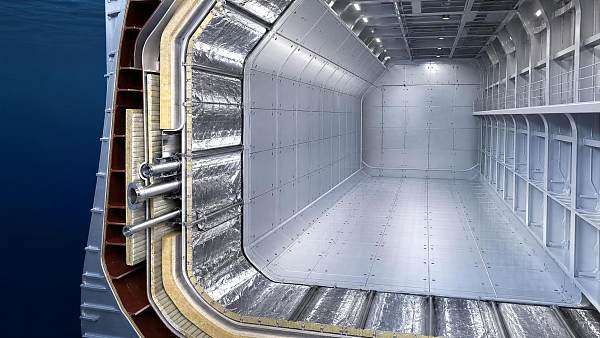
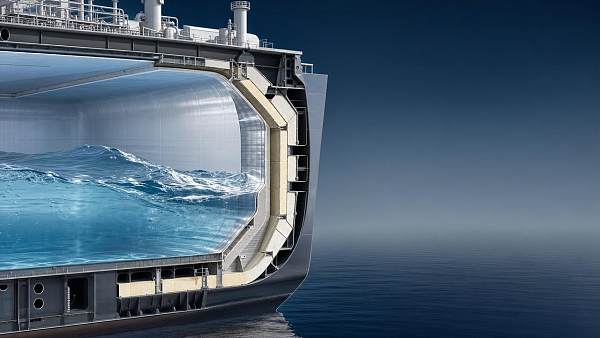
Membrane systems require a different evaluation. The primary barrier is a thin, corrugated or otherwise flexible layer that accommodates thermal contraction. Insulation panels transfer loads to the supporting hull structure, and a secondary barrier provides another level of protection. Here, a nickel steel plate tank may not be the governing solution, yet cryogenic material compatibility remains critical in the membrane, joints, secondary barrier, insulation interfaces, and local structures. Calling the entire arrangement “nickel steel containment” can obscure the real engineering question: where does the liquid go if the primary barrier fails, and can every layer retain integrity at the resulting temperature?
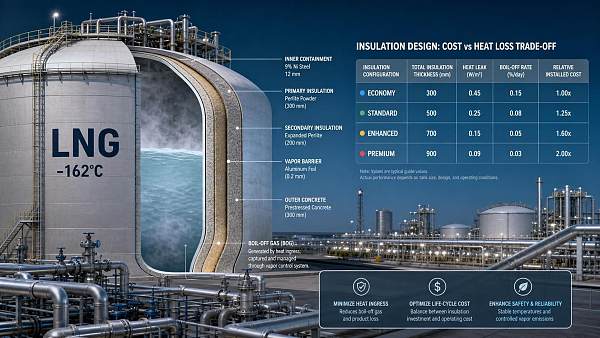
For land storage, full-containment and double-containment arrangements similarly divide responsibilities between an inner liquid-holding tank and outer containment structures. The inner tank may need a cryogenic material, while the outer wall may be designed mainly for vapor containment, environmental protection, or spill retention. Selecting nickel steel for both without considering their distinct duties is not automatically conservative; it may be inefficient and may divert attention from more important interface details.
Evaluate the operating profile, not only the steady-state condition
A storage system can be safe in steady operation yet vulnerable during transition. Filling a warm tank, cooling down after maintenance, unloading, partial filling, or restarting after an extended idle period can create steep temperature gradients. These gradients cause differential contraction. If attached structures restrain that movement, thermal stresses rise at nozzles, brackets, supports, and weld transitions.
Nickel steel is valuable because it helps the containment boundary remain resistant to brittle fracture at low temperature, but it does not eliminate thermal-stress problems. The design must allow controlled contraction and expansion. Sliding supports, flexible connections, expansion features, carefully detailed penetrations, and compatible insulation arrangements may be as important as the plate material itself.
For marine storage, cargo sloshing adds another reason to look beyond temperature. Partial-fill conditions can create localized impact loads on tank walls. Repeated voyages add fatigue cycles. A robust assessment considers the combination of low temperature, variable liquid head, pressure cycles, vibration, vessel motion, and fabrication discontinuities. A material with acceptable low-temperature toughness can still perform poorly if the geometry concentrates stress or if welded details are not designed for fatigue.
Where nickel steel may be unnecessary
Nickel steel containment is not a default answer for every low-temperature storage duty. It may be unnecessary where the lowest credible metal temperature remains within the proven service range of another qualified material. This can occur when insulation and spacing reliably protect the structural wall, when the cryogenic liquid is contained by a membrane or inner vessel made from a different suitable alloy, or when the stored medium is refrigerated but not cold enough to require a high-nickel solution.
It may also be the wrong choice when another material better suits the complete system. Austenitic stainless steel may offer a favorable combination of cryogenic performance and corrosion resistance in some process equipment or smaller tanks. Aluminum can be attractive where mass reduction and established fabrication practice support its use. Specialized alloy systems may be selected where thermal cycling, product purity, or corrosion conditions dominate the design. The comparison must include joining methods, inspection capability, repair strategy, supply availability, and compatibility with adjacent materials.
Cost should be assessed at the system level. Nickel-bearing material can carry a higher initial material and fabrication cost, but a lower-cost substitute may require more insulation, more complex structural isolation, added monitoring, or restrictive operating procedures. The reverse can also be true: specifying high-grade nickel steel in a component that is never exposed to cryogenic temperature adds cost without meaningfully improving safety.
Questions that should be resolved before material selection
A useful evaluation package answers the following points before a grade is nominated or a vendor comparison is finalized:
- What is the minimum design metal temperature for each containment layer, support, penetration, and adjacent structure?
- Which elements are primary liquid barriers, secondary barriers, vapor boundaries, or non-containment structures?
- What loads act simultaneously at low temperature, including liquid head, internal pressure, external loads, ship motion, and thermal restraint?
- What cooldown and warm-up rates are expected, and where can uneven temperature distribution occur?
- How will weld metal, heat-affected zones, joints, and repairs demonstrate the required low-temperature performance?
- Does the design allow movement without transferring excessive thermal strain into rigid connections?
- What inspection methods can realistically be applied during fabrication and throughout service?
- What happens after a primary leak: which barrier receives the liquid, how cold does it become, and how long must it remain functional?
These questions help prevent a common failure of procurement logic: comparing material certificates before confirming whether bidders are offering the same containment duty. Two proposals may both state a cryogenic steel grade while assigning very different responsibilities to insulation, secondary containment, and structural supports.
Fabrication discipline determines whether the material advantage survives
Low-temperature performance is not preserved automatically once plate arrives at a fabrication yard. Welding procedures, filler selection, heat input control, joint preparation, fit-up, nondestructive examination, and repair handling all affect the final containment system. Weld metal and heat-affected zones require the same careful attention as the parent plate because these locations can become the controlling points for toughness and fatigue.
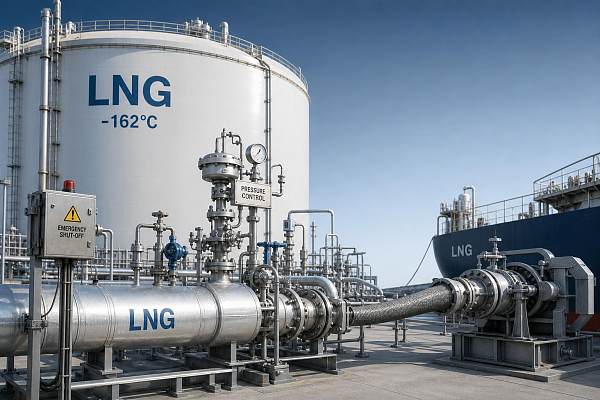
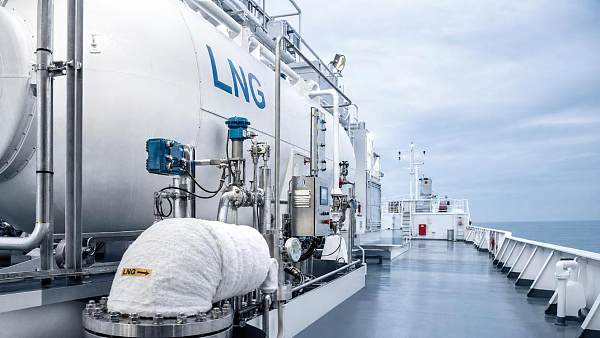
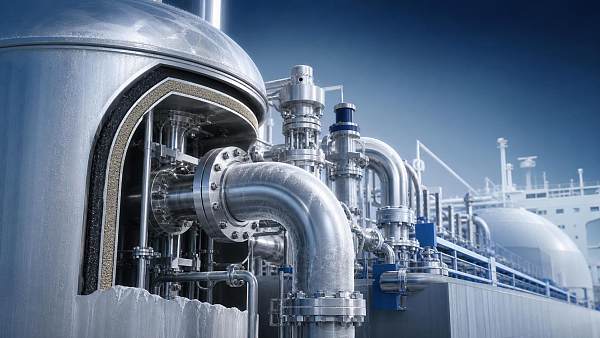
Details deserve equal scrutiny. Nozzles, manways, pump towers, instrumentation connections, support attachments, and transitions to warmer piping often introduce restraint and geometry changes. Insulation discontinuities can create localized cold spots. A technically sound nickel steel shell can still be undermined by an attachment designed as if it were ordinary ambient-temperature steelwork.
For LNG carrier assessments, this is why containment cannot be separated from cargo handling and vessel structure. The tank, insulation, secondary barrier, cargo piping, support arrangement, and hull interface form one cryogenic system. GTOT’s coverage of membrane containment stress analysis is relevant in this context because the material decision must be read alongside the containment architecture and its load-transfer behavior, rather than treated as an isolated metal-grade choice.
A practical decision rule
Select nickel steel containment when the storage boundary, backup barrier, or a structurally essential component can credibly experience cryogenic temperatures and must remain ductile while carrying pressure, liquid, motion, or fatigue loads. Do not select it merely because the product is cold. Map the temperature exposure and containment responsibilities first, then compare qualified material systems against the actual loads, fabrication route, inspection plan, and consequence of failure.
That sequence produces a clearer outcome: nickel steel is indispensable where it protects a load-bearing cryogenic boundary from brittle fracture risk, but it is only one part of a reliable containment solution. The final choice should make the whole system manageable through construction, operation, inspection, and repair, not simply make the material schedule look conservative.
Recommended News
 Sep 28, 2026When is nickel steel containment needed for cryogenic storage?Nickel steel containment is essential when cryogenic tanks face brittle-fracture risk. Discover how temperature, loads, and tank design guide the right choice.
 Sep 11, 2026How membrane containment systems demonstrate compliance with IMO standardsMembrane containment systems IMO standards: discover how LNG carriers prove compliance through verified barriers, testing, monitoring, and traceable records.
 Sep 10, 2026How membrane and Moss containment systems differ for LNG carriersLNG cargo containment for carriers: compare membrane and Moss systems for capacity, BOG, safety, sloshing, lifecycle cost, and operational flexibility.
 Sep 03, 2026What drives membrane containment systems cost in LNG projects?Membrane containment systems cost depends on tank design, materials, labor, QA, and boil-off performance. Discover how to control LNG project risk and lifecycle costs.
 Aug 11, 2026How Vacuum Insulated Cryogenic Engineering Reduces Boil-Off and Heat LeakVacuum insulated cryogenic engineering cuts boil-off and heat leak by optimizing vacuum spaces, MLI, supports, and penetrations—discover what really improves LNG thermal performance.
 Aug 09, 2026What Determines Safe Cryogenic Containment Design in LNG Storage?Cryogenic containment design in LNG storage depends on materials, thermal stress, leak control, and BOG management. Discover what truly defines safe, code-compliant performance.
 Jul 29, 2026How to Evaluate a Cryogenic Tank Handling System for LNG Transfer SafetyCryogenic tank handling system evaluation for LNG transfer safety: learn how to assess pressure control, insulation, ESD response, and operational reliability before choosing a safer system.
 Jul 24, 2026Deep-Cryogenic Insulation Systems Cost: What Drives Total Project Spend?Deep-cryogenic insulation systems cost depends on design, materials, installation, QA, and boil-off performance. Learn what drives total project spend and compare bids with confidence.
 Jul 21, 2026LNG Carriers Class Approval: Key Rules and Compliance RisksLNG carriers class approval explained: key rules, major compliance risks, and practical steps to prevent delays, protect vessel readiness, and improve charter confidence.
 Jul 15, 2026Low Boil Off Insulation System Performance: What Reduces LNG Losses MostLow boil off insulation system performance explained: discover what cuts LNG losses most through smarter containment, installation quality, and BOG management.
 Jul 13, 2026Deep Cryogenic Insulation for LNG Tanks: Cost vs Heat LossDeep cryogenic insulation for LNG tanks impacts more than upfront cost. Learn how lower heat loss cuts BOG, improves efficiency, and strengthens lifecycle value.
 Jul 13, 2026Low Loss Cryogenic Handling: Key Factors for Safer TransferLow loss cryogenic handling starts with thermal control, pressure balance, and clean transfer. Learn the key factors that reduce boil-off, protect product integrity, and improve safer LNG and industrial operations.
 Jul 12, 2026LNG Vessel Fuel Storage: Main Safety Risks and FixesLNG vessel fuel storage safety starts with early risk detection. Learn the main hazards, warning signs, and practical fixes to reduce leaks, pressure instability, and onboard failures.
 Jul 09, 2026Membrane Cargo Tank vs Moss Type: Which Fits Modern LNG FleetsMembrane cargo tank vs Moss type: compare LNG fleet capacity, boil-off strategy, maintenance, and asset value to choose the best-fit design for modern shipping returns.
 Jul 08, 2026Membrane Containment Systems: Key Failure Risks in LNG Tank DesignMembrane containment systems are central to LNG tank safety. Explore key failure risks, from insulation degradation to sloshing and secondary barrier issues, and learn what to check early.
 Jul 06, 2026How to Compare a Cryogenic Shipping Systems Manufacturer for Long-Haul LNG ProjectsCryogenic shipping systems manufacturer selection can make or break long-haul LNG projects. Compare boil-off control, compliance, engineering support, and lifecycle value.
 Jul 02, 2026Cryogenic Shipping Safety: Common Failure Risks and FixesCryogenic shipping safety starts with finding hidden failure risks early. Learn the main causes, practical fixes, and audit gaps that help protect LNG cargo, cut incidents, and improve control.
 Jul 02, 2026LNG Carriers Dimensions Explained for Terminal PlanningLNG carriers dimensions explained for smarter terminal planning. Learn how vessel size affects berth design, draft limits, mooring, and future fleet compatibility.
 Jun 30, 2026LNG Carrier Containment Technology Explained: Membrane vs Moss SystemsLNG carrier containment technology explained clearly: compare membrane vs Moss systems, key trade-offs, cargo efficiency, sloshing risk, and what drives smarter LNG vessel decisions.
 Jun 30, 2026Vacuum Deep Cryogenic Insulation: Key Failure Risks and How to Prevent ThemVacuum deep cryogenic insulation failure can raise boil-off, safety, and compliance risks. Learn key warning signs, root causes, and practical prevention steps to protect LNG operations.
 Jun 28, 2026Deep-Cryogenic Insulation Cost: What Drives Budget Changes in LNG ProjectsDeep-cryogenic insulation cost in LNG projects depends on materials, containment design, labor, compliance, and shipyard execution. Learn what drives budget changes and how to control risk.
 Jun 25, 2026Cryogenic Shipping Solutions: Key Risks, Costs, and Containment ChoicesCryogenic shipping solutions: compare key risks, lifecycle costs, and membrane vs. Moss containment to avoid hidden losses and choose safer, more efficient LNG transport.
 Jun 15, 2026Cryogenic Engineering Basics: Key Design Factors for Containment SafetyCryogenic engineering basics explained: discover the key design factors behind safer LNG and low-temperature containment, from materials and thermal stress to boil-off control and monitoring.
 Jun 11, 2026Membrane Containment Systems: Key Failure Risks and Design ChecksMembrane containment systems demand rigorous design checks. Explore key failure risks, from sloshing stress to insulation aging, and learn how to improve LNG vessel safety and compliance.