Search News
Industry Portal
Popular Tags
Is Membrane Containment Suitable for LNG Vessels in Rough Seas?
Author
Time
Click Count
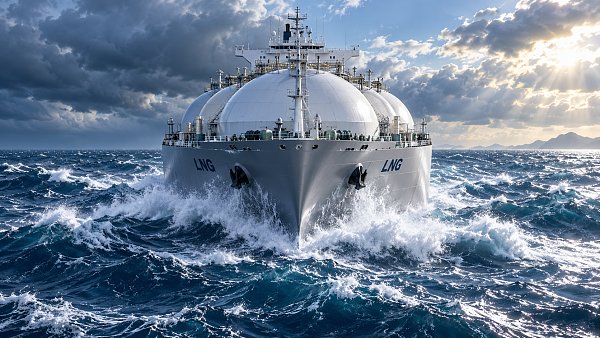
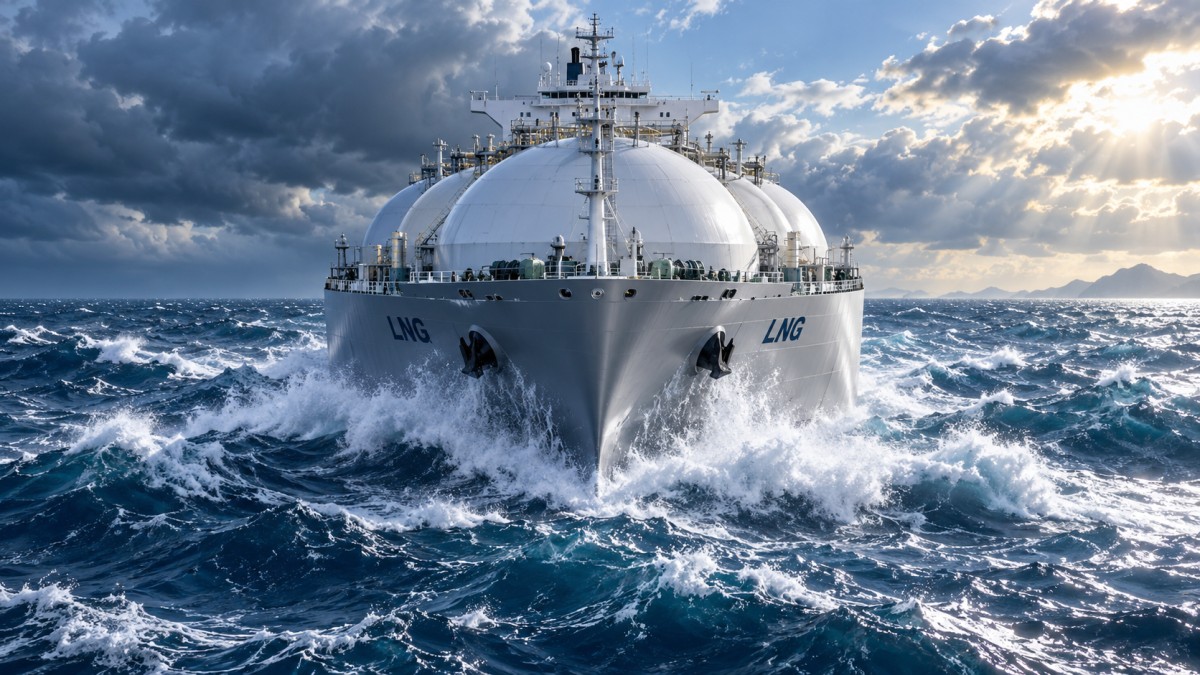
Yes—membrane containment is suitable for LNG vessels operating in rough seas, provided that the cargo containment system, hull structure, loading limits, and operating procedures are designed and managed as one integrated system. Rough weather does not automatically make a membrane tank unsafe. Modern membrane LNG carriers are engineered for global trading routes and must meet the International Code for the Construction and Equipment of Ships Carrying Liquefied Gases in Bulk (IGC Code), applicable flag-state requirements, and classification-society rules.
The more useful question is not whether a membrane system can “survive” heavy seas in general. It is whether the vessel’s predicted motions, tank filling condition, cargo management practice, and structural design keep sloshing pressure and cyclic deformation within the containment system’s approved design envelope. In severe conditions, the principal concern is rarely the thin primary membrane alone. The real engineering challenge lies in the interaction between liquid motion, insulation panels, secondary barriers, inner-hull deformation, and local structural supports.
Why rough seas matter to an LNG containment system
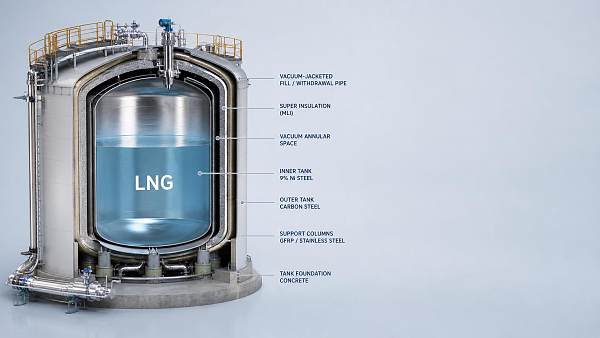
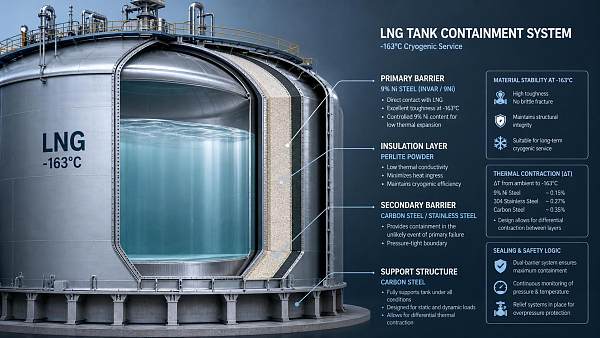
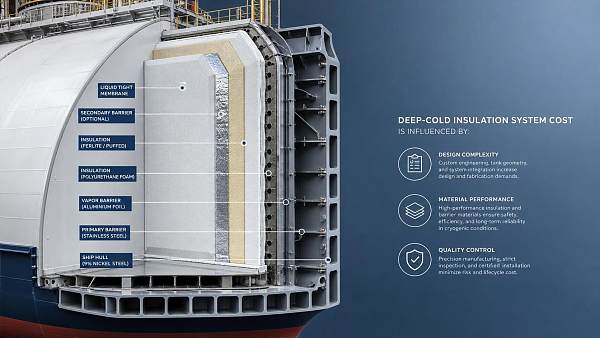
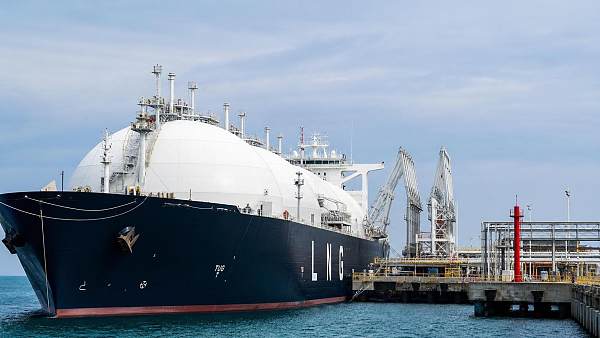
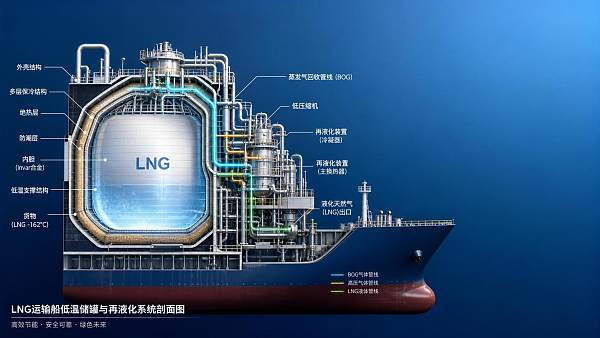
LNG is carried at approximately -163°C. At that temperature, ordinary ship steel would become unsuitable for direct contact with the cargo, so a membrane containment system uses thin cryogenic barriers supported by insulation and the vessel’s inner hull. The containment system is therefore not a free-standing tank in the same sense as a Moss-type spherical tank. It depends on a carefully engineered relationship with the ship’s structure.
In rough seas, an LNG carrier can experience combinations of roll, pitch, heave, surge, sway, yaw, hull bending, torsion, and occasional slamming. These motions influence the cargo in different ways:
- Roll and pitch move the liquid mass across tank boundaries and increase free-surface motion.
- Heave and vertical acceleration can intensify impact loads when the cargo surface strikes tank boundaries.
- Hull girder bending and torsion create small but repeated distortions in the tank-supporting structure.
- Slamming forward of the vessel can transmit dynamic loads through the hull, particularly in heavy head seas.
- Partially filled tanks may allow more energetic cargo movement than tanks that are nearly full or nearly empty.
These effects are relevant to all LNG containment technologies. The distinction is that membrane systems must accommodate the resulting local and global structural movements without damaging the primary barrier, insulation arrangement, secondary barrier, or supporting hull.
The central issue: sloshing, not simply wave height
Wave height alone is an incomplete measure of containment risk. A vessel may encounter substantial seas while operating safely if its speed, heading, loading condition, and motion response remain within expected limits. Conversely, a less dramatic sea state can generate unfavorable tank excitation if vessel motions align with the natural sloshing behavior of a partially filled tank.
Sloshing occurs when LNG moves within a tank and strikes tank boundaries with dynamic force. In a membrane tank, localized impact pressure can act on the insulation system and be transferred to the inner hull. The magnitude and distribution of that load depend on cargo depth, tank geometry, vessel accelerations, liquid properties, and the frequency content of the vessel’s motion.
This is why membrane LNG carriers are not assessed only through broad statements such as “suitable for ocean service.” Their designs are evaluated using structural calculations, model testing where required, dynamic analysis, containment-system qualification data, and rules imposed by the selected classification society. The vessel’s approved loading manual and operating procedures are part of the safety case, not administrative paperwork added after construction.
A common misunderstanding is that an LNG tank is safest when it is simply kept as full as possible. High filling levels can reduce free-surface motion, but they can also introduce different load patterns and operational constraints. Very low filling levels may reduce cargo mass but can create significant free-surface effects. The most demanding conditions are frequently associated with intermediate filling levels, where the liquid has enough space to build momentum and impact tank structures.
How membrane systems manage ship motion
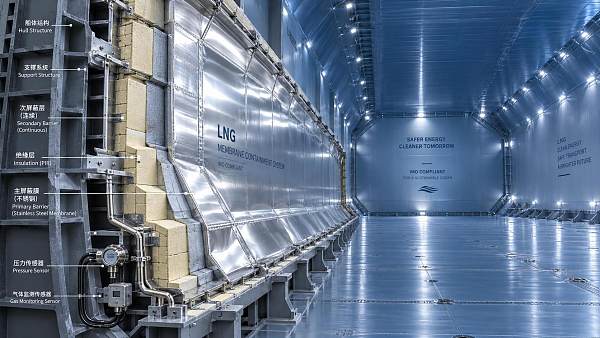
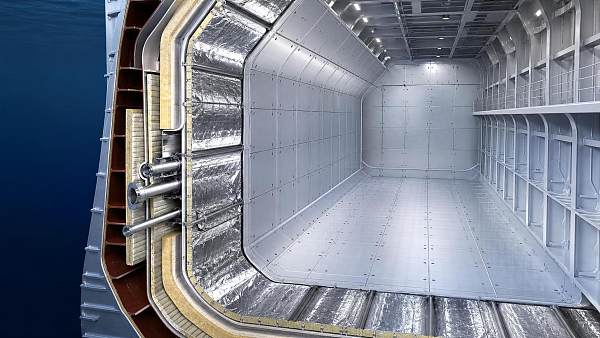
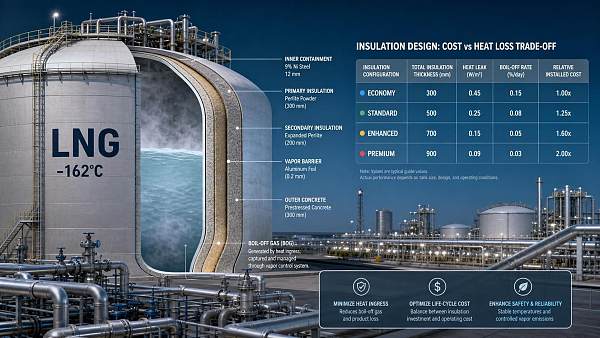
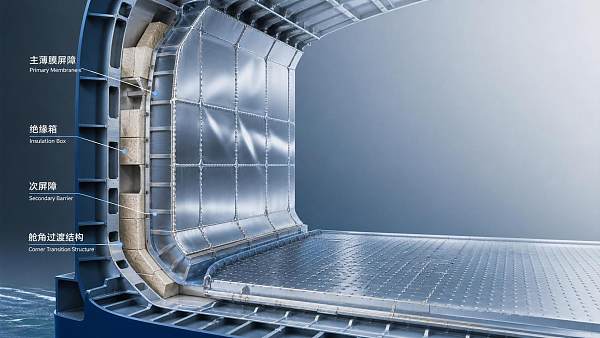
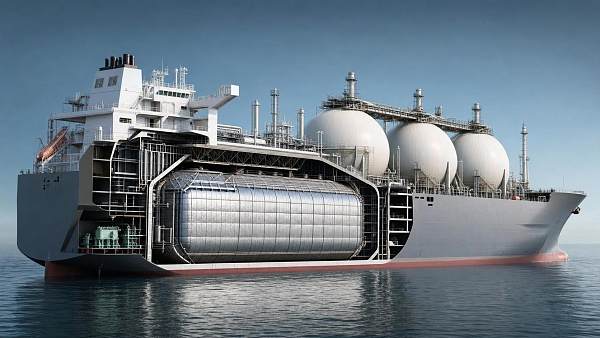
Membrane containment systems are designed to work with controlled flexibility. The primary membrane is generally made from a cryogenic-compatible metallic material, while insulation layers reduce heat ingress and transfer cargo loads to the hull. A secondary barrier provides an additional level of protection if the primary barrier were to leak. The inner hull forms the structural foundation for the system.
This arrangement addresses rough-sea operation in several ways.
Thermal contraction is accommodated by the containment design. Cooling a large tank from ambient temperature to LNG temperature creates substantial thermal movement. The membrane and insulation configuration must absorb or distribute this movement without concentrating stress at joints, corners, penetrations, or interfaces with pumps and piping.
Hull deflection is expected rather than ignored. A large LNG carrier bends and twists as it moves through waves. The containment system must remain compatible with the allowable deformation of the supporting structure. This makes hull design, weld quality, local reinforcement, and construction tolerances relevant to cargo containment reliability.
Localized sloshing loads are considered in tank design. Areas exposed to potentially higher impact loads may require strengthened arrangements or may be subject to filling restrictions. The exact limits are vessel- and design-specific. It is not technically sound to assume that all membrane tanks have identical partial-fill capability simply because they use the same broad containment category.
Leak detection is built into the safety philosophy. Interbarrier spaces and associated monitoring arrangements are intended to detect abnormal conditions early. Detection does not eliminate the need for structural integrity, but it provides an important safeguard within a layered containment concept.
Rough-sea suitability depends on the approved operating envelope
A membrane LNG carrier should be regarded as suitable for rough seas only within its approved operational envelope. That envelope is shaped by the vessel’s actual design, not by a generic description of membrane technology.
Important variables include tank dimensions, insulation design, bow form, hull stiffness, vessel size, route profile, propulsion capability, loading condition, boil-off gas management arrangement, and approved filling ranges. Two ships may both be membrane LNG carriers but have materially different restrictions because their tank geometries, structural details, or design assumptions differ.
For chartering, terminal planning, and cargo scheduling, this has practical consequences. A voyage involving frequent heavy-weather exposure should not be evaluated merely by asking whether the vessel has membrane tanks. The relevant documents are the ship’s loading manual, cargo operating manual, class-approved filling restrictions, weather-routing procedures, and any company-specific operating limits. These records identify whether a planned cargo quantity creates an unfavorable partial-fill condition and what mitigations are available.
In some circumstances, operational restrictions may require tanks to be loaded above or below specified ranges, depending on the vessel’s approved sloshing criteria. This can affect cargo flexibility, heel management, ballast planning, cooldown sequences, and commercial scheduling. The restriction is not evidence that membrane technology is unsuitable; it is a recognition that cargo containment is a dynamic engineering system with defined boundaries.
What can go wrong when the limits are poorly understood
The principal concern in heavy weather is cumulative damage rather than an immediate, dramatic failure. Repeated high-energy liquid impacts can degrade insulation support, cause local crushing or cracking in insulation components, loosen interfaces, or increase stress at membrane and secondary-barrier details. If structural movement or sloshing loads exceed the design basis, the risk is not confined to a single voyage; fatigue and progressive deterioration may become relevant.
Another risk is treating weather avoidance as a complete solution. Reducing speed or changing course can lower vessel accelerations, but such actions may not always be possible without affecting arrival windows, boil-off management, traffic separation requirements, or safe navigation. Weather routing is therefore an operational control, not a substitute for proper filling management and a containment system designed for the intended trade.
Tank-entry and repair considerations also matter. A membrane system can be highly reliable in service, yet inspection and repair work require specialized procedures, qualified personnel, controlled materials, and careful verification. Damage to a membrane or insulation zone cannot be approached as a routine steel repair. Owners and managers must consider access to competent repair capability as part of lifecycle risk management, particularly for vessels trading far from major LNG repair hubs.
Membrane versus Moss containment in heavy weather
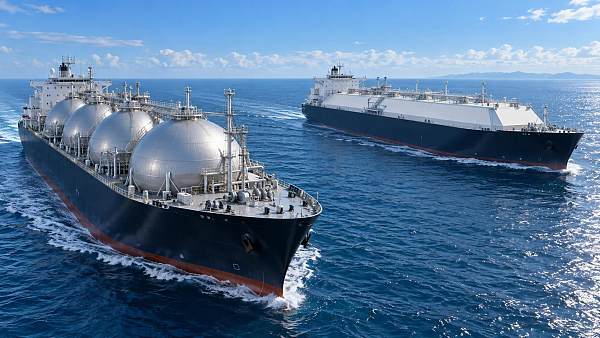
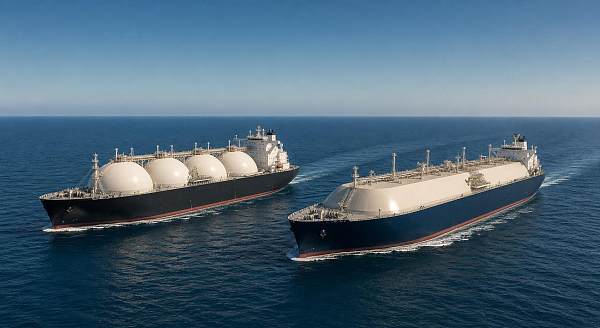
The comparison with Moss-type spherical containment is often oversimplified. Moss tanks are self-supporting and are visually distinct because the spheres project above deck. Their structural concept differs fundamentally from a membrane system, and their behavior under sloshing and hull deformation also differs. Because the tank is structurally independent of the hull, a Moss design does not rely on the inner hull in the same way as a membrane system.
That does not mean Moss tanks are categorically “better in rough seas,” nor does it mean membrane systems are inherently vulnerable. Both technologies have established LNG shipping applications and are subject to rigorous design and classification requirements. The practical comparison is more specific:
- Membrane systems generally make efficient use of hull volume and can support high cargo capacity relative to the vessel’s dimensions.
- Self-supporting spherical tanks follow a different load path and may offer different behavior under particular sloshing or structural-motion conditions.
- Membrane systems require close attention to insulation integrity, secondary barriers, and supporting-hull deformation.
- Tank filling restrictions, repair philosophy, deck arrangement, cargo capacity, boil-off strategy, and yard capability can all influence the technology choice.
The containment choice should therefore be tied to the intended trade, cargo pattern, vessel size, construction strategy, and risk tolerance—not reduced to a single rough-weather criterion.
Design and operational controls that determine performance
For a membrane LNG carrier expected to trade through demanding sea conditions, the most consequential controls begin before delivery. The ship design must establish credible motion assumptions for the intended service, account for structural response, and demonstrate compatibility between the cargo containment system and the supporting hull. Classification review and statutory compliance form a baseline, but owner specifications can be equally important where a ship is intended for a particularly demanding route or loading pattern.
During construction, containment reliability depends heavily on workmanship. Membrane joints, insulation installation, corner details, penetrations, secondary barriers, and inner-hull surface preparation all require disciplined quality control. A technically sound design can be compromised by poor alignment, damage during installation, inadequate cleanliness, or deviations that are not properly assessed and corrected.
In service, cargo planning becomes the active control. Operators need to know the vessel’s permitted filling conditions before loading decisions are finalized, rather than discovering restrictions after a cargo nomination has been agreed. Weather forecasts and route conditions should be linked to tank levels, expected voyage duration, ballast condition, and propulsion margins. Where forecasts indicate sustained heavy weather, course and speed decisions should consider not only crew comfort and schedule but also tank excitation.
Condition monitoring also deserves attention. Interbarrier-space monitoring, temperature and pressure trends, boil-off behavior, alarm history, cargo pump performance, and abnormal structural or insulation indications should be evaluated in context. No single reading proves containment damage, but unexplained changes should not be dismissed as ordinary voyage variation without technical review.
The decision is conditional, not absolute
Membrane containment is an established and appropriate solution for LNG carriers operating on open-ocean routes, including routes where rough seas are an expected operational reality. Its suitability rests on a disciplined combination of approved engineering, appropriate loading conditions, construction quality, vessel-specific operating limits, and competent heavy-weather management.
The incorrect conclusion is that rough seas make membrane containment unsuitable. The equally incorrect conclusion is that all membrane LNG vessels can be operated identically regardless of tank level or route exposure. The critical question is whether the particular vessel’s containment design and operating procedures have been matched to its actual loading profile and expected motion environment.
Where a trade involves frequent intermediate tank levels, long exposure to severe sea states, unusual cargo patterns, or limited ability to alter route and speed, the containment assessment should go beyond a generic technology comparison. It should examine the vessel’s approved partial-fill restrictions, sloshing design basis, structural monitoring philosophy, inspection arrangements, and repair support. That is where rough-sea suitability is determined in practice.
Recommended News
 Nov 03, 2026How to choose a containment system for cryogenic shipping in EuropeCryogenic shipping Europe: compare membrane and independent tanks, boil-off management, regulations and lifecycle costs to choose the right containment system.
 Nov 02, 2026How insulated piping reduces heat gain in cryogenic shippingExplore cryogenic shipping solutions piping and discover how insulation, thermal bridge control and installation quality reduce heat gain in LNG transfer lines.
 Oct 16, 2026Is Membrane Containment Suitable for LNG Vessels in Rough Seas?Is membrane containment suitable for LNG vessels operating in rough seas? Explore sloshing risks, operating limits, and proven safety controls for confident LNG voyage planning.
 Oct 13, 2026How Should You Compare Cryogenic Engineering Test Data from Suppliers?How do I compare cryogenic engineering test data from suppliers? Discover a practical guide to evaluating LNG thermal performance, traceability, standards, and risk.
 Sep 28, 2026When is nickel steel containment needed for cryogenic storage?Nickel steel containment is essential when cryogenic tanks face brittle-fracture risk. Discover how temperature, loads, and tank design guide the right choice.
 Sep 11, 2026How membrane containment systems demonstrate compliance with IMO standardsMembrane containment systems IMO standards: discover how LNG carriers prove compliance through verified barriers, testing, monitoring, and traceable records.
 Sep 10, 2026How membrane and Moss containment systems differ for LNG carriersLNG cargo containment for carriers: compare membrane and Moss systems for capacity, BOG, safety, sloshing, lifecycle cost, and operational flexibility.
 Sep 03, 2026What drives membrane containment systems cost in LNG projects?Membrane containment systems cost depends on tank design, materials, labor, QA, and boil-off performance. Discover how to control LNG project risk and lifecycle costs.
 Aug 11, 2026How Vacuum Insulated Cryogenic Engineering Reduces Boil-Off and Heat LeakVacuum insulated cryogenic engineering cuts boil-off and heat leak by optimizing vacuum spaces, MLI, supports, and penetrations—discover what really improves LNG thermal performance.
 Aug 09, 2026What Determines Safe Cryogenic Containment Design in LNG Storage?Cryogenic containment design in LNG storage depends on materials, thermal stress, leak control, and BOG management. Discover what truly defines safe, code-compliant performance.
 Jul 29, 2026How to Evaluate a Cryogenic Tank Handling System for LNG Transfer SafetyCryogenic tank handling system evaluation for LNG transfer safety: learn how to assess pressure control, insulation, ESD response, and operational reliability before choosing a safer system.
 Jul 24, 2026Deep-Cryogenic Insulation Systems Cost: What Drives Total Project Spend?Deep-cryogenic insulation systems cost depends on design, materials, installation, QA, and boil-off performance. Learn what drives total project spend and compare bids with confidence.
 Jul 21, 2026LNG Carriers Class Approval: Key Rules and Compliance RisksLNG carriers class approval explained: key rules, major compliance risks, and practical steps to prevent delays, protect vessel readiness, and improve charter confidence.
 Jul 15, 2026Low Boil Off Insulation System Performance: What Reduces LNG Losses MostLow boil off insulation system performance explained: discover what cuts LNG losses most through smarter containment, installation quality, and BOG management.
 Jul 13, 2026Deep Cryogenic Insulation for LNG Tanks: Cost vs Heat LossDeep cryogenic insulation for LNG tanks impacts more than upfront cost. Learn how lower heat loss cuts BOG, improves efficiency, and strengthens lifecycle value.
 Jul 13, 2026Low Loss Cryogenic Handling: Key Factors for Safer TransferLow loss cryogenic handling starts with thermal control, pressure balance, and clean transfer. Learn the key factors that reduce boil-off, protect product integrity, and improve safer LNG and industrial operations.
 Jul 12, 2026LNG Vessel Fuel Storage: Main Safety Risks and FixesLNG vessel fuel storage safety starts with early risk detection. Learn the main hazards, warning signs, and practical fixes to reduce leaks, pressure instability, and onboard failures.
 Jul 09, 2026Membrane Cargo Tank vs Moss Type: Which Fits Modern LNG FleetsMembrane cargo tank vs Moss type: compare LNG fleet capacity, boil-off strategy, maintenance, and asset value to choose the best-fit design for modern shipping returns.
 Jul 08, 2026Membrane Containment Systems: Key Failure Risks in LNG Tank DesignMembrane containment systems are central to LNG tank safety. Explore key failure risks, from insulation degradation to sloshing and secondary barrier issues, and learn what to check early.
 Jul 06, 2026How to Compare a Cryogenic Shipping Systems Manufacturer for Long-Haul LNG ProjectsCryogenic shipping systems manufacturer selection can make or break long-haul LNG projects. Compare boil-off control, compliance, engineering support, and lifecycle value.
 Jul 02, 2026Cryogenic Shipping Safety: Common Failure Risks and FixesCryogenic shipping safety starts with finding hidden failure risks early. Learn the main causes, practical fixes, and audit gaps that help protect LNG cargo, cut incidents, and improve control.
 Jul 02, 2026LNG Carriers Dimensions Explained for Terminal PlanningLNG carriers dimensions explained for smarter terminal planning. Learn how vessel size affects berth design, draft limits, mooring, and future fleet compatibility.
 Jun 30, 2026LNG Carrier Containment Technology Explained: Membrane vs Moss SystemsLNG carrier containment technology explained clearly: compare membrane vs Moss systems, key trade-offs, cargo efficiency, sloshing risk, and what drives smarter LNG vessel decisions.
 Jun 30, 2026Vacuum Deep Cryogenic Insulation: Key Failure Risks and How to Prevent ThemVacuum deep cryogenic insulation failure can raise boil-off, safety, and compliance risks. Learn key warning signs, root causes, and practical prevention steps to protect LNG operations.