



Search News
Industry Portal
Popular Tags
How to Compare a Cryogenic Shipping Systems Manufacturer for Long-Haul LNG Projects
Author
Time
Click Count
How to Compare a Cryogenic Shipping Systems Manufacturer for Long-Haul LNG Projects
Choosing the right cryogenic shipping systems manufacturer can determine whether a long-haul LNG project delivers efficiency, safety, and lifecycle value, or costly risk.
For sourcing decisions, price alone rarely tells the full story.
A strong supplier must prove containment reliability, thermal efficiency, compliance strength, engineering depth, and dependable global execution.
That matters even more in long-haul LNG trades, where cargo loss, boil-off rates, and downtime directly affect commercial performance.
This guide breaks down how to compare a cryogenic shipping systems manufacturer in a way that supports sound technical and commercial decisions.
Start With Project Fit, Not Supplier Claims
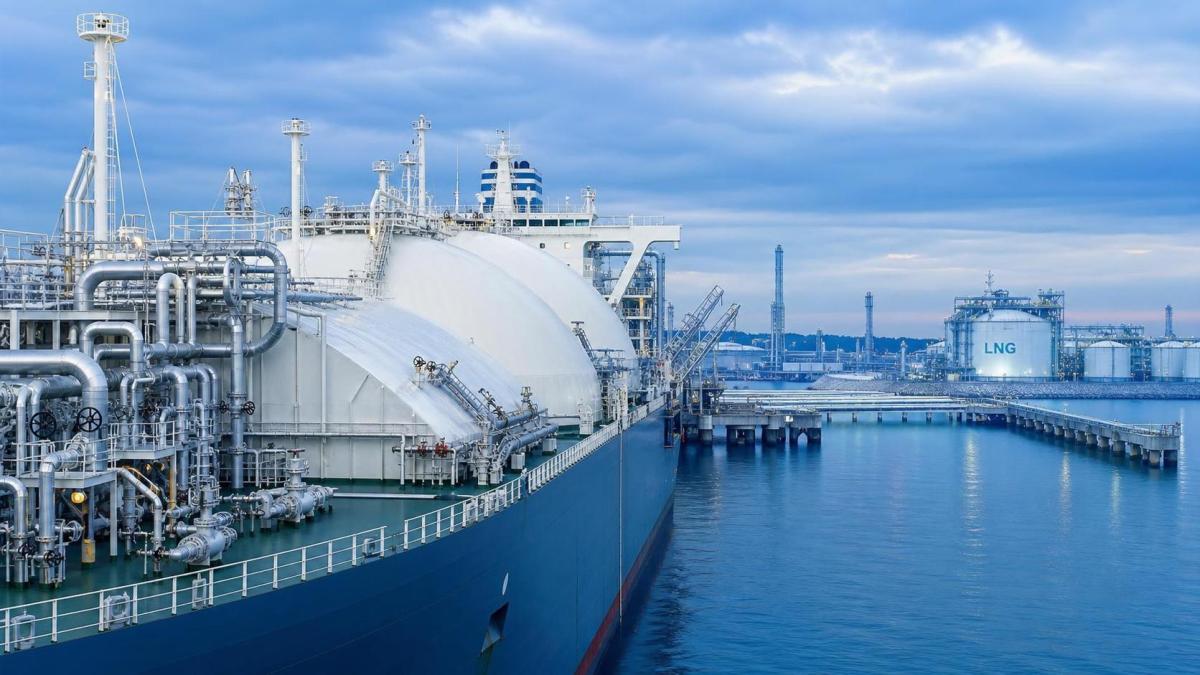
Before comparing any cryogenic shipping systems manufacturer, define the project profile in operational terms.
Long-haul LNG projects place different demands on cargo systems than short regional routes.
Voyage duration, loading frequency, destination climate, fuel strategy, and offloading pattern all change the selection logic.
In practice, the best cryogenic shipping systems manufacturer is the one that matches the mission profile with evidence, not marketing language.
A useful first filter includes these questions:
- What LNG carrier size and containment type does the project require?
- What boil-off gas performance is commercially acceptable?
- How much schedule risk can the project absorb?
- Which class rules, flag requirements, and terminal interfaces apply?
- Will the operator need lifecycle support across several regions?
Once those points are clear, supplier comparison becomes more disciplined and easier to defend internally.
Check Containment System Expertise First
For long-haul LNG service, containment performance sits at the center of supplier evaluation.
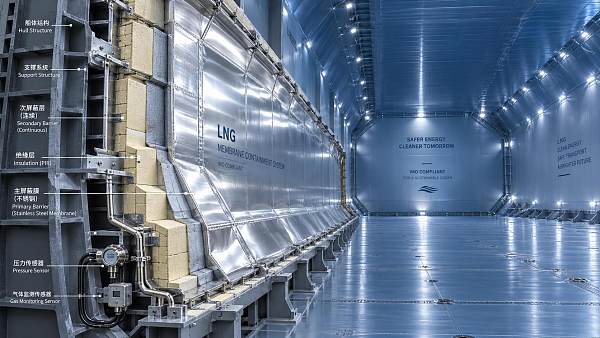
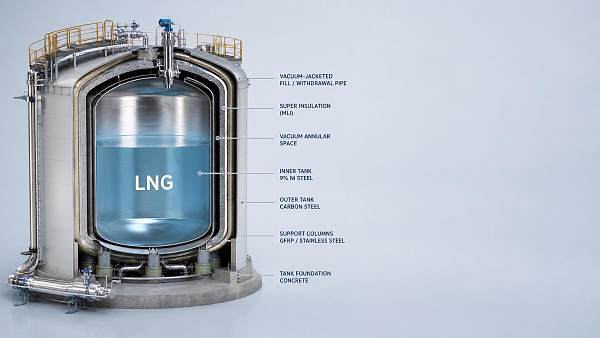
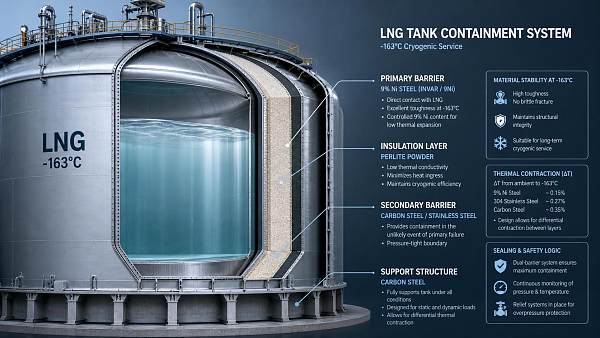
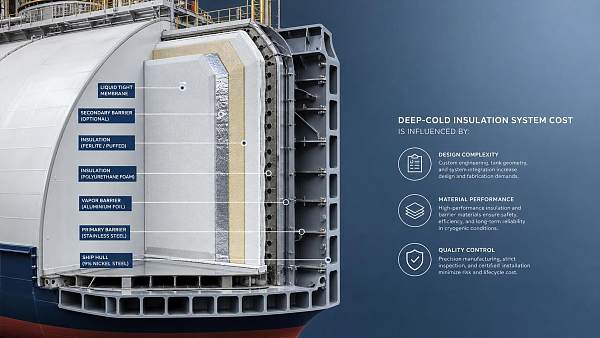
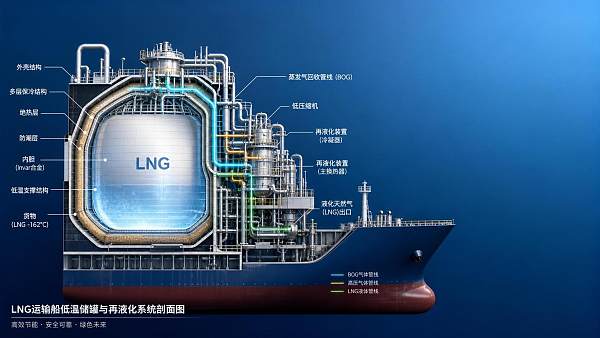
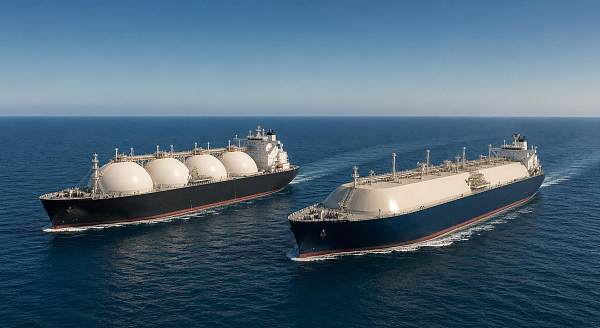
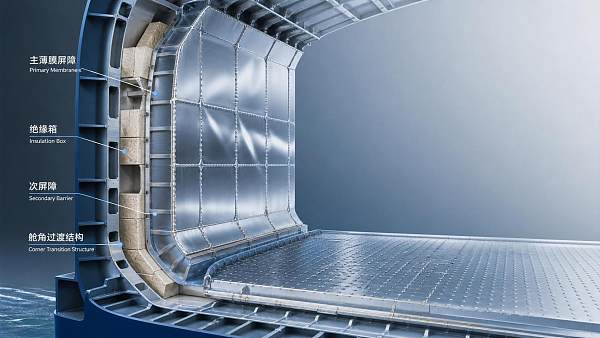
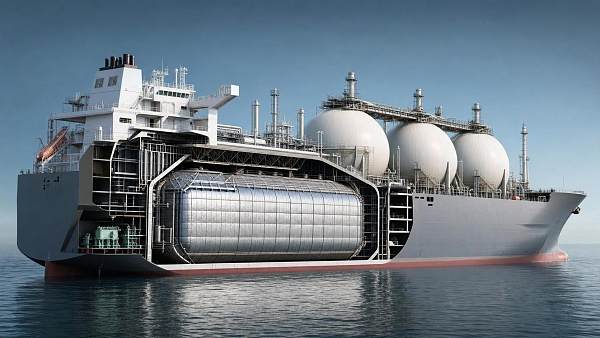
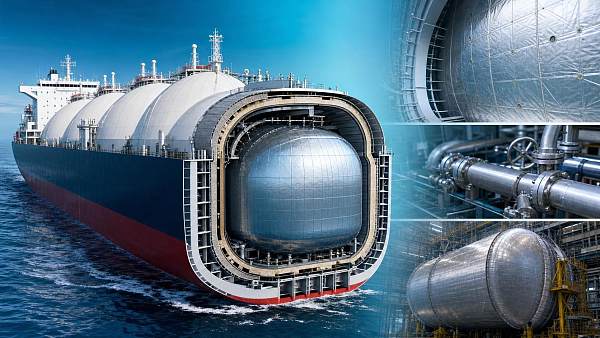
A cryogenic shipping systems manufacturer should demonstrate deep experience with membrane systems, Moss-type tanks, or other approved configurations relevant to the vessel concept.
The key is not only design familiarity.
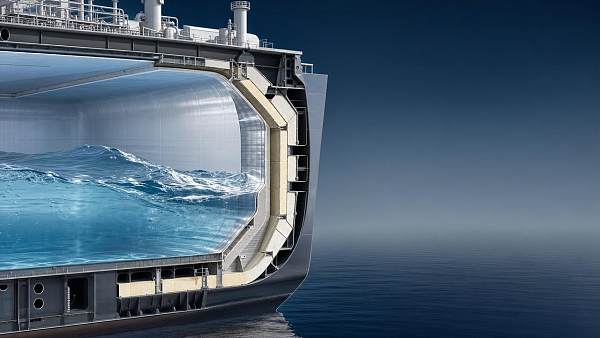
It is the ability to show how the system performs under thermal cycling, sloshing loads, vibration, and extended ocean transit.
Ask for technical proof in specific areas:
- Historical leakage and failure records
- Insulation system degradation data
- Finite element or structural stress validation
- Repair methodology and turnaround time
- Compatibility with dual-fuel propulsion strategy
This is where many bids begin to separate.
Some suppliers provide attractive capex figures, but their technical package looks thin once detailed operating conditions are reviewed.
Evaluate Thermal Performance and Boil-Off Control
A cryogenic shipping systems manufacturer should be judged carefully on thermal performance, because boil-off losses compound over every voyage.
For long-haul LNG routes, even small efficiency gaps can reshape annual economics.
Review guaranteed boil-off rate assumptions in context.
Check ambient temperature ranges, tank fill levels, voyage duration, and sea-state conditions behind the numbers.
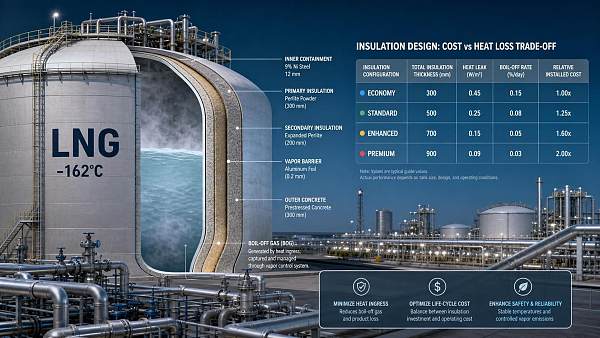
A reliable cryogenic shipping systems manufacturer should also explain how insulation design, cargo handling equipment, and gas management systems work together.
Useful comparison points include:
- Guaranteed boil-off rate under specified operating conditions
- Insulation material performance at minus 163 degrees Celsius
- Boil-off gas handling flexibility during delays or rerouting
- Energy integration with reliquefaction or engine consumption
- Performance penalties during partial-load operation
When a supplier cannot explain these tradeoffs clearly, selection risk rises quickly.
Review Compliance, Certification, and Quality Systems
No cryogenic shipping systems manufacturer should advance to final review without a strong compliance record.
Long-haul LNG projects operate under tight scrutiny from class societies, shipyards, charterers, insurers, and regulators.
That means certification should be treated as a live operating capability, not a document bundle.
Look for evidence of compliance with the IGC Code, relevant IMO requirements, and class-specific approval processes.
Also review manufacturing discipline.
A qualified cryogenic shipping systems manufacturer should have traceable welding procedures, non-destructive testing protocols, materials control, and formal change management.
Recent market shifts have made this even more important.
As delivery slots tighten, weaker suppliers sometimes stretch capacity and quality systems at the same time.
That usually shows up first in documentation gaps, delayed approvals, or inconsistent factory audits.
Compare Engineering Support Across the Full Project Cycle
A capable cryogenic shipping systems manufacturer does far more than deliver hardware.
For complex LNG carrier programs, engineering support often determines whether integration stays smooth or becomes expensive.
This includes concept review, yard coordination, interface management, commissioning, crew familiarization, and after-sales response.
In real projects, delays rarely come from one dramatic failure.
They usually come from unresolved interfaces between cargo systems, hull structures, automation, and propulsion packages.
Review each cryogenic shipping systems manufacturer on these support dimensions:
- Front-end technical consultation quality
- 3D modeling and interface coordination capability
- Shipyard collaboration history
- Commissioning team availability
- Remote diagnostics and field service reach
- Spare parts planning and lifecycle documentation
This also helps separate manufacturers from system assemblers with limited technical ownership.
Assess Delivery Capacity and Supply Chain Resilience
A cryogenic shipping systems manufacturer may look excellent on paper and still fail under delivery pressure.
That is why execution capacity should be reviewed with the same seriousness as technology.
Long-haul LNG projects depend on specialized materials, precision fabrication, and tightly sequenced yard schedules.
Any disruption in valves, insulation components, steel processing, or test facilities can cascade into major delay costs.
Review practical indicators such as factory loading, subcontractor control, regional service hubs, and previous on-time delivery performance.
More importantly, ask how the cryogenic shipping systems manufacturer manages disruption scenarios.
Backup sourcing, inspection flexibility, and critical parts visibility matter more now than they did a few years ago.
Look Beyond Capex to Total Lifecycle Value
The cheapest cryogenic shipping systems manufacturer is rarely the most economical choice over vessel life.
A better comparison model combines acquisition cost with operating efficiency, maintenance burden, outage risk, and service responsiveness.
This is especially relevant when evaluating LNG containment technology for routes with high utilization and strict delivery windows.
A simple supplier scorecard can help keep decisions grounded.
This approach gives the cryogenic shipping systems manufacturer comparison more commercial depth and less short-term bias.
Use Structured Questions During Supplier Review
A disciplined question set often reveals more than a polished presentation.
When interviewing a cryogenic shipping systems manufacturer, focus on evidence-based responses.
- Which reference vessels operate on similar long-haul LNG routes?
- What assumptions sit behind the guaranteed boil-off figures?
- How are critical containment repairs handled at sea or in port?
- What recent non-conformities occurred, and how were they closed?
- What lead-time risks exist today across key components?
- How quickly can engineering support be deployed internationally?
Suppliers that answer directly, with data and case history, are usually easier partners during execution.
Make the Final Comparison Defensible
The final decision should show why one cryogenic shipping systems manufacturer fits the project better than another.
That requires a balanced view of risk, performance, support, and lifecycle economics.
A practical process is to shortlist suppliers, score them against weighted criteria, validate claims through references, and challenge weak assumptions before award.
For long-haul LNG projects, the best cryogenic shipping systems manufacturer is usually the one with proven containment performance, transparent engineering, and resilient delivery capability.
That combination protects schedule, cargo integrity, and long-term asset value.
Use this framework to turn supplier comparison into a clear decision process, backed by technical evidence and commercial logic.
Recommended News
 Sep 28, 2026When is nickel steel containment needed for cryogenic storage?Nickel steel containment is essential when cryogenic tanks face brittle-fracture risk. Discover how temperature, loads, and tank design guide the right choice.
 Sep 11, 2026How membrane containment systems demonstrate compliance with IMO standardsMembrane containment systems IMO standards: discover how LNG carriers prove compliance through verified barriers, testing, monitoring, and traceable records.
 Sep 10, 2026How membrane and Moss containment systems differ for LNG carriersLNG cargo containment for carriers: compare membrane and Moss systems for capacity, BOG, safety, sloshing, lifecycle cost, and operational flexibility.
 Sep 03, 2026What drives membrane containment systems cost in LNG projects?Membrane containment systems cost depends on tank design, materials, labor, QA, and boil-off performance. Discover how to control LNG project risk and lifecycle costs.
 Aug 11, 2026How Vacuum Insulated Cryogenic Engineering Reduces Boil-Off and Heat LeakVacuum insulated cryogenic engineering cuts boil-off and heat leak by optimizing vacuum spaces, MLI, supports, and penetrations—discover what really improves LNG thermal performance.
 Aug 09, 2026What Determines Safe Cryogenic Containment Design in LNG Storage?Cryogenic containment design in LNG storage depends on materials, thermal stress, leak control, and BOG management. Discover what truly defines safe, code-compliant performance.
 Jul 29, 2026How to Evaluate a Cryogenic Tank Handling System for LNG Transfer SafetyCryogenic tank handling system evaluation for LNG transfer safety: learn how to assess pressure control, insulation, ESD response, and operational reliability before choosing a safer system.
 Jul 24, 2026Deep-Cryogenic Insulation Systems Cost: What Drives Total Project Spend?Deep-cryogenic insulation systems cost depends on design, materials, installation, QA, and boil-off performance. Learn what drives total project spend and compare bids with confidence.
 Jul 21, 2026LNG Carriers Class Approval: Key Rules and Compliance RisksLNG carriers class approval explained: key rules, major compliance risks, and practical steps to prevent delays, protect vessel readiness, and improve charter confidence.
 Jul 15, 2026Low Boil Off Insulation System Performance: What Reduces LNG Losses MostLow boil off insulation system performance explained: discover what cuts LNG losses most through smarter containment, installation quality, and BOG management.
 Jul 13, 2026Deep Cryogenic Insulation for LNG Tanks: Cost vs Heat LossDeep cryogenic insulation for LNG tanks impacts more than upfront cost. Learn how lower heat loss cuts BOG, improves efficiency, and strengthens lifecycle value.
 Jul 13, 2026Low Loss Cryogenic Handling: Key Factors for Safer TransferLow loss cryogenic handling starts with thermal control, pressure balance, and clean transfer. Learn the key factors that reduce boil-off, protect product integrity, and improve safer LNG and industrial operations.
 Jul 12, 2026LNG Vessel Fuel Storage: Main Safety Risks and FixesLNG vessel fuel storage safety starts with early risk detection. Learn the main hazards, warning signs, and practical fixes to reduce leaks, pressure instability, and onboard failures.
 Jul 09, 2026Membrane Cargo Tank vs Moss Type: Which Fits Modern LNG FleetsMembrane cargo tank vs Moss type: compare LNG fleet capacity, boil-off strategy, maintenance, and asset value to choose the best-fit design for modern shipping returns.
 Jul 08, 2026Membrane Containment Systems: Key Failure Risks in LNG Tank DesignMembrane containment systems are central to LNG tank safety. Explore key failure risks, from insulation degradation to sloshing and secondary barrier issues, and learn what to check early.
 Jul 06, 2026How to Compare a Cryogenic Shipping Systems Manufacturer for Long-Haul LNG ProjectsCryogenic shipping systems manufacturer selection can make or break long-haul LNG projects. Compare boil-off control, compliance, engineering support, and lifecycle value.
 Jul 02, 2026Cryogenic Shipping Safety: Common Failure Risks and FixesCryogenic shipping safety starts with finding hidden failure risks early. Learn the main causes, practical fixes, and audit gaps that help protect LNG cargo, cut incidents, and improve control.
 Jul 02, 2026LNG Carriers Dimensions Explained for Terminal PlanningLNG carriers dimensions explained for smarter terminal planning. Learn how vessel size affects berth design, draft limits, mooring, and future fleet compatibility.
 Jun 30, 2026LNG Carrier Containment Technology Explained: Membrane vs Moss SystemsLNG carrier containment technology explained clearly: compare membrane vs Moss systems, key trade-offs, cargo efficiency, sloshing risk, and what drives smarter LNG vessel decisions.
 Jun 30, 2026Vacuum Deep Cryogenic Insulation: Key Failure Risks and How to Prevent ThemVacuum deep cryogenic insulation failure can raise boil-off, safety, and compliance risks. Learn key warning signs, root causes, and practical prevention steps to protect LNG operations.
 Jun 28, 2026Deep-Cryogenic Insulation Cost: What Drives Budget Changes in LNG ProjectsDeep-cryogenic insulation cost in LNG projects depends on materials, containment design, labor, compliance, and shipyard execution. Learn what drives budget changes and how to control risk.
 Jun 25, 2026Cryogenic Shipping Solutions: Key Risks, Costs, and Containment ChoicesCryogenic shipping solutions: compare key risks, lifecycle costs, and membrane vs. Moss containment to avoid hidden losses and choose safer, more efficient LNG transport.
 Jun 15, 2026Cryogenic Engineering Basics: Key Design Factors for Containment SafetyCryogenic engineering basics explained: discover the key design factors behind safer LNG and low-temperature containment, from materials and thermal stress to boil-off control and monitoring.
 Jun 11, 2026Membrane Containment Systems: Key Failure Risks and Design ChecksMembrane containment systems demand rigorous design checks. Explore key failure risks, from sloshing stress to insulation aging, and learn how to improve LNG vessel safety and compliance.