



Search News
Industry Portal
Popular Tags
LNG Carrier Containment Technology Explained: Membrane vs Moss Systems
Author
Time
Click Count
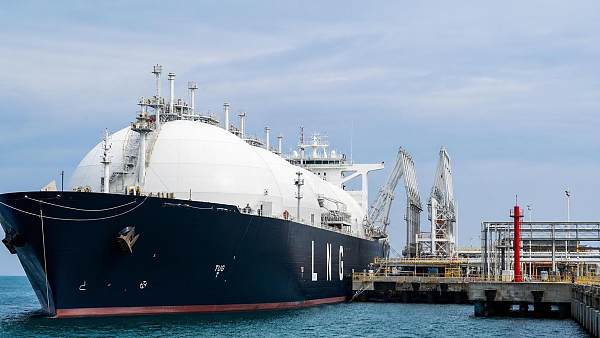
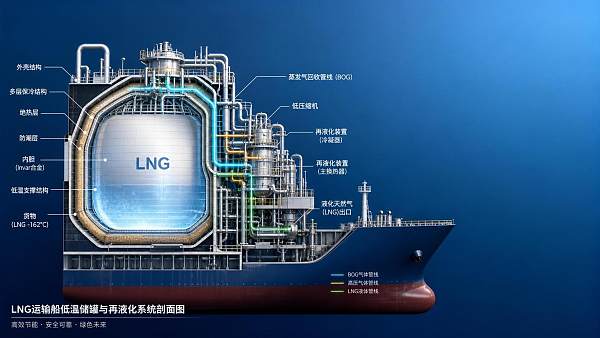
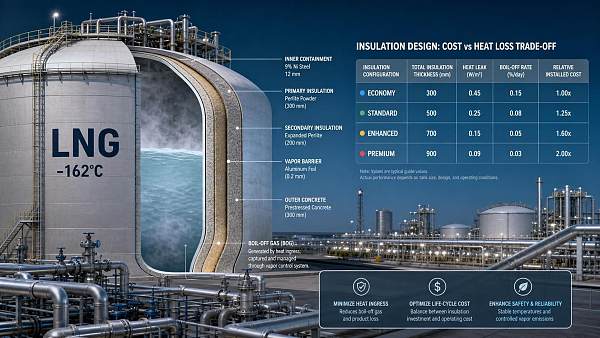
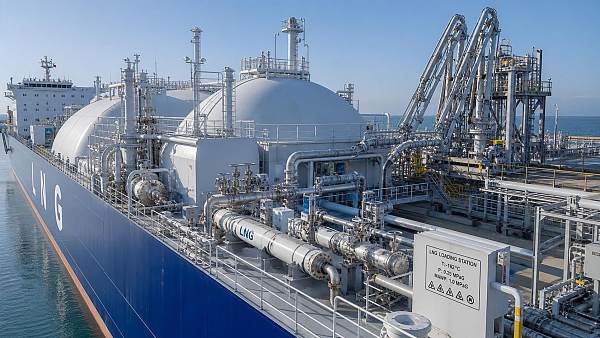
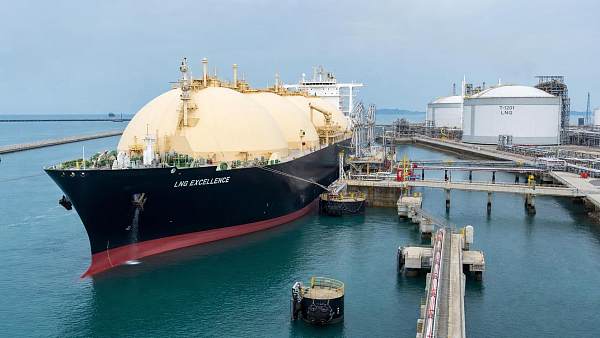
LNG carrier containment technology sits at the center of cryogenic shipping performance. It protects cargo at minus 163 degrees Celsius, limits boil-off gas, and shapes how an LNG vessel earns through its operating life.
That is why the comparison between membrane and Moss systems remains a live issue. For anyone tracking vessel design, charter economics, or fleet renewal, the containment choice affects much more than tank geometry.
Within the wider transport intelligence landscape followed by GTOT, LNG carriers stand beside smart container ships and rail control systems as critical infrastructure assets. Their containment systems are not isolated engineering details. They influence energy security, route flexibility, and asset value across the global supply chain.
Why Containment Design Matters in LNG Shipping
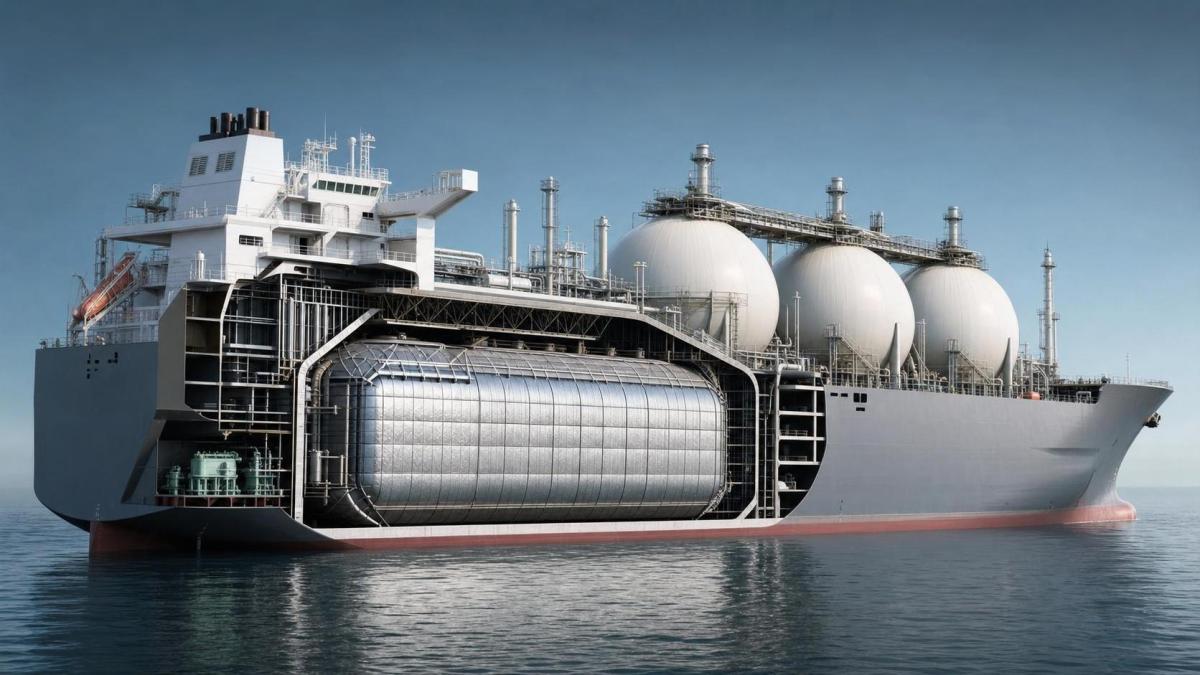
An LNG carrier does not simply store fuel-like cargo. It carries liquefied natural gas under extreme cryogenic conditions, where heat ingress, structural movement, and cargo management must stay tightly controlled.
In practical terms, LNG carrier containment technology determines four core outcomes. These are cargo preservation, vessel capacity efficiency, maintenance burden, and operational resilience during long-distance marine transport.
Small design differences can produce large commercial effects. A system with better volumetric efficiency may improve cargo capacity. A system with stronger structural independence may simplify some risk considerations in rough sea conditions.
The Two Main Systems in Simple Terms
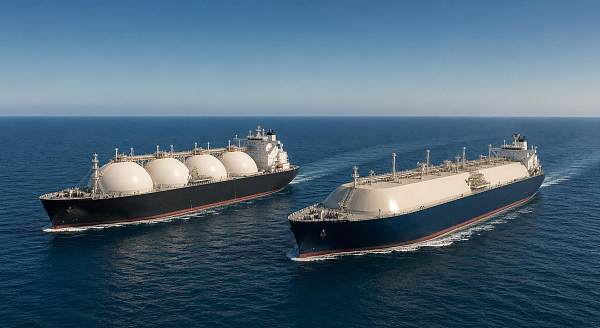
Modern LNG carrier containment technology is dominated by two proven concepts: membrane systems and Moss systems. Both are mature. Both are used in high-value vessels. Their strengths, however, are different.
Membrane Systems
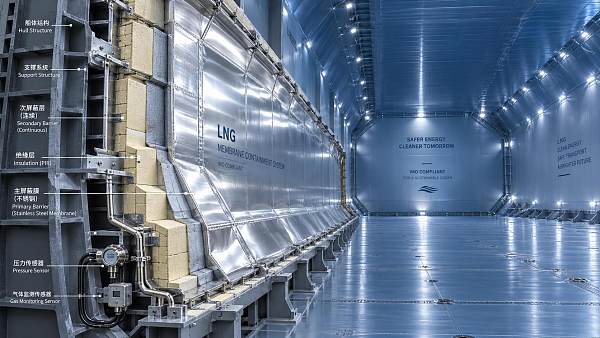
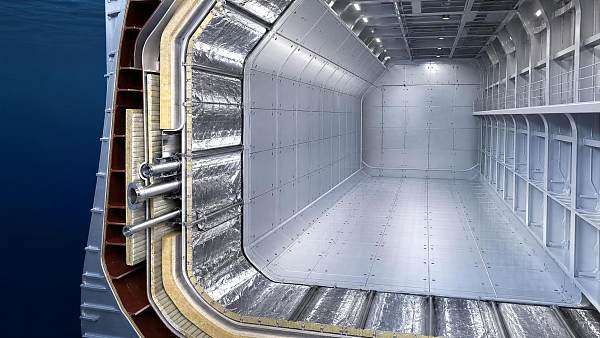
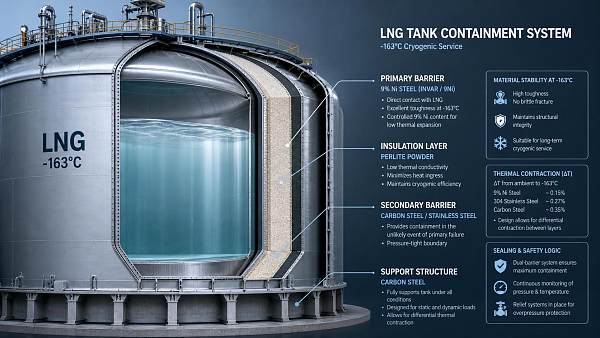
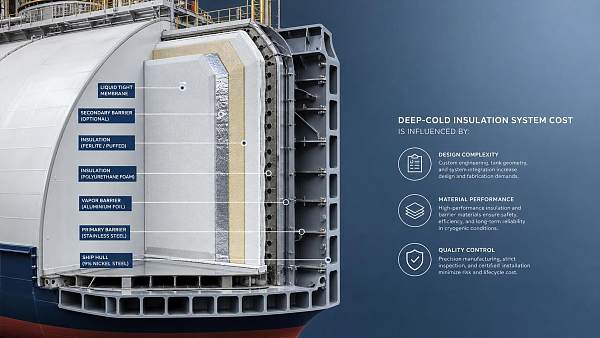
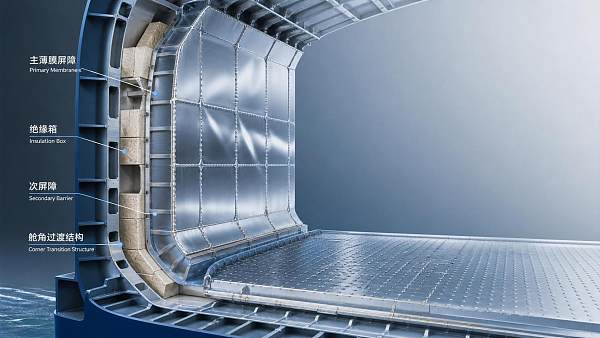
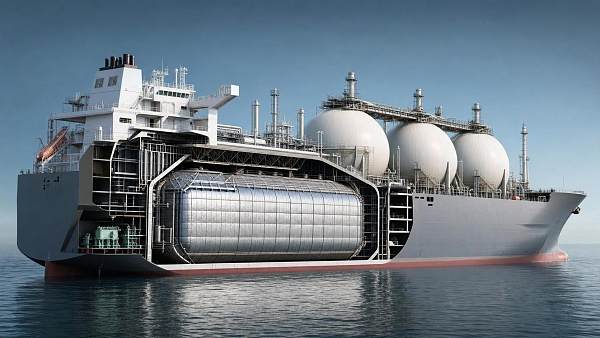
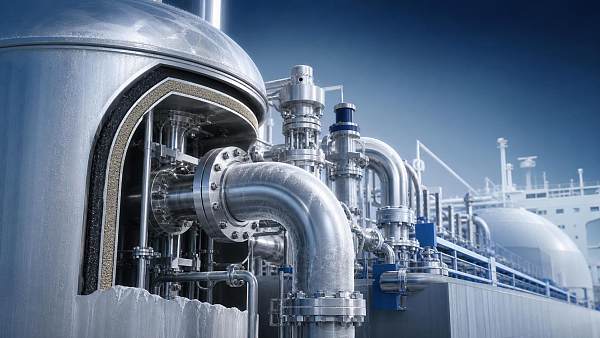
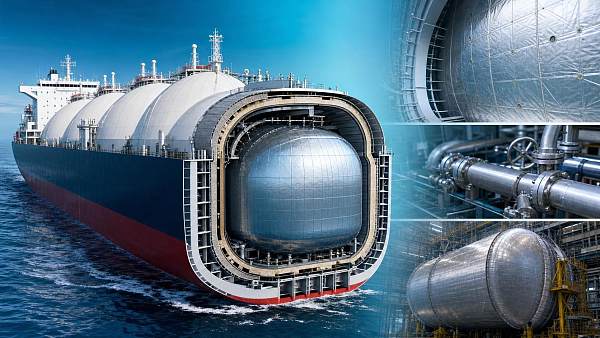
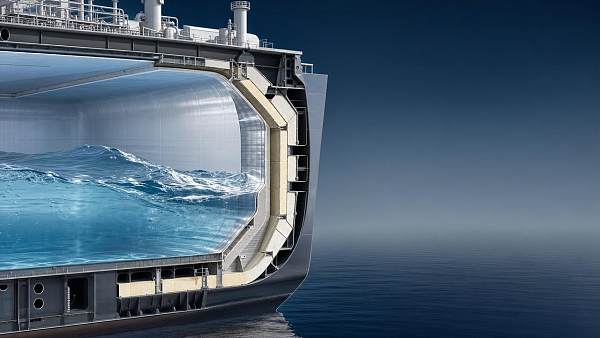
A membrane tank is not self-supporting in the same way as a sphere. It relies on thin metallic membranes, insulation layers, and the hull structure working together as a complete containment arrangement.
Two well-known membrane approaches are associated with GTT designs. Their exact layer structures differ, but the commercial logic is similar: maximize cargo space within the hull envelope.
Moss Systems
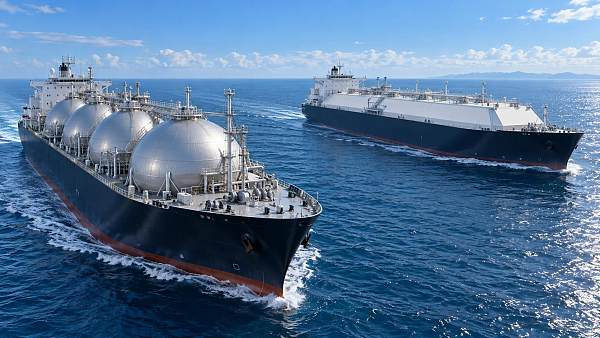
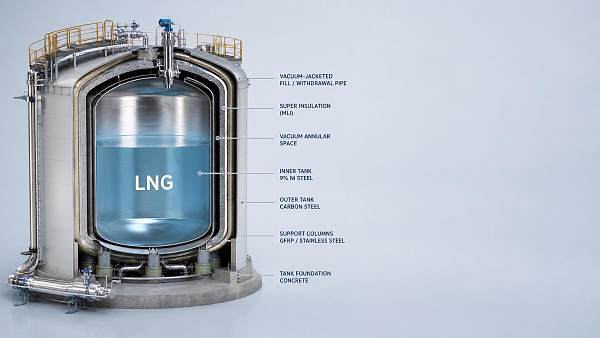
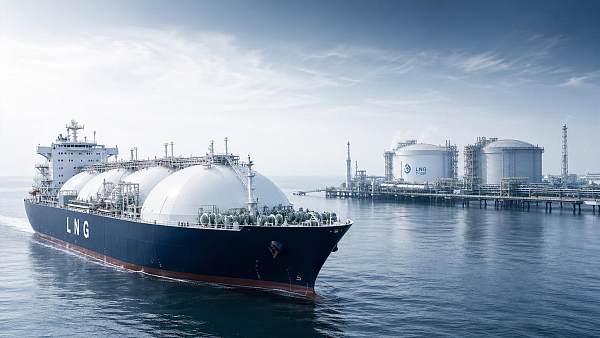
A Moss tank uses independent spherical aluminum tanks. These large spheres are structurally self-supporting and are visibly recognizable above deck on many classic LNG carriers.
This configuration gives the tank a clear structural identity separate from the hull. That distinction matters when discussing sloshing risk, inspection logic, and some aspects of long-term durability.
Membrane vs Moss: The Real Trade-Offs
The membrane versus Moss discussion is useful only when attached to actual decision criteria. A high-level comparison helps place each technology in the right operational context.
This does not mean one system is universally better. It means LNG carrier containment technology should be judged against route profile, cargo handling pattern, financing assumptions, and owner operating philosophy.
Why Membrane Systems Lead Many Newbuild Orders
From a fleet economics perspective, membrane designs often win because they use hull volume more efficiently. More cargo in a comparable ship size can improve revenue potential on long-haul trades.
They also fit well with the broader industry push toward optimization. Shipowners are balancing fuel efficiency, emissions performance, digital monitoring, and cargo economics as one package rather than as separate decisions.
That trend aligns with GTOT’s cross-sector view of transport assets. Whether the asset is a signaling system, a braking platform, or an LNG vessel, the market increasingly rewards designs that convert technical precision into measurable operating efficiency.
More worth noting is that membrane systems have benefited from design refinements, better simulation tools, and tighter quality control in construction. Those improvements have strengthened confidence in their large-scale deployment.
Why Moss Still Matters
Moss technology remains relevant because simplicity and robustness still matter. The independent spherical tank concept is easy to understand at a structural level, and that clarity has long appealed in conservative technical environments.
For some operators, the lower sensitivity to sloshing under certain partial loading conditions remains a practical advantage. That can be important where trading patterns create irregular cargo states or repeated operational variation.
Moss vessels also carry legacy value in fleet benchmarking. When reviewing older tonnage, refurbishment potential, or comparative performance records, they remain part of the real market picture rather than just a historical reference.
What to Examine Beyond the Basic Comparison
A sound review of LNG carrier containment technology should move past headline labels. The key questions usually sit in operating detail.
- How much boil-off gas is expected under actual voyage conditions, not ideal assumptions?
- What are the vessel’s common loading patterns, including partial fill operations?
- How mature is the chosen yard’s construction quality for the containment type?
- What inspection, repair, and off-hire implications appear across the asset lifecycle?
- How does the containment choice interact with propulsion, reliquefaction, and digital monitoring systems?
These questions matter because the containment system does not operate alone. It sits inside a broader technical and commercial chain, from ship design and terminal interface to charter obligations and maintenance planning.
Typical Use Scenarios and Evaluation Angles
In research and business analysis, different use cases call for different emphasis. A concise framework can help structure comparisons without oversimplifying them.
This is also where GTOT-style intelligence becomes useful. Containment technology can be read not just as marine equipment, but as one node in a land-sea system shaped by energy flows, shipbuilding cycles, and infrastructure investment.
How to Read the Market from Here
Current market attention is moving toward integrated performance. LNG carrier containment technology is now evaluated together with dual-fuel propulsion, digital condition monitoring, emissions strategy, and long-term cargo flexibility.
That shift changes how membrane and Moss systems should be interpreted. The question is no longer only which tank concept is stronger or more efficient in isolation.
A more useful question is which system fits the vessel’s intended commercial life, route structure, and maintenance discipline. In many cases, that wider framing produces a clearer conclusion than a direct technology ranking.
The next step is to build a comparison sheet around real operating assumptions. Review cargo profile, boil-off expectations, yard capability, inspection strategy, and charter context together. That is where LNG carrier containment technology becomes an actionable decision, not just a technical category.
Recommended News
 Sep 28, 2026When is nickel steel containment needed for cryogenic storage?Nickel steel containment is essential when cryogenic tanks face brittle-fracture risk. Discover how temperature, loads, and tank design guide the right choice.
 Sep 11, 2026How membrane containment systems demonstrate compliance with IMO standardsMembrane containment systems IMO standards: discover how LNG carriers prove compliance through verified barriers, testing, monitoring, and traceable records.
 Sep 10, 2026How membrane and Moss containment systems differ for LNG carriersLNG cargo containment for carriers: compare membrane and Moss systems for capacity, BOG, safety, sloshing, lifecycle cost, and operational flexibility.
 Sep 03, 2026What drives membrane containment systems cost in LNG projects?Membrane containment systems cost depends on tank design, materials, labor, QA, and boil-off performance. Discover how to control LNG project risk and lifecycle costs.
 Aug 11, 2026How Vacuum Insulated Cryogenic Engineering Reduces Boil-Off and Heat LeakVacuum insulated cryogenic engineering cuts boil-off and heat leak by optimizing vacuum spaces, MLI, supports, and penetrations—discover what really improves LNG thermal performance.
 Aug 09, 2026What Determines Safe Cryogenic Containment Design in LNG Storage?Cryogenic containment design in LNG storage depends on materials, thermal stress, leak control, and BOG management. Discover what truly defines safe, code-compliant performance.
 Jul 29, 2026How to Evaluate a Cryogenic Tank Handling System for LNG Transfer SafetyCryogenic tank handling system evaluation for LNG transfer safety: learn how to assess pressure control, insulation, ESD response, and operational reliability before choosing a safer system.
 Jul 24, 2026Deep-Cryogenic Insulation Systems Cost: What Drives Total Project Spend?Deep-cryogenic insulation systems cost depends on design, materials, installation, QA, and boil-off performance. Learn what drives total project spend and compare bids with confidence.
 Jul 21, 2026LNG Carriers Class Approval: Key Rules and Compliance RisksLNG carriers class approval explained: key rules, major compliance risks, and practical steps to prevent delays, protect vessel readiness, and improve charter confidence.
 Jul 15, 2026Low Boil Off Insulation System Performance: What Reduces LNG Losses MostLow boil off insulation system performance explained: discover what cuts LNG losses most through smarter containment, installation quality, and BOG management.
 Jul 13, 2026Deep Cryogenic Insulation for LNG Tanks: Cost vs Heat LossDeep cryogenic insulation for LNG tanks impacts more than upfront cost. Learn how lower heat loss cuts BOG, improves efficiency, and strengthens lifecycle value.
 Jul 13, 2026Low Loss Cryogenic Handling: Key Factors for Safer TransferLow loss cryogenic handling starts with thermal control, pressure balance, and clean transfer. Learn the key factors that reduce boil-off, protect product integrity, and improve safer LNG and industrial operations.
 Jul 12, 2026LNG Vessel Fuel Storage: Main Safety Risks and FixesLNG vessel fuel storage safety starts with early risk detection. Learn the main hazards, warning signs, and practical fixes to reduce leaks, pressure instability, and onboard failures.
 Jul 09, 2026Membrane Cargo Tank vs Moss Type: Which Fits Modern LNG FleetsMembrane cargo tank vs Moss type: compare LNG fleet capacity, boil-off strategy, maintenance, and asset value to choose the best-fit design for modern shipping returns.
 Jul 08, 2026Membrane Containment Systems: Key Failure Risks in LNG Tank DesignMembrane containment systems are central to LNG tank safety. Explore key failure risks, from insulation degradation to sloshing and secondary barrier issues, and learn what to check early.
 Jul 06, 2026How to Compare a Cryogenic Shipping Systems Manufacturer for Long-Haul LNG ProjectsCryogenic shipping systems manufacturer selection can make or break long-haul LNG projects. Compare boil-off control, compliance, engineering support, and lifecycle value.
 Jul 02, 2026Cryogenic Shipping Safety: Common Failure Risks and FixesCryogenic shipping safety starts with finding hidden failure risks early. Learn the main causes, practical fixes, and audit gaps that help protect LNG cargo, cut incidents, and improve control.
 Jul 02, 2026LNG Carriers Dimensions Explained for Terminal PlanningLNG carriers dimensions explained for smarter terminal planning. Learn how vessel size affects berth design, draft limits, mooring, and future fleet compatibility.
 Jun 30, 2026LNG Carrier Containment Technology Explained: Membrane vs Moss SystemsLNG carrier containment technology explained clearly: compare membrane vs Moss systems, key trade-offs, cargo efficiency, sloshing risk, and what drives smarter LNG vessel decisions.
 Jun 30, 2026Vacuum Deep Cryogenic Insulation: Key Failure Risks and How to Prevent ThemVacuum deep cryogenic insulation failure can raise boil-off, safety, and compliance risks. Learn key warning signs, root causes, and practical prevention steps to protect LNG operations.
 Jun 28, 2026Deep-Cryogenic Insulation Cost: What Drives Budget Changes in LNG ProjectsDeep-cryogenic insulation cost in LNG projects depends on materials, containment design, labor, compliance, and shipyard execution. Learn what drives budget changes and how to control risk.
 Jun 25, 2026Cryogenic Shipping Solutions: Key Risks, Costs, and Containment ChoicesCryogenic shipping solutions: compare key risks, lifecycle costs, and membrane vs. Moss containment to avoid hidden losses and choose safer, more efficient LNG transport.
 Jun 15, 2026Cryogenic Engineering Basics: Key Design Factors for Containment SafetyCryogenic engineering basics explained: discover the key design factors behind safer LNG and low-temperature containment, from materials and thermal stress to boil-off control and monitoring.
 Jun 11, 2026Membrane Containment Systems: Key Failure Risks and Design ChecksMembrane containment systems demand rigorous design checks. Explore key failure risks, from sloshing stress to insulation aging, and learn how to improve LNG vessel safety and compliance.