



Search News
Industry Portal
Popular Tags
Deep Cryogenic Insulation for LNG Tanks: Cost vs Heat Loss
Author
Time
Click Count
Deep Cryogenic Insulation for LNG Tanks: Cost vs Heat Loss
For LNG tank procurement teams, choosing deep cryogenic insulation for LNG tanks is not only a matter of upfront cost.
It is a long-term decision tied to boil-off gas control, thermal efficiency, and operating economics.
That tradeoff looks simple on paper, but it rarely is in actual projects.
A lower purchase price can raise fuel consumption, cargo loss, and maintenance exposure over time.
A higher specification can protect vessel value, but only when the design matches the operating profile.
This is why deep cryogenic insulation for LNG tanks should be evaluated as a lifecycle asset decision.
The key question is not just “What does insulation cost?”
The better question is “What does poor heat control cost over fifteen to twenty years?”
Why Heat Loss Matters More Than the Initial Price
LNG cargo must stay near minus 163 degrees Celsius.
Any heat ingress increases boil-off gas, often called BOG.
BOG is not always wasted, but it must be managed carefully.
On dual-fuel ships, some boil-off can support propulsion.
Even then, uncontrolled heat loss reduces flexibility in route planning and cargo handling.
For this reason, deep cryogenic insulation for LNG tanks affects more than tank performance.
It also affects engine balance, reliquefaction load, emissions, and charter efficiency.
From a commercial angle, every extra fraction of daily boil-off matters.
That is especially true on long-haul routes, waiting periods, and partial-load operations.
What Buyers Are Really Comparing
In many tenders, suppliers present insulation cost as a material and installation package.
That view is too narrow for serious LNG tank procurement.
A better comparison should include technical and operating variables together.
- Guaranteed heat leak or daily boil-off rate
- Insulation thickness and effective thermal conductivity
- Weight impact on deadweight and vessel balance
- Installation complexity and yard schedule risk
- Durability under vibration, sloshing, and thermal cycling
- Inspection access and repairability
- Expected maintenance cost across the service life
This broader view usually changes the ranking of bids.
The cheapest insulation package often stops being the cheapest once BOG economics are included.
How Insulation Design Changes Lifecycle Cost
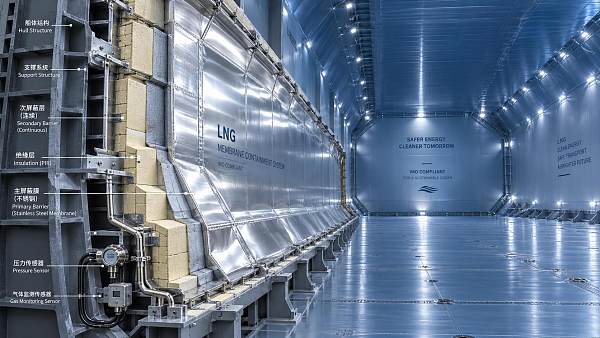
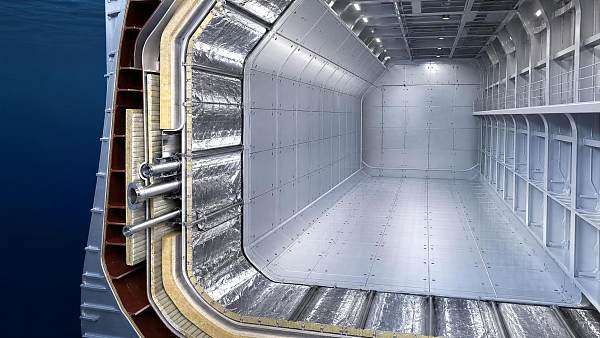
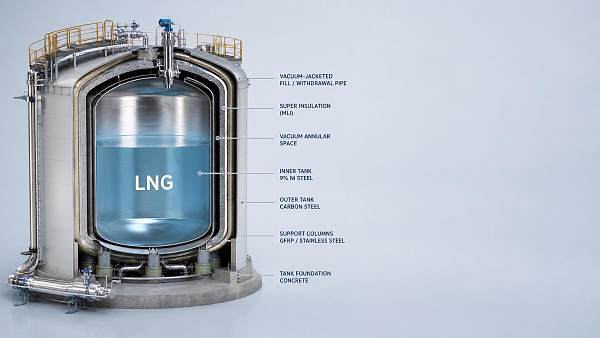
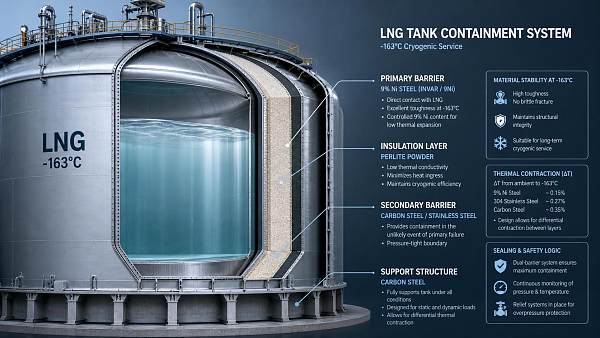
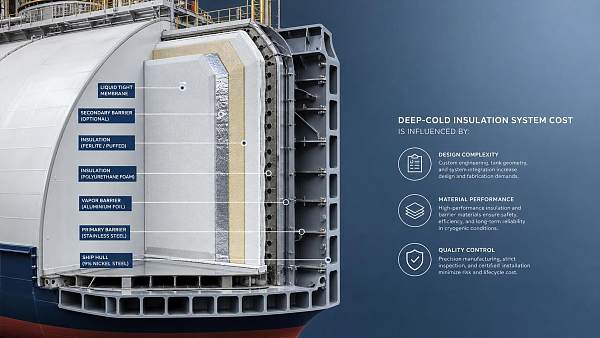
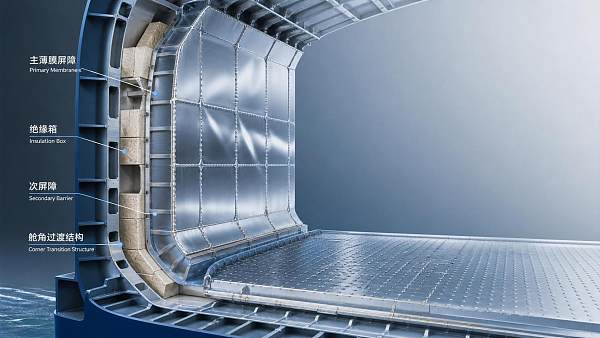
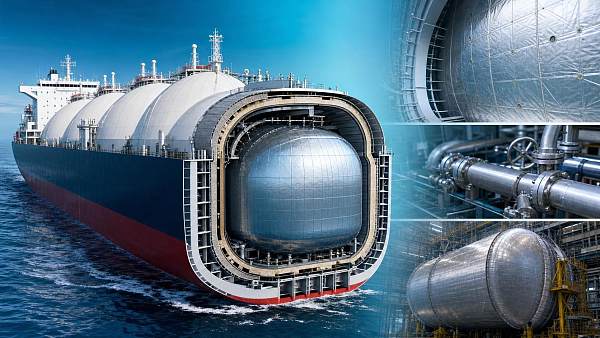
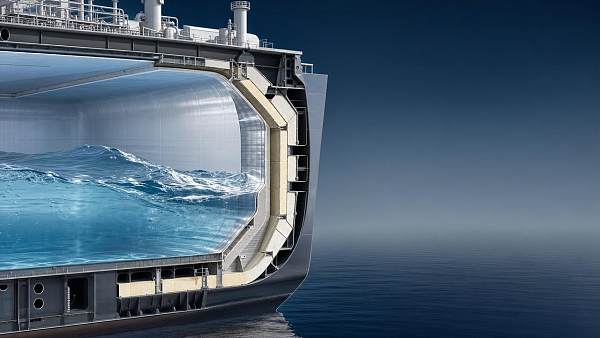
Deep cryogenic insulation for LNG tanks usually involves multilayer systems, foam structures, or advanced membrane-support arrangements.
Each design has a different cost pattern.
Higher-grade systems cost more in fabrication and quality control.
However, they can reduce heat ingress enough to lower lifetime fuel and cargo penalties.
That saving becomes more visible when gas prices are volatile.
It also becomes more visible when the vessel trades on uneven schedules.
A robust insulation system can absorb those operating swings more gracefully.
In practical terms, procurement teams should model three cost layers.
- Capital cost: materials, installation, testing, and certification.
- Operating cost: heat loss, BOG handling, fuel substitution, and energy use.
- Risk cost: off-hire, repairs, underperformance claims, and residual value impact.
This lifecycle view creates a more accurate business case for deep cryogenic insulation for LNG tanks.
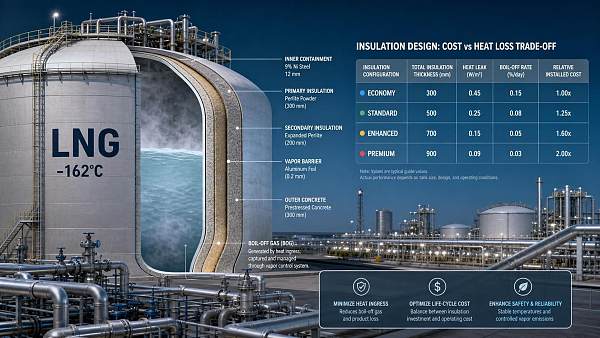
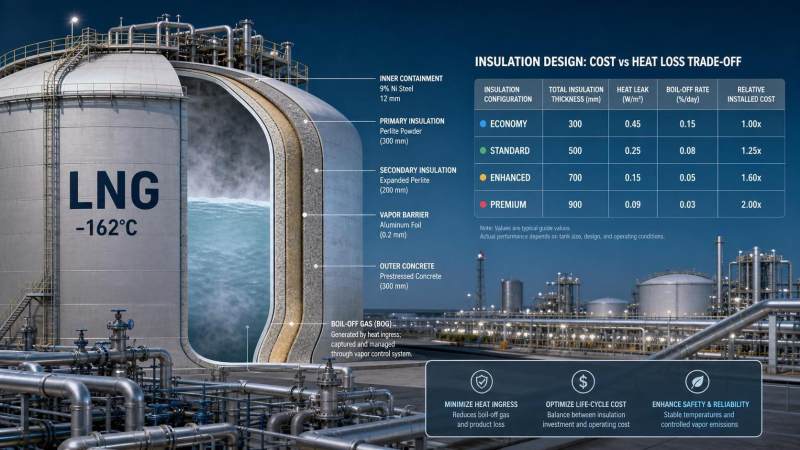
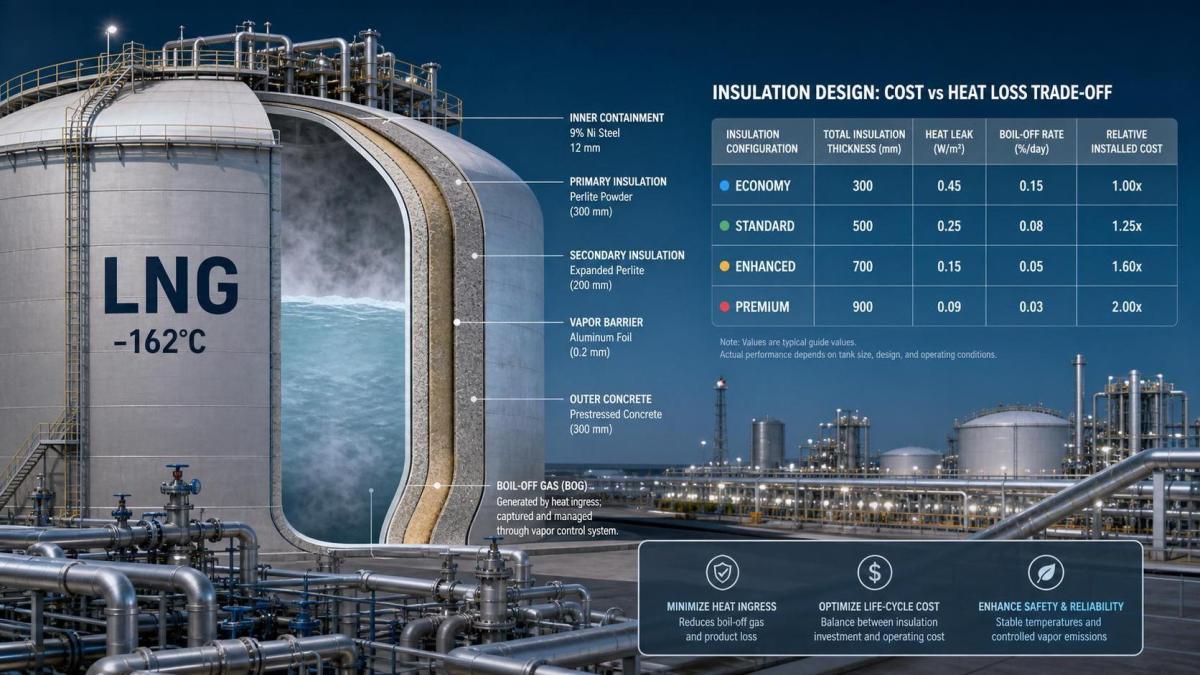
Cost vs Heat Loss: A Practical Comparison Table
This table does not mean premium options always win.
It means the right answer depends on route profile, charter model, and performance guarantees.
Technical Signals That Deserve Closer Scrutiny
When evaluating deep cryogenic insulation for LNG tanks, some details reveal more than brochure claims.
Recent market changes make this even more important.
More projects now demand documented performance under realistic operating stress.
- Thermal conductivity values at actual cryogenic conditions, not room-temperature references
- Compression resistance over long service intervals
- Moisture resistance and vapor barrier integrity
- Performance after repeated cooldown and warmup cycles
- Joint quality, edge treatment, and installation tolerance control
- Third-party validation and class approval records
A technically acceptable material can still underperform if installation discipline is weak.
That is why supplier capability matters almost as much as the insulation specification itself.
Common Procurement Mistakes in LNG Tank Insulation
One common mistake is buying against nominal thickness alone.
Thickness matters, but the full thermal system matters more.
Another mistake is assuming all boil-off can be economically consumed.
That assumption breaks down during idle periods or restricted operating modes.
A third mistake is overlooking repair access.
A low-cost system becomes expensive if inspection or localized repair is disruptive.
There is also a contract mistake that shows up often.
Some tenders specify materials clearly, yet define performance guarantees too loosely.
That leaves too much room for commercial disputes later.
A stronger procurement strategy links material selection with measurable heat-loss outcomes.
How to Build a Better Buying Decision
A disciplined buying process makes deep cryogenic insulation for LNG tanks easier to compare.
It also reduces the chance of short-term cost bias.
- Define route assumptions, cargo cycle, waiting time, and propulsion mode.
- Request guaranteed thermal performance with test basis and tolerance limits.
- Model lifecycle economics under low, base, and high gas-price scenarios.
- Review installation method, yard compatibility, and quality assurance steps.
- Check service network, repair response, and historical claim records.
- Translate technical differences into daily operating cost and asset-value impact.
This approach turns insulation selection into a measurable business decision.
That is usually where the strongest procurement outcomes come from.
Final Takeaway
Deep cryogenic insulation for LNG tanks should never be judged by purchase price alone.
Heat loss is not just a technical metric.
It is a direct driver of fuel balance, cargo preservation, maintenance risk, and vessel earnings.
The most effective buying decision combines thermal performance, supplier execution, and lifecycle economics.
In a market where efficiency and reliability are under constant pressure, that balance matters more than ever.
The next step is straightforward: compare insulation offers using guaranteed heat-loss outcomes, not material price alone.
Recommended News
 Sep 28, 2026When is nickel steel containment needed for cryogenic storage?Nickel steel containment is essential when cryogenic tanks face brittle-fracture risk. Discover how temperature, loads, and tank design guide the right choice.
 Sep 11, 2026How membrane containment systems demonstrate compliance with IMO standardsMembrane containment systems IMO standards: discover how LNG carriers prove compliance through verified barriers, testing, monitoring, and traceable records.
 Sep 10, 2026How membrane and Moss containment systems differ for LNG carriersLNG cargo containment for carriers: compare membrane and Moss systems for capacity, BOG, safety, sloshing, lifecycle cost, and operational flexibility.
 Sep 03, 2026What drives membrane containment systems cost in LNG projects?Membrane containment systems cost depends on tank design, materials, labor, QA, and boil-off performance. Discover how to control LNG project risk and lifecycle costs.
 Aug 11, 2026How Vacuum Insulated Cryogenic Engineering Reduces Boil-Off and Heat LeakVacuum insulated cryogenic engineering cuts boil-off and heat leak by optimizing vacuum spaces, MLI, supports, and penetrations—discover what really improves LNG thermal performance.
 Aug 09, 2026What Determines Safe Cryogenic Containment Design in LNG Storage?Cryogenic containment design in LNG storage depends on materials, thermal stress, leak control, and BOG management. Discover what truly defines safe, code-compliant performance.
 Jul 29, 2026How to Evaluate a Cryogenic Tank Handling System for LNG Transfer SafetyCryogenic tank handling system evaluation for LNG transfer safety: learn how to assess pressure control, insulation, ESD response, and operational reliability before choosing a safer system.
 Jul 24, 2026Deep-Cryogenic Insulation Systems Cost: What Drives Total Project Spend?Deep-cryogenic insulation systems cost depends on design, materials, installation, QA, and boil-off performance. Learn what drives total project spend and compare bids with confidence.
 Jul 21, 2026LNG Carriers Class Approval: Key Rules and Compliance RisksLNG carriers class approval explained: key rules, major compliance risks, and practical steps to prevent delays, protect vessel readiness, and improve charter confidence.
 Jul 15, 2026Low Boil Off Insulation System Performance: What Reduces LNG Losses MostLow boil off insulation system performance explained: discover what cuts LNG losses most through smarter containment, installation quality, and BOG management.
 Jul 13, 2026Deep Cryogenic Insulation for LNG Tanks: Cost vs Heat LossDeep cryogenic insulation for LNG tanks impacts more than upfront cost. Learn how lower heat loss cuts BOG, improves efficiency, and strengthens lifecycle value.
 Jul 13, 2026Low Loss Cryogenic Handling: Key Factors for Safer TransferLow loss cryogenic handling starts with thermal control, pressure balance, and clean transfer. Learn the key factors that reduce boil-off, protect product integrity, and improve safer LNG and industrial operations.
 Jul 12, 2026LNG Vessel Fuel Storage: Main Safety Risks and FixesLNG vessel fuel storage safety starts with early risk detection. Learn the main hazards, warning signs, and practical fixes to reduce leaks, pressure instability, and onboard failures.
 Jul 09, 2026Membrane Cargo Tank vs Moss Type: Which Fits Modern LNG FleetsMembrane cargo tank vs Moss type: compare LNG fleet capacity, boil-off strategy, maintenance, and asset value to choose the best-fit design for modern shipping returns.
 Jul 08, 2026Membrane Containment Systems: Key Failure Risks in LNG Tank DesignMembrane containment systems are central to LNG tank safety. Explore key failure risks, from insulation degradation to sloshing and secondary barrier issues, and learn what to check early.
 Jul 06, 2026How to Compare a Cryogenic Shipping Systems Manufacturer for Long-Haul LNG ProjectsCryogenic shipping systems manufacturer selection can make or break long-haul LNG projects. Compare boil-off control, compliance, engineering support, and lifecycle value.
 Jul 02, 2026Cryogenic Shipping Safety: Common Failure Risks and FixesCryogenic shipping safety starts with finding hidden failure risks early. Learn the main causes, practical fixes, and audit gaps that help protect LNG cargo, cut incidents, and improve control.
 Jul 02, 2026LNG Carriers Dimensions Explained for Terminal PlanningLNG carriers dimensions explained for smarter terminal planning. Learn how vessel size affects berth design, draft limits, mooring, and future fleet compatibility.
 Jun 30, 2026LNG Carrier Containment Technology Explained: Membrane vs Moss SystemsLNG carrier containment technology explained clearly: compare membrane vs Moss systems, key trade-offs, cargo efficiency, sloshing risk, and what drives smarter LNG vessel decisions.
 Jun 30, 2026Vacuum Deep Cryogenic Insulation: Key Failure Risks and How to Prevent ThemVacuum deep cryogenic insulation failure can raise boil-off, safety, and compliance risks. Learn key warning signs, root causes, and practical prevention steps to protect LNG operations.
 Jun 28, 2026Deep-Cryogenic Insulation Cost: What Drives Budget Changes in LNG ProjectsDeep-cryogenic insulation cost in LNG projects depends on materials, containment design, labor, compliance, and shipyard execution. Learn what drives budget changes and how to control risk.
 Jun 25, 2026Cryogenic Shipping Solutions: Key Risks, Costs, and Containment ChoicesCryogenic shipping solutions: compare key risks, lifecycle costs, and membrane vs. Moss containment to avoid hidden losses and choose safer, more efficient LNG transport.
 Jun 15, 2026Cryogenic Engineering Basics: Key Design Factors for Containment SafetyCryogenic engineering basics explained: discover the key design factors behind safer LNG and low-temperature containment, from materials and thermal stress to boil-off control and monitoring.
 Jun 11, 2026Membrane Containment Systems: Key Failure Risks and Design ChecksMembrane containment systems demand rigorous design checks. Explore key failure risks, from sloshing stress to insulation aging, and learn how to improve LNG vessel safety and compliance.