



Search News
Industry Portal
Popular Tags
How membrane and Moss containment systems differ for LNG carriers
Author
Time
Click Count
How Membrane and Moss Containment Systems Differ for LNG Carriers
For technical evaluators assessing LNG cargo containment for carriers, the decision is not simply between two tank shapes. It determines hull arrangement, usable cargo volume, boil-off gas behavior, inspection access, construction risk, and lifecycle economics.
Both membrane and Moss systems have proven operational records across the LNG fleet. Neither is universally superior. The appropriate selection depends on vessel size, charter profile, shipyard capability, cargo handling philosophy, and the owner’s risk tolerance.
This article compares the two systems through the issues evaluators face during concept selection and specification review. The objective is to identify where each design creates measurable technical or commercial advantages.
Executive Comparison for LNG Cargo Containment Decisions
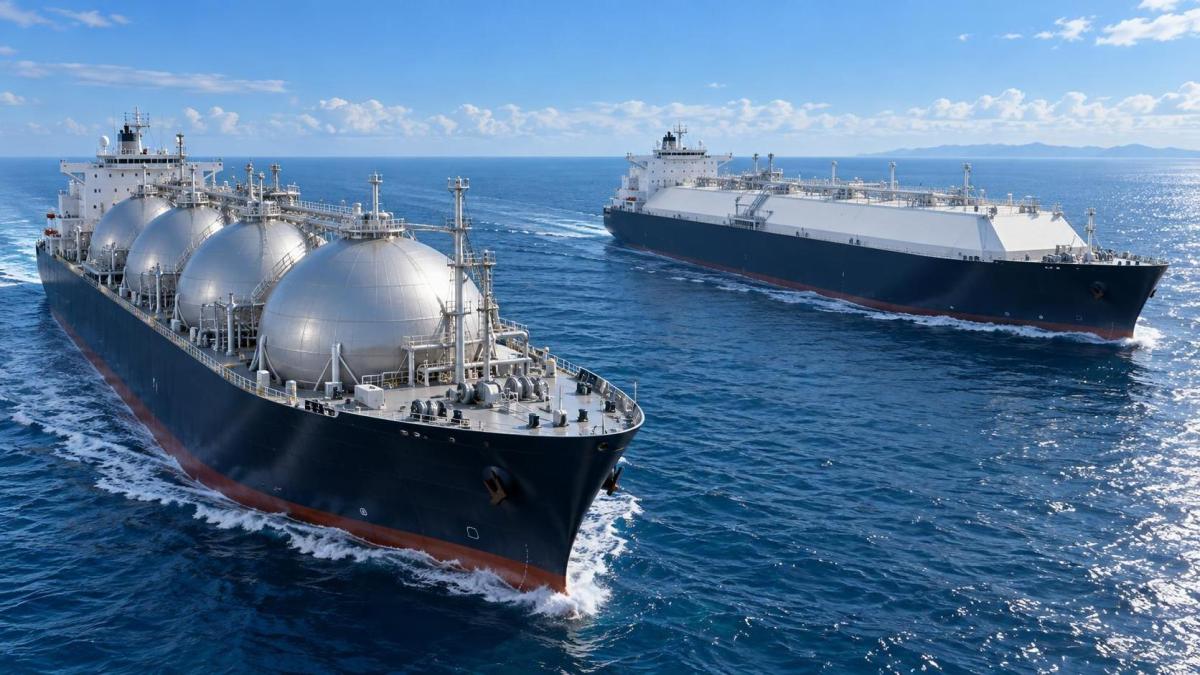
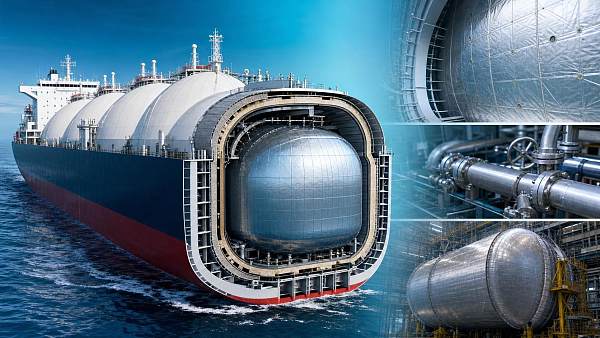
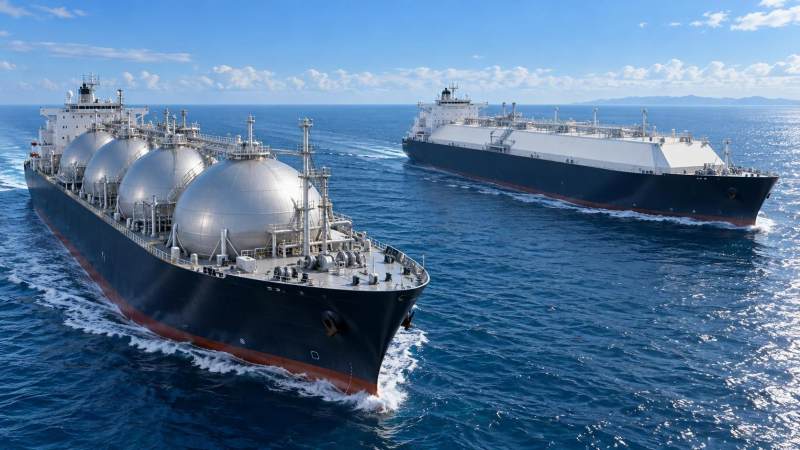
Membrane systems maximize cargo capacity within a given hull envelope because their containment barriers follow the inner hull geometry. Moss systems use independent spherical tanks that occupy more deck height and leave spaces between tank shells.
Moss containment generally offers a clearer structural separation between cargo tanks and the hull. Its self-supporting aluminum spheres manage cargo pressure independently, while membrane tanks rely on insulation and supporting hull structure to distribute loads.
For large conventional LNG carriers, membrane systems often provide a stronger cargo-volume proposition. For projects prioritizing visible tank geometry, robust independent containment, or particular operational preferences, Moss technology may remain compelling.
Technical evaluation should begin with a weighted requirements matrix. Cargo capacity, terminal compatibility, boil-off targets, vessel draft, yard experience, maintenance access, and contractual performance guarantees should receive explicit scores rather than informal preference.
Structural Principle: Independent Spheres Versus Hull-Integrated Barriers
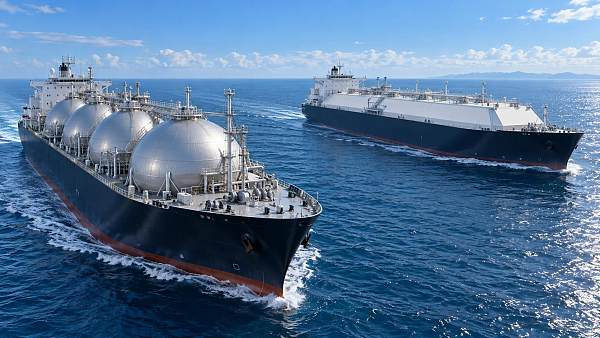
A Moss LNG carrier uses Type B independent tanks, typically aluminum alloy spheres supported by cylindrical skirts. Each tank is structurally self-supporting and designed to withstand internal cargo loads without relying on the surrounding hull.
The spherical form is structurally efficient under pressure because stresses distribute uniformly around the shell. This geometry supports a conservative safety case and simplifies the distinction between primary containment and the ship’s structural envelope.
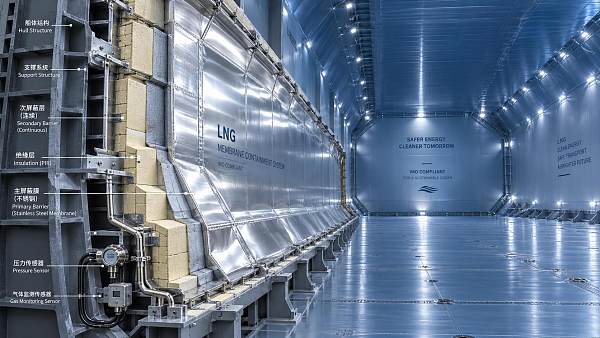
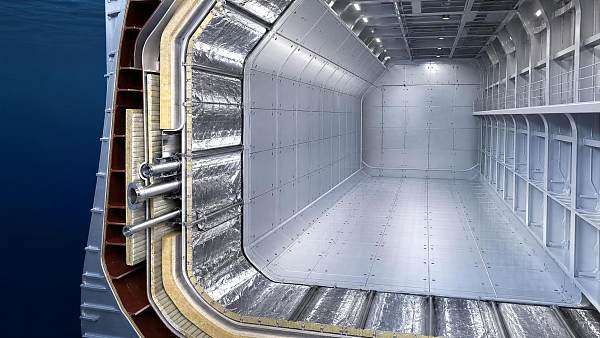
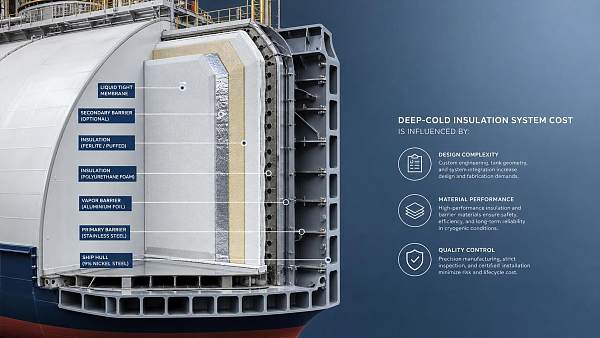
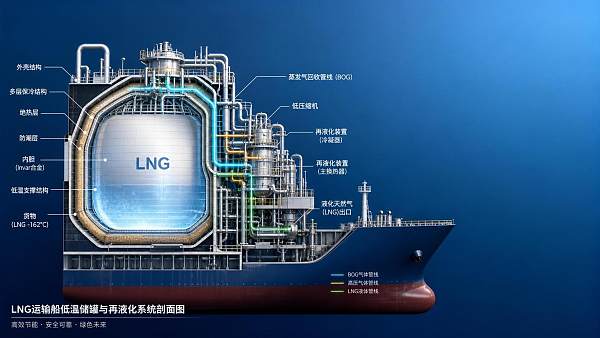
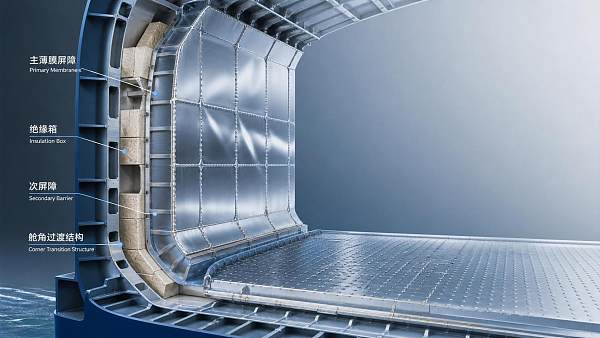
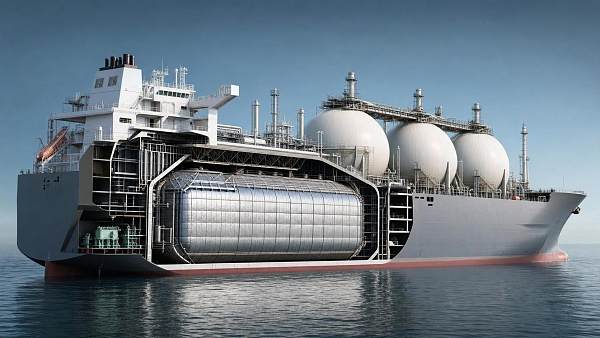
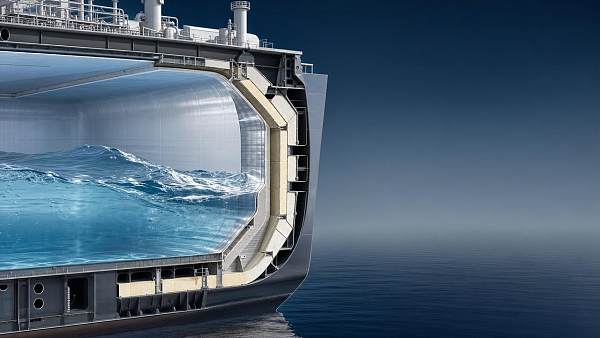
Membrane LNG cargo containment for carriers uses a thin metallic primary barrier supported by insulation panels attached to the inner hull. The containment system closely conforms to prismatic tank spaces rather than standing independently.
Common membrane technologies employ Invar or stainless-steel barrier concepts, supported by layered insulation and secondary containment arrangements. The precise configuration varies by licensed technology, approved design generation, and builder implementation.
Because membrane tanks are hull-integrated, the hull structure, insulation system, barrier arrangement, and construction tolerances must be evaluated as one engineered package. Local deformation control and workmanship quality are particularly significant.
Evaluators should avoid treating “membrane” as a single specification. Licensed systems differ in barrier material, insulation construction, corner details, sloshing qualifications, and approved operating envelopes, affecting design review requirements.
Cargo Capacity and Vessel Arrangement: Where Membrane Usually Leads
The principal commercial benefit of membrane containment is volumetric efficiency. Prismatic tanks fill much of the available beam, depth, and length inside the hull, allowing higher cargo volume for a comparable vessel size.
This efficiency can reduce steel weight per delivered cubic meter or enable additional cargo capacity within draft and port restrictions. It has helped membrane systems become common on modern large-scale LNG carriers.
Moss tanks create unavoidable void spaces around their spherical shells. These spaces support access, structural separation, and operational resilience, but they reduce the percentage of hull volume available for LNG cargo.
The difference should be assessed using the intended vessel dimensions, not generalized capacity claims. A design may compensate through a larger hull, but this can affect propulsion power, canal limitations, berth constraints, and capital cost.
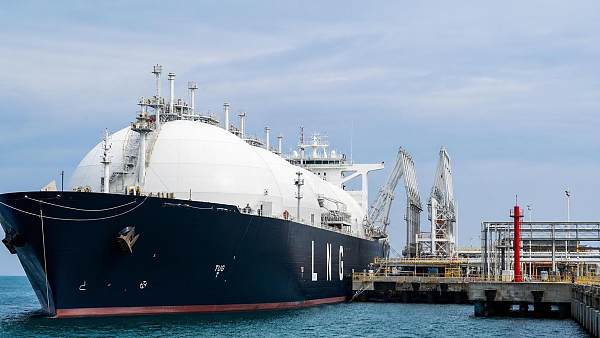
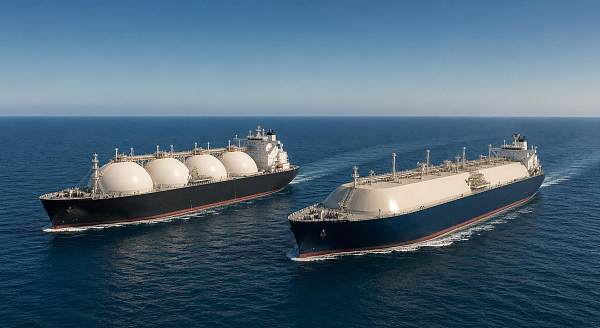
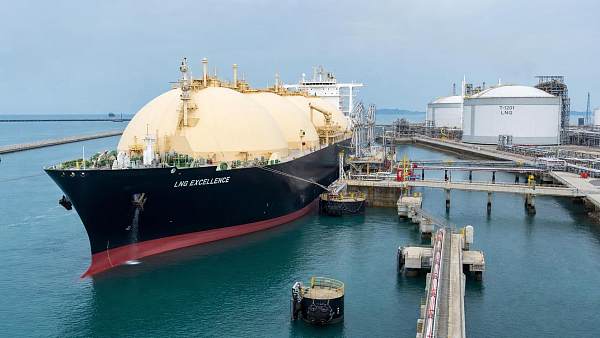
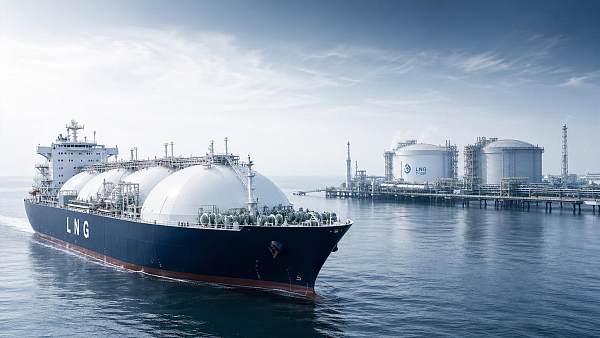
Deck arrangement also differs visibly. Moss carriers have prominent tank domes above deck, while membrane carriers usually present a flatter deck profile with tank cover spaces and enclosed trunk arrangements.
Above-deck geometry affects windage, equipment arrangement, visual profile, and sometimes terminal interfaces. It may also influence stakeholder expectations for accessibility, segregation, and emergency response planning.
Boil-Off Gas Performance Is a System-Level Question
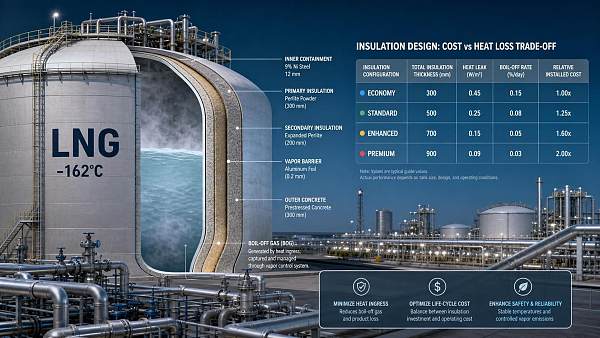
Boil-off gas, or BOG, is generated when heat enters cryogenic cargo held near minus 163 degrees Celsius. Containment design influences heat ingress, but it does not independently determine the final daily boil-off rate.
Insulation performance, tank surface area, ambient conditions, cargo loading temperature, voyage duration, heel management, pressure control settings, and machinery configuration all influence actual vapor generation.
Membrane tanks often offer favorable surface-area-to-volume characteristics in large vessels, supporting competitive thermal performance. However, performance must be compared through guaranteed heat-leak and boil-off figures under identical contract assumptions.
Moss tanks use insulation applied around their independent spherical shells. Their thermal design can be highly reliable, but the system’s larger exposed geometry may influence total heat-transfer behavior at equivalent cargo capacity.
Technical evaluators should request a complete BOG balance rather than accepting a nominal daily percentage. The balance should specify laden condition, ballast condition, ambient boundaries, cargo density, reliquefaction assumptions, and propulsion fuel demand.
This distinction matters for dual-fuel propulsion. A vessel may consume natural boil-off efficiently during normal voyages but require forced vaporization, reliquefaction, or gas combustion arrangements when operational conditions change.
Sloshing and Partial Loading Require Careful Operating Envelope Review
Sloshing occurs when LNG moves dynamically within a partially filled tank during vessel motions. Impact loads can become significant when wave conditions, filling levels, speed, heading, and tank dimensions combine unfavorably.
Membrane systems require especially detailed sloshing assessment because loads transfer through the cargo, primary barrier, insulation panels, and supporting hull. Approved loading restrictions may apply for particular tank sizes and filling ranges.
Modern membrane technologies have extensive model testing, numerical analysis, and operational experience supporting larger tanks. Nevertheless, the approved sloshing envelope must be verified for the specific vessel, not assumed from another project.
Moss tanks benefit from spherical geometry, which can reduce certain sloshing concerns compared with large prismatic tanks. Their operational flexibility at intermediate filling levels is often cited as a practical advantage.
That advantage becomes more relevant for short-haul distribution, floating storage arrangements, commissioning voyages, or trading patterns involving frequent partial discharges. It may be less decisive for stable long-haul point-to-point transportation.
Reviewers should ask whether the commercial schedule requires unrestricted partial loading. A technically valid vessel can still create operational friction if its approved filling restrictions conflict with terminal nominations or charterer practices.
Safety Philosophy and Damage Tolerance
Both containment concepts are regulated through the International Gas Carrier Code and supported by class rules, flag-state requirements, and technology-specific approval processes. Their safety cases differ in structure, not in regulatory seriousness.
Moss Type B tanks use a design philosophy based on high structural reliability and a reduced need for full secondary containment. The independent sphere and its controlled stress behavior support this classification approach.
Membrane tanks rely on a complete secondary barrier system because the primary barrier is thin and non-self-supporting. This secondary containment arrangement is integral to the overall safety concept and leak management strategy.
For membrane ships, evaluator attention should focus on insulation integrity, barrier continuity, corner and joint detailing, hull deflection limits, and procedures for detecting abnormal conditions before a localized issue escalates.
For Moss ships, focus should include tank shell condition, skirt support behavior, dome connections, insulation condition, and access planning around the elevated tank arrangement. Different inspection points do not mean fewer responsibilities.
The decision should consider the owner’s incident-response procedures and technical organization. A system is strongest when its monitoring, maintenance, crew competence, and shore-side engineering support match the underlying design philosophy.
Construction Risk and Shipyard Capability Often Decide the Outcome
Membrane construction depends on highly disciplined fabrication and installation processes. Panel alignment, insulation installation, barrier welding, cleanliness, leak testing, and dimensional control require specialized expertise and mature quality systems.
Shipyards with repeated membrane carrier deliveries can manage this work efficiently. A yard entering the segment or changing technology should demonstrate licensed support, qualified personnel, validated procedures, and credible quality assurance records.
Moss tanks require precision fabrication of large aluminum spherical shells, specialized welding, and controlled erection procedures. The challenge is different but equally substantial, particularly for geometry control and support integration.
Construction risk should be evaluated through the yard’s actual experience with the selected containment technology, not through its general reputation for shipbuilding. LNG carrier execution requires specialized processes and supply-chain discipline.
Contract reviews should define responsibility for containment-system licensors, key material suppliers, testing requirements, repair procedures, and acceptance criteria. Ambiguity in these interfaces can cause expensive schedule disputes during commissioning.
Factory acceptance testing, site surveillance, training records, nonconformance management, and traceability should be part of the evaluator’s pre-award evidence package. These controls reduce risk more effectively than broad contractual assurances.
Inspection, Maintenance, and Repair Considerations
Moss tanks offer visually intuitive independent tank geometry and accessible external spaces around the sphere. This can support inspection planning, although access at height and around tank supports remains a major practical consideration.
Membrane tanks provide a more compact hull arrangement, but their critical containment components sit behind internal protective layers. Inspection relies heavily on established procedures, monitoring data, tank-entry planning, and specialist repair capability.
Neither system should be labeled maintenance-free. Cryogenic cycling, structural movement, insulation condition, cargo operations, and equipment interfaces require continuous asset-management attention throughout the vessel’s service life.
For lifecycle comparisons, technical teams should examine planned dry-docking scope, tank-entry frequency, typical repair duration, spare-material availability, licensor support, and the consequences of an unexpected containment defect.
Owners should also evaluate data quality. Integrated temperature, pressure, level, and gas-detection trends can help identify deviations early, but only when alarm logic, historian access, and engineering review routines are clearly defined.
A useful procurement question is straightforward: which party can diagnose, authorize, and execute a credible repair at the vessel’s expected trading locations? The answer may materially affect downtime exposure.
Cost Assessment Must Go Beyond Newbuilding Price
Initial capital cost is important, but it rarely captures the full economic difference between containment concepts. Cargo capacity, freight revenue, fuel use, financing assumptions, off-hire exposure, and residual value all matter.
A membrane design may generate more revenue per voyage when its higher cargo capacity is monetized. This benefit depends on cargo demand, contract volume commitments, loading limits, and whether additional volume is commercially usable.
A Moss design may justify a capacity trade-off where operational flexibility, independent-tank characteristics, or owner familiarity has measurable economic value. These benefits should be translated into explicit scenarios rather than qualitative preference.
Lifecycle models should include expected BOG handling costs, emissions implications, repair contingencies, insurance considerations, training requirements, and potential schedule impacts from containment-related restrictions or inspections.
Comparisons should use equivalent assumptions for ship speed, propulsion plant, cargo quantity, ambient conditions, charter duration, financing, and residual value. Otherwise, apparent containment advantages may actually reflect unrelated design differences.
Sensitivity analysis is particularly useful. Test outcomes under low utilization, volatile gas prices, varying voyage length, unplanned repair days, and alternative cargo utilization rates before making a technology recommendation.
Choosing the Appropriate System for the Operating Profile
Membrane containment is often the practical choice for large LNG carriers operating predictable long-haul routes. Its cargo-volume efficiency aligns well with projects where scale, delivered volume, and standardized shipyard execution are priorities.
Moss containment can be attractive when operational flexibility across filling levels is highly valued, when an owner has established experience with the technology, or when a project favors independent tank characteristics.
For floating LNG, regasification, storage, or unconventional trading applications, the containment choice requires a separate operating-case analysis. Motion environment, extended station keeping, partial loading, and maintenance accessibility may change priorities.
Technical evaluators should not let fleet convention replace project-specific analysis. A containment technology widely used in one trade may be suboptimal where terminal constraints, cargo patterns, financing conditions, or maintenance resources differ.
The most defensible recommendation identifies the operating assumptions that drive it. It also states the conditions under which the conclusion would change, such as a revised route, different cargo size, or alternative gas-handling plant.
Evaluation Checklist for a Defensible Technology Selection
Start by confirming required cargo capacity, draft, beam, air-draft, terminal limitations, and voyage profile. These physical and commercial boundaries establish whether volumetric efficiency is a decisive design variable.
Next, compare guaranteed thermal performance using a common BOG calculation basis. Request details for insulation assumptions, ambient conditions, cargo temperature, pressure limits, machinery consumption, and remaining vapor treatment capacity.
Review the approved operating envelope for partial filling, loading sequence, ballast voyage behavior, weather restrictions, and emergency conditions. This prevents commercial teams from assuming flexibility that the vessel cannot provide.
Audit shipyard and licensor capability through delivered-vessel references, quality documentation, workforce qualifications, containment testing procedures, and defined technical support during construction, gas trials, and warranty periods.
Model lifecycle value with transparent assumptions. Include cargo utilization, fuel and emissions costs, expected maintenance, likely repair scenarios, off-hire consequences, and the availability of specialist support across intended trading regions.
Finally, document residual risks and ownership actions. A sound selection report should specify monitoring requirements, crew training, spare-parts strategy, inspection intervals, and the contractual safeguards needed to protect vessel performance.
Conclusion: Match Containment Technology to the Real LNG Transport Case
Membrane and Moss systems are mature solutions for LNG cargo containment for carriers, but they solve the design problem differently. Membrane favors hull-volume efficiency, while Moss emphasizes independent spherical tank construction and flexibility benefits.
For most large, regular-trade LNG carriers, membrane containment may offer the strongest capacity case. For operations requiring particular partial-load characteristics or established independent-tank expertise, Moss can remain strategically appropriate.
The correct decision comes from comparing verified project data, not generalized claims. Technical evaluators should align containment selection with the vessel’s route, cargo profile, gas-management design, construction partner, and long-term operating model.
When these factors are assessed together, the containment system becomes more than a tank choice. It becomes a controlled decision about cargo economics, operational resilience, safety assurance, and asset value across the carrier’s lifecycle.
Recommended News
 Sep 28, 2026When is nickel steel containment needed for cryogenic storage?Nickel steel containment is essential when cryogenic tanks face brittle-fracture risk. Discover how temperature, loads, and tank design guide the right choice.
 Sep 11, 2026How membrane containment systems demonstrate compliance with IMO standardsMembrane containment systems IMO standards: discover how LNG carriers prove compliance through verified barriers, testing, monitoring, and traceable records.
 Sep 10, 2026How membrane and Moss containment systems differ for LNG carriersLNG cargo containment for carriers: compare membrane and Moss systems for capacity, BOG, safety, sloshing, lifecycle cost, and operational flexibility.
 Sep 03, 2026What drives membrane containment systems cost in LNG projects?Membrane containment systems cost depends on tank design, materials, labor, QA, and boil-off performance. Discover how to control LNG project risk and lifecycle costs.
 Aug 11, 2026How Vacuum Insulated Cryogenic Engineering Reduces Boil-Off and Heat LeakVacuum insulated cryogenic engineering cuts boil-off and heat leak by optimizing vacuum spaces, MLI, supports, and penetrations—discover what really improves LNG thermal performance.
 Aug 09, 2026What Determines Safe Cryogenic Containment Design in LNG Storage?Cryogenic containment design in LNG storage depends on materials, thermal stress, leak control, and BOG management. Discover what truly defines safe, code-compliant performance.
 Jul 29, 2026How to Evaluate a Cryogenic Tank Handling System for LNG Transfer SafetyCryogenic tank handling system evaluation for LNG transfer safety: learn how to assess pressure control, insulation, ESD response, and operational reliability before choosing a safer system.
 Jul 24, 2026Deep-Cryogenic Insulation Systems Cost: What Drives Total Project Spend?Deep-cryogenic insulation systems cost depends on design, materials, installation, QA, and boil-off performance. Learn what drives total project spend and compare bids with confidence.
 Jul 21, 2026LNG Carriers Class Approval: Key Rules and Compliance RisksLNG carriers class approval explained: key rules, major compliance risks, and practical steps to prevent delays, protect vessel readiness, and improve charter confidence.
 Jul 15, 2026Low Boil Off Insulation System Performance: What Reduces LNG Losses MostLow boil off insulation system performance explained: discover what cuts LNG losses most through smarter containment, installation quality, and BOG management.
 Jul 13, 2026Deep Cryogenic Insulation for LNG Tanks: Cost vs Heat LossDeep cryogenic insulation for LNG tanks impacts more than upfront cost. Learn how lower heat loss cuts BOG, improves efficiency, and strengthens lifecycle value.
 Jul 13, 2026Low Loss Cryogenic Handling: Key Factors for Safer TransferLow loss cryogenic handling starts with thermal control, pressure balance, and clean transfer. Learn the key factors that reduce boil-off, protect product integrity, and improve safer LNG and industrial operations.
 Jul 12, 2026LNG Vessel Fuel Storage: Main Safety Risks and FixesLNG vessel fuel storage safety starts with early risk detection. Learn the main hazards, warning signs, and practical fixes to reduce leaks, pressure instability, and onboard failures.
 Jul 09, 2026Membrane Cargo Tank vs Moss Type: Which Fits Modern LNG FleetsMembrane cargo tank vs Moss type: compare LNG fleet capacity, boil-off strategy, maintenance, and asset value to choose the best-fit design for modern shipping returns.
 Jul 08, 2026Membrane Containment Systems: Key Failure Risks in LNG Tank DesignMembrane containment systems are central to LNG tank safety. Explore key failure risks, from insulation degradation to sloshing and secondary barrier issues, and learn what to check early.
 Jul 06, 2026How to Compare a Cryogenic Shipping Systems Manufacturer for Long-Haul LNG ProjectsCryogenic shipping systems manufacturer selection can make or break long-haul LNG projects. Compare boil-off control, compliance, engineering support, and lifecycle value.
 Jul 02, 2026Cryogenic Shipping Safety: Common Failure Risks and FixesCryogenic shipping safety starts with finding hidden failure risks early. Learn the main causes, practical fixes, and audit gaps that help protect LNG cargo, cut incidents, and improve control.
 Jul 02, 2026LNG Carriers Dimensions Explained for Terminal PlanningLNG carriers dimensions explained for smarter terminal planning. Learn how vessel size affects berth design, draft limits, mooring, and future fleet compatibility.
 Jun 30, 2026LNG Carrier Containment Technology Explained: Membrane vs Moss SystemsLNG carrier containment technology explained clearly: compare membrane vs Moss systems, key trade-offs, cargo efficiency, sloshing risk, and what drives smarter LNG vessel decisions.
 Jun 30, 2026Vacuum Deep Cryogenic Insulation: Key Failure Risks and How to Prevent ThemVacuum deep cryogenic insulation failure can raise boil-off, safety, and compliance risks. Learn key warning signs, root causes, and practical prevention steps to protect LNG operations.
 Jun 28, 2026Deep-Cryogenic Insulation Cost: What Drives Budget Changes in LNG ProjectsDeep-cryogenic insulation cost in LNG projects depends on materials, containment design, labor, compliance, and shipyard execution. Learn what drives budget changes and how to control risk.
 Jun 25, 2026Cryogenic Shipping Solutions: Key Risks, Costs, and Containment ChoicesCryogenic shipping solutions: compare key risks, lifecycle costs, and membrane vs. Moss containment to avoid hidden losses and choose safer, more efficient LNG transport.
 Jun 15, 2026Cryogenic Engineering Basics: Key Design Factors for Containment SafetyCryogenic engineering basics explained: discover the key design factors behind safer LNG and low-temperature containment, from materials and thermal stress to boil-off control and monitoring.
 Jun 11, 2026Membrane Containment Systems: Key Failure Risks and Design ChecksMembrane containment systems demand rigorous design checks. Explore key failure risks, from sloshing stress to insulation aging, and learn how to improve LNG vessel safety and compliance.