



Search News
Industry Portal
Popular Tags
Railway Automation Systems: Key Selection Criteria Before Modernizing Operations
Author
Time
Click Count
Introduction: Selecting railway automation systems is no longer a purely technical upgrade; it is a strategic procurement decision affecting safety, capacity, cost, and resilience.
For buyers, the real question is not which platform looks most advanced, but which system can operate reliably for decades under demanding conditions.
Modernization projects often fail when procurement focuses on initial price while underestimating certification, integration complexity, cybersecurity, maintenance capability, and supplier accountability.
This article outlines the criteria procurement teams should evaluate before investment, helping decision-makers reduce risk and select automation platforms for high-density intelligent rail operations.
Start With Operational Outcomes, Not Product Specifications
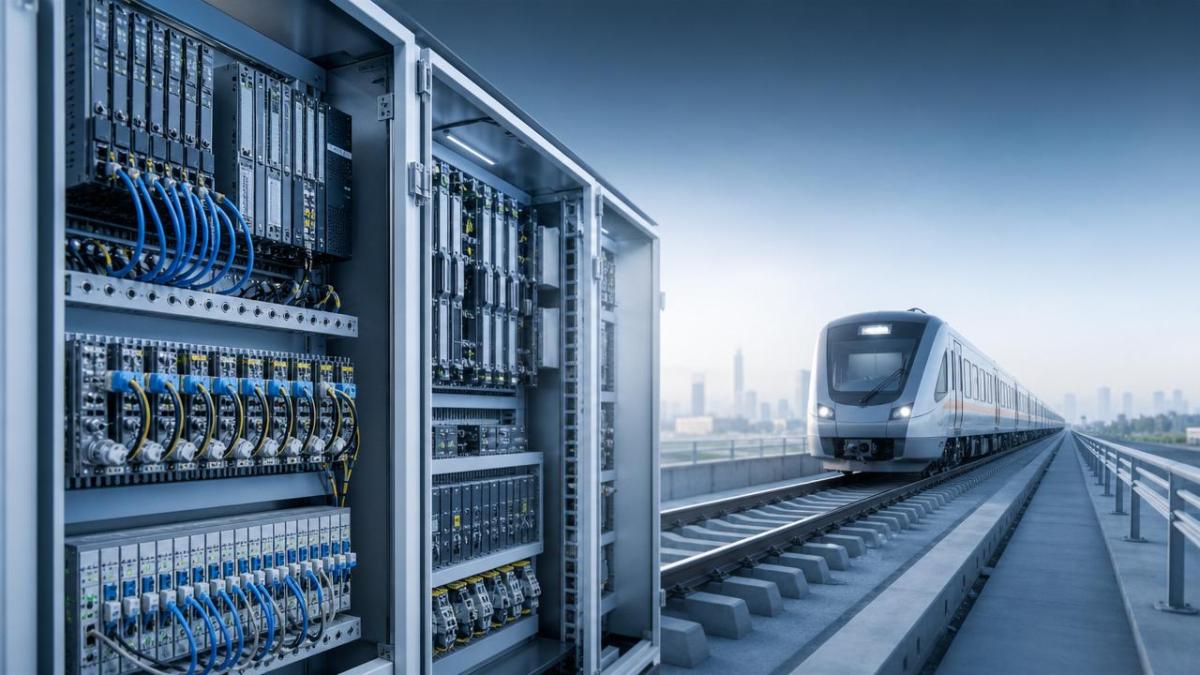
Before comparing railway automation systems, procurement teams should define what the modernization project must achieve in measurable operational terms.
Typical objectives include shorter headways, higher line capacity, improved punctuality, reduced human error, lower maintenance cost, and better incident response.
A system designed for metro automation may not suit heavy-haul freight, regional passenger operations, or mixed-traffic corridors with complex interfaces.
Buyers should request suppliers to map technical functions directly to business outcomes, including capacity gains, safety improvement, and lifecycle performance.
This approach prevents procurement teams from being distracted by fashionable features that do not solve the railway operator’s real constraints.
For example, advanced traffic management is valuable only when it improves dispatching decisions across actual network bottlenecks and operating rules.
Procurement specifications should therefore begin with operational scenarios, peak-hour requirements, degraded-mode procedures, and future expansion assumptions.
Verify Safety Integrity and Certification Before Price Negotiation
Safety is the first non-negotiable criterion when selecting railway automation systems, especially for signaling, interlocking, train protection, and control platforms.
Procurement teams should verify whether the system meets relevant standards such as EN 50126, EN 50128, EN 50129, and SIL4 requirements.
Certification should not be treated as a marketing claim; buyers need documented safety cases, independent assessment reports, and references from comparable deployments.
When suppliers offer customized functions, procurement teams must confirm whether modifications affect existing certification or require additional validation work.
Any uncertainty in this area can create approval delays, budget overruns, and operational restrictions after installation.
A strong supplier should explain hazard analysis, fail-safe design, redundancy architecture, verification procedures, and responsibilities during regulatory acceptance.
Buyers should also examine how the system behaves during equipment failure, communication loss, power interruption, and manual fallback operations.
The safest procurement decision is not always the most conservative one, but the one with transparent evidence and proven operational resilience.
Assess Interoperability With Existing Infrastructure
Most modernization projects do not begin on a blank network, so interoperability is often the deciding factor in project success.
Railway automation systems must interface with legacy signaling, rolling stock equipment, control centers, communication networks, power systems, and depot systems.
Procurement teams should request a complete interface matrix that identifies technical dependencies, protocol requirements, data ownership, and integration responsibilities.
Open architecture is valuable, but buyers should distinguish between genuine standard-based interoperability and supplier-defined openness with hidden constraints.
For cross-border or multi-vendor networks, compatibility with ETCS, CBTC variants, ATS, SCADA, and enterprise asset platforms may become critical.
Integration risk is often underestimated because it appears late, usually during testing, commissioning, or phased migration.
To reduce this risk, procurement documents should require simulation testing, factory acceptance testing, site acceptance testing, and staged interface validation.
Buyers should also clarify who bears responsibility when third-party equipment causes performance issues after integration begins.
Evaluate Cybersecurity as a Procurement Requirement
As rail operations become more connected, cybersecurity is no longer an IT add-on but a core requirement for automation procurement.
Centralized control, remote diagnostics, wireless communication, and cloud-enabled analytics increase efficiency, but also expand the attack surface.
Procurement teams should require compliance with recognized cybersecurity frameworks, secure development practices, vulnerability management, and incident response procedures.
Important questions include how access is controlled, how software updates are verified, and how operational technology networks are segmented.
Buyers should also review encryption, authentication, logging, intrusion detection, backup strategy, and disaster recovery planning.
A supplier’s cybersecurity maturity can be assessed through audit reports, penetration testing results, patch policies, and long-term support commitments.
Cybersecurity clauses should define response times, notification duties, patch delivery obligations, and responsibilities during active threats.
Without these protections, a technically advanced automation system may become a future operational liability.
Look Beyond Capex: Calculate Total Lifecycle Cost
Initial purchase price is only one part of the economic picture for railway automation systems.
Procurement teams should evaluate total lifecycle cost, including engineering, installation, testing, licensing, spare parts, maintenance, upgrades, training, and obsolescence management.
A lower bid may become expensive if it requires proprietary tools, limited supplier support, or frequent replacement of critical components.
Buyers should request lifecycle cost models covering at least fifteen to twenty years, depending on the expected asset strategy.
Cost evaluation should include downtime impact, service disruption during migration, system availability guarantees, and costs of future capacity expansion.
Maintenance model is especially important because automation systems rely on software, electronics, communication equipment, and specialized diagnostic tools.
Procurement teams should compare whether maintenance can be performed locally or requires continuous dependence on the original supplier.
The best value usually comes from predictable cost, maintainable architecture, and clear upgrade pathways rather than the cheapest upfront proposal.
Scrutinize Supplier Experience and Project Delivery Capability
Supplier credibility matters because railway automation modernization is a long, high-risk process involving engineering, construction, testing, and operational transition.
Procurement teams should examine comparable references, especially projects with similar traffic density, climate conditions, regulatory environment, and legacy infrastructure.
Reference checks should go beyond brochures and include interviews with operators who have used the system in daily service.
Key questions include whether the supplier delivered on schedule, managed interface issues, supported commissioning, and resolved defects after handover.
Buyers should assess the supplier’s local engineering capacity, spare parts availability, training resources, and long-term technical support presence.
Global experience is useful, but local execution capability often determines whether a modernization project progresses smoothly.
Procurement teams should also evaluate financial stability, manufacturing capacity, subcontractor control, and escalation procedures for critical project risks.
A strong automation partner should act as a systems integrator, not simply a vendor delivering hardware and software modules.
Plan Migration Without Disrupting Daily Operations
Railway automation upgrades are rarely completed in one step, especially on busy lines where service continuity is essential.
Procurement teams should require a detailed migration strategy explaining how old and new systems will coexist during transition.
The plan should cover installation windows, temporary operating procedures, fallback modes, staff responsibilities, and passenger or freight service impacts.
Phased commissioning reduces risk, but it also requires precise coordination between signaling, rolling stock, communications, operations, and safety approval teams.
Buyers should demand realistic schedules supported by site surveys, resource planning, risk registers, and contingency measures.
Testing should include normal operations, degraded operations, emergency scenarios, and recovery after partial system failure.
A supplier that cannot explain migration in operational language may not fully understand the buyer’s network constraints.
For procurement teams, migration quality is often the difference between a successful modernization and a highly visible operational crisis.
Check Scalability for Future Capacity and Digital Operations
Modern railway automation systems should support not only today’s requirements but also future traffic growth and digital transformation.
Procurement teams should assess whether the platform can scale across additional lines, depots, control centers, and rolling stock fleets.
Future needs may include higher automation grades, AI-assisted traffic management, predictive maintenance, energy optimization, and integrated passenger information.
Buyers should verify whether additional functions can be enabled through modular upgrades or require major system replacement.
Data architecture is a key consideration because automation platforms increasingly generate valuable operational, maintenance, and energy performance data.
Procurement teams should clarify data access rights, export formats, integration with analytics tools, and restrictions created by proprietary databases.
Scalability should also include communication bandwidth, processing capacity, cybersecurity expansion, and compatibility with future signaling standards.
A future-ready system allows operators to modernize progressively without being locked into an inflexible technical ecosystem.
Define Performance Metrics and Contractual Accountability
Procurement decisions become stronger when expectations are translated into measurable contractual obligations.
Railway automation systems should be evaluated using availability, reliability, safety performance, response times, failure rates, and maintainability indicators.
Service level agreements should define how performance is measured, what exclusions apply, and what remedies are available when targets are missed.
Buyers should avoid vague promises such as improved efficiency unless suppliers can link them to measurable network outcomes.
Important contractual elements include warranty terms, defect correction timelines, spare parts commitments, software support periods, and upgrade responsibilities.
For mission-critical systems, procurement teams may require performance bonds, liquidated damages, or staged payments linked to acceptance milestones.
Clear accountability reduces disputes and encourages suppliers to align engineering decisions with operational performance.
A technically strong system still requires a contract structure that protects the operator throughout implementation and long-term service.
Build an Evaluation Framework Before Issuing the Tender
A structured evaluation framework helps procurement teams compare suppliers fairly while maintaining focus on operational priorities.
The framework should weight safety certification, interoperability, cybersecurity, lifecycle cost, supplier capability, migration strategy, scalability, and commercial terms.
Technical and commercial scoring should not be separated completely because design decisions can affect cost, risk, and future flexibility.
Procurement teams should involve operations, maintenance, safety, cybersecurity, finance, and engineering stakeholders before finalizing tender requirements.
This cross-functional approach reveals practical constraints that may not appear in standard technical specifications.
Buyers should also request demonstrations, simulation results, reference visits, and clarification workshops before making a final award decision.
The goal is not to make procurement slower, but to prevent irreversible mistakes before contracts are signed.
A disciplined evaluation process gives decision-makers confidence that the selected system can deliver value beyond installation.
Conclusion: Select for Safety, Integration, and Long-Term Control
Choosing railway automation systems is fundamentally a risk management and value creation decision for procurement teams.
The right platform improves safety, capacity, punctuality, and resilience while supporting future digital operations and network expansion.
The wrong choice can create integration failures, approval delays, cybersecurity exposure, supplier dependence, and avoidable lifecycle cost.
Procurement teams should therefore prioritize certified safety, proven interoperability, cybersecurity maturity, supplier credibility, migration planning, and transparent lifecycle economics.
For modern rail operators, automation is not simply equipment replacement; it is the foundation for high-density, intelligent, and resilient transport operations.
A well-structured procurement process helps buyers secure systems that meet today’s needs while protecting strategic flexibility for decades ahead.
Recommended News
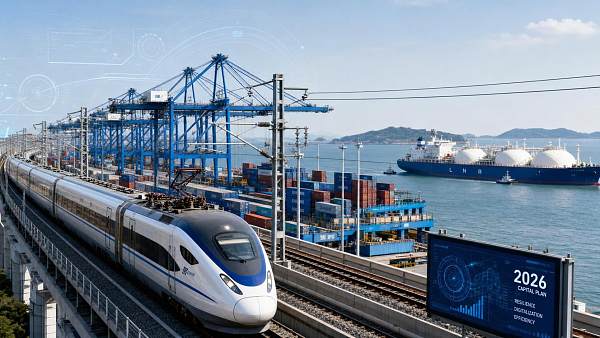
 Jul 19, 2026Transportation Infrastructure Trends Shaping Capital Planning in 2026Transportation infrastructure trends in 2026 are reshaping capital planning across rail, ports, and shipping. Discover how resilience, automation, and digital control are driving smarter investment decisions.
 Jul 12, 2026Gas Carrier Technology in the Middle East: 2026 OutlookGas carrier technology Middle East trends for 2026: explore LNG vessel innovation, propulsion, containment, and regional yard upgrades shaping smarter energy trade decisions.
 Jul 10, 2026Commercial Shipbuilding Technology Trends Shaping Newbuild Projects in 2026Commercial shipbuilding technology is reshaping 2026 newbuild projects with smarter vessels, fuel flexibility, digital twins, and earlier compliance planning. Explore the trends driving stronger ROI.
 Jul 08, 2026Rail Transit Systems Upgrade Trends Shaping 2026 Investment PlansRail transit systems in 2026 are shifting from expansion to smarter upgrades. Explore safety, automation, energy, and digital trends shaping resilient, high-value investment plans.
 Jul 06, 2026Cryogenic Shipping Systems Manufacturer Trends Shaping 2026 Fleet UpgradesCryogenic shipping systems manufacturer trends are reshaping 2026 fleet upgrades. Explore how digital monitoring, emissions control, and safer containment can improve vessel performance.
 Jul 05, 2026Smart Shipping Solutions for Fleet Management: 2026 Trends Shaping Vessel OperationsSmart shipping solutions for fleet management are redefining vessel operations in 2026. Explore trends in integration, compliance, fuel efficiency, and resilient fleet performance.
 Jul 04, 2026Digital Marine Decarbonization Technology: What Delivers Measurable GainsDigital marine decarbonization technology helps fleets cut fuel use, improve compliance, and boost vessel efficiency with measurable, data-driven gains. Learn what truly delivers value.
 Jul 03, 2026Global Rail Infrastructure Standards: 2026 Changes to WatchGlobal rail infrastructure standards are reshaping 2026 rail projects. Discover the key compliance, interoperability, cyber, and low-carbon changes that will impact bids and investment.
 Jul 02, 2026Global Trade Logistics North America Trends to Watch in 2026Global trade logistics North America in 2026 will be shaped by rail-ocean integration, smart routing, LNG demand, and measurable resilience. Discover the trends redefining reliability and trade advantage.
 Jun 30, 2026International Shipbuilding Suppliers: 2026 Sourcing Trends and Supply Chain RisksInternational shipbuilding suppliers face new 2026 sourcing risks, from compliance and digital integration to sub-tier bottlenecks. Explore key trends shaping cost, delivery, and resilience.
 Jun 27, 2026Heavy Industry Tech Trends Reshaping Equipment Investment in 2026Heavy industry tech is reshaping 2026 equipment investment across rail and maritime systems. Explore the five trends driving safer, smarter, higher-value capital decisions.
 Jun 25, 2026Decarbonization Trends Reshaping Rail and Marine Investment in 2026Decarbonization is reshaping rail and marine investment in 2026. Discover where capital is moving, which assets gain value, and how smarter transport upgrades improve resilience.
 Jun 23, 2026Global Rail Infrastructure Trends Shaping Capacity, Funding, and Delivery TimelinesGlobal rail infrastructure trends are redefining capacity, funding, and delivery timelines. Explore how data-driven planning and system readiness shape resilient, investable rail projects.
 Jun 22, 2026Maritime Logistics Trends in 2026: Capacity Shifts, Delays, and Margin PressureMaritime logistics in 2026 faces shifting capacity, persistent delays, and rising margin pressure. Explore key risks, lane-level signals, and smarter planning strategies.
 Jun 21, 2026LNG Carriers Technology Advancements: 5 Upgrades Reshaping Fleet PerformanceLNG carriers technology advancements are reshaping fleet performance through smarter containment, dual-fuel propulsion, digital monitoring, boil-off control, and automation—see the 5 upgrades driving safer, cleaner, more profitable LNG shipping.
 Jun 20, 2026Global Supply Chain Challenges in Rail Infrastructure in 2026Global supply chain challenges in rail infrastructure are redefining 2026 project risk. Discover where delays, compliance, and sourcing pressure hit hardest—and how smarter evaluation protects cost, delivery, and performance.
 Jun 20, 2026Full Digitalization in Rail: 7 Risks to Address Before ScalingFull digitalization in rail can boost safety, maintenance, and control—but only if key risks are managed. Explore 7 critical challenges to address before scaling network-wide.
 Jun 18, 2026Maritime Logistics Trends in 2026: Where Shipping Efficiency Is MovingMaritime logistics in 2026 is driven by AI routing, port connectivity, decarbonization, and asset visibility. Discover the trends redefining shipping efficiency and resilience.
 Jun 17, 2026Transportation Infrastructure Development Trends That Matter for Long-Term PlanningTransportation infrastructure development trends are reshaping rail, ports, shipping, and LNG networks. Explore the key signals for smarter long-term planning, resilience, and investment value.
 Jun 17, 2026Railway Automation Trends Shaping Safer, Smarter Networks in 2026Railway automation in 2026 is driving safer, smarter rail networks with predictive maintenance, integrated signaling, and higher capacity. Explore the trends shaping resilient transport.
 Jun 15, 2026Decarbonization in Rail Transportation: What Cuts Emissions First?Decarbonization in rail transportation starts with the fastest wins: traction optimization, regenerative braking, smarter signalling, and retrofit upgrades that cut emissions, costs, and risk.
 Jun 14, 2026Rail Infrastructure Investment: Cost vs Long-Term ReturnRail infrastructure investment is more than upfront cost. Discover how lifecycle planning, smarter systems, and reliable rail design can deliver stronger long-term returns.
 Jun 13, 2026Advanced Ocean-Going Vessels: Key Design Shifts in 2026Advanced ocean-going vessels in 2026 are redefining shipping with AI routing, fuel-flexible propulsion, and smarter port integration. See which design shifts drive resilience, efficiency, and long-term fleet value.
 Jun 12, 2026High-Speed Rail Technology Trends Shaping 2026 ProjectsHigh-speed rail technology is reshaping 2026 projects through smarter signaling, resilient traction, precision braking, and digital monitoring. Explore the trends driving safer, scalable, bankable rail delivery.