



Search News
Industry Portal
Popular Tags
High-Speed Rail Technology Performance Benchmarks
Author
Time
Click Count
For technical evaluators, high-speed rail technology performance benchmarks are essential for comparing safety integrity, traction stability, braking precision, and lifecycle efficiency. In a market shaped by automation, decarbonization, and cross-border infrastructure investment, clear benchmark frameworks help identify which systems can sustain reliable operation under extreme speed, density, and environmental demands.
For organizations assessing rolling stock, signalling, power collection, and braking subsystems, benchmark design is no longer a narrow engineering exercise. It directly affects tender scoring, risk allocation, maintenance planning, and long-term asset value across 20- to 35-year operating horizons.
This is especially relevant for platforms such as GTOT, where railway control intelligence, high-speed traction systems, and broader land-sea transport infrastructure are evaluated through a common lens: operational resilience, safety margins, and measurable efficiency under demanding real-world conditions.
Why High-Speed Rail Technology Benchmarks Matter in Technical Evaluation
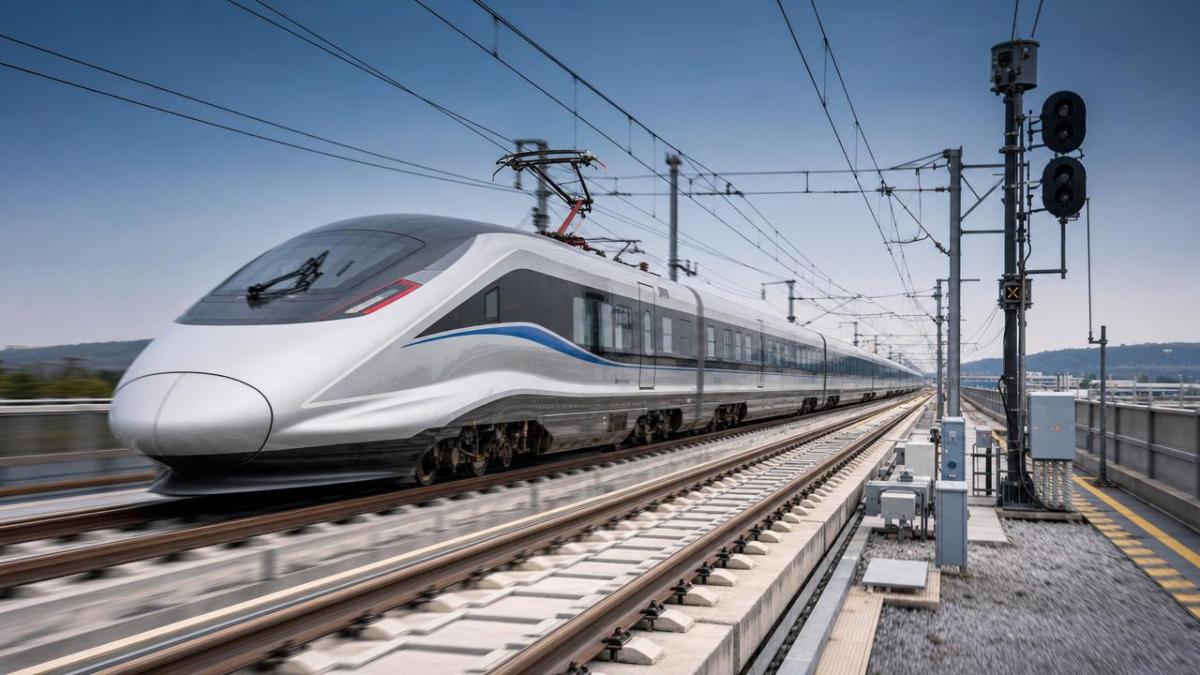
High-speed rail technology cannot be judged by top speed alone. A trainset rated above 300 km/h may still underperform if the signalling architecture, pantograph-catenary interface, or braking response cannot maintain stability in dense traffic, crosswind zones, tunnels, or temperature swings from -25°C to 45°C.
Technical evaluators typically need a benchmark system that connects 4 core questions: Is it safe, is it stable, is it maintainable, and is it efficient over the full lifecycle? Without that structure, procurement teams often overemphasize initial capital cost and underestimate operating risk.
From Specification Review to Decision Support
In B2B procurement, benchmark frameworks support more than compliance checking. They help compare suppliers across 6 practical dimensions: safety integrity, traction continuity, braking consistency, interoperability, maintainability, and digital readiness. These dimensions are especially important in projects with mixed vendors and phased deployment schedules of 24 to 60 months.
Typical evaluation pain points
- Performance claims based on laboratory conditions rather than route-level operating profiles
- Insufficient data on degradation after 500,000 to 1,200,000 km of service
- Weak comparison between safety functions and maintenance burden
- Limited transparency on subsystem integration risk across signalling, braking, and power collection
The most effective high-speed rail technology benchmark does not treat each subsystem in isolation. Instead, it measures interface behavior, such as how braking response interacts with train control logic, or how pantograph dynamics affect traction power continuity at 350 km/h and above.
Core benchmark categories for high-speed systems
The following table outlines the benchmark categories most technical teams use when screening suppliers or preparing technical tender comparisons. Each category should be backed by route simulation, field test data, and maintenance records rather than brochure-level descriptions.
A key takeaway is that high-speed rail technology performance benchmarks should align technical metrics with commercial outcomes. For example, a 10% improvement in braking thermal stability may reduce wheel and pad replacement frequency, while a tighter pantograph contact force range can lower overhead line maintenance exposure over several million train-kilometers.
Benchmarking the Four Critical Subsystems
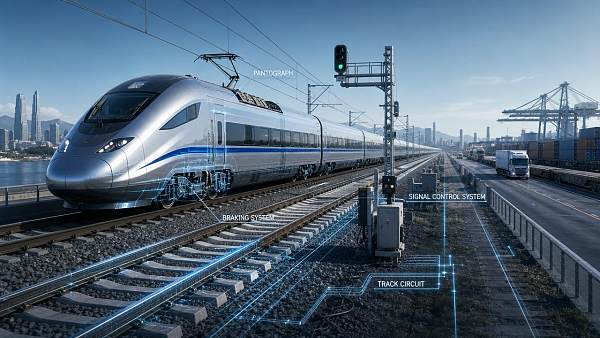
In high-speed projects, four subsystem groups usually carry the highest evaluation weight: signalling and train control, traction and pantograph systems, braking systems, and digital maintenance architecture. Their combined performance determines whether the platform can operate safely at scale, not just whether it can pass acceptance tests.
1. Signalling and train control systems
Railway signal control systems are often the first gate in high-speed rail technology assessment because they act as the operational nervous system. Technical evaluators should examine fail-safe logic, latency under dense traffic, onboard-wayside communication continuity, and degraded mode recovery behavior.
A strong benchmark includes at least 5 checks: safety integrity level, route availability, automatic train protection response time, cybersecurity hardening, and interoperability with legacy interfaces. For cross-border or network-upgrade projects, interoperability risk can be as important as raw performance.
What to verify
- Response stability during peak traffic density and short headways
- Fault isolation speed and restart procedures within defined operating windows
- Compatibility with automatic operation and remote diagnostics
- Lifecycle support for software updates over 10 to 15 years
2. Pantographs and traction stability
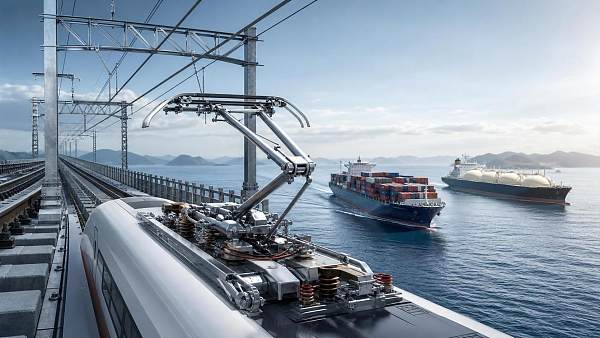
At speeds above 300 km/h, the pantograph is no longer a passive component. It becomes a dynamic interface affected by uplift force, aerodynamic turbulence, vibration, and catenary geometry. Benchmarking should therefore include contact force stability, dewirement risk, arc behavior, and wear rate under multiple environmental conditions.
For technical evaluators, a useful performance benchmark compares behavior in at least 3 route scenarios: open plain crosswind, tunnel entry and exit, and winter icing or contamination conditions. The goal is to understand not just nominal efficiency, but power continuity under stress.
3. Braking precision and thermal resilience
Rail transit braking systems are central to high-speed rail technology benchmarking because stopping performance is influenced by train mass, speed, gradient, adhesion, brake blending logic, and thermal load. A benchmark should compare routine service braking with emergency scenarios, not one or the other.
Evaluators should request data on deceleration consistency, wheel-slide protection effectiveness, and thermal fade after repeated cycles. On heavily used corridors, the difference between stable and unstable brake performance can appear after dozens of high-energy braking events in a single duty cycle.
4. Digital maintenance and lifecycle intelligence
Modern benchmark systems should also include digital maintenance capability. Condition monitoring, remote diagnostics, and predictive alerting can reduce unscheduled downtime by identifying drift before it becomes service-affecting. This is where GTOT’s intelligence-oriented perspective is particularly relevant for technical evaluation teams.
A practical benchmark asks whether the subsystem supports sensor-based monitoring, event logging, and maintenance planning intervals tied to actual load rather than fixed schedules alone. Fleets with these capabilities often manage maintenance more efficiently over 30-year asset lifecycles.
How to Build a Practical Benchmark Framework for Procurement and Tenders
A workable benchmark model should help evaluators score competing solutions in a repeatable way. In most procurement environments, that means balancing technical thresholds, route-specific needs, and ownership cost. Weightings vary by project, but 4 layers are commonly used: compliance, performance, maintainability, and integration risk.
Recommended scoring structure
The table below provides a practical structure that technical teams can adapt for tender evaluation. It avoids single-metric bias and helps connect subsystem performance to operational and commercial outcomes.
This approach helps prevent a common procurement mistake: awarding high scores to components with strong headline performance but weak serviceability or uncertain integration behavior. In high-speed rail technology, a subsystem that performs well in isolation may still create network-level reliability issues after commissioning.
Five-step evaluation workflow
Technical teams can improve consistency by following a structured workflow rather than relying on fragmented document review. A 5-step sequence is often sufficient for early- and mid-stage selection.
- Define operating envelope: target speed, headway, climate, route geometry, and traffic density
- Set benchmark thresholds for safety, traction, braking, and maintainability
- Request evidence sets: test reports, degradation curves, software support plans, and maintenance intervals
- Run interface risk review across rolling stock, signalling, OCS, and depots
- Convert technical findings into weighted tender scoring and risk notes
Where projects often go wrong
- Using urban rail assumptions for 300+ km/h intercity operations
- Ignoring environmental stress testing beyond nominal temperature bands
- Failing to compare maintenance access time, tooling needs, and spare parts response
- Scoring digital features without verifying data integration and operator usability
Risk Control, Serviceability, and Long-Term Value
Benchmarking high-speed rail technology should not stop at commissioning. For asset owners and EPC teams, the larger question is whether the chosen system can maintain safe, efficient operation through changing traffic demand, software updates, component aging, and supply chain disruptions.
Risk indicators worth tracking after deployment
A strong evaluation plan includes post-award monitoring indicators. Common examples include failure recurrence within 90 days, time to restore service after faults, brake wear variance between depots, and pantograph strip replacement intervals under seasonal load. These data points reveal whether benchmark assumptions remain valid in operation.
Why lifecycle visibility matters to GTOT’s audience
GTOT’s focus on signalling, pantographs, braking systems, and strategic transport intelligence reflects a broader market reality: infrastructure buyers now expect components to contribute to digitalization, decarbonization, and operational predictability at the same time. Technical evaluators therefore need benchmark tools that connect hardware performance with data transparency and service strategy.
For distributors, EPC contractors, and system integrators, this also strengthens technical credibility in restricted tenders. When benchmark logic is explicit, engineering teams can justify selections with measurable criteria rather than generic claims about reliability or efficiency.
Frequently asked evaluation questions
Should top speed be the main benchmark?
No. Top speed is only one parameter. A complete high-speed rail technology benchmark should include safe headway control, stopping repeatability, traction continuity, thermal behavior, and maintenance burden across the expected duty cycle.
How much field evidence is enough?
There is no single universal threshold, but evaluators usually need laboratory validation, route simulation, and in-service evidence where available. For critical systems, evidence across multiple climate and load conditions is more valuable than a single peak-performance test.
Which subsystem most affects lifecycle cost?
There is no one answer. Braking, pantograph wear, signalling software support, and diagnostic maturity can all influence cost over 20 to 30 years. That is why benchmark frameworks should compare subsystem interactions, not isolated component prices.
Effective high-speed rail technology performance benchmarks give technical evaluators a disciplined way to compare safety integrity, traction performance, braking precision, interoperability, and lifecycle efficiency. They reduce procurement ambiguity, strengthen tender defensibility, and support better long-term asset decisions in increasingly automated and decarbonized rail networks.
If your team is assessing signalling systems, pantographs, braking solutions, or integrated transport intelligence, GTOT can help translate complex technical data into clearer benchmark logic and decision-ready insight. Contact us to discuss product details, request a tailored evaluation framework, or explore more solutions for high-speed and cross-border transport projects.
Recommended News
 Jul 19, 2026Transportation Infrastructure Trends Shaping Capital Planning in 2026Transportation infrastructure trends in 2026 are reshaping capital planning across rail, ports, and shipping. Discover how resilience, automation, and digital control are driving smarter investment decisions.
 Jul 12, 2026Gas Carrier Technology in the Middle East: 2026 OutlookGas carrier technology Middle East trends for 2026: explore LNG vessel innovation, propulsion, containment, and regional yard upgrades shaping smarter energy trade decisions.
 Jul 10, 2026Commercial Shipbuilding Technology Trends Shaping Newbuild Projects in 2026Commercial shipbuilding technology is reshaping 2026 newbuild projects with smarter vessels, fuel flexibility, digital twins, and earlier compliance planning. Explore the trends driving stronger ROI.
 Jul 08, 2026Rail Transit Systems Upgrade Trends Shaping 2026 Investment PlansRail transit systems in 2026 are shifting from expansion to smarter upgrades. Explore safety, automation, energy, and digital trends shaping resilient, high-value investment plans.
 Jul 06, 2026Cryogenic Shipping Systems Manufacturer Trends Shaping 2026 Fleet UpgradesCryogenic shipping systems manufacturer trends are reshaping 2026 fleet upgrades. Explore how digital monitoring, emissions control, and safer containment can improve vessel performance.
 Jul 05, 2026Smart Shipping Solutions for Fleet Management: 2026 Trends Shaping Vessel OperationsSmart shipping solutions for fleet management are redefining vessel operations in 2026. Explore trends in integration, compliance, fuel efficiency, and resilient fleet performance.
 Jul 04, 2026Digital Marine Decarbonization Technology: What Delivers Measurable GainsDigital marine decarbonization technology helps fleets cut fuel use, improve compliance, and boost vessel efficiency with measurable, data-driven gains. Learn what truly delivers value.
 Jul 03, 2026Global Rail Infrastructure Standards: 2026 Changes to WatchGlobal rail infrastructure standards are reshaping 2026 rail projects. Discover the key compliance, interoperability, cyber, and low-carbon changes that will impact bids and investment.
 Jul 02, 2026Global Trade Logistics North America Trends to Watch in 2026Global trade logistics North America in 2026 will be shaped by rail-ocean integration, smart routing, LNG demand, and measurable resilience. Discover the trends redefining reliability and trade advantage.
 Jun 30, 2026International Shipbuilding Suppliers: 2026 Sourcing Trends and Supply Chain RisksInternational shipbuilding suppliers face new 2026 sourcing risks, from compliance and digital integration to sub-tier bottlenecks. Explore key trends shaping cost, delivery, and resilience.
 Jun 27, 2026Heavy Industry Tech Trends Reshaping Equipment Investment in 2026Heavy industry tech is reshaping 2026 equipment investment across rail and maritime systems. Explore the five trends driving safer, smarter, higher-value capital decisions.
 Jun 25, 2026Decarbonization Trends Reshaping Rail and Marine Investment in 2026Decarbonization is reshaping rail and marine investment in 2026. Discover where capital is moving, which assets gain value, and how smarter transport upgrades improve resilience.
 Jun 23, 2026Global Rail Infrastructure Trends Shaping Capacity, Funding, and Delivery TimelinesGlobal rail infrastructure trends are redefining capacity, funding, and delivery timelines. Explore how data-driven planning and system readiness shape resilient, investable rail projects.
 Jun 22, 2026Maritime Logistics Trends in 2026: Capacity Shifts, Delays, and Margin PressureMaritime logistics in 2026 faces shifting capacity, persistent delays, and rising margin pressure. Explore key risks, lane-level signals, and smarter planning strategies.
 Jun 21, 2026LNG Carriers Technology Advancements: 5 Upgrades Reshaping Fleet PerformanceLNG carriers technology advancements are reshaping fleet performance through smarter containment, dual-fuel propulsion, digital monitoring, boil-off control, and automation—see the 5 upgrades driving safer, cleaner, more profitable LNG shipping.
 Jun 20, 2026Global Supply Chain Challenges in Rail Infrastructure in 2026Global supply chain challenges in rail infrastructure are redefining 2026 project risk. Discover where delays, compliance, and sourcing pressure hit hardest—and how smarter evaluation protects cost, delivery, and performance.
 Jun 20, 2026Full Digitalization in Rail: 7 Risks to Address Before ScalingFull digitalization in rail can boost safety, maintenance, and control—but only if key risks are managed. Explore 7 critical challenges to address before scaling network-wide.
 Jun 18, 2026Maritime Logistics Trends in 2026: Where Shipping Efficiency Is MovingMaritime logistics in 2026 is driven by AI routing, port connectivity, decarbonization, and asset visibility. Discover the trends redefining shipping efficiency and resilience.
 Jun 17, 2026Transportation Infrastructure Development Trends That Matter for Long-Term PlanningTransportation infrastructure development trends are reshaping rail, ports, shipping, and LNG networks. Explore the key signals for smarter long-term planning, resilience, and investment value.
 Jun 17, 2026Railway Automation Trends Shaping Safer, Smarter Networks in 2026Railway automation in 2026 is driving safer, smarter rail networks with predictive maintenance, integrated signaling, and higher capacity. Explore the trends shaping resilient transport.
 Jun 15, 2026Decarbonization in Rail Transportation: What Cuts Emissions First?Decarbonization in rail transportation starts with the fastest wins: traction optimization, regenerative braking, smarter signalling, and retrofit upgrades that cut emissions, costs, and risk.
 Jun 14, 2026Rail Infrastructure Investment: Cost vs Long-Term ReturnRail infrastructure investment is more than upfront cost. Discover how lifecycle planning, smarter systems, and reliable rail design can deliver stronger long-term returns.
 Jun 13, 2026Advanced Ocean-Going Vessels: Key Design Shifts in 2026Advanced ocean-going vessels in 2026 are redefining shipping with AI routing, fuel-flexible propulsion, and smarter port integration. See which design shifts drive resilience, efficiency, and long-term fleet value.
 Jun 12, 2026High-Speed Rail Technology Trends Shaping 2026 ProjectsHigh-speed rail technology is reshaping 2026 projects through smarter signaling, resilient traction, precision braking, and digital monitoring. Explore the trends driving safer, scalable, bankable rail delivery.