



Search News
Industry Portal
Popular Tags
Global Rail Infrastructure Risks to Watch in 2026
Author
Time
Click Count
As 2026 approaches, global rail infrastructure is entering a period of heightened uncertainty shaped by funding gaps, cybersecurity threats, supply chain volatility, and stricter safety expectations. For business decision-makers, understanding these risks is no longer optional—it is essential to protecting asset value, securing project continuity, and identifying where resilient technology and strategic investment can create long-term advantage.
The core search intent behind “Global Rail Infrastructure Risks to Watch in 2026” is practical, not academic. Readers want a decision-ready view of which risks are becoming material, how those risks could affect budgets and operations, and where to act now rather than react later.
For enterprise leaders, the most urgent question is simple: which rail risks in 2026 can disrupt projects, damage returns, or weaken competitive position? The answer is that risk is no longer concentrated in a single area. It now spans capital access, digital security, component availability, regulatory compliance, operational resilience, and geopolitical exposure.
This means executives should stop treating global rail infrastructure risk as an engineering issue alone. In 2026, it is a board-level issue tied directly to procurement strategy, project bankability, technology selection, lifecycle cost, and long-term network reliability.
Why 2026 looks different for global rail infrastructure
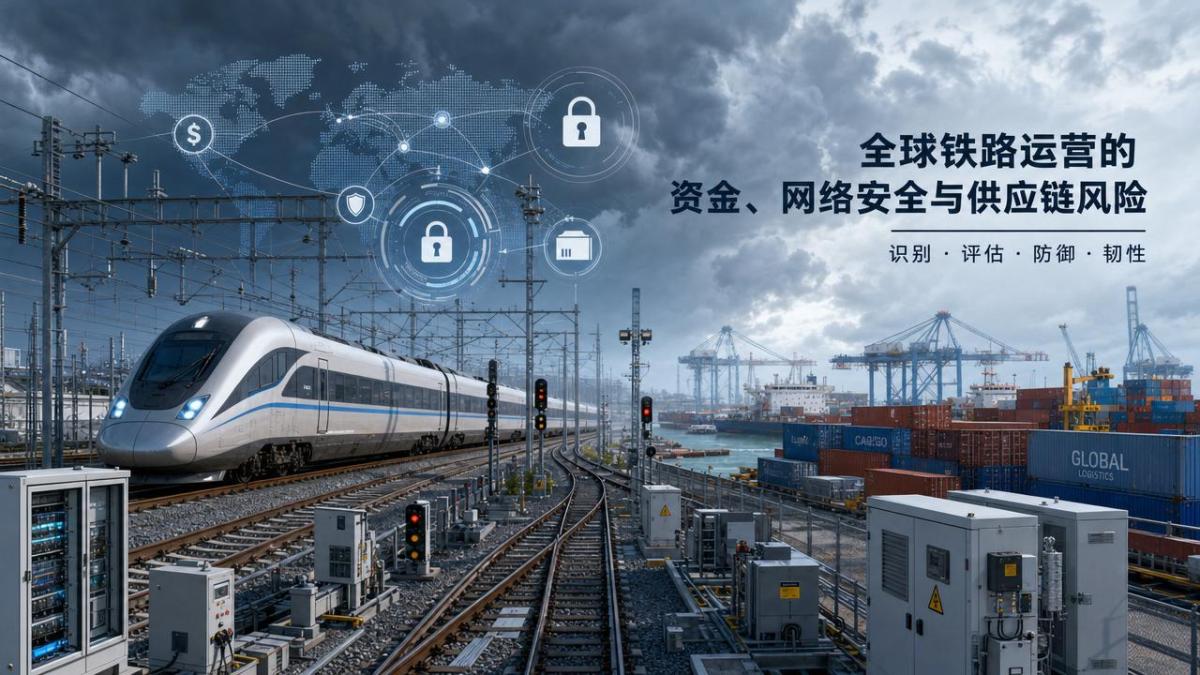
Rail investment remains strategically important, but the environment around it has changed. Inflationary pressure, sovereign debt constraints, decarbonization mandates, and aging transport assets are colliding at the same time, making project delivery more fragile than many expected.
Across developed and emerging markets, railway expansion is still politically attractive because it supports mobility, trade corridors, and emissions reduction. Yet political support does not automatically translate into stable funding, timely approvals, or secure supply of critical systems.
For decision-makers, the key shift is that risk now travels across the entire project chain. A financing issue can become a procurement delay. A software vulnerability can become a service interruption. A shortage in signalling electronics can undermine commissioning schedules months later.
That is why the most valuable approach in 2026 is integrated risk assessment. Companies involved in rolling stock, signalling, traction power, braking systems, and infrastructure delivery should evaluate exposure across technology, operations, capital, and compliance rather than in isolated silos.
Risk #1: Funding gaps and cost escalation will delay more projects than expected
One of the most immediate threats to global rail infrastructure in 2026 is not lack of ambition but lack of financial certainty. Many projects have strong strategic narratives, yet struggle when construction costs, borrowing rates, or foreign exchange assumptions move beyond original estimates.
Large rail projects are especially vulnerable because they are long-cycle investments with complex stakeholder structures. Even small changes in steel prices, energy costs, labor expenses, or interest rates can materially affect project viability and contract negotiations.
Decision-makers should pay close attention to three warning signs: repeated budget revisions, phased scope reduction, and delayed financial close. These often signal deeper stress in project economics and may precede procurement slowdown or contractor claims.
For suppliers and EPC participants, this risk changes how opportunities should be evaluated. Winning a tender matters less if the underlying funding structure is fragile. It is increasingly important to assess sponsor strength, multilateral backing, local fiscal conditions, and payment security before committing resources.
Executives can reduce exposure by prioritizing projects with stronger financing visibility, flexible contract structures, and clearer lifecycle value propositions. Solutions that reduce maintenance cost, improve energy efficiency, or raise system availability are more defensible when capital becomes constrained.
Risk #2: Cybersecurity is becoming a direct operational and safety risk
As railway systems become more connected, cybersecurity is no longer limited to IT departments. It now affects signalling, traffic management, onboard diagnostics, maintenance systems, communication networks, and remote monitoring platforms that support daily operations.
This is especially relevant in high-density and automated networks, where digital interdependence is increasing. A successful cyberattack may not only interrupt business systems but also degrade service reliability, trigger safety incidents, or force manual fallback operations with major cost implications.
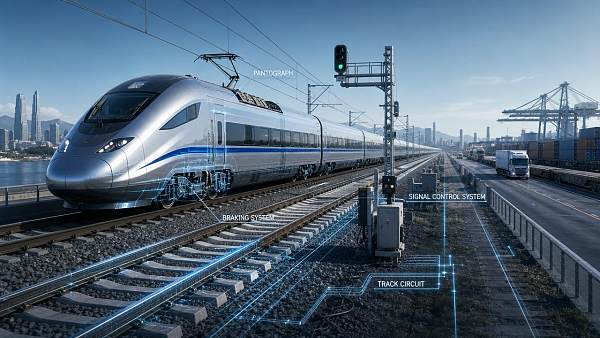
Railway signal control systems deserve particular attention because they function as the operational nerve center of the network. The higher the automation level, the more important it becomes to secure interfaces, data integrity, software updates, and recovery procedures.
For business leaders, the question is not whether to invest in cybersecurity, but where it produces the greatest resilience. Priorities should include asset visibility, secure-by-design procurement, segmentation between critical systems, supplier access control, and incident response readiness.
Cyber resilience should also become a procurement criterion, not an afterthought. Vendors that can demonstrate compliance, secure lifecycle management, patch governance, and operational recovery capability will have stronger credibility in highly regulated rail tenders.
Risk #3: Supply chain fragility will continue to affect rail components and schedules
Although some logistics bottlenecks have eased, rail supply chains remain exposed in 2026. The problem is not only shipping delays. It is the concentration of critical inputs, long lead times for specialized electronics, and limited availability of qualified manufacturers for safety-critical systems.
Components such as signalling modules, power electronics, pantographs, braking subsystems, sensors, and embedded control units often depend on global supplier networks. If a single tier-two or tier-three supplier fails, the impact can cascade through manufacturing, testing, and commissioning timelines.
Pantographs and braking systems are particularly important from a risk management perspective. These are not interchangeable commodity items. Their performance under high speed, vibration, and environmental stress directly affects safety, reliability, and fleet availability.
Executives should look beyond basic supplier diversification and ask harder questions. Where are the true single points of failure? Which components have the longest requalification cycle? Which suppliers face geopolitical, energy, or labor risks that could impair delivery?
Practical mitigation includes dual sourcing where possible, earlier demand forecasting, buffer inventory for critical components, and tighter collaboration with engineering teams on approved alternatives. In 2026, companies that understand their technical dependencies in detail will outperform those relying on generic sourcing plans.
Risk #4: Safety expectations are rising faster than some systems are being modernized
Another major global rail infrastructure risk is the widening gap between rising safety expectations and the pace of asset modernization. Governments and operators are demanding higher reliability, stricter compliance, and stronger accident prevention, especially in urban and high-speed corridors.
But many networks still rely on legacy systems, aging fleets, or mixed-technology environments where new digital layers are added to old infrastructure. This creates hidden complexity, making validation, interoperability, and fault diagnosis more difficult.
For decision-makers, safety risk should be evaluated as both a compliance issue and a business continuity issue. A failure in interlocking, braking, power collection, or traffic control does not just create technical problems. It can produce reputational damage, legal exposure, and network-wide service disruption.
Investment in SIL4-aligned signalling architecture, predictive maintenance, condition monitoring, and higher-performance braking technologies can deliver more than regulatory comfort. It can materially reduce downtime, improve fleet utilization, and strengthen the case for long-term asset value preservation.
The organizations most likely to manage this well are those linking engineering assurance with executive oversight. Safety should be tracked through measurable indicators such as fault recurrence, mean time to repair, deferred maintenance exposure, and critical subsystem obsolescence.
Risk #5: Geopolitics and industrial policy are reshaping market access
Global rail infrastructure is increasingly shaped by geopolitics, trade restrictions, localization rules, and strategic industrial policy. This affects where projects are funded, which suppliers are eligible, how technology is transferred, and what procurement standards must be met.
For multinational companies, the challenge is not just uncertainty but fragmentation. A product accepted in one market may face local content requirements, cybersecurity scrutiny, certification barriers, or export control issues in another. That can complicate growth plans and margin assumptions.
This trend is especially relevant for high-value systems such as signalling, traction, communications, and advanced control components. Buyers are becoming more cautious about strategic dependence, while governments are increasingly linking transport infrastructure to national resilience goals.
Business leaders should therefore assess rail opportunities through a market access lens, not only through demand forecasts. It is essential to understand localization expectations, certification timelines, public procurement rules, and the political durability of cross-border partnerships.
Companies that build flexible market strategies, regional technical support capability, and transparent compliance processes will be better positioned to navigate this environment. In 2026, commercial competitiveness in rail will depend as much on strategic adaptability as on product quality.
Risk #6: Climate stress is moving from long-term concern to near-term operating reality
Climate exposure is becoming a direct infrastructure risk for rail operators and investors. Extreme heat, flooding, storm intensity, coastal erosion, and power instability are already affecting track conditions, signalling equipment, substations, and service continuity across multiple regions.
What makes this especially important in 2026 is that resilience expectations are becoming more explicit in funding, insurance, and public accountability. Projects that ignore climate adaptation may face higher lifecycle cost, more frequent disruptions, and lower investor confidence.
For global rail infrastructure, climate resilience should be built into design specifications, component selection, and maintenance planning. Equipment must perform reliably under wider temperature ranges, water ingress threats, and power fluctuation scenarios than many legacy assumptions allowed.
Decision-makers should ask whether resilience planning is grounded in real operational data. Are drainage, thermal expansion, electrical protection, and failure recovery strategies aligned with local climate conditions? Or are they based on historical norms that are no longer dependable?
Technology providers that offer robust condition monitoring, durable materials, and predictive diagnostics can create clear value here. Resilience is increasingly bankable because it protects uptime, lowers disruption cost, and supports the long-term credibility of infrastructure investment.
How enterprise leaders should prioritize action now
Not every rail risk deserves the same executive attention. The most effective response is to prioritize according to business impact, probability, and time to mitigate. In many cases, the highest-value actions are those that improve visibility before they require major capital.
Start with a portfolio-level view. Identify which projects, customers, suppliers, and technologies are most exposed to funding stress, cyber vulnerability, component concentration, or regulatory change. This creates a more useful management picture than reviewing each issue in isolation.
Next, test contracts and procurement models against disruption scenarios. Can critical deliveries be rescheduled without major penalties? Are technical alternatives prequalified? Do service obligations depend on fragile software, data, or spare parts arrangements?
Then align risk strategy with technology strategy. In rail, resilient components are not simply technical upgrades. Better signalling architecture, higher-performance pantographs, advanced braking systems, and stronger diagnostic tools can protect revenue, service continuity, and tender competitiveness.
Finally, treat intelligence as a strategic asset. Companies that continuously track rail investment cycles, component trends, safety standards, and geopolitical developments will make better decisions than those reacting only when disruptions become visible in financial results.
What this means for competitive advantage in 2026
The organizations that will benefit most from 2026 are not necessarily the ones chasing the largest number of projects. They are the ones that understand how global rail infrastructure risk is evolving and can translate that understanding into smarter bids, stronger partnerships, and more resilient operations.
In practical terms, that means favoring opportunities with clearer funding logic, selecting technology with proven lifecycle performance, strengthening cyber and supply chain discipline, and preparing for a more fragmented regulatory landscape. These are not defensive moves alone. They are strategic differentiators.
For decision-makers in rail and adjacent industrial sectors, the market is still rich with opportunity. But opportunity will increasingly flow to companies able to connect technical insight with commercial judgment, especially in safety-critical and performance-critical systems.
The central message is clear: the biggest risks to global rail infrastructure in 2026 are interconnected, measurable, and manageable for companies willing to act early. Those that invest in resilience, intelligence, and disciplined execution will be better positioned to protect assets and capture long-term value.
As the sector moves deeper into digitalization, decarbonization, and operational complexity, leadership quality will matter as much as engineering quality. The winners will be those that treat risk not as a constraint on growth, but as a framework for making better infrastructure decisions.
Recommended News
 Jul 19, 2026Transportation Infrastructure Trends Shaping Capital Planning in 2026Transportation infrastructure trends in 2026 are reshaping capital planning across rail, ports, and shipping. Discover how resilience, automation, and digital control are driving smarter investment decisions.
 Jul 12, 2026Gas Carrier Technology in the Middle East: 2026 OutlookGas carrier technology Middle East trends for 2026: explore LNG vessel innovation, propulsion, containment, and regional yard upgrades shaping smarter energy trade decisions.
 Jul 10, 2026Commercial Shipbuilding Technology Trends Shaping Newbuild Projects in 2026Commercial shipbuilding technology is reshaping 2026 newbuild projects with smarter vessels, fuel flexibility, digital twins, and earlier compliance planning. Explore the trends driving stronger ROI.
 Jul 08, 2026Rail Transit Systems Upgrade Trends Shaping 2026 Investment PlansRail transit systems in 2026 are shifting from expansion to smarter upgrades. Explore safety, automation, energy, and digital trends shaping resilient, high-value investment plans.
 Jul 06, 2026Cryogenic Shipping Systems Manufacturer Trends Shaping 2026 Fleet UpgradesCryogenic shipping systems manufacturer trends are reshaping 2026 fleet upgrades. Explore how digital monitoring, emissions control, and safer containment can improve vessel performance.
 Jul 05, 2026Smart Shipping Solutions for Fleet Management: 2026 Trends Shaping Vessel OperationsSmart shipping solutions for fleet management are redefining vessel operations in 2026. Explore trends in integration, compliance, fuel efficiency, and resilient fleet performance.
 Jul 04, 2026Digital Marine Decarbonization Technology: What Delivers Measurable GainsDigital marine decarbonization technology helps fleets cut fuel use, improve compliance, and boost vessel efficiency with measurable, data-driven gains. Learn what truly delivers value.
 Jul 03, 2026Global Rail Infrastructure Standards: 2026 Changes to WatchGlobal rail infrastructure standards are reshaping 2026 rail projects. Discover the key compliance, interoperability, cyber, and low-carbon changes that will impact bids and investment.
 Jul 02, 2026Global Trade Logistics North America Trends to Watch in 2026Global trade logistics North America in 2026 will be shaped by rail-ocean integration, smart routing, LNG demand, and measurable resilience. Discover the trends redefining reliability and trade advantage.
 Jun 30, 2026International Shipbuilding Suppliers: 2026 Sourcing Trends and Supply Chain RisksInternational shipbuilding suppliers face new 2026 sourcing risks, from compliance and digital integration to sub-tier bottlenecks. Explore key trends shaping cost, delivery, and resilience.
 Jun 27, 2026Heavy Industry Tech Trends Reshaping Equipment Investment in 2026Heavy industry tech is reshaping 2026 equipment investment across rail and maritime systems. Explore the five trends driving safer, smarter, higher-value capital decisions.
 Jun 25, 2026Decarbonization Trends Reshaping Rail and Marine Investment in 2026Decarbonization is reshaping rail and marine investment in 2026. Discover where capital is moving, which assets gain value, and how smarter transport upgrades improve resilience.
 Jun 23, 2026Global Rail Infrastructure Trends Shaping Capacity, Funding, and Delivery TimelinesGlobal rail infrastructure trends are redefining capacity, funding, and delivery timelines. Explore how data-driven planning and system readiness shape resilient, investable rail projects.
 Jun 22, 2026Maritime Logistics Trends in 2026: Capacity Shifts, Delays, and Margin PressureMaritime logistics in 2026 faces shifting capacity, persistent delays, and rising margin pressure. Explore key risks, lane-level signals, and smarter planning strategies.
 Jun 21, 2026LNG Carriers Technology Advancements: 5 Upgrades Reshaping Fleet PerformanceLNG carriers technology advancements are reshaping fleet performance through smarter containment, dual-fuel propulsion, digital monitoring, boil-off control, and automation—see the 5 upgrades driving safer, cleaner, more profitable LNG shipping.
 Jun 20, 2026Global Supply Chain Challenges in Rail Infrastructure in 2026Global supply chain challenges in rail infrastructure are redefining 2026 project risk. Discover where delays, compliance, and sourcing pressure hit hardest—and how smarter evaluation protects cost, delivery, and performance.
 Jun 20, 2026Full Digitalization in Rail: 7 Risks to Address Before ScalingFull digitalization in rail can boost safety, maintenance, and control—but only if key risks are managed. Explore 7 critical challenges to address before scaling network-wide.
 Jun 18, 2026Maritime Logistics Trends in 2026: Where Shipping Efficiency Is MovingMaritime logistics in 2026 is driven by AI routing, port connectivity, decarbonization, and asset visibility. Discover the trends redefining shipping efficiency and resilience.
 Jun 17, 2026Transportation Infrastructure Development Trends That Matter for Long-Term PlanningTransportation infrastructure development trends are reshaping rail, ports, shipping, and LNG networks. Explore the key signals for smarter long-term planning, resilience, and investment value.
 Jun 17, 2026Railway Automation Trends Shaping Safer, Smarter Networks in 2026Railway automation in 2026 is driving safer, smarter rail networks with predictive maintenance, integrated signaling, and higher capacity. Explore the trends shaping resilient transport.
 Jun 15, 2026Decarbonization in Rail Transportation: What Cuts Emissions First?Decarbonization in rail transportation starts with the fastest wins: traction optimization, regenerative braking, smarter signalling, and retrofit upgrades that cut emissions, costs, and risk.
 Jun 14, 2026Rail Infrastructure Investment: Cost vs Long-Term ReturnRail infrastructure investment is more than upfront cost. Discover how lifecycle planning, smarter systems, and reliable rail design can deliver stronger long-term returns.
 Jun 13, 2026Advanced Ocean-Going Vessels: Key Design Shifts in 2026Advanced ocean-going vessels in 2026 are redefining shipping with AI routing, fuel-flexible propulsion, and smarter port integration. See which design shifts drive resilience, efficiency, and long-term fleet value.
 Jun 12, 2026High-Speed Rail Technology Trends Shaping 2026 ProjectsHigh-speed rail technology is reshaping 2026 projects through smarter signaling, resilient traction, precision braking, and digital monitoring. Explore the trends driving safer, scalable, bankable rail delivery.