



Search News
Industry Portal
Popular Tags
Traction Power Upgrades: When Capacity Becomes the Bottleneck
Author
Time
Click Count
When rail networks add trains, shorten headways, or electrify new corridors, traction power can become the defining project constraint.
The challenge is not only installing substations, feeders, or cables. It is aligning traction power capacity with safety, continuity, budgets, and future resilience.
For high-density rail, traction power upgrades must support reliable acceleration, stable voltage, regenerative braking, and predictable operations under peak demand.
What Does a Traction Power Bottleneck Really Mean?
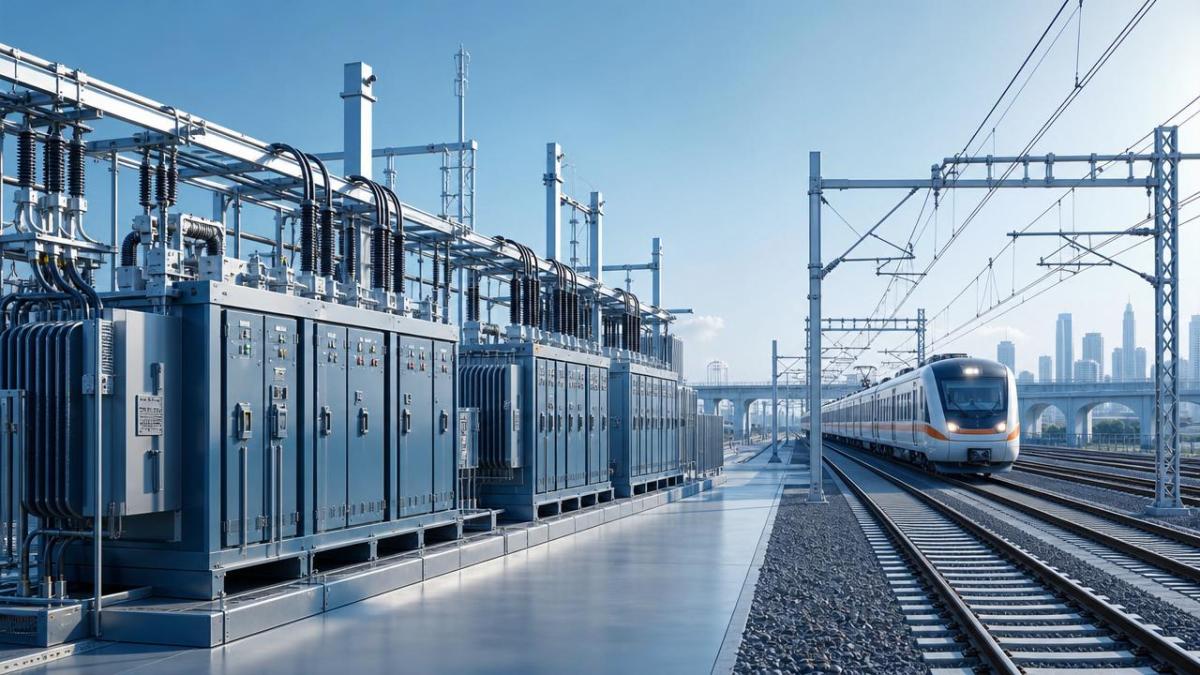
A traction power bottleneck appears when electrical infrastructure cannot reliably support the service pattern demanded by the railway.
It may emerge before visible failure. Voltage margins shrink, equipment runs hotter, and operational flexibility becomes limited.
In electrified railways, traction power is not a simple utility layer. It is part of the operating system.
Acceleration profiles, dwell times, train length, gradients, and recovery from disruption all depend on available electrical capacity.
When traction power is undersized, timetable changes become risky. Adding trains may increase delays instead of improving capacity.
The issue can affect metros, commuter rail, high-speed corridors, depots, freight terminals, and mixed-traffic electrified routes.
GTOT views traction power as a strategic control layer linking railway signaling, train performance, asset reliability, and investment timing.
Common causes of capacity stress
- Shorter headways increasing simultaneous train demand.
- Longer or heavier trains requiring higher acceleration energy.
- New rolling stock with different traction power profiles.
- Electrification extensions connected to legacy substations.
- Weak utility interfaces or limited grid redundancy.
- Poor coordination between regenerative braking and load absorption.
When Should Capacity Be Treated as the Main Project Constraint?
Traction power should move to the top of the risk register when service expansion depends on electrical headroom.
This often happens during fleet renewal, metro automation, corridor electrification, or timetable compression programs.
A rail line may appear operationally stable today, yet have little traction power margin for future growth.
The bottleneck becomes critical when peak demand overlaps with degraded operating scenarios.
Examples include one substation offline, feeder maintenance, abnormal train bunching, or recovery after a major service delay.
If voltage remains acceptable only under perfect conditions, traction power capacity is already constraining resilience.
Early warning signals to investigate
- Voltage drops during morning or evening peaks.
- Frequent thermal alarms from transformers, rectifiers, or feeders.
- Train performance restrictions near gradients or terminal approaches.
- Regenerated energy wasted because nearby loads cannot absorb it.
- Maintenance windows blocked by limited feeder redundancy.
- Timetable planners avoiding certain scenarios due to electrical limits.
These indicators do not always demand immediate construction. They do demand traction power modeling and scenario validation.
How Can Traction Power Capacity Be Measured Accurately?
Accurate assessment starts with integrated simulation, not isolated nameplate ratings.
A transformer may be adequate on paper, while the corridor still suffers from local voltage depression.
Traction power studies should combine timetable data, rolling stock characteristics, route geometry, signaling assumptions, and utility supply constraints.
This is especially important where communications-based train control or automated operation enables tighter service intervals.
The electrical network must be tested against planned service, degraded cases, and credible future demand.
Data that improves decision quality
- Train mass, acceleration curves, braking curves, and auxiliary loads.
- Planned headways, dwell assumptions, and turnback constraints.
- Substation ratings, feeder impedance, protection settings, and topology.
- Utility grid fault levels, connection limits, and outage conditions.
- Historical voltage, current, temperature, and alarm records.
- Regenerative braking behavior and energy storage opportunities.
A strong traction power study should not only confirm compliance. It should reveal operational flexibility.
That flexibility determines whether a line can recover quickly after disruption without sacrificing safety or equipment life.
Which Upgrade Paths Solve Traction Power Constraints?
There is no universal traction power upgrade. The correct path depends on constraint location, service goals, land access, and outage tolerance.
Some networks need new substations. Others need feeder reinforcement, sectionalizing changes, energy storage, or smarter operational control.
A practical program often combines infrastructure, protection, digital monitoring, and timetable refinement.
Main upgrade options
The best traction power solution usually balances capital cost with operational value.
An expensive substation may be justified if it unlocks service growth, redundancy, and maintenance access for decades.
A smaller intervention may be better when the bottleneck is temporary or linked to operating practice.
What Risks Are Often Missed During Traction Power Upgrades?
The most common mistake is treating traction power as a late-stage electrical package.
By then, station layouts, depot plans, utility agreements, and signaling concepts may already limit better options.
Another risk is focusing on peak normal operation while ignoring degraded operation.
Railways fail customers during disruption, not during ideal simulation runs. Traction power resilience must match service recovery needs.
Risk checklist for project teams
- Validate traction power assumptions before finalizing timetable promises.
- Confirm utility connection dates before committing commissioning milestones.
- Coordinate protection settings with signaling and operational rules.
- Assess electromagnetic compatibility for nearby control equipment.
- Review fire safety, ventilation, and access for substations.
- Model maintenance scenarios, not only full-asset availability.
Cybersecurity also matters as traction power systems become more connected.
Remote monitoring, intelligent breakers, and energy management platforms improve visibility, but they expand the protection perimeter.
Safety standards, operational continuity, and digital resilience should therefore be reviewed together.
How Should Cost, Schedule, and Service Continuity Be Balanced?
Traction power upgrades are rarely judged by equipment cost alone.
The true cost includes access windows, utility works, civil construction, testing, commissioning, and service disruption.
A lower-cost design may become expensive if it requires long shutdowns or repeated possessions.
Conversely, modular traction power equipment can reduce outage exposure even when unit prices are higher.
Decision framework for upgrade planning
- Define target service levels and future fleet assumptions.
- Model normal, degraded, and emergency traction power scenarios.
- Rank constraints by impact on capacity and recovery.
- Compare infrastructure options against outage requirements.
- Align utility milestones with railway commissioning stages.
- Reserve digital monitoring budget for long-term asset intelligence.
For corridors already under heavy demand, phased delivery is often essential.
Temporary feeders, night works, modular switchgear, and parallel testing can protect service continuity.
However, phasing should not fragment the final traction power architecture.
Each phase must move the network toward a coherent target state, not create stranded assets.
FAQ Summary: Practical Answers on Traction Power Upgrades
The table highlights a central point: traction power decisions are operational decisions, not only engineering choices.
They influence capacity, energy efficiency, maintenance access, recovery speed, and long-term asset value.
Conclusion: Turning Capacity Limits into Strategic Advantage
Traction power becomes the bottleneck when rail ambition exceeds electrical readiness.
The warning signs are measurable, but they must be examined before timetable, fleet, and civil decisions become locked.
A strong upgrade strategy connects simulation, utility coordination, safety validation, staged construction, and digital monitoring.
It also recognizes that capacity is not only about megawatts. It is about dependable railway performance under pressure.
For land-sea intelligence platforms such as GTOT, traction power sits within a wider transportation technology ecosystem.
It connects rail control, high-speed traction systems, braking performance, energy efficiency, and infrastructure investment discipline.
The next practical step is clear: identify service goals, test traction power margins, and rank upgrades by operational value.
With that evidence, capacity constraints can become planned investments rather than emergency interventions.
Recommended News
 Sep 29, 2026What drives traction systems price differences between rail projects?Traction systems price differences explained: compare duty cycles, voltage compatibility, integration, localization, and lifecycle costs for smarter rail procurement.
 Sep 26, 2026What to assess before selecting an electric traction system manufacturerChoose an electric traction system manufacturer with confidence. Explore key criteria for performance, reliability, safety, integration, energy efficiency, and lifecycle support.
 Sep 25, 2026When do full digitalization systems justify the investment?Full digitalization systems: discover when rail and maritime operators can turn connected data into safer operations, higher availability, and measurable ROI.
 Sep 23, 2026What drives automatic train control systems cost on rail projects?Automatic train control systems cost depends on integration, migration, safety testing, communications, and lifecycle support. Explore the key budget drivers for rail projects.
 Sep 21, 2026How to assess an ocean going vessel builder’s delivery riskAssess an ocean going vessel builder’s delivery risk with proven checks for schedules, capacity, design maturity, critical equipment, quality, and project controls.
 Sep 20, 2026What drives rail safety technology costs over a project lifecycle?Rail safety technology cost goes beyond equipment—explore lifecycle drivers from integration and safety assurance to cybersecurity, commissioning, and obsolescence.
 Sep 16, 2026What to verify before choosing an advanced ocean-going vessels supplierAdvanced ocean-going vessels supplier checklist: verify design authority, build quality, digital systems, delivery reliability, and lifecycle support before you buy.
 Sep 15, 2026What rail safety technology best reduces level-crossing risks in Southeast Asia?Rail safety technology Southeast Asia: discover how fail-safe signalling, barriers, obstacle detection and remote monitoring reduce level-crossing risks.
 Sep 14, 2026How exporters can reduce customs delays in global trade logisticsGlobal trade logistics for exporters: reduce customs delays with accurate data, clearance-ready documents, early filing, and proactive exception management.
 Sep 13, 2026When do global transportation network systems reduce delivery delays?Global transportation network systems reduce delivery delays by improving rail-port-vessel coordination, real-time visibility, and proactive decisions across complex land-sea supply chains.
 Sep 09, 2026When should you choose a rail and maritime manufacturer with dual-sector capability?Rail and maritime manufacturer guide: learn when dual-sector capability reduces integration risk, improves lifecycle support, and strengthens rail-to-port operations.
 Sep 08, 2026What to verify before selecting a railway signalling equipment supplierRailway signalling equipment supplier checklist: verify safety evidence, integration, cybersecurity, delivery capability, and lifecycle support before award.
 Sep 07, 2026How to size a traction power transformer for railway load demandTraction power transformer sizing guide: model railway load demand, peak duty, voltage regulation, harmonics, and contingency capacity for reliable service.
 Sep 07, 2026How do customization options for industrial connectors affect lead times?Customization options for industrial connectors can impact lead times, cost, and compliance. Learn how to specify smarter for rail and marine projects.
 Sep 05, 2026What information should an industrial sourcing guide include?Industrial sourcing information procurement guide: evaluate suppliers, compliance, lifecycle costs, interfaces, and lead times for smarter rail and maritime purchasing decisions.
 Sep 01, 2026How to find reliable maritime tender information before biddingMaritime tender information: learn how to verify sources, define bid-ready scopes, check qualifications, and reduce risk before submitting competitive marine bids.
 Aug 30, 2026How to select railway automation equipment for depots with phased upgradesRailway automation equipment for depots: learn how to plan phased upgrades that improve safety, throughput, integration, and lifecycle control.
 Aug 27, 2026How industrial sourcing intelligence pricing data supports budget approvalIndustrial sourcing intelligence pricing data helps teams benchmark scope, assess supplier risk, and build defensible budget approvals for complex rail and maritime assets.
 Aug 26, 2026When does a marine fuel efficiency solution make financial sense in the Middle East?Marine fuel efficiency solution Middle East: learn when retrofit savings, compliance value, and vessel data align to deliver credible ROI and smarter shipping investment decisions.
 Aug 24, 2026When does maritime automation for tankers deliver a real payback?Maritime automation for tankers delivers real payback when it cuts fuel use, reduces cargo risk, and improves uptime. See how owners can time investment for stronger ROI.
 Aug 23, 2026When do maritime logistics systems in the Middle East justify the costMaritime logistics systems Middle East: discover when rising delays, manual coordination, and poor visibility make system investment the smarter move for regional operators.
 Aug 22, 2026What drives vessel navigation system price for commercial fleetsVessel navigation system price depends on integration, compliance, automation, and support—not just hardware. Learn what drives fleet costs and compare quotes with confidence.
 Aug 21, 2026How to assess shipbuilding maritime tenders before biddingShipbuilding maritime tenders require more than price checks. Learn how to assess technical scope, compliance, supply chain, and commercial risk before bidding with confidence.
 Aug 20, 2026When does working with an ocean-going vessels distributor reduce supply risk?Ocean-going vessels distributor: learn when this partner cuts supply risk through stronger compliance, faster response, and better sourcing resilience in complex maritime procurement.