



Search News
Industry Portal
Popular Tags
Heavy Industry Equipment Cost Risks to Check Before Upgrading

Author
Time
Click Count
Upgrading heavy industry equipment can unlock safer rail operations, smarter vessels, and stronger supply-chain performance—but for financial approvers, the real challenge is identifying hidden cost risks before capital is committed. From lifecycle maintenance and compliance exposure to integration delays, energy efficiency gaps, and vendor dependency, each decision can affect ROI for years. This article highlights the key financial checkpoints decision-makers should review before approving upgrades across complex land-and-sea infrastructure assets.
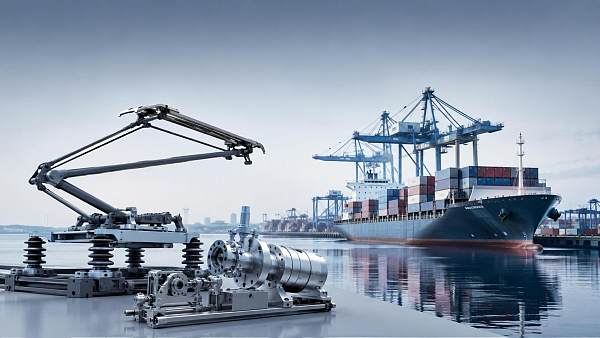
For finance leaders, the upgrade decision is rarely about purchase price alone. Railway signal control systems, pantographs, braking systems, smart container ships, and LNG carriers all involve long service lives, strict safety requirements, and complex supplier ecosystems.
A financially sound upgrade should connect engineering value with measurable business outcomes. The approval file should explain not only what the equipment does, but how it affects downtime, compliance exposure, energy consumption, tender competitiveness, and asset value over 10–30 years.
Understand the Full Cost Base Before Approving Heavy Industry Equipment

The first checkpoint is total cost of ownership. In heavy industry equipment, the invoice may represent only one portion of future spending, especially when systems operate under SIL4 railway safety requirements or cryogenic maritime conditions near minus 163°C.
Financial approvers should request a cost model that separates capital expenditure, commissioning, software licensing, spare parts, maintenance labor, operator training, and warranty exclusions. A 5-year and 15-year view usually reveals risks hidden in short procurement summaries.
Key Cost Categories That Are Often Underestimated
High-end land-and-sea assets demand cross-disciplinary evaluation. A signaling upgrade may require trackside interface changes, while a vessel intelligence platform may require satellite connectivity, cybersecurity controls, and ship-to-shore data integration.
- Integration costs, including interface engineering, testing windows, software adaptation, and legacy system migration.
- Certification and compliance costs, including safety cases, documentation, classification review, and periodic audits.
- Operational disruption costs, especially when railway possessions or vessel dry-dock schedules are limited to 7–21 day windows.
- Spare parts exposure, including minimum order quantities, lead times of 8–24 weeks, and component obsolescence.
The table below gives finance teams a practical way to compare visible costs against long-tail liabilities before signing an upgrade proposal.
The main conclusion is simple: a low bid can become expensive when integration, licensing, and spares are excluded. Finance teams should require the same cost visibility for heavy industry equipment as they expect for long-term infrastructure financing.
Why Asset Life Changes the Approval Logic
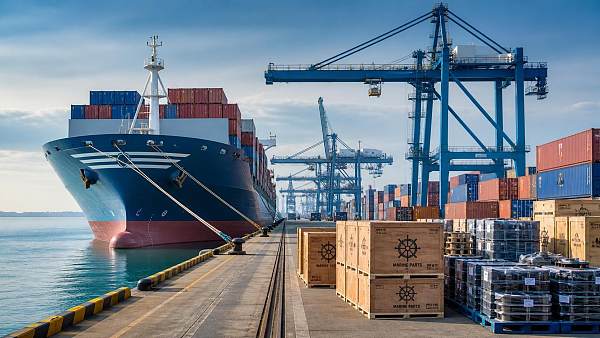
A rail traction component may operate through millions of current-collection cycles, while a container vessel or LNG carrier may remain in commercial service for 20–30 years. Short payback logic can miss strategic value.
Approvers should compare expected service life, overhaul intervals, and residual value. A component with a higher purchase price may reduce unscheduled downtime if maintenance intervals extend from 6 months to 12 months under normal operating conditions.
Compliance, Safety, and Certification Exposure
In heavy industry equipment, compliance risk is a financial risk. A railway interlocking system that fails safety validation or a vessel system that lacks classification acceptance can delay revenue and trigger costly rework.
Financial approvers do not need to become safety engineers. However, they should confirm that the technical team has mapped each approval requirement, documentation package, and test milestone before capital release.
Rail and Maritime Requirements to Review
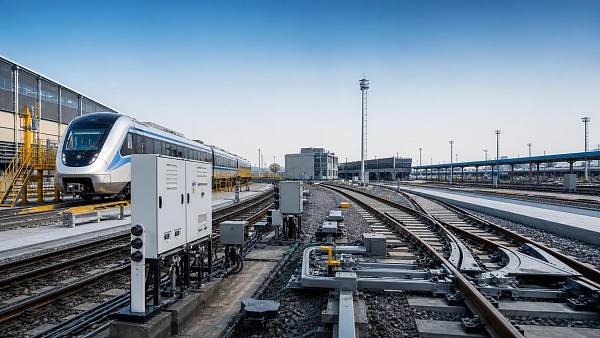
Railway signal control systems often involve SIL4 safety cases, fail-safe design evidence, and controlled change procedures. Pantographs and braking systems require mechanical, electrical, and environmental validation across speed, vibration, heat, and wear conditions.
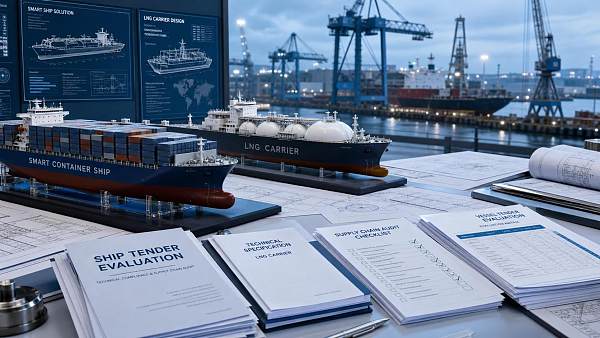
For advanced vessels, finance teams should check classification society requirements, cybersecurity documentation, propulsion integration, emissions-related upgrades, and cargo containment inspection plans. LNG carriers add cryogenic insulation and dual-fuel propulsion considerations.
A 6-Point Compliance Gate
- Confirm the applicable safety integrity level, classification rules, or national railway standards.
- Identify who owns certification costs: buyer, EPC contractor, system integrator, or original equipment supplier.
- Review evidence requirements before procurement, not after factory acceptance testing.
- Set milestone payments around document approval, site acceptance, and operational trial completion.
- Require a change-control budget for interface modifications and safety case updates.
- Check whether compliance documents remain valid after software patches or hardware substitution.
A practical compliance gate can prevent approval committees from treating certification as an administrative afterthought. For complex heavy industry equipment, a missing document can be as costly as a defective component.
Cost Impact of Failed Acceptance
Failed acceptance can create cascading financial effects. A 2-week delay in signaling commissioning may disrupt network capacity, while a vessel retrofit overrun can miss charter availability or port booking windows.
Approval memos should include liquidated damages, retesting fees, additional labor shifts, storage costs, and standby charges. These items are often small individually, but together they can materially weaken project ROI.
Integration Delays and Operational Disruption
Upgrading heavy industry equipment is rarely a plug-and-play exercise. A new braking control module must communicate with train management systems, while smart vessel software must exchange data with navigation, engine, cargo, and shore platforms.
Finance leaders should examine whether integration assumptions are based on verified interface data or optimistic vendor claims. Even a 5% mismatch in scope can lead to expensive field engineering.
Where Integration Risk Appears
The highest-risk interfaces are usually at system boundaries. In rail, this may include train control, platform screen doors, depot maintenance systems, and power supply monitoring. At sea, it may include voyage optimization, engine automation, cargo monitoring, and satellite communication.
- Legacy protocols that require gateways or custom middleware.
- Incomplete interface control documents or outdated drawings.
- Testing environments that do not reflect real operating loads.
- Limited access windows, such as night possessions of 4–6 hours or dry-dock constraints.
Before funding is released, project teams should present an integration map and identify the top 10 interface risks. This keeps financial approval linked to execution reality.
Implementation Milestones Finance Should Track
Milestone-based payment schedules work best when they reflect technical progress rather than delivery of boxes. For complex upgrades, acceptance should be tied to factory testing, site testing, operational trials, and reliability evidence.
A typical approval structure can include 5 stages: design freeze, factory acceptance, installation readiness, site acceptance, and 30–90 day reliability monitoring. Each stage should have measurable deliverables.
Energy Efficiency, Maintenance, and Lifecycle ROI
Energy and maintenance costs can dominate the financial profile of heavy industry equipment. Traction systems, braking energy recovery, vessel propulsion optimization, and LNG boil-off management all influence operating expenditure year after year.
Financial approvers should ask whether efficiency claims are supported by test conditions, duty cycles, and operating scenarios. A system that performs well in laboratory conditions may produce different savings in coastal routes, high-density rail corridors, or extreme climates.
Metrics That Connect Engineering to Finance
The best approval cases translate technical improvements into financial terms. Examples include reduced brake pad replacement frequency, lower traction power losses, fewer false signal failures, and optimized vessel routing over 3–12 month operating cycles.
The following table outlines practical indicators finance teams can use when comparing upgrade proposals across railway and ocean-going assets.
These metrics help move the discussion from technical preference to lifecycle economics. Finance teams should reject vague efficiency claims unless they are tied to measurable duty cycles and documented assumptions.
Maintenance Strategy as a Budget Control Tool
A preventive maintenance plan can reduce cost volatility, especially for safety-critical components. The plan should define inspection frequency, wear thresholds, diagnostic tools, approved consumables, and escalation response time.
For example, composite brake pad performance should be evaluated against thermal fade behavior and route braking profiles. Pantograph carbon strip wear should be reviewed alongside overhead line condition, speed, and vibration patterns above 300 km/h.
Vendor Dependency and Commercial Control
Vendor dependency can quietly reshape the economics of heavy industry equipment. If only one supplier controls diagnostics, firmware, spare parts, or integration tools, the buyer may lose negotiating power after installation.
This risk is particularly relevant in restricted railway tenders, specialized shipbuilding cycles, and LNG carrier systems where technical entry barriers are high. Financial approvers should examine dependency before contract signature, not after the first service event.
Contract Terms That Protect Long-Term Value
A strong contract should balance technical support with commercial flexibility. Buyers may still select a specialist supplier, but they need visibility into pricing, data rights, service levels, and exit options.
- Spare parts price review mechanisms, ideally with clear adjustment formulas every 12 months.
- Service response tiers, such as remote support within 24 hours and field support within agreed regional timeframes.
- Data ownership terms for diagnostics, route optimization, energy reports, and predictive maintenance records.
- Software update obligations, cybersecurity patch responsibilities, and end-of-support notification periods.
Red Flags for Finance Review
Approvers should be cautious when proposals lack interface documentation, provide only 1-year spare pricing, or make performance claims without operating boundaries. These gaps may indicate future variation orders.
Another red flag is a warranty that excludes the exact conditions under which the equipment will operate. For land-and-sea infrastructure, environmental assumptions must be reviewed against temperature, vibration, humidity, salt exposure, and load profile.
A Practical Approval Framework for Finance Teams
Financial approval should not slow innovation, but it should make risk visible. A structured framework allows decision-makers to support safer rail operations, smarter vessels, and more resilient supply chains without accepting uncontrolled cost exposure.
GTOT’s intelligence perspective is useful because it connects technical evolution with commercial timing. Rail infrastructure investment, shipbuilding cycles, decarbonization pressure, and digital control trends all affect when and how upgrades should be funded.
The 7 Questions to Ask Before Capital Commitment
- What is the total cost of ownership over 5, 10, and 15 years?
- Which certification, safety, or classification milestones could delay revenue?
- What integration assumptions depend on legacy systems or third-party data?
- How are energy savings, downtime reduction, and maintenance intervals measured?
- Which components, software tools, or diagnostics create supplier lock-in?
- What operational windows are required for installation, testing, and rollback?
- Which payment milestones protect the buyer if acceptance is delayed?
These questions create a practical bridge between engineering teams and approval committees. They also improve tender credibility when EPC contractors, distributors, and asset owners must justify investment in regulated environments.
How GTOT Supports Better Upgrade Decisions
GTOT focuses on the intelligence layer behind high-end transportation equipment. Its coverage spans railway signal control systems, pantographs, rail transit braking systems, smart container ships, and LNG carriers.
For financial approvers, this means access to context that goes beyond product brochures. Sector news, evolutionary trend analysis, and commercial insights help compare upgrade timing, supplier positioning, technical readiness, and procurement risk.
Whether the decision involves LTE-M in rail transit, composite brake pad behavior, membrane containment stress in LNG ships, or AI route optimization, the financial case improves when technical evidence is structured into risk, cost, and value.
Final Guidance for Safer Capital Approval
Heavy industry equipment upgrades can strengthen safety, efficiency, and international competitiveness, but only when financial risks are identified early. Purchase price is only the starting point.
Approvers should look closely at lifecycle maintenance, certification exposure, integration delays, energy assumptions, vendor dependency, and contract protections. Each factor can influence ROI long after commissioning is complete.
For organizations investing across rail and ocean infrastructure, GTOT provides the intelligence needed to evaluate complex equipment decisions with sharper commercial judgment. To review upgrade risks, compare market signals, or explore targeted intelligence for your next approval cycle, contact us to learn more solutions or request a tailored consultation.
Recommended News
 Sep 29, 2026What drives traction systems price differences between rail projects?Traction systems price differences explained: compare duty cycles, voltage compatibility, integration, localization, and lifecycle costs for smarter rail procurement.
 Sep 26, 2026What to assess before selecting an electric traction system manufacturerChoose an electric traction system manufacturer with confidence. Explore key criteria for performance, reliability, safety, integration, energy efficiency, and lifecycle support.
 Sep 25, 2026When do full digitalization systems justify the investment?Full digitalization systems: discover when rail and maritime operators can turn connected data into safer operations, higher availability, and measurable ROI.
 Sep 23, 2026What drives automatic train control systems cost on rail projects?Automatic train control systems cost depends on integration, migration, safety testing, communications, and lifecycle support. Explore the key budget drivers for rail projects.
 Sep 21, 2026How to assess an ocean going vessel builder’s delivery riskAssess an ocean going vessel builder’s delivery risk with proven checks for schedules, capacity, design maturity, critical equipment, quality, and project controls.
 Sep 20, 2026What drives rail safety technology costs over a project lifecycle?Rail safety technology cost goes beyond equipment—explore lifecycle drivers from integration and safety assurance to cybersecurity, commissioning, and obsolescence.
 Sep 16, 2026What to verify before choosing an advanced ocean-going vessels supplierAdvanced ocean-going vessels supplier checklist: verify design authority, build quality, digital systems, delivery reliability, and lifecycle support before you buy.
 Sep 15, 2026What rail safety technology best reduces level-crossing risks in Southeast Asia?Rail safety technology Southeast Asia: discover how fail-safe signalling, barriers, obstacle detection and remote monitoring reduce level-crossing risks.
 Sep 14, 2026How exporters can reduce customs delays in global trade logisticsGlobal trade logistics for exporters: reduce customs delays with accurate data, clearance-ready documents, early filing, and proactive exception management.
 Sep 13, 2026When do global transportation network systems reduce delivery delays?Global transportation network systems reduce delivery delays by improving rail-port-vessel coordination, real-time visibility, and proactive decisions across complex land-sea supply chains.
 Sep 09, 2026When should you choose a rail and maritime manufacturer with dual-sector capability?Rail and maritime manufacturer guide: learn when dual-sector capability reduces integration risk, improves lifecycle support, and strengthens rail-to-port operations.
 Sep 08, 2026What to verify before selecting a railway signalling equipment supplierRailway signalling equipment supplier checklist: verify safety evidence, integration, cybersecurity, delivery capability, and lifecycle support before award.
 Sep 07, 2026How to size a traction power transformer for railway load demandTraction power transformer sizing guide: model railway load demand, peak duty, voltage regulation, harmonics, and contingency capacity for reliable service.
 Sep 07, 2026How do customization options for industrial connectors affect lead times?Customization options for industrial connectors can impact lead times, cost, and compliance. Learn how to specify smarter for rail and marine projects.
 Sep 05, 2026What information should an industrial sourcing guide include?Industrial sourcing information procurement guide: evaluate suppliers, compliance, lifecycle costs, interfaces, and lead times for smarter rail and maritime purchasing decisions.
 Sep 01, 2026How to find reliable maritime tender information before biddingMaritime tender information: learn how to verify sources, define bid-ready scopes, check qualifications, and reduce risk before submitting competitive marine bids.
 Aug 30, 2026How to select railway automation equipment for depots with phased upgradesRailway automation equipment for depots: learn how to plan phased upgrades that improve safety, throughput, integration, and lifecycle control.
 Aug 27, 2026How industrial sourcing intelligence pricing data supports budget approvalIndustrial sourcing intelligence pricing data helps teams benchmark scope, assess supplier risk, and build defensible budget approvals for complex rail and maritime assets.
 Aug 26, 2026When does a marine fuel efficiency solution make financial sense in the Middle East?Marine fuel efficiency solution Middle East: learn when retrofit savings, compliance value, and vessel data align to deliver credible ROI and smarter shipping investment decisions.
 Aug 24, 2026When does maritime automation for tankers deliver a real payback?Maritime automation for tankers delivers real payback when it cuts fuel use, reduces cargo risk, and improves uptime. See how owners can time investment for stronger ROI.
 Aug 23, 2026When do maritime logistics systems in the Middle East justify the costMaritime logistics systems Middle East: discover when rising delays, manual coordination, and poor visibility make system investment the smarter move for regional operators.
 Aug 22, 2026What drives vessel navigation system price for commercial fleetsVessel navigation system price depends on integration, compliance, automation, and support—not just hardware. Learn what drives fleet costs and compare quotes with confidence.
 Aug 21, 2026How to assess shipbuilding maritime tenders before biddingShipbuilding maritime tenders require more than price checks. Learn how to assess technical scope, compliance, supply chain, and commercial risk before bidding with confidence.
 Aug 20, 2026When does working with an ocean-going vessels distributor reduce supply risk?Ocean-going vessels distributor: learn when this partner cuts supply risk through stronger compliance, faster response, and better sourcing resilience in complex maritime procurement.