Search News
Industry Portal
Popular Tags
Railway Safety Technology: What Reduces Incident Rates Most?
Author
Time
Click Count
In modern rail operations, railway safety technology is the decisive factor behind lower incident rates, stronger compliance, and more reliable service continuity. For quality control teams and safety managers, understanding which systems deliver the greatest risk reduction—from signal control and braking intelligence to real-time monitoring and predictive maintenance—is essential for building safer, higher-performance networks.
Which railway safety technology reduces incident rates most?
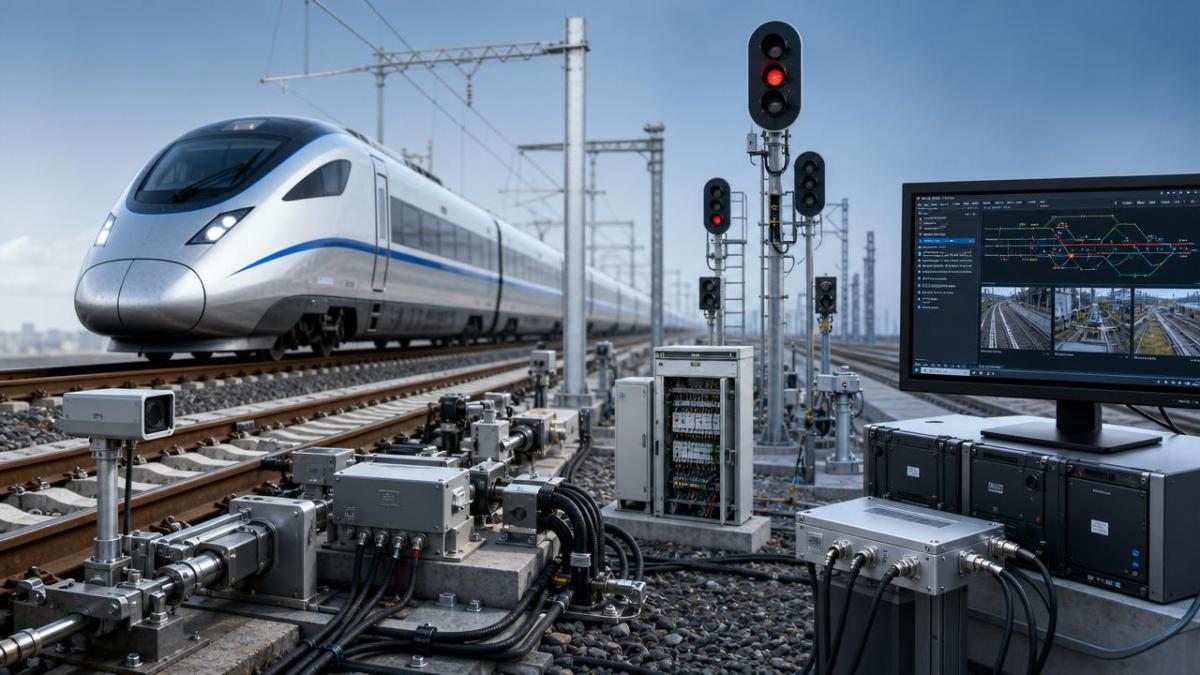
The short answer is that no single device works alone. The biggest reduction usually comes from a layered safety architecture that combines signalling, braking, onboard diagnostics, trackside detection, disciplined maintenance, and operator decision support.
For quality control personnel, the practical question is not which component sounds most advanced. It is which railway safety technology closes the highest-risk failure paths in a specific network, depot, corridor, or rolling stock fleet.
In high-density passenger lines, signal control and interlocking often deliver the largest safety gain. In freight-heavy routes with long braking distances, brake performance monitoring and wheel-rail condition control may matter more. In mixed fleets, data visibility and predictive maintenance often unlock the most measurable reduction in incidents.
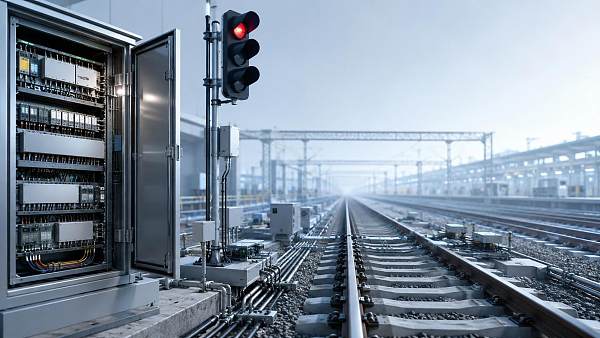
- Signalling and train protection reduce collision and routing risks by enforcing movement authority and speed limits.
- Brake intelligence reduces overspeed, stopping distance deviation, thermal fade, and degraded emergency response.
- Condition monitoring reduces hidden failures before they become operational safety events.
- Maintenance analytics reduce repeat defects, especially in high-cycle components and safety-critical assemblies.
This is where GTOT adds value. Its focus on railway signal control systems, high-speed traction interfaces, and rail transit braking systems helps safety managers compare safety impact not as isolated products, but as connected assets within a broader transport reliability chain.
Where incident rates usually fall fastest
The table below helps safety teams prioritize railway safety technology by incident type, implementation difficulty, and expected operational influence.
The table shows a clear pattern. Signalling controls catastrophic conflict risk, braking controls kinetic risk, and monitoring controls hidden degradation risk. The best railway safety technology program addresses all three.
Why signalling and interlocking often deliver the highest safety return
If safety managers must rank technologies by direct prevention of severe incidents, modern signalling usually sits first. Interlocking, automatic train protection, and movement authority enforcement prevent unsafe routes from being set and stop trains from exceeding permitted conditions.
This matters even more in dense operations, where headway compression increases the cost of human error. A network can tolerate component wear for a time. It cannot tolerate route conflict or uncontrolled train separation loss.
What quality control teams should verify
- Safety integrity alignment with project requirements, especially for SIL-oriented applications in critical control logic.
- Interface consistency across interlocking, onboard units, communication links, and centralized supervision systems.
- Fail-safe behavior under power loss, communication interruption, sensor disagreement, and degraded modes.
- Validation records covering route locking, flank protection, point detection, and emergency fallback procedures.
GTOT’s strength in railway signal control intelligence is useful here because many procurement failures happen before commissioning. Teams compare features, but not integration logic. In practice, incident reduction depends on system behavior under abnormal conditions, not on brochure claims.
How much does braking intelligence influence railway safety technology outcomes?
Braking systems are often the second major lever for incident reduction, and in some freight or high-speed contexts they can be the first. Brake performance is where speed, mass, adhesion, grade, and thermal stress converge into a safety outcome.
A train may have compliant signalling, yet still face elevated risk if brake response is inconsistent, fade margins are weak, or monitoring does not detect performance drift across vehicles. This is especially true for long consists, emergency stopping events, and operations in heat, rain, or leaf contamination seasons.
Brake-related evaluation points that matter
For safety managers comparing railway safety technology investments, the following table organizes brake system evaluation into field-relevant decision points.
For GTOT readers, this is where technical intelligence becomes commercially useful. Understanding composite brake pad thermal fade, control response logic, and stopping precision helps teams choose systems that fit actual duty cycles rather than nominal catalog ranges.
What role do real-time monitoring and predictive maintenance play?
Many operators already have core protection systems. Their next incident-rate gains come from better detection of developing defects. Real-time monitoring does not replace interlocking or braking. It prevents degradation from bypassing them.
Common examples include vibration analytics, bearing temperature alarms, door status monitoring, wheel condition alerts, pantograph-catenary interaction observation, and communication-health supervision. These tools matter because many serious incidents begin as small maintenance exceptions.
Where predictive maintenance delivers practical value
- It reduces repeat defects by identifying patterns that manual inspection misses across fleets and depots.
- It supports risk-based maintenance intervals instead of calendar-only servicing.
- It improves spare parts planning for safety-critical components with long lead times.
- It gives quality teams evidence for supplier review, acceptance criteria, and warranty discussions.
GTOT’s wider land-sea intelligence perspective is relevant here. Whether in rail signalling or LNG containment, the same principle applies: incident reduction improves when data from critical assets is stitched into a decision system instead of isolated in separate maintenance records.
How should safety managers choose railway safety technology under budget pressure?
Budget pressure does not remove safety obligations. It changes the sequence of implementation. A useful rule is to fund technologies first by hazard severity, then by exposure frequency, then by maintainability burden.
That means high-consequence collision prevention usually outranks convenience upgrades. After that, brake reliability, condition visibility, and diagnostic integration often offer the strongest next-stage reduction in incident rates.
A practical selection checklist
- Map the top five safety events in the last three years, including near misses and maintenance-driven service threats.
- Check whether the proposed railway safety technology addresses root causes or only improves reporting visibility.
- Review compatibility with existing signalling, braking, rolling stock, and depot workflow.
- Confirm training demand, spare parts readiness, and fault response ownership before purchase approval.
- Ask suppliers for abnormal-condition evidence, not just nominal performance data.
For distributors, EPC contractors, and transport operators, GTOT can help narrow this selection process by connecting technical performance questions with commercial timing, supply chain constraints, and tender credibility requirements.
Which standards and compliance points should not be overlooked?
Compliance does not guarantee low incident rates, but weak compliance usually signals hidden risk. Safety managers should examine functional safety, software assurance, braking validation, electromagnetic compatibility, environmental endurance, and traceable maintenance records.
In railway safety technology projects, the most common compliance mistake is treating certification as a procurement checkbox. Real control comes from verifying how a certified subsystem behaves inside the actual train, route, and operations architecture.
Key compliance review areas
- Functional safety alignment for safety-critical signalling and control components.
- Validation of brake system performance across route gradients, axle loads, and weather conditions.
- Configuration management and software version traceability for onboard and wayside systems.
- Inspection and maintenance documentation that supports auditability and post-incident review.
Quality teams that ask these questions early reduce rework, delayed acceptance, and safety-case revision later. That is especially important in international projects where tender qualification can depend on the ability to demonstrate technical discipline as clearly as product capability.
Common mistakes when evaluating railway safety technology
Is the most advanced system always the safest choice?
No. A feature-rich platform can still underperform if integration is weak, training is incomplete, or maintenance capacity is too limited. Safety improvement comes from fit, discipline, and response speed, not from complexity alone.
Can monitoring alone reduce serious incidents?
Not by itself. Monitoring is valuable when alerts trigger action. If alarm thresholds are poorly tuned or maintenance teams cannot respond quickly, dashboards create awareness without reducing risk exposure.
Should procurement focus mainly on unit price?
No. Low upfront price may increase lifecycle risk through higher false alarms, shorter component life, slower fault diagnosis, or difficult spare support. Safety managers should compare total operational burden, not only purchase cost.
Do all fleets need the same railway safety technology priorities?
They do not. Metro, high-speed passenger, heavy freight, and mixed-traffic networks face different risk concentrations. Selection should reflect line density, stopping profile, weather exposure, axle load, and digital maturity.
What trends will shape the next generation of railway safety technology?
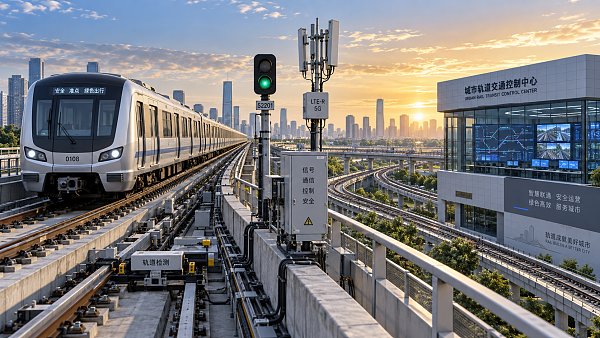
The direction is clear: more integrated data, stronger automation safeguards, and deeper connection between asset health and operational control. Communication layers such as LTE-M and similar railway digital links are expanding what can be observed and acted on in near real time.
Another trend is the convergence of safety and efficiency. Operators no longer want isolated protection functions only. They want railway safety technology that also improves punctuality, maintenance planning, asset utilization, and tender competitiveness.
This is consistent with GTOT’s strategic intelligence model. By linking signalling logic, traction interfaces, braking behavior, and broader transport infrastructure trends, decision-makers can judge which upgrades create both safer operations and stronger long-term asset value.
Why choose us for technical intelligence and next-step evaluation?
GTOT supports safety managers, quality teams, distributors, and EPC stakeholders who need more than product headlines. We help interpret railway safety technology through the lenses that matter in real projects: control logic, brake behavior, digital monitoring, compliance fit, and supply chain practicality.
You can consult us for parameter confirmation on signal control and braking-related components, selection guidance for different rail operating scenarios, delivery cycle discussion for safety-critical equipment, and clarification of certification or tender document expectations.
If your team is comparing upgrade paths, preparing a bid, validating a supplier, or planning a safer maintenance strategy, contact GTOT to discuss application-specific recommendations, component intelligence, sample support possibilities, and quotation communication based on your project risk profile.
Recommended News
 Sep 29, 2026What drives traction systems price differences between rail projects?Traction systems price differences explained: compare duty cycles, voltage compatibility, integration, localization, and lifecycle costs for smarter rail procurement.
 Sep 26, 2026What to assess before selecting an electric traction system manufacturerChoose an electric traction system manufacturer with confidence. Explore key criteria for performance, reliability, safety, integration, energy efficiency, and lifecycle support.
 Sep 25, 2026When do full digitalization systems justify the investment?Full digitalization systems: discover when rail and maritime operators can turn connected data into safer operations, higher availability, and measurable ROI.
 Sep 23, 2026What drives automatic train control systems cost on rail projects?Automatic train control systems cost depends on integration, migration, safety testing, communications, and lifecycle support. Explore the key budget drivers for rail projects.
 Sep 21, 2026How to assess an ocean going vessel builder’s delivery riskAssess an ocean going vessel builder’s delivery risk with proven checks for schedules, capacity, design maturity, critical equipment, quality, and project controls.
 Sep 20, 2026What drives rail safety technology costs over a project lifecycle?Rail safety technology cost goes beyond equipment—explore lifecycle drivers from integration and safety assurance to cybersecurity, commissioning, and obsolescence.
 Sep 16, 2026What to verify before choosing an advanced ocean-going vessels supplierAdvanced ocean-going vessels supplier checklist: verify design authority, build quality, digital systems, delivery reliability, and lifecycle support before you buy.
 Sep 15, 2026What rail safety technology best reduces level-crossing risks in Southeast Asia?Rail safety technology Southeast Asia: discover how fail-safe signalling, barriers, obstacle detection and remote monitoring reduce level-crossing risks.
 Sep 14, 2026How exporters can reduce customs delays in global trade logisticsGlobal trade logistics for exporters: reduce customs delays with accurate data, clearance-ready documents, early filing, and proactive exception management.
 Sep 13, 2026When do global transportation network systems reduce delivery delays?Global transportation network systems reduce delivery delays by improving rail-port-vessel coordination, real-time visibility, and proactive decisions across complex land-sea supply chains.
 Sep 09, 2026When should you choose a rail and maritime manufacturer with dual-sector capability?Rail and maritime manufacturer guide: learn when dual-sector capability reduces integration risk, improves lifecycle support, and strengthens rail-to-port operations.
 Sep 08, 2026What to verify before selecting a railway signalling equipment supplierRailway signalling equipment supplier checklist: verify safety evidence, integration, cybersecurity, delivery capability, and lifecycle support before award.
 Sep 07, 2026How to size a traction power transformer for railway load demandTraction power transformer sizing guide: model railway load demand, peak duty, voltage regulation, harmonics, and contingency capacity for reliable service.
 Sep 07, 2026How do customization options for industrial connectors affect lead times?Customization options for industrial connectors can impact lead times, cost, and compliance. Learn how to specify smarter for rail and marine projects.
 Sep 05, 2026What information should an industrial sourcing guide include?Industrial sourcing information procurement guide: evaluate suppliers, compliance, lifecycle costs, interfaces, and lead times for smarter rail and maritime purchasing decisions.
 Sep 01, 2026How to find reliable maritime tender information before biddingMaritime tender information: learn how to verify sources, define bid-ready scopes, check qualifications, and reduce risk before submitting competitive marine bids.
 Aug 30, 2026How to select railway automation equipment for depots with phased upgradesRailway automation equipment for depots: learn how to plan phased upgrades that improve safety, throughput, integration, and lifecycle control.
 Aug 27, 2026How industrial sourcing intelligence pricing data supports budget approvalIndustrial sourcing intelligence pricing data helps teams benchmark scope, assess supplier risk, and build defensible budget approvals for complex rail and maritime assets.
 Aug 26, 2026When does a marine fuel efficiency solution make financial sense in the Middle East?Marine fuel efficiency solution Middle East: learn when retrofit savings, compliance value, and vessel data align to deliver credible ROI and smarter shipping investment decisions.
 Aug 24, 2026When does maritime automation for tankers deliver a real payback?Maritime automation for tankers delivers real payback when it cuts fuel use, reduces cargo risk, and improves uptime. See how owners can time investment for stronger ROI.
 Aug 23, 2026When do maritime logistics systems in the Middle East justify the costMaritime logistics systems Middle East: discover when rising delays, manual coordination, and poor visibility make system investment the smarter move for regional operators.
 Aug 22, 2026What drives vessel navigation system price for commercial fleetsVessel navigation system price depends on integration, compliance, automation, and support—not just hardware. Learn what drives fleet costs and compare quotes with confidence.
 Aug 21, 2026How to assess shipbuilding maritime tenders before biddingShipbuilding maritime tenders require more than price checks. Learn how to assess technical scope, compliance, supply chain, and commercial risk before bidding with confidence.
 Aug 20, 2026When does working with an ocean-going vessels distributor reduce supply risk?Ocean-going vessels distributor: learn when this partner cuts supply risk through stronger compliance, faster response, and better sourcing resilience in complex maritime procurement.