



Search News
Industry Portal
Popular Tags
Railway Automation Risks in Legacy Networks
Author
Time
Click Count
As operators accelerate digital upgrades, railway automation is becoming essential to capacity, safety, and asset efficiency—but legacy networks can turn modernization into a high-stakes challenge.
Aging signalling architectures, fragmented control interfaces, cybersecurity gaps, and SIL constraints may expose rail enterprises to disruption, compliance pressure, and investment risk.
For infrastructure planners, railway automation is no longer a technical upgrade. It is a strategic condition for resilient, high-density, intelligent rail operations.
Railway Automation Risks in Legacy Networks: What Is Really at Stake?
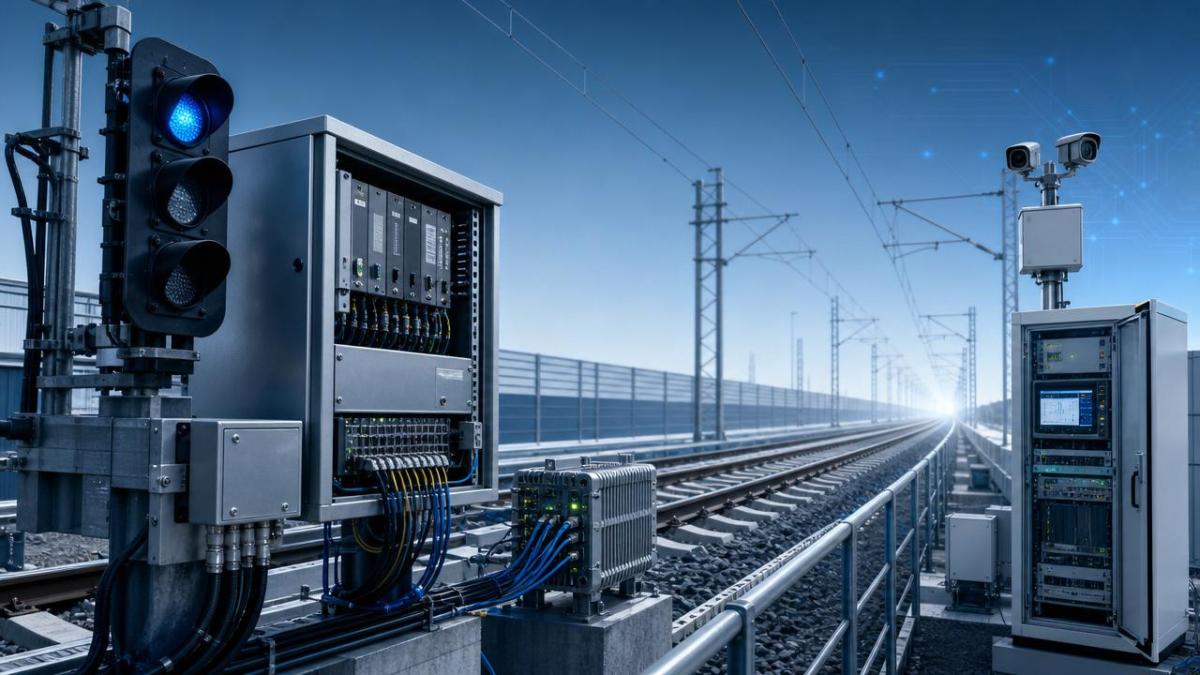
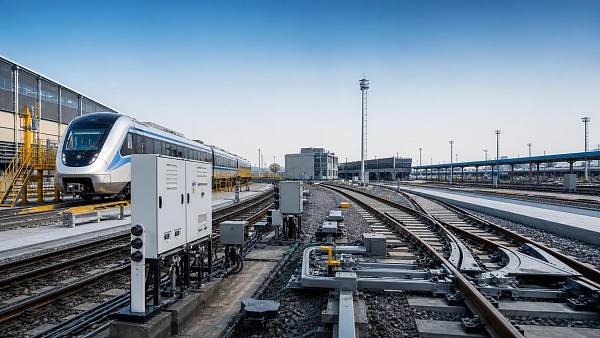
Legacy rail networks were often built around relay interlocking, isolated signalling islands, and local operating rules.
Railway automation introduces centralized supervision, digital movement authority, predictive diagnostics, and automated route control into that inherited environment.
The risk appears when old assets cannot communicate reliably with new control layers.
A track circuit may still work safely, yet provide limited data quality for modern traffic management systems.
An interlocking may meet historical requirements, yet struggle with real-time integration and remote diagnostics.
For GTOT’s land-sea intelligence view, this resembles smart shipping retrofits.
Adding AI routing to a vessel is valuable, but only when sensors, propulsion data, and shore links remain trustworthy.
Likewise, railway automation depends on dependable field data, verified command paths, and disciplined safety engineering.
Why legacy conditions matter
- Obsolete interfaces increase integration uncertainty.
- Undocumented modifications weaken system assurance.
- Mixed vendor generations complicate testing.
- Cyber exposure grows as assets become connected.
- Operational migration may affect service continuity.
How Do Aging Signalling Systems Limit Railway Automation?
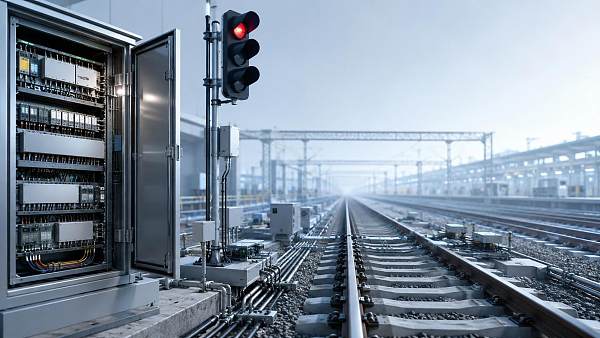
Railway signalling is the central nervous system of any network.
When that system is fragmented, railway automation cannot safely deliver its full capacity promise.
Older signalling assets may lack standardized data models, precise timestamps, or resilient communication protocols.
This limits automated dispatching, condition-based maintenance, and high-density train regulation.
The challenge is not only equipment age.
It is the gap between deterministic safety logic and flexible digital supervision.
A relay-based interlocking can be extremely reliable, but difficult to interrogate digitally.
A software-based interlocking can support railway automation, but requires strict configuration control and validation.
Common technical constraints
- Limited diagnostics from trackside assets.
- Inconsistent interface documentation.
- Low bandwidth for control communications.
- Legacy fail-safe logic that resists modification.
- Difficulty proving SIL4 compliance after change.
The practical answer is not immediate replacement in every case.
A phased railway automation roadmap can separate safety-critical functions from performance enhancement layers.
This protects service availability while creating a path toward modern train control.
Where Do Cybersecurity Risks Enter Automated Rail Networks?
Cybersecurity becomes more complex when isolated control systems connect to IP networks, remote maintenance tools, and cloud analytics.
Railway automation expands the digital attack surface unless security is designed from the first architecture decision.
Legacy networks often contain assets that were never designed for authentication, encryption, or continuous monitoring.
Remote access can improve fault response, yet create unauthorized entry points.
Vendor tools can speed maintenance, yet introduce unmanaged credentials and inconsistent patching.
This does not mean railway automation should be delayed indefinitely.
It means digital rail modernization requires segmentation, monitoring, governance, and tested incident response.
Cyber questions worth asking early
- Which assets are safety-critical and externally reachable?
- Which vendor accounts have privileged access?
- Are patches tested against operational safety requirements?
- Can abnormal commands be detected quickly?
- Is recovery rehearsed, not merely documented?
In automated transport, cyber resilience is operational resilience.
A small integration weakness can affect train regulation, station throughput, and public confidence.
How Should SIL Compliance Shape Railway Automation Decisions?
Safety Integrity Level compliance is central to rail control procurement and engineering assurance.
For railway automation, SIL4 requirements often determine architecture, supplier qualification, verification scope, and lifecycle cost.
A frequent mistake is treating compliance as paperwork at project completion.
In reality, safety evidence must be built throughout design, integration, commissioning, and maintenance.
Legacy networks make this harder because historical configurations may lack traceable engineering records.
When undocumented changes exist, railway automation teams must rebuild confidence through surveys, reverse engineering, and controlled testing.
Key assurance principles
- Define the safety boundary before selecting technology.
- Preserve independence between protection and optimization functions.
- Document every interface affecting movement authority.
- Validate degraded modes, not only normal operation.
- Align suppliers around a shared safety case.
SIL discipline can slow early decisions, but it prevents expensive redesign later.
For high-density corridors, compliant railway automation is a capacity enabler, not a bureaucratic obstacle.
When Is Retrofitting Better Than Full Replacement?
Full replacement may look cleaner, but it is not always the best route.
Retrofitting can reduce service disruption, extend asset value, and support staged railway automation.
However, retrofitting should never mean connecting everything and hoping integration works.
The decision depends on remaining asset life, interface openness, safety evidence, cyber maturity, and operational urgency.
A mature retrofit strategy may add protocol gateways, diagnostic overlays, upgraded communications, and centralized supervision.
A replacement strategy may be better when assets are unsupported, undocumented, or incompatible with future railway automation standards.
The strongest approach is often hybrid.
Critical bottlenecks receive deeper renewal, while stable zones adopt targeted railway automation enhancements.
What Implementation Risks Are Most Often Underestimated?
The most underestimated risks are rarely the most visible technologies.
They sit in migration planning, data quality, stakeholder coordination, and operational rule changes.
Railway automation changes how decisions are made, supervised, recorded, and recovered.
If operating rules remain manual while systems become automated, confusion can appear during degraded modes.
If maintenance teams cannot interpret new diagnostic alarms, predictive maintenance becomes alarm fatigue.
If procurement focuses only on purchase price, lifecycle support and verification costs may escalate.
Implementation checklist for legacy networks
- Build an accurate asset and interface register.
- Classify functions by safety, performance, and cyber criticality.
- Test migration in representative simulation environments.
- Plan fallback operations before commissioning.
- Require supplier evidence for long-term maintainability.
- Measure benefits through capacity, punctuality, and failure recovery.
Good railway automation programs treat implementation as a lifecycle transformation.
The objective is not simply digital equipment, but safe, explainable, and resilient operations.
FAQ Summary: Practical Questions Before Committing Investment
These questions help translate railway automation from an abstract modernization theme into a controlled investment pathway.
They also support clearer supplier comparison and more defensible technical procurement.
Conclusion: Build Railway Automation on Evidence, Not Assumption
Legacy networks can benefit greatly from railway automation, especially where capacity, reliability, and safety margins face rising pressure.
Yet modernization succeeds only when hidden risks are exposed before deployment.
Aging signalling, cyber gaps, SIL obligations, and migration complexity must be treated as strategic planning variables.
The recommended next step is a structured readiness review covering assets, interfaces, safety cases, data flows, and operational fallback.
With disciplined analysis, railway automation can transform legacy railways into safer, denser, and more intelligent transport arteries.
GTOT will continue tracking the technologies, standards, and commercial signals shaping this transition across land and sea infrastructure.
Recommended News
 Sep 29, 2026What drives traction systems price differences between rail projects?Traction systems price differences explained: compare duty cycles, voltage compatibility, integration, localization, and lifecycle costs for smarter rail procurement.
 Sep 26, 2026What to assess before selecting an electric traction system manufacturerChoose an electric traction system manufacturer with confidence. Explore key criteria for performance, reliability, safety, integration, energy efficiency, and lifecycle support.
 Sep 25, 2026When do full digitalization systems justify the investment?Full digitalization systems: discover when rail and maritime operators can turn connected data into safer operations, higher availability, and measurable ROI.
 Sep 23, 2026What drives automatic train control systems cost on rail projects?Automatic train control systems cost depends on integration, migration, safety testing, communications, and lifecycle support. Explore the key budget drivers for rail projects.
 Sep 21, 2026How to assess an ocean going vessel builder’s delivery riskAssess an ocean going vessel builder’s delivery risk with proven checks for schedules, capacity, design maturity, critical equipment, quality, and project controls.
 Sep 20, 2026What drives rail safety technology costs over a project lifecycle?Rail safety technology cost goes beyond equipment—explore lifecycle drivers from integration and safety assurance to cybersecurity, commissioning, and obsolescence.
 Sep 16, 2026What to verify before choosing an advanced ocean-going vessels supplierAdvanced ocean-going vessels supplier checklist: verify design authority, build quality, digital systems, delivery reliability, and lifecycle support before you buy.
 Sep 15, 2026What rail safety technology best reduces level-crossing risks in Southeast Asia?Rail safety technology Southeast Asia: discover how fail-safe signalling, barriers, obstacle detection and remote monitoring reduce level-crossing risks.
 Sep 14, 2026How exporters can reduce customs delays in global trade logisticsGlobal trade logistics for exporters: reduce customs delays with accurate data, clearance-ready documents, early filing, and proactive exception management.
 Sep 13, 2026When do global transportation network systems reduce delivery delays?Global transportation network systems reduce delivery delays by improving rail-port-vessel coordination, real-time visibility, and proactive decisions across complex land-sea supply chains.
 Sep 09, 2026When should you choose a rail and maritime manufacturer with dual-sector capability?Rail and maritime manufacturer guide: learn when dual-sector capability reduces integration risk, improves lifecycle support, and strengthens rail-to-port operations.
 Sep 08, 2026What to verify before selecting a railway signalling equipment supplierRailway signalling equipment supplier checklist: verify safety evidence, integration, cybersecurity, delivery capability, and lifecycle support before award.
 Sep 07, 2026How to size a traction power transformer for railway load demandTraction power transformer sizing guide: model railway load demand, peak duty, voltage regulation, harmonics, and contingency capacity for reliable service.
 Sep 07, 2026How do customization options for industrial connectors affect lead times?Customization options for industrial connectors can impact lead times, cost, and compliance. Learn how to specify smarter for rail and marine projects.
 Sep 05, 2026What information should an industrial sourcing guide include?Industrial sourcing information procurement guide: evaluate suppliers, compliance, lifecycle costs, interfaces, and lead times for smarter rail and maritime purchasing decisions.
 Sep 01, 2026How to find reliable maritime tender information before biddingMaritime tender information: learn how to verify sources, define bid-ready scopes, check qualifications, and reduce risk before submitting competitive marine bids.
 Aug 30, 2026How to select railway automation equipment for depots with phased upgradesRailway automation equipment for depots: learn how to plan phased upgrades that improve safety, throughput, integration, and lifecycle control.
 Aug 27, 2026How industrial sourcing intelligence pricing data supports budget approvalIndustrial sourcing intelligence pricing data helps teams benchmark scope, assess supplier risk, and build defensible budget approvals for complex rail and maritime assets.
 Aug 26, 2026When does a marine fuel efficiency solution make financial sense in the Middle East?Marine fuel efficiency solution Middle East: learn when retrofit savings, compliance value, and vessel data align to deliver credible ROI and smarter shipping investment decisions.
 Aug 24, 2026When does maritime automation for tankers deliver a real payback?Maritime automation for tankers delivers real payback when it cuts fuel use, reduces cargo risk, and improves uptime. See how owners can time investment for stronger ROI.
 Aug 23, 2026When do maritime logistics systems in the Middle East justify the costMaritime logistics systems Middle East: discover when rising delays, manual coordination, and poor visibility make system investment the smarter move for regional operators.
 Aug 22, 2026What drives vessel navigation system price for commercial fleetsVessel navigation system price depends on integration, compliance, automation, and support—not just hardware. Learn what drives fleet costs and compare quotes with confidence.
 Aug 21, 2026How to assess shipbuilding maritime tenders before biddingShipbuilding maritime tenders require more than price checks. Learn how to assess technical scope, compliance, supply chain, and commercial risk before bidding with confidence.
 Aug 20, 2026When does working with an ocean-going vessels distributor reduce supply risk?Ocean-going vessels distributor: learn when this partner cuts supply risk through stronger compliance, faster response, and better sourcing resilience in complex maritime procurement.