



Search News
Industry Portal
Popular Tags
High-Speed Traction Systems: Efficiency Checks
Author
Time
Click Count
For technical evaluators, high-speed traction systems are no longer assessed only by peak power or acceleration curves; their real value lies in measurable efficiency, stability, and lifecycle reliability under demanding operating conditions. This article examines the key efficiency checks that reveal how traction converters, motors, control algorithms, thermal management, and energy recovery strategies perform in modern rail networks. By connecting field data with engineering benchmarks, GTOT provides a practical lens for judging whether a traction platform can support safer, faster, and more energy-conscious intercity mobility.
What Should Efficiency Checks Prove in High-Speed Traction Systems?
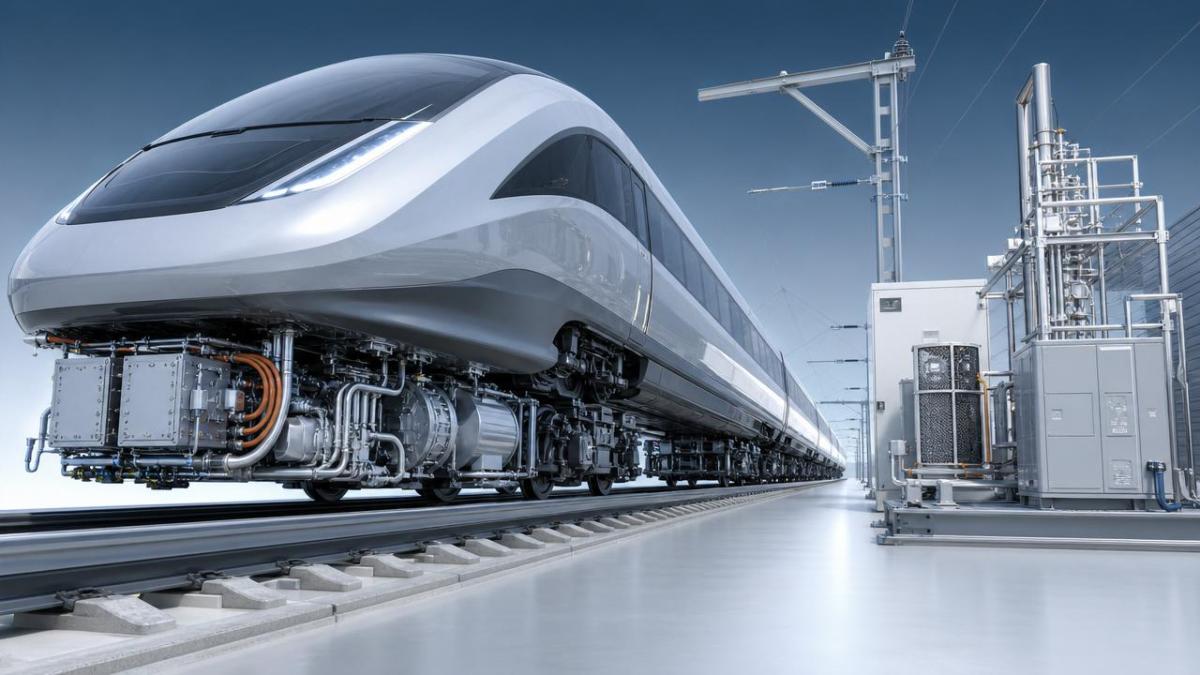
Efficiency checks should prove more than laboratory conversion performance. They should show how high-speed traction systems behave across gradients, tunnels, curves, voltage fluctuations, peak-hour load profiles, and regenerative braking limits.
For technical evaluators, the key question is practical: can the traction architecture reduce energy consumption without compromising timetable stability, safety margins, passenger comfort, or maintainability?
- Traction converters must maintain stable switching behavior under variable catenary voltage and frequent acceleration cycles.
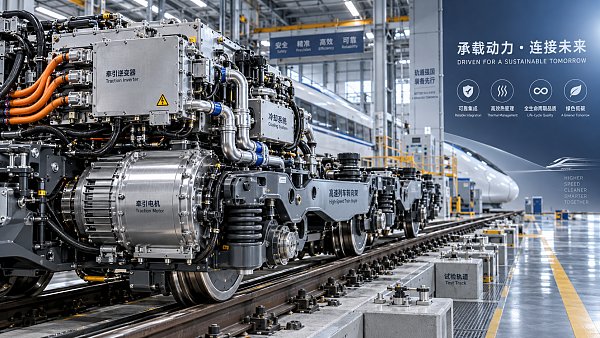
- Traction motors should deliver high torque density while keeping temperature rise within predictable operating limits.
- Control software must coordinate adhesion, slip prevention, braking blending, and energy recovery without unstable interventions.
- Thermal management should protect semiconductors, bearings, insulation systems, and auxiliary cooling equipment during sustained high-speed service.
GTOT views high-speed traction systems as part of a wider land-sea mobility intelligence chain. Rail traction, signalling, pantographs, braking systems, smart vessels, and LNG carriers all share one evaluation principle: efficiency must be verified under real operating constraints.
Core Parameters Technical Evaluators Should Check First
A credible evaluation starts with measurable parameters. The table below outlines practical checkpoints for high-speed traction systems, especially when comparing suppliers, retrofit options, or tender submissions.
The most useful data is not a single number. It is a traceable performance map that connects converter loss, motor heat, braking recovery, and operational scenarios.
Why Partial-Load Data Often Changes the Decision
High-speed trains do not operate continuously at maximum traction output. They accelerate, cruise, coast, brake, dwell, and restart. Therefore, high-speed traction systems must be judged across the full duty cycle.
A platform with excellent rated-load efficiency may underperform on routes with dense stations. Conversely, a system optimized for partial-load performance can support better annual energy results.
How to Compare Traction Architectures Without Oversimplifying
Technical evaluators often face competing claims around asynchronous motors, permanent magnet motors, silicon IGBT converters, and silicon carbide power modules. Each option needs route-based analysis.
The following comparison is not a universal ranking. It helps identify which architecture may fit a specific operating target for high-speed traction systems.
A strong comparison should include maintenance capability, spare parts continuity, software update governance, and interoperability with pantographs, braking control, and signalling constraints.
Decision Logic for Mixed Fleet Operators
Mixed fleets demand caution. A technically superior traction package may create training gaps, diagnostic fragmentation, or inventory complexity if it is not aligned with depot operations.
GTOT recommends evaluating high-speed traction systems through a fleet-level model, not only a vehicle-level model. This prevents hidden costs from moving into operations after delivery.
Field Efficiency Checks: From Test Bench to Operating Line
Bench tests confirm component capability, but field checks confirm operational truth. Technical evaluators should request evidence that links simulation, type testing, commissioning data, and service monitoring.
- Define representative route profiles, including gradients, tunnels, speed restrictions, dwell times, ambient temperature, and expected passenger load.
- Measure energy consumption at train level, converter level, and auxiliary subsystem level to avoid misleading aggregated data.
- Compare regenerative braking potential with actual returned energy, because grid absorption limits can reduce apparent savings.
- Review thermal records after repeated peak-demand cycles, not only after short-duration acceleration tests.
- Check whether software interventions improve stability without generating excessive torque oscillation, wheel wear, or passenger discomfort.
Data Quality Matters as Much as Data Quantity
Energy meters, event logs, converter diagnostics, temperature sensors, and braking data must be time-synchronized. Without synchronization, efficiency analysis becomes vulnerable to false correlations.
High-speed traction systems should also be assessed with cybersecurity-aware data handling. Remote diagnostics are valuable, but access control and update traceability cannot be ignored.
Procurement Guide: What Should Be Written Into the Technical Specification?
Procurement documents often focus on output power, axle configuration, and maximum speed. Those items are necessary, but they are not enough for reliable efficiency evaluation.
When purchasing or qualifying high-speed traction systems, evaluators should translate performance expectations into verifiable clauses. Ambiguous terms create disputes during commissioning.
- Require an efficiency map covering representative speed, torque, voltage, and ambient temperature conditions.
- Specify acceptable temperature limits for power modules, motor windings, bearings, cooling loops, and control cabinets.
- Ask for regenerative braking assumptions, including catenary receptivity, braking coordination, and fallback behavior.
- Define diagnostic interfaces, data export formats, event log retention, and maintenance software access rights.
- Clarify lifecycle support terms, including spare parts, firmware updates, obsolescence management, and training documentation.
Budget Pressure Should Not Remove Validation Steps
Budget limits are real, especially in infrastructure projects facing tight delivery windows. However, reducing validation scope can shift cost into failures, delays, and warranty disputes.
A practical approach is to prioritize checks that influence lifecycle cost most directly: energy consumption, thermal stability, maintainability, software reliability, and braking integration.
Standards, Safety, and Compliance Signals to Review
High-speed traction systems operate inside safety-critical railway environments. Efficiency cannot be separated from functional safety, electromagnetic compatibility, fire behavior, and reliability documentation.
The following table summarizes common compliance areas that technical evaluators may review during qualification. Exact requirements depend on country, project scope, and authority expectations.
Compliance review should not become a paperwork exercise. The strongest evidence connects certification logic with field behavior, maintenance procedures, and operational risk controls.
Common Misconceptions About High-Speed Traction Systems
Misjudgments usually appear when evaluation teams rely on isolated specifications. High-speed traction systems are integrated platforms, so one attractive number rarely tells the whole story.
- Misconception one: higher peak power always means better service performance. In reality, adhesion control and timetable design may limit usable power.
- Misconception two: regenerative braking automatically creates large savings. Actual recovery depends on grid receptivity, train spacing, and braking coordination.
- Misconception three: cooling is only a packaging issue. Thermal design directly affects semiconductor life, motor insulation, and maintenance intervals.
- Misconception four: software updates are minor details. Control algorithms shape slip control, energy optimization, diagnostics, and fault recovery behavior.
FAQ: How Should Evaluators Interpret Supplier Claims?
How should high-speed traction systems be selected for a new intercity line?
Start with the operating plan, not the component catalog. Route length, gradients, stop spacing, maximum speed, passenger load, and grid capacity define the correct traction profile.
What is the most overlooked efficiency factor?
Auxiliary consumption is often underestimated. Cooling fans, pumps, control cabinets, and HVAC interaction can reduce whole-train gains if they are not included in calculations.
Are silicon carbide converters always the better choice?
Not always. SiC can reduce switching losses, but evaluators must consider cost, EMC behavior, cooling redesign, supplier maturity, depot training, and long-term support.
How long should validation planning take?
Timing depends on project complexity, but validation should be planned before procurement closure. Late-stage efficiency checks often reveal issues when redesign options are limited.
Why GTOT Is a Practical Intelligence Partner for Technical Evaluation
GTOT connects railway control expertise, traction power science, braking knowledge, pantograph analysis, and ocean technology intelligence into one macro-transportation perspective.
For high-speed traction systems, this matters because efficiency is never isolated. It depends on signalling headways, power collection stability, braking strategy, maintenance planning, and supply chain confidence.
- Parameter confirmation: review efficiency maps, thermal limits, regenerative braking assumptions, and route-specific load cases.
- Product selection support: compare traction architectures, converter technologies, motor types, and lifecycle support models.
- Tender preparation: align technical clauses with verification methods, compliance expectations, and realistic delivery milestones.
- Custom analysis: assess retrofit feasibility, mixed fleet integration, diagnostic requirements, and energy-saving trade-offs.
- Commercial communication: prepare questions for suppliers covering quotation scope, sample support, documentation, and certification evidence.
If your team is evaluating high-speed traction systems for procurement, retrofit, or technical benchmarking, contact GTOT for structured parameter review, selection guidance, compliance discussion, and quotation preparation support.
Recommended News
 Sep 29, 2026What drives traction systems price differences between rail projects?Traction systems price differences explained: compare duty cycles, voltage compatibility, integration, localization, and lifecycle costs for smarter rail procurement.
 Sep 26, 2026What to assess before selecting an electric traction system manufacturerChoose an electric traction system manufacturer with confidence. Explore key criteria for performance, reliability, safety, integration, energy efficiency, and lifecycle support.
 Sep 25, 2026When do full digitalization systems justify the investment?Full digitalization systems: discover when rail and maritime operators can turn connected data into safer operations, higher availability, and measurable ROI.
 Sep 23, 2026What drives automatic train control systems cost on rail projects?Automatic train control systems cost depends on integration, migration, safety testing, communications, and lifecycle support. Explore the key budget drivers for rail projects.
 Sep 21, 2026How to assess an ocean going vessel builder’s delivery riskAssess an ocean going vessel builder’s delivery risk with proven checks for schedules, capacity, design maturity, critical equipment, quality, and project controls.
 Sep 20, 2026What drives rail safety technology costs over a project lifecycle?Rail safety technology cost goes beyond equipment—explore lifecycle drivers from integration and safety assurance to cybersecurity, commissioning, and obsolescence.
 Sep 16, 2026What to verify before choosing an advanced ocean-going vessels supplierAdvanced ocean-going vessels supplier checklist: verify design authority, build quality, digital systems, delivery reliability, and lifecycle support before you buy.
 Sep 15, 2026What rail safety technology best reduces level-crossing risks in Southeast Asia?Rail safety technology Southeast Asia: discover how fail-safe signalling, barriers, obstacle detection and remote monitoring reduce level-crossing risks.
 Sep 14, 2026How exporters can reduce customs delays in global trade logisticsGlobal trade logistics for exporters: reduce customs delays with accurate data, clearance-ready documents, early filing, and proactive exception management.
 Sep 13, 2026When do global transportation network systems reduce delivery delays?Global transportation network systems reduce delivery delays by improving rail-port-vessel coordination, real-time visibility, and proactive decisions across complex land-sea supply chains.
 Sep 09, 2026When should you choose a rail and maritime manufacturer with dual-sector capability?Rail and maritime manufacturer guide: learn when dual-sector capability reduces integration risk, improves lifecycle support, and strengthens rail-to-port operations.
 Sep 08, 2026What to verify before selecting a railway signalling equipment supplierRailway signalling equipment supplier checklist: verify safety evidence, integration, cybersecurity, delivery capability, and lifecycle support before award.
 Sep 07, 2026How to size a traction power transformer for railway load demandTraction power transformer sizing guide: model railway load demand, peak duty, voltage regulation, harmonics, and contingency capacity for reliable service.
 Sep 07, 2026How do customization options for industrial connectors affect lead times?Customization options for industrial connectors can impact lead times, cost, and compliance. Learn how to specify smarter for rail and marine projects.
 Sep 05, 2026What information should an industrial sourcing guide include?Industrial sourcing information procurement guide: evaluate suppliers, compliance, lifecycle costs, interfaces, and lead times for smarter rail and maritime purchasing decisions.
 Sep 01, 2026How to find reliable maritime tender information before biddingMaritime tender information: learn how to verify sources, define bid-ready scopes, check qualifications, and reduce risk before submitting competitive marine bids.
 Aug 30, 2026How to select railway automation equipment for depots with phased upgradesRailway automation equipment for depots: learn how to plan phased upgrades that improve safety, throughput, integration, and lifecycle control.
 Aug 27, 2026How industrial sourcing intelligence pricing data supports budget approvalIndustrial sourcing intelligence pricing data helps teams benchmark scope, assess supplier risk, and build defensible budget approvals for complex rail and maritime assets.
 Aug 26, 2026When does a marine fuel efficiency solution make financial sense in the Middle East?Marine fuel efficiency solution Middle East: learn when retrofit savings, compliance value, and vessel data align to deliver credible ROI and smarter shipping investment decisions.
 Aug 24, 2026When does maritime automation for tankers deliver a real payback?Maritime automation for tankers delivers real payback when it cuts fuel use, reduces cargo risk, and improves uptime. See how owners can time investment for stronger ROI.
 Aug 23, 2026When do maritime logistics systems in the Middle East justify the costMaritime logistics systems Middle East: discover when rising delays, manual coordination, and poor visibility make system investment the smarter move for regional operators.
 Aug 22, 2026What drives vessel navigation system price for commercial fleetsVessel navigation system price depends on integration, compliance, automation, and support—not just hardware. Learn what drives fleet costs and compare quotes with confidence.
 Aug 21, 2026How to assess shipbuilding maritime tenders before biddingShipbuilding maritime tenders require more than price checks. Learn how to assess technical scope, compliance, supply chain, and commercial risk before bidding with confidence.
 Aug 20, 2026When does working with an ocean-going vessels distributor reduce supply risk?Ocean-going vessels distributor: learn when this partner cuts supply risk through stronger compliance, faster response, and better sourcing resilience in complex maritime procurement.