Search News
Industry Portal
Popular Tags
Rail Infrastructure Maintenance Solutions That Lower Lifecycle Costs
Author
Time
Click Count
For after-sales maintenance teams, rail infrastructure maintenance solutions are no longer just about fixing faults—they are critical to lowering lifecycle costs, improving asset reliability, and reducing service disruptions. From signalling systems and traction power interfaces to braking-related track impacts, smarter maintenance strategies help rail operators balance safety, uptime, and budget performance in increasingly demanding transport networks.
Why do rail infrastructure maintenance solutions now matter more to after-sales teams?
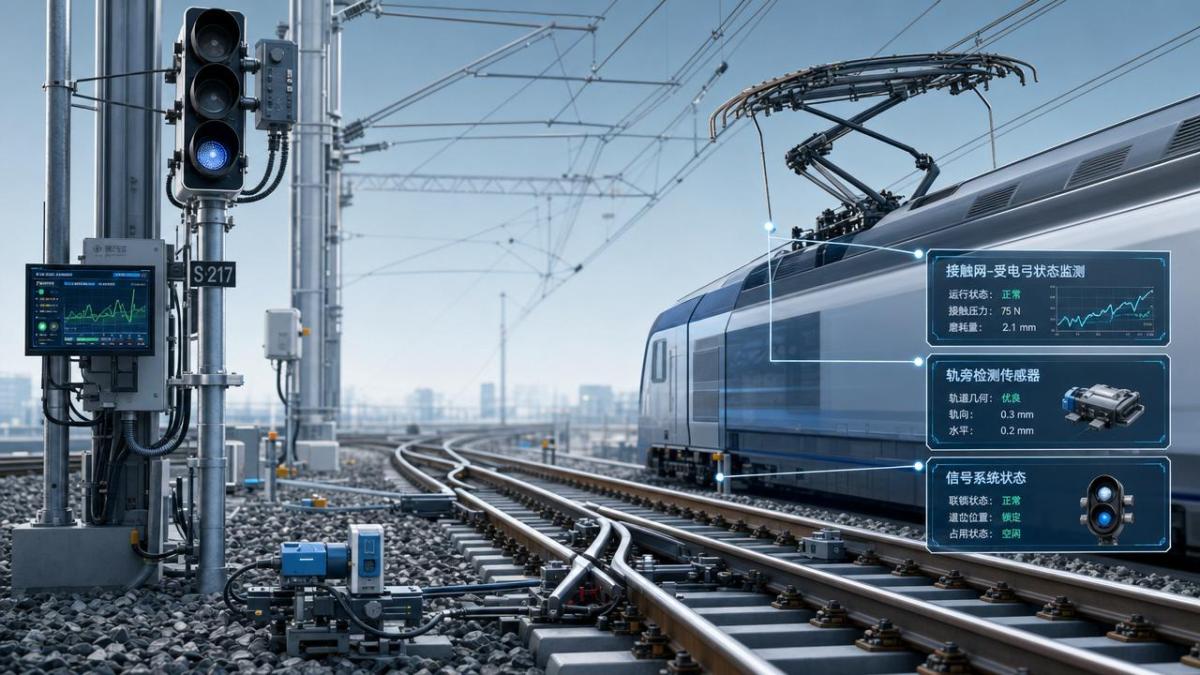
After-sales maintenance personnel are being asked to do more with tighter budgets, shorter possession windows, and stricter safety expectations. In many networks, maintenance is no longer judged only by repair speed. It is measured by how well teams prevent repeat faults, extend asset life, and support stable operations across signalling, power collection, braking interaction, and trackside control systems.
That shift is why rail infrastructure maintenance solutions have become a strategic topic rather than a workshop-level issue. A failed point machine, degraded track circuit, unstable pantograph-contact wire interface, or excessive wheel-rail braking impact can trigger delays far beyond the immediate fault location. The true cost includes manpower, emergency logistics, passenger disruption, and lost asset availability.
GTOT operates at the intersection of core rail control components, traction systems, and wider transport intelligence. This perspective helps after-sales teams connect maintenance decisions with broader asset value. When maintenance data is interpreted alongside signalling architecture, power collection behavior, and braking-related wear patterns, teams can move from reactive replacement to targeted lifecycle management.
- Reactive maintenance reduces immediate downtime but often raises spare parts consumption and overtime costs.
- Preventive schedules improve control, yet fixed intervals may still replace healthy assets too early.
- Condition-based rail infrastructure maintenance solutions allow teams to align intervention with real degradation patterns.
Which cost drivers are usually hidden in rail infrastructure maintenance?
Direct and indirect lifecycle cost pressures
Many maintenance budgets focus on obvious line items such as spare parts, labor, and contractor support. However, lifecycle costs in rail infrastructure are strongly influenced by hidden drivers: repeat troubleshooting, overnight access constraints, fault localization delays, incompatible replacement parts, and service penalties caused by low asset availability.
For after-sales teams, the challenge is not simply choosing the lowest purchase price. The better question is which rail infrastructure maintenance solutions reduce unplanned interventions over five to fifteen years, depending on asset class. A low-cost component with weak environmental tolerance can become expensive once failures multiply in vibration, dust, humidity, or temperature cycling.
The table below summarizes common cost drivers that maintenance teams should quantify before selecting a maintenance strategy or replacement component.
For decision makers on the maintenance side, this table shows why rail infrastructure maintenance solutions should be evaluated as cost-control systems, not just technical repairs. The more complex the network, the more expensive poor coordination becomes.
What should after-sales teams look at across signalling, pantograph, and braking interfaces?
Subsystems do not fail in isolation
GTOT’s sector focus is useful here because core rail assets are interdependent. Maintenance teams often receive a fault report at one point in the system, while the root cause sits elsewhere. An unstable power collection condition may accelerate wear, disturb onboard equipment behavior, or increase dynamic stress that later appears as a braking or control-side issue.
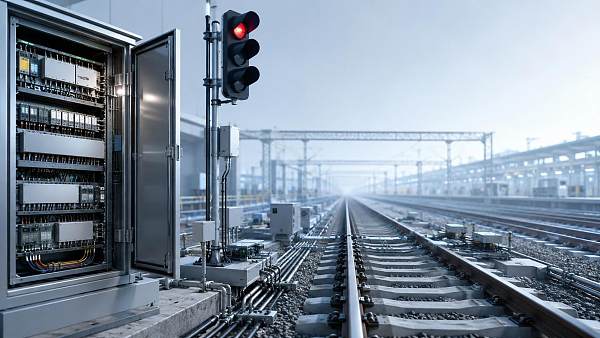
Railway signal control systems require high reliability because they function as the network’s decision layer. Maintenance planning should therefore consider relay health, interlocking diagnostics, cable integrity, environmental sealing, communication quality, and inspection traceability. Random replacement without trend data may restore service temporarily but rarely lowers lifecycle cost.
Pantograph-related maintenance is another area where simple visual checks are not enough. Contact strip wear, uplift consistency, aerodynamic behavior, vibration tolerance, and catenary interaction all matter. For high-speed applications, small deviations can produce cumulative damage that is far more costly than early correction.
Braking systems also influence infrastructure wear through wheel-rail interaction, thermal loading, and stopping precision. Even when after-sales staff are not directly servicing onboard braking units, they should understand how braking patterns affect rail surface condition, track geometry deterioration, and component fatigue near sensitive zones.
- Review interface data, not only single-component alarms.
- Correlate wear history with train speed, axle load, weather, and traffic density.
- Use root-cause tracking to avoid replacing downstream components that are only secondary victims.
How to compare maintenance strategies that lower lifecycle costs?
Not every network needs the same maintenance model. The right rail infrastructure maintenance solutions depend on line speed, automation level, climate exposure, asset age, spare parts maturity, and availability targets. For after-sales teams, comparison should focus on intervention timing, data requirements, failure consequences, and resource intensity.
The following comparison table helps maintenance planners choose between common approaches without oversimplifying the trade-offs.
For most modern operators, the best result is not pure digitization or pure manual practice. It is a layered model: risk-based prioritization, condition-based monitoring for critical assets, and time-based maintenance where wear is predictable.
How should you evaluate suppliers and solutions before procurement?
Selection criteria that matter in real maintenance work
Procurement often fails maintenance teams when technical evaluation focuses only on nominal specifications. Effective rail infrastructure maintenance solutions should be screened through serviceability, compatibility, lead time, documentation quality, training burden, and traceable compliance with relevant railway practices.
GTOT’s value lies in helping teams make better decisions around core rail components and system intelligence. That includes understanding whether a replacement plan supports digitalization, whether diagnostic outputs are actionable, and whether component choices align with strict tender environments where technical credibility matters.
Use the checklist below when comparing vendors, component upgrades, or outsourced support packages.
- Confirm interface compatibility with signalling, traction power, and mechanical mounting conditions.
- Ask for maintenance intervals, inspection points, and expected wear behavior under local operating conditions.
- Review documentation quality, including fault trees, parts traceability, and commissioning guidance.
- Check spare parts availability, repair turnaround, and delivery risks for imported or low-volume items.
- Assess whether the solution supports data capture for future predictive maintenance use.
Standards and compliance questions
Depending on the asset category, maintenance teams may need to consider common railway standards and safety expectations such as SIL-related design logic, electromagnetic compatibility, environmental testing, insulation performance, or fire and smoke requirements. Exact standards depend on project scope, country, and system architecture, so teams should verify them early rather than at delivery stage.
What implementation process helps reduce repeat faults?
A practical rollout path for after-sales maintenance teams
Even strong rail infrastructure maintenance solutions underperform when implementation is fragmented. The most reliable rollout process links fault history, asset criticality, field inspection routines, and feedback from operations. That is especially important in mixed fleets or networks where old and new technologies coexist.
- Start with a failure map: identify which assets create the highest delay minutes, repeat site visits, or spare parts drain.
- Segment assets by consequence: signalling logic, turnout control, power collection interfaces, and braking-impact zones should not share the same intervention rules.
- Define measurable thresholds: wear limit, contact quality, vibration trend, insulation value, temperature rise, or fault recurrence count.
- Create a closed loop: inspection findings must update spare strategy, maintenance frequency, and supplier evaluation.
The biggest gain usually comes from consistency. Once teams capture the same inspection fields every time, they can distinguish normal wear from abnormal degradation. That prevents over-maintenance and improves intervention timing.
Common mistakes and FAQ about rail infrastructure maintenance solutions
Is the cheapest replacement part really the lowest-cost option?
Usually not. The lowest purchase price can create higher total cost if the part has shorter service life, weak environmental resistance, or poor compatibility with adjacent systems. After-sales teams should compare replacement frequency, installation time, failure consequence, and logistics burden.
Which rail infrastructure maintenance solutions are best for high-availability lines?
High-availability routes generally benefit from condition-based and risk-based maintenance, especially for signalling, turnout equipment, and traction power interfaces. These solutions help teams intervene before faults affect traffic while preserving useful component life.
How important is data quality in predictive maintenance?
It is critical. Poor data labeling, inconsistent inspection methods, or missing environmental context can mislead trend analysis. Useful prediction requires clean baselines, repeatable inspection points, and correlation with actual failure modes.
What is a common mistake when maintaining cross-system interfaces?
A frequent mistake is treating each subsystem separately. In practice, signalling behavior, pantograph performance, braking dynamics, and infrastructure wear can influence one another. Cross-functional review often reveals root causes that isolated teams miss.
Why choose us for rail infrastructure maintenance insight and decision support?
GTOT supports maintenance-focused decision making through deep intelligence on railway signal control systems, pantographs, rail transit braking systems, and the wider transport ecosystem. For after-sales teams, this matters because lifecycle cost reduction depends on technical connection, not isolated component knowledge.
You can contact us for practical support around rail infrastructure maintenance solutions, including parameter confirmation for core components, selection guidance for signalling and power interface parts, maintenance strategy comparison, delivery cycle discussion, compliance and tender documentation direction, sample support feasibility, and quotation communication for targeted projects.
If your team is dealing with repeat faults, unclear replacement standards, or pressure to lower lifecycle costs without raising service risk, a more structured maintenance framework is the right next step. GTOT can help you evaluate where data, component choice, and maintenance logic need to align before the next outage becomes a larger operating cost.
Recommended News
 Sep 29, 2026What drives traction systems price differences between rail projects?Traction systems price differences explained: compare duty cycles, voltage compatibility, integration, localization, and lifecycle costs for smarter rail procurement.
 Sep 26, 2026What to assess before selecting an electric traction system manufacturerChoose an electric traction system manufacturer with confidence. Explore key criteria for performance, reliability, safety, integration, energy efficiency, and lifecycle support.
 Sep 25, 2026When do full digitalization systems justify the investment?Full digitalization systems: discover when rail and maritime operators can turn connected data into safer operations, higher availability, and measurable ROI.
 Sep 23, 2026What drives automatic train control systems cost on rail projects?Automatic train control systems cost depends on integration, migration, safety testing, communications, and lifecycle support. Explore the key budget drivers for rail projects.
 Sep 21, 2026How to assess an ocean going vessel builder’s delivery riskAssess an ocean going vessel builder’s delivery risk with proven checks for schedules, capacity, design maturity, critical equipment, quality, and project controls.
 Sep 20, 2026What drives rail safety technology costs over a project lifecycle?Rail safety technology cost goes beyond equipment—explore lifecycle drivers from integration and safety assurance to cybersecurity, commissioning, and obsolescence.
 Sep 16, 2026What to verify before choosing an advanced ocean-going vessels supplierAdvanced ocean-going vessels supplier checklist: verify design authority, build quality, digital systems, delivery reliability, and lifecycle support before you buy.
 Sep 15, 2026What rail safety technology best reduces level-crossing risks in Southeast Asia?Rail safety technology Southeast Asia: discover how fail-safe signalling, barriers, obstacle detection and remote monitoring reduce level-crossing risks.
 Sep 14, 2026How exporters can reduce customs delays in global trade logisticsGlobal trade logistics for exporters: reduce customs delays with accurate data, clearance-ready documents, early filing, and proactive exception management.
 Sep 13, 2026When do global transportation network systems reduce delivery delays?Global transportation network systems reduce delivery delays by improving rail-port-vessel coordination, real-time visibility, and proactive decisions across complex land-sea supply chains.
 Sep 09, 2026When should you choose a rail and maritime manufacturer with dual-sector capability?Rail and maritime manufacturer guide: learn when dual-sector capability reduces integration risk, improves lifecycle support, and strengthens rail-to-port operations.
 Sep 08, 2026What to verify before selecting a railway signalling equipment supplierRailway signalling equipment supplier checklist: verify safety evidence, integration, cybersecurity, delivery capability, and lifecycle support before award.
 Sep 07, 2026How to size a traction power transformer for railway load demandTraction power transformer sizing guide: model railway load demand, peak duty, voltage regulation, harmonics, and contingency capacity for reliable service.
 Sep 07, 2026How do customization options for industrial connectors affect lead times?Customization options for industrial connectors can impact lead times, cost, and compliance. Learn how to specify smarter for rail and marine projects.
 Sep 05, 2026What information should an industrial sourcing guide include?Industrial sourcing information procurement guide: evaluate suppliers, compliance, lifecycle costs, interfaces, and lead times for smarter rail and maritime purchasing decisions.
 Sep 01, 2026How to find reliable maritime tender information before biddingMaritime tender information: learn how to verify sources, define bid-ready scopes, check qualifications, and reduce risk before submitting competitive marine bids.
 Aug 30, 2026How to select railway automation equipment for depots with phased upgradesRailway automation equipment for depots: learn how to plan phased upgrades that improve safety, throughput, integration, and lifecycle control.
 Aug 27, 2026How industrial sourcing intelligence pricing data supports budget approvalIndustrial sourcing intelligence pricing data helps teams benchmark scope, assess supplier risk, and build defensible budget approvals for complex rail and maritime assets.
 Aug 26, 2026When does a marine fuel efficiency solution make financial sense in the Middle East?Marine fuel efficiency solution Middle East: learn when retrofit savings, compliance value, and vessel data align to deliver credible ROI and smarter shipping investment decisions.
 Aug 24, 2026When does maritime automation for tankers deliver a real payback?Maritime automation for tankers delivers real payback when it cuts fuel use, reduces cargo risk, and improves uptime. See how owners can time investment for stronger ROI.
 Aug 23, 2026When do maritime logistics systems in the Middle East justify the costMaritime logistics systems Middle East: discover when rising delays, manual coordination, and poor visibility make system investment the smarter move for regional operators.
 Aug 22, 2026What drives vessel navigation system price for commercial fleetsVessel navigation system price depends on integration, compliance, automation, and support—not just hardware. Learn what drives fleet costs and compare quotes with confidence.
 Aug 21, 2026How to assess shipbuilding maritime tenders before biddingShipbuilding maritime tenders require more than price checks. Learn how to assess technical scope, compliance, supply chain, and commercial risk before bidding with confidence.
 Aug 20, 2026When does working with an ocean-going vessels distributor reduce supply risk?Ocean-going vessels distributor: learn when this partner cuts supply risk through stronger compliance, faster response, and better sourcing resilience in complex maritime procurement.