



Search News
Industry Portal
Popular Tags
How High-Speed Traction Systems Cut Rail Energy Loss
Author
Time
Click Count
For technical evaluators, the real question is not whether high-speed traction systems matter, but which design choices measurably reduce rail energy loss without introducing unacceptable complexity, maintenance burden, or integration risk.
In practice, the biggest gains come from efficient power conversion, precise motor control, regenerative braking utilization, lightweight thermal design, and system-level coordination with the train and grid.
When these elements are engineered as one architecture rather than isolated components, operators can lower specific energy consumption, stabilize performance across duty cycles, and improve lifecycle economics.
This article examines how high-speed traction systems cut losses, which indicators reveal real efficiency, and what technical evaluators should verify before comparing suppliers or approving next-generation deployments.
What is the core mechanism by which high-speed traction systems reduce energy loss?
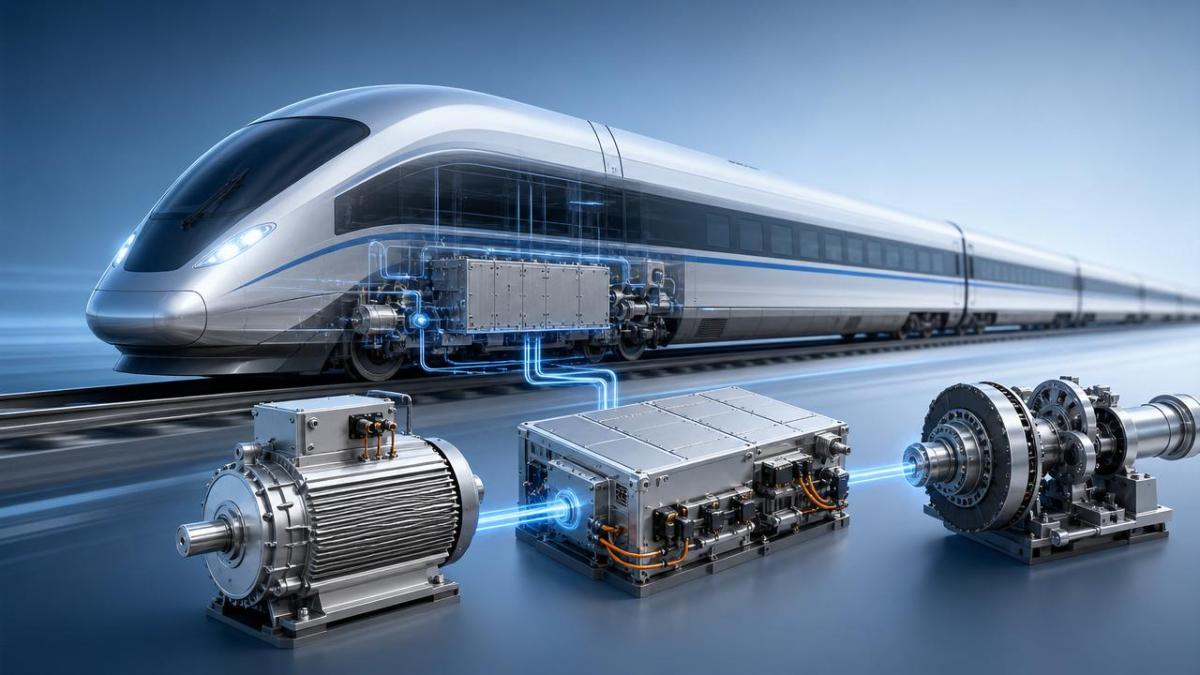
High-speed traction systems reduce energy loss by converting electrical input into usable tractive effort with fewer conversion, transmission, thermal, and control-related losses across the full operating envelope.
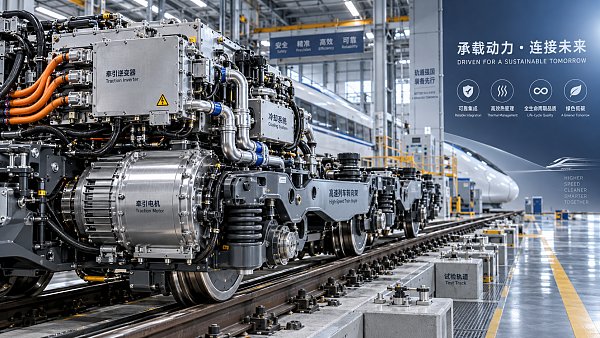
That sounds straightforward, but in modern rail applications, losses are distributed across the transformer, converter, inverter, traction motors, cooling system, cabling, gear train, and braking interface.
A technically strong system does not optimize one component in isolation. It minimizes total losses under realistic conditions including acceleration peaks, cruise operation, gradient changes, tunnel pressure effects, and repeated stop-start cycles.
For evaluators, the most important takeaway is that energy efficiency is a system outcome. A highly efficient inverter alone will not deliver the best train-level result if motor matching, thermal limits, or braking recovery are weak.
This is why supplier claims should always be tested against complete duty-cycle efficiency, not just nameplate performance measured at ideal laboratory points.
Where does rail energy loss actually occur in traction architectures?
To evaluate performance, it helps to break losses into categories. The first is electrical conversion loss, which occurs when incoming power is transformed, rectified, inverted, and conditioned for traction use.
Each conversion stage generates heat through semiconductor switching, conduction resistance, transformer core losses, and auxiliary power demand. Better materials and control strategies reduce these penalties.
The second category is motor loss. Traction motors lose energy through copper resistance, iron losses, harmonic effects, stray load loss, and mechanical friction in bearings and rotating parts.
The third category is drivetrain loss. Even with efficient motors, gears, couplings, and wheel-rail transmission introduce additional inefficiencies, especially under high torque transitions and fluctuating adhesion conditions.
The fourth category is thermal loss. Heat generated in converters and motors must be removed. If cooling systems are oversized, poorly controlled, or inefficient, auxiliary energy consumption rises significantly.
The fifth category is operational loss. Inaccurate torque control, poor adhesion management, underused regenerative braking, or conservative protection settings can all waste recoverable energy during service.
For technical evaluators, mapping these loss channels is essential because suppliers may present excellent component data while masking weaker whole-system behavior.
Why power electronics are central to high-speed traction efficiency
Power electronics are the heart of modern high-speed traction systems because they determine how efficiently electrical energy is conditioned, modulated, and delivered to traction motors.
Traditional silicon IGBT-based systems remain widely used and proven, but newer silicon carbide devices are increasingly attractive because they can switch faster and operate with lower losses.
That translates into higher converter efficiency, reduced cooling demand, lower system weight, and potentially more compact packaging, all of which support lower train energy consumption.
However, evaluators should not assume every wide-bandgap solution automatically performs better in service. Benefits depend on switching strategy, electromagnetic compatibility design, thermal cycling durability, and maintenance maturity.
A traction converter should therefore be judged by several practical indicators: efficiency across partial loads, harmonic performance, power factor behavior, cooling power requirement, and failure resilience under voltage fluctuation.
Partial-load performance matters especially because trains do not operate at maximum power continuously. A converter optimized only for peak output may underperform during common cruise and transitional states.
Another key issue is control granularity. More precise switching and modulation allow better motor current shaping, which reduces harmonic losses and improves traction smoothness.
For operators pursuing decarbonization and cost reduction, these electronic efficiencies can accumulate into substantial annual savings across large fleets.
How traction motor design influences total energy consumption
Motor selection is one of the most consequential decisions in high-speed traction systems because motor efficiency directly affects both energy use and thermal burden.
Modern rail platforms commonly use asynchronous or permanent magnet synchronous motors. Each architecture has tradeoffs in efficiency curve, maintenance profile, mass, rare-earth dependence, and control complexity.
Permanent magnet motors often deliver stronger efficiency at certain operating points and can improve power density, which helps reduce weight and packaging volume.
Yet asynchronous motors remain attractive because they are mature, robust, and may be easier to maintain in some procurement and lifecycle contexts.
Technical evaluators should focus less on technology labels and more on the actual motor efficiency map across the train’s target duty cycle.
A motor that performs exceptionally at one speed band but drops efficiency under typical acceleration or urban intercity transition conditions may not be the optimal choice.
Also important are rotor heating behavior, insulation life under high-frequency inverter switching, bearing current mitigation, and vibration response at sustained high speed.
These factors affect not only direct energy loss but also long-term reliability. A motor that runs hotter will demand more cooling, age faster, and create hidden lifecycle costs.
How advanced traction control cuts avoidable losses in real service
Even with good hardware, inefficient control software can leave measurable energy savings unrealized. High-speed traction systems rely on sophisticated algorithms to optimize torque delivery, adhesion, braking, and power balance.
Vector control and model-based control methods allow motors to produce required torque with better current precision, reducing unnecessary losses caused by overexcitation or unstable response.
Adhesion management is especially important. If wheel slip is detected too late or corrected too aggressively, energy is wasted and component wear increases.
Advanced control systems use faster sensing and predictive logic to keep traction near the adhesion limit without repeated instability. This improves both efficiency and acceleration consistency.
Train-level energy management also matters. Control coordination between multiple traction units can distribute load more evenly, avoiding inefficient operating zones and reducing peak thermal stress.
In practical evaluation, software should be examined for response speed, tuning adaptability, degraded-mode behavior, and compatibility with signaling and train control systems.
For technical evaluators, this is a major distinction between nominally similar products. Two systems may share similar hardware, yet deliver different energy outcomes because their control strategies differ significantly.
Why regenerative braking is one of the biggest opportunities for loss reduction
Regenerative braking is one of the most visible ways high-speed traction systems cut rail energy loss because it converts the train’s kinetic energy back into electrical energy instead of wasting it as heat.
In ideal conditions, regenerated power is returned to the overhead line or onboard energy buffer and then reused by other trains or auxiliary systems.
The actual savings, however, depend on more than the traction package. They are influenced by network receptivity, timetable density, substation design, and power quality constraints.
This means evaluators should ask not only whether a traction system supports regeneration, but how effectively it can maintain stable recovery across different voltage and traffic conditions.
Critical technical points include low-speed regeneration capability, transition smoothness between regenerative and friction braking, DC-link management, and line-side compatibility.
A well-designed system maximizes energy recovery without compromising braking predictability or safety margins. It also avoids excessive thermal loading when recovered energy cannot be accepted by the network.
Where grid receptivity is limited, hybrid approaches such as onboard storage or wayside energy storage may unlock more of the traction system’s theoretical recovery value.
For technical evaluators, regeneration performance should therefore be reviewed as part of a wider rail electrical ecosystem, not as a standalone product feature.
How thermal management affects efficiency more than many buyers expect
Thermal management is often underestimated during procurement because it is seen as a reliability issue rather than an energy issue. In reality, it directly shapes conversion efficiency and auxiliary power demand.
Converters, motors, and transformers all lose efficiency when operating outside preferred thermal ranges. Excessive heat also forces derating, which can push other components into less efficient operating states.
Meanwhile, fans, pumps, chillers, and control hardware consume energy themselves. Poor cooling architecture can turn a technically efficient traction chain into a weak train-level performer.
The best systems use smart cooling strategies that match thermal removal to actual load, rather than running auxiliaries at fixed high intensity.
Key indicators include cooling energy per traction output, hotspot uniformity, contamination resistance, maintainability of heat exchangers, and performance under harsh ambient conditions.
For high-speed rail, tunnel operation, high summer temperatures, and repeated fast acceleration can create difficult thermal profiles. A robust design maintains efficiency without oversized auxiliary penalties.
Evaluators should also consider whether the supplier can provide thermal simulation data validated by service operation, not just bench tests.
Which technical metrics matter most when comparing high-speed traction systems?
Technical evaluation should focus on metrics that reveal train-level energy behavior, not just brochure-level component capability. The most useful KPI is specific energy consumption over a defined duty cycle.
This should be measured in realistic operating scenarios, with full transparency on passenger load, gradient, ambient temperature, stopping pattern, and line voltage conditions.
Another core metric is end-to-end traction chain efficiency, ideally shown across multiple speed and load points rather than a single best-case value.
Regenerative braking recovery ratio is also crucial, but it must be interpreted alongside network receptivity assumptions. Otherwise, published numbers may overstate achievable savings in service.
Auxiliary power draw, especially for cooling, should be separated clearly from traction power so evaluators can understand where hidden energy penalties occur.
Thermal derating thresholds, mean time between failures, semiconductor junction temperature margins, and maintainability indicators are equally important because energy performance that declines quickly in service is not real value.
Lifecycle analysis should include spare strategy, software update requirements, diagnostic capability, and the effect of efficiency degradation over time.
For many procurement teams, the right question is not which system has the highest peak efficiency, but which one preserves stable efficiency and availability over fifteen to thirty years.
What risks should technical evaluators watch for behind efficiency claims?
One common risk is overreliance on laboratory efficiency figures. These may exclude auxiliaries, assume ideal voltage quality, or measure only narrow operating points.
Another risk is poor interoperability. A traction system may be efficient in itself but difficult to integrate with existing transformers, brake systems, signaling architecture, or maintenance workflows.
Thermal stress is another hidden issue. Compact designs may appear attractive for weight and efficiency reasons, yet suffer accelerated degradation if cooling margins are inadequate.
Cyber-physical dependence is also increasing. As traction control software becomes more advanced, validation, update governance, and fault isolation become critical evaluation topics.
Supply chain resilience should not be ignored either. Some high-performance components may create replacement risk, especially where semiconductor sourcing or magnet materials are constrained.
Finally, evaluators should examine service support maturity. A slightly lower theoretical efficiency may be preferable if the supplier offers stronger diagnostics, spare availability, and proven field performance.
What does a practical evaluation framework look like?
A practical framework begins with mission definition. Evaluators should clearly specify route profile, speed regime, climate, energy tariff conditions, grid receptivity, maintenance model, and fleet utilization target.
Next, compare candidates using normalized duty-cycle simulations backed by measured subsystem data. This prevents misleading comparisons based on different assumptions.
Then assess hardware architecture, focusing on converter topology, semiconductor choice, motor efficiency map, braking integration, thermal design, and redundancy strategy.
Software and controls should be reviewed separately, including traction optimization logic, slip-slide handling, fault recovery, cybersecurity process, and update validation pathway.
After that, evaluate lifecycle factors: energy cost over service life, overhaul intervals, cooling maintenance burden, spare parts exposure, and expected efficiency retention.
Where possible, request field data from comparable speed classes and climates. In rail procurement, long-term operational evidence is often more valuable than isolated demonstration results.
This structured approach helps technical evaluators distinguish between systems that are merely advanced on paper and those that can consistently reduce rail energy loss in actual deployment.
Conclusion: the best high-speed traction systems reduce loss through integration, not isolated features
High-speed traction systems cut rail energy loss most effectively when power electronics, motor design, control software, regenerative braking, and thermal management are engineered as a coordinated whole.
For technical evaluators, the decisive issue is not a single efficiency claim but the credibility of train-level performance across the full service envelope and lifecycle.
The strongest solutions typically show balanced excellence: efficient conversion at partial load, strong motor matching, stable regenerative recovery, low auxiliary demand, and robust performance under thermal and operational stress.
By evaluating architecture, measurable KPIs, integration risk, and long-term maintainability together, decision-makers can identify traction platforms that deliver both energy savings and durable operational value.
In that sense, energy efficiency is not only a design feature. It is a proof of engineering maturity across the entire high-speed rail propulsion system.
Recommended News
 Sep 29, 2026What drives traction systems price differences between rail projects?Traction systems price differences explained: compare duty cycles, voltage compatibility, integration, localization, and lifecycle costs for smarter rail procurement.
 Sep 26, 2026What to assess before selecting an electric traction system manufacturerChoose an electric traction system manufacturer with confidence. Explore key criteria for performance, reliability, safety, integration, energy efficiency, and lifecycle support.
 Sep 25, 2026When do full digitalization systems justify the investment?Full digitalization systems: discover when rail and maritime operators can turn connected data into safer operations, higher availability, and measurable ROI.
 Sep 23, 2026What drives automatic train control systems cost on rail projects?Automatic train control systems cost depends on integration, migration, safety testing, communications, and lifecycle support. Explore the key budget drivers for rail projects.
 Sep 21, 2026How to assess an ocean going vessel builder’s delivery riskAssess an ocean going vessel builder’s delivery risk with proven checks for schedules, capacity, design maturity, critical equipment, quality, and project controls.
 Sep 20, 2026What drives rail safety technology costs over a project lifecycle?Rail safety technology cost goes beyond equipment—explore lifecycle drivers from integration and safety assurance to cybersecurity, commissioning, and obsolescence.
 Sep 16, 2026What to verify before choosing an advanced ocean-going vessels supplierAdvanced ocean-going vessels supplier checklist: verify design authority, build quality, digital systems, delivery reliability, and lifecycle support before you buy.
 Sep 15, 2026What rail safety technology best reduces level-crossing risks in Southeast Asia?Rail safety technology Southeast Asia: discover how fail-safe signalling, barriers, obstacle detection and remote monitoring reduce level-crossing risks.
 Sep 14, 2026How exporters can reduce customs delays in global trade logisticsGlobal trade logistics for exporters: reduce customs delays with accurate data, clearance-ready documents, early filing, and proactive exception management.
 Sep 13, 2026When do global transportation network systems reduce delivery delays?Global transportation network systems reduce delivery delays by improving rail-port-vessel coordination, real-time visibility, and proactive decisions across complex land-sea supply chains.
 Sep 09, 2026When should you choose a rail and maritime manufacturer with dual-sector capability?Rail and maritime manufacturer guide: learn when dual-sector capability reduces integration risk, improves lifecycle support, and strengthens rail-to-port operations.
 Sep 08, 2026What to verify before selecting a railway signalling equipment supplierRailway signalling equipment supplier checklist: verify safety evidence, integration, cybersecurity, delivery capability, and lifecycle support before award.
 Sep 07, 2026How to size a traction power transformer for railway load demandTraction power transformer sizing guide: model railway load demand, peak duty, voltage regulation, harmonics, and contingency capacity for reliable service.
 Sep 07, 2026How do customization options for industrial connectors affect lead times?Customization options for industrial connectors can impact lead times, cost, and compliance. Learn how to specify smarter for rail and marine projects.
 Sep 05, 2026What information should an industrial sourcing guide include?Industrial sourcing information procurement guide: evaluate suppliers, compliance, lifecycle costs, interfaces, and lead times for smarter rail and maritime purchasing decisions.
 Sep 01, 2026How to find reliable maritime tender information before biddingMaritime tender information: learn how to verify sources, define bid-ready scopes, check qualifications, and reduce risk before submitting competitive marine bids.
 Aug 30, 2026How to select railway automation equipment for depots with phased upgradesRailway automation equipment for depots: learn how to plan phased upgrades that improve safety, throughput, integration, and lifecycle control.
 Aug 27, 2026How industrial sourcing intelligence pricing data supports budget approvalIndustrial sourcing intelligence pricing data helps teams benchmark scope, assess supplier risk, and build defensible budget approvals for complex rail and maritime assets.
 Aug 26, 2026When does a marine fuel efficiency solution make financial sense in the Middle East?Marine fuel efficiency solution Middle East: learn when retrofit savings, compliance value, and vessel data align to deliver credible ROI and smarter shipping investment decisions.
 Aug 24, 2026When does maritime automation for tankers deliver a real payback?Maritime automation for tankers delivers real payback when it cuts fuel use, reduces cargo risk, and improves uptime. See how owners can time investment for stronger ROI.
 Aug 23, 2026When do maritime logistics systems in the Middle East justify the costMaritime logistics systems Middle East: discover when rising delays, manual coordination, and poor visibility make system investment the smarter move for regional operators.
 Aug 22, 2026What drives vessel navigation system price for commercial fleetsVessel navigation system price depends on integration, compliance, automation, and support—not just hardware. Learn what drives fleet costs and compare quotes with confidence.
 Aug 21, 2026How to assess shipbuilding maritime tenders before biddingShipbuilding maritime tenders require more than price checks. Learn how to assess technical scope, compliance, supply chain, and commercial risk before bidding with confidence.
 Aug 20, 2026When does working with an ocean-going vessels distributor reduce supply risk?Ocean-going vessels distributor: learn when this partner cuts supply risk through stronger compliance, faster response, and better sourcing resilience in complex maritime procurement.