



Search News
Industry Portal
Popular Tags
Global Trade Logistics Delays: Main Causes and Fixes
Author
Time
Click Count
Global trade logistics delays can derail project timelines, inflate costs, and weaken supply chain resilience across rail and maritime operations. For project managers and engineering leaders, understanding the main causes—from port congestion and customs bottlenecks to equipment shortages and route disruptions—is essential to keeping complex transport programs on track. This article explores the key issues behind delays and the practical fixes that improve delivery speed, visibility, and control.
For organizations managing railway control systems, pantographs, braking components, smart container ships, LNG carriers, and other cross-border assets, delays are rarely caused by one issue alone. In most programs, a 7-day slip at one node can trigger a 2- to 4-week knock-on effect across installation, testing, commissioning, and handover.
This is why global trade logistics must be treated as a project control discipline, not just a transport function. The closer the cargo is to high-value engineering equipment, the more important it becomes to align lead times, route planning, customs preparation, packaging standards, and milestone visibility from supplier to site.
Why Global Trade Logistics Delays Matter in Rail and Maritime Projects
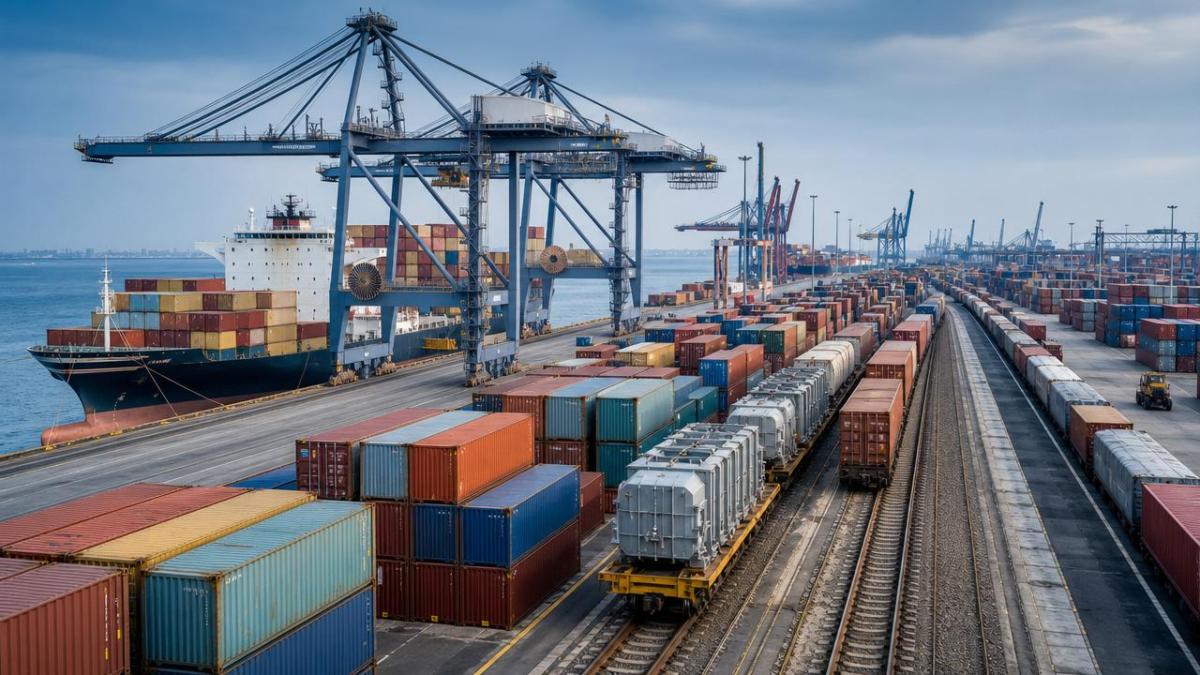
In capital-intensive transport programs, delays affect more than freight schedules. A late shipment of interlocking hardware, traction power components, brake modules, or vessel automation systems can halt dependent tasks, lock up installation crews, and extend equipment rental windows by 10 to 30 days.
For project managers, the core risk is interface failure. Rail and marine supply chains involve manufacturers, freight forwarders, port operators, customs agents, EPC contractors, insurers, and final operators. When information is fragmented across 5 to 8 parties, decision-making slows, and corrective action usually starts too late.
Typical Delay Impacts on Engineering Delivery
- Factory acceptance tests may need rescheduling by 1 to 2 weeks if export packaging is incomplete.
- Port dwell time can rise from 3 days to 9 days during seasonal congestion or labor shortages.
- Site commissioning windows may be missed if critical-path items arrive after civil or electrical readiness.
- Liquidated damages risk increases when milestone-linked deliveries are tied to contract payment stages.
Why high-value equipment is especially exposed
Advanced rail and vessel systems often require controlled handling, special cradles, anti-vibration packaging, moisture barriers, and precise documentation. A customs discrepancy on a generic cargo may be manageable. The same error on SIL4-related signaling equipment or cryogenic ship components can stop inspection, release, and onward transport for several working days.
The table below shows how common delay points affect project execution in global trade logistics for land-sea transport programs.
The main takeaway is simple: in global trade logistics, delay duration is only part of the problem. The real issue is how a short disruption at one node multiplies across engineering dependencies, commercial obligations, and resource planning.
Main Causes of Global Trade Logistics Delays
Project teams often ask why a shipment that looked stable at week 1 turns critical by week 4. In practice, most global trade logistics delays come from four clusters: infrastructure bottlenecks, compliance gaps, asset availability constraints, and low-quality planning assumptions.
1. Port Congestion and Terminal Throughput Limits
Major gateways can experience throughput pressure during peak export cycles, weather events, or labor disruptions. Even where vessel schedules remain nominal, container rollovers and terminal dwell can extend by 48 to 120 hours. For oversized rail modules or vessel equipment, lifting slot availability may be even tighter.
2. Customs Bottlenecks and Documentation Errors
A missing certificate, inaccurate HS code, incomplete packing list, or mismatch between invoice and cargo marking can delay clearance immediately. In projects using multi-country sourcing, customs complexity increases further because each origin may require different declarations, inspection logic, or embargo checks.
For engineered systems, supporting documents often include technical manuals, serial lists, country-of-origin declarations, hazardous goods notes, and insurance references. If just 1 of these 6 to 10 document sets is inconsistent, release can stall.
3. Equipment Shortages and Capacity Imbalance
Container shortages, lack of special racks, limited reefer access, or reduced heavy-lift vessel slots can hold cargo at origin longer than planned. This problem is common when moving brake assemblies, signaling cabinets, or marine systems that cannot be packed into standard formats without technical risk.
4. Route Disruptions and Geopolitical Uncertainty
Canal restrictions, regional conflict, weather rerouting, and inland rail interruptions can add 7 to 20 days depending on the corridor. A route that was cost-optimal last quarter may no longer be schedule-safe this quarter. For project cargo, the cheapest route is often the least resilient route.
5. Weak Cross-Functional Planning
Many delays start internally. Procurement promises one lead time, engineering freezes drawings later than expected, packaging is specified too late, and logistics booking starts only after production is complete. That sequence creates avoidable compression, usually in the final 10 to 15 days before dispatch.
Common planning mistakes
- Using factory-ready date instead of cargo-ready date.
- Ignoring export crating and preservation time, which can take 2 to 5 days.
- Booking transport before confirming final dimensions and gross weight.
- Assuming customs clearance is a fixed 24-hour process in every destination.
- Failing to align shipping milestones with site installation sequence.
Practical Fixes That Improve Delivery Speed and Control
Reducing global trade logistics delays requires more than expediting. The most effective fixes combine planning discipline, documentation control, route resilience, supplier coordination, and digital visibility. Project teams that apply these methods early usually gain both schedule protection and better cost predictability.
Build a 5-Step Logistics Control Model
- Map critical-path cargo by value, function, and required-on-site date.
- Create a milestone ladder covering production, QA release, packaging, booking, customs, arrival, and inland delivery.
- Pre-validate documents 5 to 7 days before cargo-ready date.
- Define fallback routes and acceptable transit-time ranges, such as 18–24 days versus 28–35 days.
- Review shipment status in a fixed weekly cadence, increasing to every 48 hours for critical loads.
Improve Documentation Accuracy at Source
One of the lowest-cost fixes in global trade logistics is document governance. A structured pre-shipment checklist should verify consignee details, HS codes, dimensions, net and gross weight, package count, marking, dangerous goods classification where applicable, and origin declarations before booking confirmation.
For engineering cargo, it also helps to align technical and logistics teams around the same master shipment file. This reduces the chance that the commercial invoice says 12 cases while the packing list says 11, or that the drawing register uses a different equipment description than the customs entry.
Use Route Segmentation Instead of Single-Lane Planning
Not all cargo should move under one logistics strategy. Long-lead but non-critical items can use standard ocean planning, while commissioning-critical assemblies may justify premium routing, split shipments, or earlier dispatch buffers of 10 to 14 days. This segmented approach lowers the risk of one delay affecting the entire workfront.
The following table compares common fixes and where they generate the most value for project-driven global trade logistics operations.
The strongest fixes are usually process-based, not reactive. When milestones, route options, and document controls are defined early, project teams can absorb normal disruption without losing overall schedule integrity.
Strengthen Visibility with Practical Digital Tools
Digital visibility does not have to mean a complex platform rollout. Even a disciplined control tower model with exception alerts, container milestone tracking, document status flags, and weekly risk scoring can materially improve global trade logistics performance. What matters is not data volume, but usable signal.
For GTOT-aligned sectors such as smart shipping and advanced rail systems, digital tracking becomes more valuable when tied to engineering logic. A delayed shipment should trigger not only a freight alert, but also a commissioning impact review, contractor resequencing check, and spare-parts risk assessment.
How Project Managers Should Evaluate Logistics Readiness
Project leaders need a simple way to judge whether their global trade logistics setup is robust enough for high-stakes delivery. A useful approach is to score readiness across four dimensions: schedule realism, document quality, route resilience, and stakeholder responsiveness.
A 4-Point Readiness Checklist
- Schedule realism: Are lead times based on actual cargo-ready dates and not optimistic factory estimates?
- Document quality: Has every shipment file been checked against at least 6 core fields before dispatch?
- Route resilience: Is there a secondary path if the main port, carrier, or inland leg fails?
- Stakeholder responsiveness: Are escalation owners named, and can they act within 24 hours?
Signals that a project is underprepared
Warning signs include repeated “ETD to be confirmed” updates, missing gross weight data, packaging completion after vessel booking, no distinction between critical and non-critical cargo, and lack of destination customs review. If 3 or more of these signals are present, delay probability rises sharply.
Procurement and engineering must work from the same timeline
A common failure in global trade logistics is timeline separation. Procurement tracks purchase order dates, engineering tracks drawing approvals, and logistics tracks booking windows, but no one reconciles them into one operating calendar. A unified timeline with 8 to 12 milestone gates gives project leaders a far better basis for intervention.
This is especially important for specialized sectors covered by GTOT, where land-sea interconnection is strategic. Whether the cargo is rail signaling hardware, pantograph assemblies, marine intelligence modules, or LNG-related systems, logistics readiness should be reviewed as early as technical readiness.
Key Questions Teams Commonly Ask
Project teams rarely need theory alone. They need decision-ready answers that can be used in planning meetings, vendor reviews, and customer updates. The questions below reflect common issues in global trade logistics for complex transport programs.
When should we start logistics planning for engineered equipment?
Start at least 4 to 6 weeks before cargo-ready date for standard shipments, and earlier for oversized, hazardous, or highly regulated cargo. If the shipment supports commissioning, planning should begin when the equipment manufacturing schedule is first baselined, not after production ends.
Is faster transport always the best solution?
No. Premium routing can protect a critical module, but using it for all cargo may erode budget without improving total project performance. The better question is which 10% to 20% of cargo carries 80% of milestone risk. That cargo deserves different treatment.
How can we reduce customs-related delays?
Use a pre-shipment review workflow, standardize product descriptions, verify consignee and invoice details, and align technical naming with customs declarations. For destinations with stricter control, confirm import requirements before final packaging, not after the container reaches port.
What KPI set is practical for project managers?
A workable KPI set includes on-time dispatch rate, customs hold frequency, average port dwell days, critical-cargo exception count, document error rate, and actual-versus-planned transit variance. Even 6 KPIs, reviewed weekly, can reveal whether global trade logistics performance is stable or slipping.
Global trade logistics delays are manageable when project teams identify root causes early, separate critical cargo from routine cargo, and connect freight decisions to engineering milestones. For rail and maritime programs, the most effective fixes are disciplined planning, accurate documentation, resilient routing, and better cross-functional visibility.
GTOT supports decision-makers who need sharper insight into land-sea interconnection, advanced transport equipment, and the operational realities behind high-value cross-border delivery. If your team is evaluating logistics risks for railway systems, smart vessels, LNG shipping assets, or related engineering programs, now is the right time to refine the control model before delays become contractual problems.
Contact us to discuss your project scenario, request a tailored intelligence-based logistics perspective, or learn more solutions that improve delivery speed, visibility, and control.
Recommended News
 Sep 29, 2026What drives traction systems price differences between rail projects?Traction systems price differences explained: compare duty cycles, voltage compatibility, integration, localization, and lifecycle costs for smarter rail procurement.
 Sep 26, 2026What to assess before selecting an electric traction system manufacturerChoose an electric traction system manufacturer with confidence. Explore key criteria for performance, reliability, safety, integration, energy efficiency, and lifecycle support.
 Sep 25, 2026When do full digitalization systems justify the investment?Full digitalization systems: discover when rail and maritime operators can turn connected data into safer operations, higher availability, and measurable ROI.
 Sep 23, 2026What drives automatic train control systems cost on rail projects?Automatic train control systems cost depends on integration, migration, safety testing, communications, and lifecycle support. Explore the key budget drivers for rail projects.
 Sep 21, 2026How to assess an ocean going vessel builder’s delivery riskAssess an ocean going vessel builder’s delivery risk with proven checks for schedules, capacity, design maturity, critical equipment, quality, and project controls.
 Sep 20, 2026What drives rail safety technology costs over a project lifecycle?Rail safety technology cost goes beyond equipment—explore lifecycle drivers from integration and safety assurance to cybersecurity, commissioning, and obsolescence.
 Sep 16, 2026What to verify before choosing an advanced ocean-going vessels supplierAdvanced ocean-going vessels supplier checklist: verify design authority, build quality, digital systems, delivery reliability, and lifecycle support before you buy.
 Sep 15, 2026What rail safety technology best reduces level-crossing risks in Southeast Asia?Rail safety technology Southeast Asia: discover how fail-safe signalling, barriers, obstacle detection and remote monitoring reduce level-crossing risks.
 Sep 14, 2026How exporters can reduce customs delays in global trade logisticsGlobal trade logistics for exporters: reduce customs delays with accurate data, clearance-ready documents, early filing, and proactive exception management.
 Sep 13, 2026When do global transportation network systems reduce delivery delays?Global transportation network systems reduce delivery delays by improving rail-port-vessel coordination, real-time visibility, and proactive decisions across complex land-sea supply chains.
 Sep 09, 2026When should you choose a rail and maritime manufacturer with dual-sector capability?Rail and maritime manufacturer guide: learn when dual-sector capability reduces integration risk, improves lifecycle support, and strengthens rail-to-port operations.
 Sep 08, 2026What to verify before selecting a railway signalling equipment supplierRailway signalling equipment supplier checklist: verify safety evidence, integration, cybersecurity, delivery capability, and lifecycle support before award.
 Sep 07, 2026How to size a traction power transformer for railway load demandTraction power transformer sizing guide: model railway load demand, peak duty, voltage regulation, harmonics, and contingency capacity for reliable service.
 Sep 07, 2026How do customization options for industrial connectors affect lead times?Customization options for industrial connectors can impact lead times, cost, and compliance. Learn how to specify smarter for rail and marine projects.
 Sep 05, 2026What information should an industrial sourcing guide include?Industrial sourcing information procurement guide: evaluate suppliers, compliance, lifecycle costs, interfaces, and lead times for smarter rail and maritime purchasing decisions.
 Sep 01, 2026How to find reliable maritime tender information before biddingMaritime tender information: learn how to verify sources, define bid-ready scopes, check qualifications, and reduce risk before submitting competitive marine bids.
 Aug 30, 2026How to select railway automation equipment for depots with phased upgradesRailway automation equipment for depots: learn how to plan phased upgrades that improve safety, throughput, integration, and lifecycle control.
 Aug 27, 2026How industrial sourcing intelligence pricing data supports budget approvalIndustrial sourcing intelligence pricing data helps teams benchmark scope, assess supplier risk, and build defensible budget approvals for complex rail and maritime assets.
 Aug 26, 2026When does a marine fuel efficiency solution make financial sense in the Middle East?Marine fuel efficiency solution Middle East: learn when retrofit savings, compliance value, and vessel data align to deliver credible ROI and smarter shipping investment decisions.
 Aug 24, 2026When does maritime automation for tankers deliver a real payback?Maritime automation for tankers delivers real payback when it cuts fuel use, reduces cargo risk, and improves uptime. See how owners can time investment for stronger ROI.
 Aug 23, 2026When do maritime logistics systems in the Middle East justify the costMaritime logistics systems Middle East: discover when rising delays, manual coordination, and poor visibility make system investment the smarter move for regional operators.
 Aug 22, 2026What drives vessel navigation system price for commercial fleetsVessel navigation system price depends on integration, compliance, automation, and support—not just hardware. Learn what drives fleet costs and compare quotes with confidence.
 Aug 21, 2026How to assess shipbuilding maritime tenders before biddingShipbuilding maritime tenders require more than price checks. Learn how to assess technical scope, compliance, supply chain, and commercial risk before bidding with confidence.
 Aug 20, 2026When does working with an ocean-going vessels distributor reduce supply risk?Ocean-going vessels distributor: learn when this partner cuts supply risk through stronger compliance, faster response, and better sourcing resilience in complex maritime procurement.