



Search News
Industry Portal
Popular Tags
Land and Sea Equipment Maintenance Mistakes to Avoid

Author
Time
Click Count
For after-sales maintenance teams, even small errors can shorten asset life, raise safety risks, and disrupt operations. In today’s high-performance transport environment, avoiding common land and sea equipment maintenance mistakes is essential for protecting reliability, compliance, and lifecycle value. This guide highlights the most critical pitfalls and practical ways to prevent them across rail systems, marine assets, and other mission-critical equipment.
Why a Checklist Approach Matters for Land and Sea Equipment

Modern land and sea equipment operates under tight tolerances, harsh environments, and strict regulatory demands. Maintenance errors rarely stay isolated. A missed inspection can trigger faults across traction power, braking, navigation, or cargo systems.
A checklist reduces human variation. It also helps standardize work across railway signal control systems, pantographs, braking units, smart container ships, LNG carriers, and other connected assets.
For complex land and sea equipment, checklists do more than prevent omission. They support traceability, improve handovers, and create usable maintenance intelligence for future planning.
Core Maintenance Mistakes to Avoid
The following checklist focuses on the most common failures seen in high-value land and sea equipment environments. Each point is practical, repeatable, and directly tied to equipment uptime.
- Verify operating history before service, because maintenance without fault logs, alarm records, and duty-cycle data often treats symptoms while the true degradation mechanism remains active.
- Follow OEM torque, lubrication, and calibration values exactly, since small deviations can damage bearings, seals, control interfaces, contact surfaces, and structural fasteners.
- Inspect connectors, terminals, and cable routing carefully, because vibration, salt fog, and thermal cycling often cause intermittent faults that visual checks alone may miss.
- Clean components with approved methods only, as aggressive solvents, abrasive tools, or high-pressure washing can harm coatings, sensors, insulation, and membrane surfaces.
- Replace wear parts based on condition and duty severity, not calendar habit alone, especially in braking systems, pantograph strips, cryogenic valves, and sealing assemblies.
- Calibrate measuring instruments regularly, because unreliable gauges and handheld testers can turn routine land and sea equipment service into a chain of wrong decisions.
- Confirm software, firmware, and parameter versions after intervention, since mismatched logic can undermine signalling reliability, propulsion control, route optimization, or safety interlocks.
- Document every adjustment and replaced part immediately, because poor records weaken trend analysis, warranty support, root-cause review, and compliance evidence.
Scenario Notes Across Rail and Marine Operations
Railway Signal Control Systems
In signal control systems, the most dangerous mistake is assuming stable logic equals healthy hardware. Relay contacts, power modules, field interfaces, and communication links may degrade long before a total failure appears.
Land and sea equipment maintenance teams working near SIL4 environments should validate event logs, redundancy paths, grounding quality, and enclosure conditions after every intervention. Functional testing must match the live operating context.
Pantographs and Traction Power Interfaces
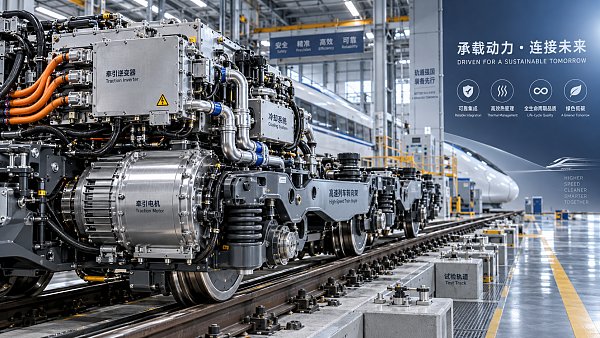
Pantograph maintenance often fails when attention stays on visible wear only. Carbon strip condition matters, but uplift force, aerodynamic stability, articulation freedom, and contact surface geometry matter just as much.
For land and sea equipment programs connected to high-speed rail fleets, incorrect adjustment can increase arcing, overheat contact wires, and create costly service interruptions across the network.
Rail Transit Braking Systems
A frequent error is replacing friction materials without checking thermal history, actuator response, and electronic control feedback. Brake performance depends on the whole system, not only on pad thickness.
When maintaining land and sea equipment with safety-critical stopping requirements, inspect heat cracking, air or hydraulic integrity, sensor drift, and command-response timing together.
Smart Container Ships and Marine Automation
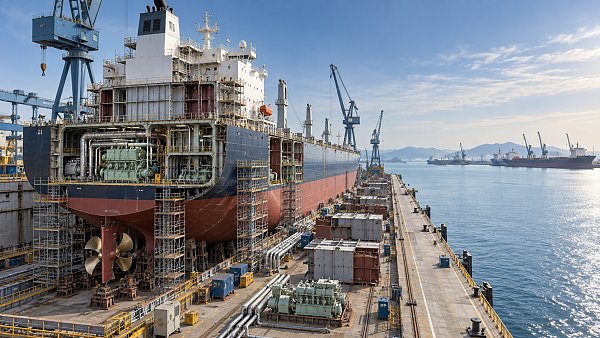
Marine assets add corrosion, humidity, and long-duration vibration to the risk profile. A common mistake is servicing isolated devices without checking network integration between navigation, cargo, power, and shore-linked data systems.
For smart land and sea equipment platforms, software validation, environmental sealing, and power quality checks should accompany every hardware replacement.
LNG Carriers and Cryogenic Systems
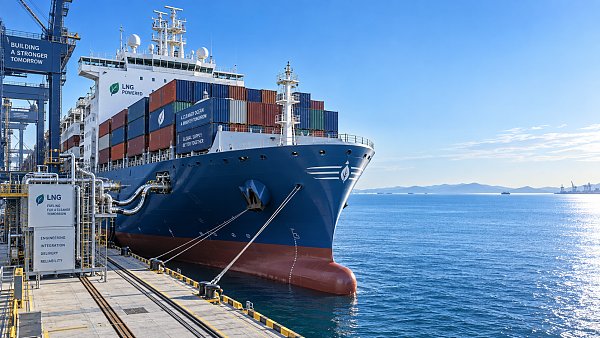
LNG carrier maintenance mistakes usually come from underestimating thermal stress and insulation sensitivity. Small handling errors around valves, piping supports, or containment interfaces can create large downstream consequences.
Land and sea equipment used in cryogenic service demands stricter cleanliness control, leak verification, material compatibility review, and detailed post-maintenance monitoring after restart.
Commonly Ignored Risks
- Environmental mismatch: Parts rated for dry rail depots may fail quickly in marine salt exposure or deck-level humidity.
- False closure: A reset alarm does not prove the root cause is removed from the land and sea equipment system.
- Spare part inconsistency: Similar-looking substitutes can alter tolerances, software behavior, sealing performance, or certification status.
- Weak restart control: Equipment often fails after maintenance because load conditions, sequencing, and warm-up verification were rushed.
- Record gaps: Missing serial numbers, calibration dates, and test results make later troubleshooting slower and less accurate.
Practical Execution Tips for Better Maintenance Outcomes
Start with a risk-ranked maintenance sheet. Put safety-critical inspections, hidden failure points, and environmental exposure items at the top. This keeps land and sea equipment work focused on consequences, not habit.
Use a three-step closeout process: verify the task, test the function, then review the data. That sequence catches both mechanical errors and control logic mismatches.
Combine condition monitoring with routine service. Vibration trends, temperature patterns, contact resistance, insulation values, and fault code frequency often reveal land and sea equipment issues before visible failure.
Standardize consumables and tools across sites where possible. Consistent grease grades, test devices, cleaning agents, and firmware control reduce avoidable variation.
Quick Field Review Table
Conclusion and Next Action
Reliable land and sea equipment maintenance depends less on heroic repairs and more on disciplined execution. Most costly failures begin with simple mistakes: skipped checks, weak records, incorrect settings, or incomplete testing.
The next practical step is to convert these points into a site-specific checklist for rail, marine, and cross-modal assets. Review it after every shutdown, update it with real fault data, and use it to strengthen uptime, safety, and asset value.
Recommended News
 Sep 29, 2026What drives traction systems price differences between rail projects?Traction systems price differences explained: compare duty cycles, voltage compatibility, integration, localization, and lifecycle costs for smarter rail procurement.
 Sep 26, 2026What to assess before selecting an electric traction system manufacturerChoose an electric traction system manufacturer with confidence. Explore key criteria for performance, reliability, safety, integration, energy efficiency, and lifecycle support.
 Sep 25, 2026When do full digitalization systems justify the investment?Full digitalization systems: discover when rail and maritime operators can turn connected data into safer operations, higher availability, and measurable ROI.
 Sep 23, 2026What drives automatic train control systems cost on rail projects?Automatic train control systems cost depends on integration, migration, safety testing, communications, and lifecycle support. Explore the key budget drivers for rail projects.
 Sep 21, 2026How to assess an ocean going vessel builder’s delivery riskAssess an ocean going vessel builder’s delivery risk with proven checks for schedules, capacity, design maturity, critical equipment, quality, and project controls.
 Sep 20, 2026What drives rail safety technology costs over a project lifecycle?Rail safety technology cost goes beyond equipment—explore lifecycle drivers from integration and safety assurance to cybersecurity, commissioning, and obsolescence.
 Sep 16, 2026What to verify before choosing an advanced ocean-going vessels supplierAdvanced ocean-going vessels supplier checklist: verify design authority, build quality, digital systems, delivery reliability, and lifecycle support before you buy.
 Sep 15, 2026What rail safety technology best reduces level-crossing risks in Southeast Asia?Rail safety technology Southeast Asia: discover how fail-safe signalling, barriers, obstacle detection and remote monitoring reduce level-crossing risks.
 Sep 14, 2026How exporters can reduce customs delays in global trade logisticsGlobal trade logistics for exporters: reduce customs delays with accurate data, clearance-ready documents, early filing, and proactive exception management.
 Sep 13, 2026When do global transportation network systems reduce delivery delays?Global transportation network systems reduce delivery delays by improving rail-port-vessel coordination, real-time visibility, and proactive decisions across complex land-sea supply chains.
 Sep 09, 2026When should you choose a rail and maritime manufacturer with dual-sector capability?Rail and maritime manufacturer guide: learn when dual-sector capability reduces integration risk, improves lifecycle support, and strengthens rail-to-port operations.
 Sep 08, 2026What to verify before selecting a railway signalling equipment supplierRailway signalling equipment supplier checklist: verify safety evidence, integration, cybersecurity, delivery capability, and lifecycle support before award.
 Sep 07, 2026How to size a traction power transformer for railway load demandTraction power transformer sizing guide: model railway load demand, peak duty, voltage regulation, harmonics, and contingency capacity for reliable service.
 Sep 07, 2026How do customization options for industrial connectors affect lead times?Customization options for industrial connectors can impact lead times, cost, and compliance. Learn how to specify smarter for rail and marine projects.
 Sep 05, 2026What information should an industrial sourcing guide include?Industrial sourcing information procurement guide: evaluate suppliers, compliance, lifecycle costs, interfaces, and lead times for smarter rail and maritime purchasing decisions.
 Sep 01, 2026How to find reliable maritime tender information before biddingMaritime tender information: learn how to verify sources, define bid-ready scopes, check qualifications, and reduce risk before submitting competitive marine bids.
 Aug 30, 2026How to select railway automation equipment for depots with phased upgradesRailway automation equipment for depots: learn how to plan phased upgrades that improve safety, throughput, integration, and lifecycle control.
 Aug 27, 2026How industrial sourcing intelligence pricing data supports budget approvalIndustrial sourcing intelligence pricing data helps teams benchmark scope, assess supplier risk, and build defensible budget approvals for complex rail and maritime assets.
 Aug 26, 2026When does a marine fuel efficiency solution make financial sense in the Middle East?Marine fuel efficiency solution Middle East: learn when retrofit savings, compliance value, and vessel data align to deliver credible ROI and smarter shipping investment decisions.
 Aug 24, 2026When does maritime automation for tankers deliver a real payback?Maritime automation for tankers delivers real payback when it cuts fuel use, reduces cargo risk, and improves uptime. See how owners can time investment for stronger ROI.
 Aug 23, 2026When do maritime logistics systems in the Middle East justify the costMaritime logistics systems Middle East: discover when rising delays, manual coordination, and poor visibility make system investment the smarter move for regional operators.
 Aug 22, 2026What drives vessel navigation system price for commercial fleetsVessel navigation system price depends on integration, compliance, automation, and support—not just hardware. Learn what drives fleet costs and compare quotes with confidence.
 Aug 21, 2026How to assess shipbuilding maritime tenders before biddingShipbuilding maritime tenders require more than price checks. Learn how to assess technical scope, compliance, supply chain, and commercial risk before bidding with confidence.
 Aug 20, 2026When does working with an ocean-going vessels distributor reduce supply risk?Ocean-going vessels distributor: learn when this partner cuts supply risk through stronger compliance, faster response, and better sourcing resilience in complex maritime procurement.