



Search News
Industry Portal
Popular Tags
Rail Infrastructure Investment: Cost Signals to Watch in 2026
Author
Time
Click Count
For finance approvers, rail infrastructure investment in 2026 will depend on hard cost signals, not market noise.
The most useful indicators now sit inside asset reliability, safety compliance, power quality, component durability, and supply-chain timing.
This guide explains which rail infrastructure investment signals deserve attention, why they matter, and how to judge budget exposure before capital is locked in.
What does rail infrastructure investment really include in 2026?
Rail infrastructure investment no longer means track and civil works alone.
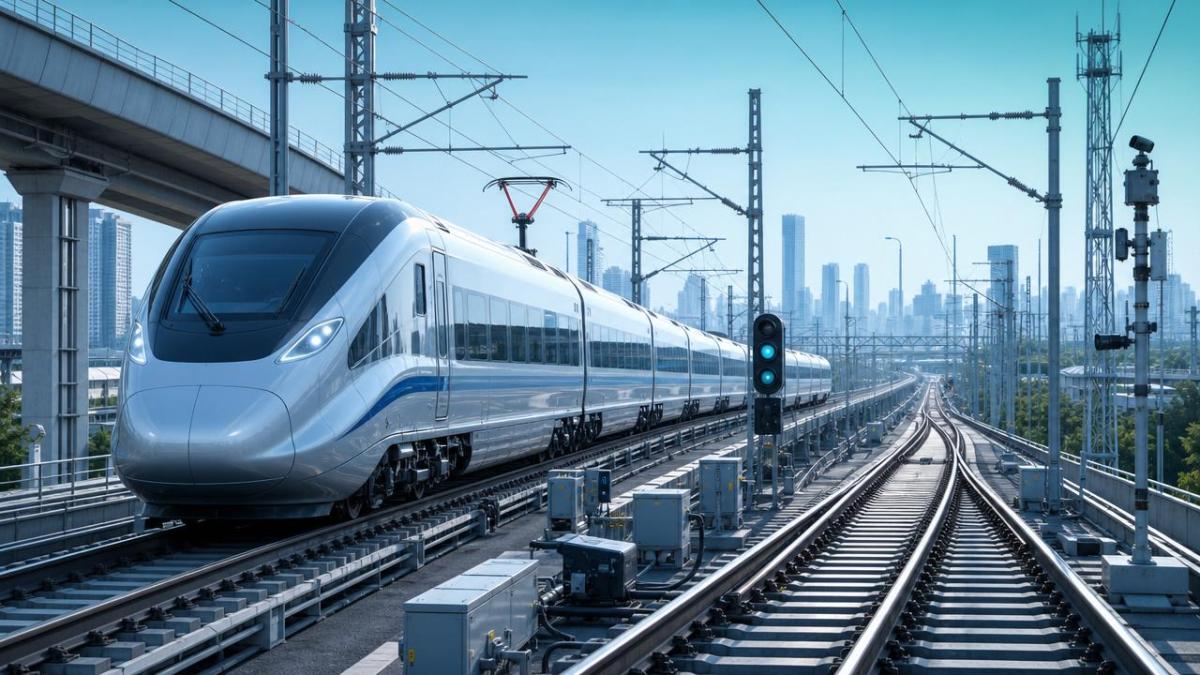
In 2026, spending is shifting toward systems that raise automation, resilience, and life-cycle efficiency.
That includes signalling modernization, traction power stability, braking performance, condition monitoring, cybersecurity, and digital diagnostics.
For high-speed and urban rail, the cost center often sits inside control precision rather than visible steel.
A new interlocking system can change maintenance needs, staffing models, uptime, and insurance exposure.
Pantographs and braking systems also affect asset value more than many early budgets assume.
Poor current collection raises wear, energy loss, and service interruption risk.
Weak braking life-cycle performance increases replacement frequency, downtime, and safety review pressure.
A realistic rail infrastructure investment model should separate four spending layers:
- Base construction and route expansion
- Control, signalling, and communications upgrades
- Rolling interface systems such as traction and braking
- Compliance, digitalization, and long-term maintenance tools
Understanding this structure helps explain why rail infrastructure investment is becoming more technology weighted each year.
Which cost signals should be watched first before approving rail infrastructure investment?
The first signal is signalling scope creep.
Projects often begin with hardware replacement, then expand into software migration, network protection, testing, and integration downtime.
The second signal is traction power reliability.
If current collection quality declines, operators face hidden energy losses and more contact line maintenance.
The third signal is braking system life-cycle cost.
A lower purchase price may be offset by faster wear, thermal fade risk, or tighter inspection intervals.
The fourth signal is supply-chain volatility.
Lead times for semiconductors, power electronics, composites, and certified safety components remain uneven across regions.
The fifth signal is compliance-driven capital intensity.
SIL4 validation, cybersecurity documentation, EMC testing, and localization rules can materially reshape final project cost.
When reviewing rail infrastructure investment, watch for these early warning signs:
- Repeated design revisions after tender release
- Unclear interface ownership between civil and systems packages
- Aggressive delivery promises without certified sourcing visibility
- Maintenance assumptions based on outdated duty cycles
- Safety budgets that exclude verification and recertification
These signals usually appear before overruns become visible in headline reporting.
How do signalling, pantographs, and braking systems change rail infrastructure investment economics?
These three areas strongly influence the total value of rail infrastructure investment.
Signalling systems are the operating brain of modern rail.
Upgrades can increase capacity without building entirely new lines.
That sounds efficient, but integration cost is often high.
Legacy compatibility, testing windows, and fail-safe logic push both time and engineering expense upward.
Pantographs shape power transfer quality at speed.
Stable contact reduces arcing, wire wear, and interruption risk.
In high-speed corridors, this directly affects maintenance scheduling and service consistency.
Braking systems define stopping precision, thermal resilience, and safety confidence.
Composite materials, microelectronic control, and aerodynamic coordination can lower operational risk over time.
However, they may increase up-front qualification expense.
The economic lesson is simple.
The cheapest component rarely creates the best rail infrastructure investment outcome.
Assets should be judged by uptime contribution, inspection burden, energy efficiency, and recertification exposure.
What common mistakes distort rail infrastructure investment forecasts?
One common mistake is treating compliance as a final-stage paperwork issue.
In reality, safety approval affects design architecture, supplier choice, testing flow, and commissioning duration.
Another mistake is underestimating interface complexity.
Rail infrastructure investment often fails on handoffs between signalling, rolling stock, power systems, and civil contractors.
A third mistake is focusing only on capex.
Projects with lower up-front pricing may carry higher maintenance shutdowns, spare-part dependence, or software support fees.
A fourth mistake is ignoring global logistics risk.
Transport bottlenecks, export restrictions, and certification delays can move installation windows by quarters, not weeks.
A fifth mistake is using static demand assumptions.
Passenger density, freight routing, and decarbonization policy may all change asset utilization faster than legacy models expect.
Better rail infrastructure investment forecasting uses scenario ranges, not one-point predictions.
How can decision-makers compare rail infrastructure investment options more accurately?
A practical comparison should combine cost, reliability, compliance, and timing.
The table below summarizes useful questions for 2026 planning.
This framework makes rail infrastructure investment comparisons more consistent across different technologies and corridor types.
It also helps identify whether savings are genuine or simply deferred risk.
What does 2026 mean for timing, risk, and long-term asset value?
In 2026, rail infrastructure investment will favor assets that support automation, digital visibility, and lower whole-life uncertainty.
Projects that delay system intelligence may appear cheaper now, but become expensive during operation.
Timing matters because many markets face overlapping transport, energy, and industrial upgrade cycles.
That overlap can tighten engineering capacity and certified component availability.
Long-term asset value will increasingly depend on measurable resilience:
- Can the system support future automation layers?
- Will maintenance data improve planning accuracy?
- Are safety upgrades modular or disruptive?
- Can power and braking performance remain stable under higher utilization?
The strongest rail infrastructure investment cases are those that protect availability while preserving upgrade flexibility.
That is especially relevant where railway systems connect with ports, logistics corridors, and broader land-sea supply chains.
How should the next rail infrastructure investment review be structured?
Start by separating visible construction cost from embedded systems cost.
Then test assumptions behind signalling integration, pantograph reliability, braking durability, and compliance effort.
Review suppliers by qualification depth, not only quotation level.
Ask whether timelines include certification, software validation, and spare-part readiness.
Finally, compare options using life-cycle cost and service continuity, not simple acquisition price.
Rail infrastructure investment in 2026 will reward disciplined analysis of cost signals hidden inside control, power, and safety systems.
A sharper review today can prevent expensive redesigns, delayed commissioning, and avoidable performance loss tomorrow.
Use these indicators as a working checklist, and refine budgets only after technical interfaces and compliance burdens are fully visible.
Recommended News
 Sep 29, 2026What drives traction systems price differences between rail projects?Traction systems price differences explained: compare duty cycles, voltage compatibility, integration, localization, and lifecycle costs for smarter rail procurement.
 Sep 26, 2026What to assess before selecting an electric traction system manufacturerChoose an electric traction system manufacturer with confidence. Explore key criteria for performance, reliability, safety, integration, energy efficiency, and lifecycle support.
 Sep 25, 2026When do full digitalization systems justify the investment?Full digitalization systems: discover when rail and maritime operators can turn connected data into safer operations, higher availability, and measurable ROI.
 Sep 23, 2026What drives automatic train control systems cost on rail projects?Automatic train control systems cost depends on integration, migration, safety testing, communications, and lifecycle support. Explore the key budget drivers for rail projects.
 Sep 21, 2026How to assess an ocean going vessel builder’s delivery riskAssess an ocean going vessel builder’s delivery risk with proven checks for schedules, capacity, design maturity, critical equipment, quality, and project controls.
 Sep 20, 2026What drives rail safety technology costs over a project lifecycle?Rail safety technology cost goes beyond equipment—explore lifecycle drivers from integration and safety assurance to cybersecurity, commissioning, and obsolescence.
 Sep 16, 2026What to verify before choosing an advanced ocean-going vessels supplierAdvanced ocean-going vessels supplier checklist: verify design authority, build quality, digital systems, delivery reliability, and lifecycle support before you buy.
 Sep 15, 2026What rail safety technology best reduces level-crossing risks in Southeast Asia?Rail safety technology Southeast Asia: discover how fail-safe signalling, barriers, obstacle detection and remote monitoring reduce level-crossing risks.
 Sep 14, 2026How exporters can reduce customs delays in global trade logisticsGlobal trade logistics for exporters: reduce customs delays with accurate data, clearance-ready documents, early filing, and proactive exception management.
 Sep 13, 2026When do global transportation network systems reduce delivery delays?Global transportation network systems reduce delivery delays by improving rail-port-vessel coordination, real-time visibility, and proactive decisions across complex land-sea supply chains.
 Sep 09, 2026When should you choose a rail and maritime manufacturer with dual-sector capability?Rail and maritime manufacturer guide: learn when dual-sector capability reduces integration risk, improves lifecycle support, and strengthens rail-to-port operations.
 Sep 08, 2026What to verify before selecting a railway signalling equipment supplierRailway signalling equipment supplier checklist: verify safety evidence, integration, cybersecurity, delivery capability, and lifecycle support before award.
 Sep 07, 2026How to size a traction power transformer for railway load demandTraction power transformer sizing guide: model railway load demand, peak duty, voltage regulation, harmonics, and contingency capacity for reliable service.
 Sep 07, 2026How do customization options for industrial connectors affect lead times?Customization options for industrial connectors can impact lead times, cost, and compliance. Learn how to specify smarter for rail and marine projects.
 Sep 05, 2026What information should an industrial sourcing guide include?Industrial sourcing information procurement guide: evaluate suppliers, compliance, lifecycle costs, interfaces, and lead times for smarter rail and maritime purchasing decisions.
 Sep 01, 2026How to find reliable maritime tender information before biddingMaritime tender information: learn how to verify sources, define bid-ready scopes, check qualifications, and reduce risk before submitting competitive marine bids.
 Aug 30, 2026How to select railway automation equipment for depots with phased upgradesRailway automation equipment for depots: learn how to plan phased upgrades that improve safety, throughput, integration, and lifecycle control.
 Aug 27, 2026How industrial sourcing intelligence pricing data supports budget approvalIndustrial sourcing intelligence pricing data helps teams benchmark scope, assess supplier risk, and build defensible budget approvals for complex rail and maritime assets.
 Aug 26, 2026When does a marine fuel efficiency solution make financial sense in the Middle East?Marine fuel efficiency solution Middle East: learn when retrofit savings, compliance value, and vessel data align to deliver credible ROI and smarter shipping investment decisions.
 Aug 24, 2026When does maritime automation for tankers deliver a real payback?Maritime automation for tankers delivers real payback when it cuts fuel use, reduces cargo risk, and improves uptime. See how owners can time investment for stronger ROI.
 Aug 23, 2026When do maritime logistics systems in the Middle East justify the costMaritime logistics systems Middle East: discover when rising delays, manual coordination, and poor visibility make system investment the smarter move for regional operators.
 Aug 22, 2026What drives vessel navigation system price for commercial fleetsVessel navigation system price depends on integration, compliance, automation, and support—not just hardware. Learn what drives fleet costs and compare quotes with confidence.
 Aug 21, 2026How to assess shipbuilding maritime tenders before biddingShipbuilding maritime tenders require more than price checks. Learn how to assess technical scope, compliance, supply chain, and commercial risk before bidding with confidence.
 Aug 20, 2026When does working with an ocean-going vessels distributor reduce supply risk?Ocean-going vessels distributor: learn when this partner cuts supply risk through stronger compliance, faster response, and better sourcing resilience in complex maritime procurement.