



Search News
Industry Portal
Popular Tags
Global Transportation Network Shifts Reshaping Freight Route Decisions
Author
Time
Click Count
As the global transportation network adapts to geopolitical shifts, energy transitions, and supply chain volatility, freight route decisions are becoming more strategic than ever. For business leaders, understanding how rail control systems, high-speed traction technologies, smart container ships, and LNG carriers influence efficiency, resilience, and cost is now essential to staying competitive in cross-border logistics and infrastructure planning.
Why the global transportation network now demands route decisions beyond simple cost comparisons
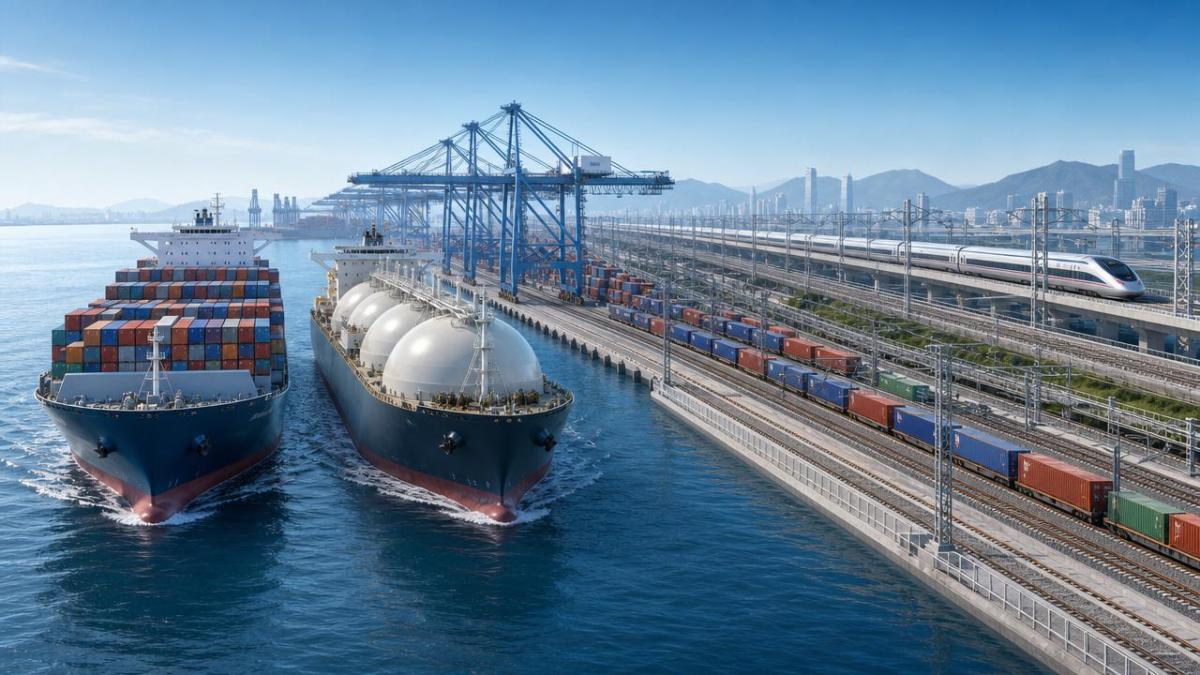
For enterprise decision-makers, freight routing is no longer a narrow transport purchase. It has become a board-level choice shaped by sanctions risk, port congestion, fuel volatility, inland rail capacity, decarbonization pressure, and equipment reliability across land-sea corridors.
In today’s global transportation network, the fastest nominal route may not be the most bankable route. A corridor with weaker signalling, unreliable traction interfaces, limited braking resilience, or vessel schedule instability can destroy the expected savings.
This is where GTOT’s cross-domain perspective matters. The platform connects railway signal control systems, pantographs, rail braking systems, smart container ships, and LNG carriers into one intelligence framework for evaluating route feasibility, operating continuity, and asset value.
- A rail-heavy corridor may look attractive on transit time, but weak interlocking modernization or low automation maturity can reduce throughput and raise disruption risk.
- A sea-heavy corridor may offer lower unit freight cost, yet port turn inefficiency, vessel mismatch, or bunker uncertainty can create hidden inventory and demurrage expenses.
- Energy-sensitive cargo strategies increasingly depend on LNG shipping availability and the ability to align maritime schedules with inland evacuation capacity.
What is changing the global transportation network most?
Several structural changes are reshaping freight route selection. None of them should be assessed in isolation, because route performance today depends on the combined behavior of infrastructure, equipment, compliance, and operating intelligence.
Key forces driving route redesign
- Geopolitical realignment is pushing shippers toward corridor diversification rather than single-route dependency.
- Decarbonization policies are changing fuel choices, vessel deployment, and rail electrification priorities.
- Digital operations are making predictive routing possible, especially where smart ships and connected rail systems exchange operational data.
- Infrastructure bottlenecks are shifting value from headline speed to dependable throughput and recoverability.
For companies managing heavy equipment, industrial components, energy-linked cargo, or EPC supply chains, the global transportation network must be assessed through route resilience, not just rate sheets.
The table below helps decision-makers compare the major route pressures influencing corridor choices across the global transportation network.
A useful conclusion is that route competitiveness now depends on technical and compliance readiness. Companies that rely on static freight benchmarks often underestimate the operational value of signalling quality, traction stability, and vessel intelligence.
How rail technology influences freight corridor reliability
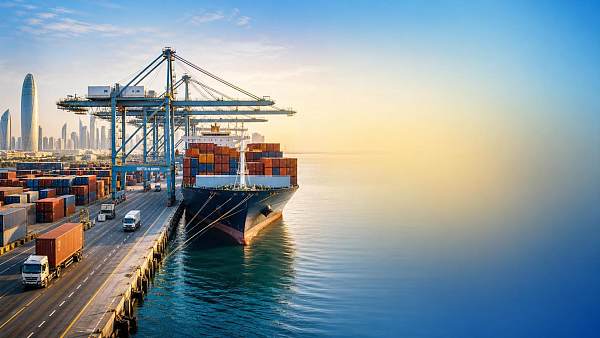
Rail is gaining importance in the global transportation network because it can shorten inland transit, reduce border-to-port pressure, and improve cargo predictability. But rail route quality is determined by more than track length or nominal train frequency.
Railway signal control systems: the hidden capacity lever
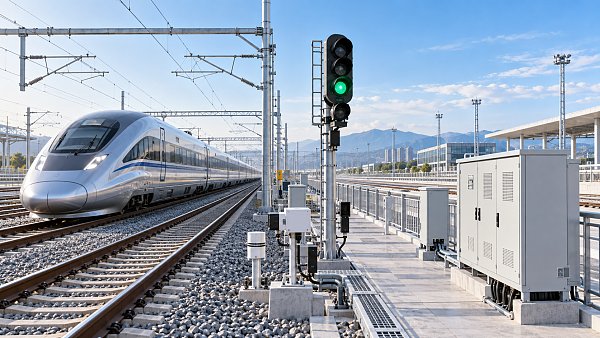
For decision-makers evaluating rail-enabled corridors, signalling is often the most underestimated variable. Advanced control systems improve headway management, dispatch consistency, safe automation, and incident recovery. In dense or cross-border corridors, these factors directly affect cargo release timing.
Pantographs and power continuity at high operating intensity
Pantograph performance matters when electrified networks run at high speed or under difficult environmental conditions. Unstable current collection can trigger power interruptions, maintenance disruption, and timetable erosion. For enterprises shipping high-value or time-sensitive goods, that risk converts quickly into financial loss.
Braking systems and stopping precision as a logistics variable
Braking systems are not just safety hardware. They shape train handling, stopping precision, line utilization, and operational confidence under varying loads. In mixed-traffic or high-density freight corridors, braking performance supports more stable network planning.
- Higher signalling integrity supports denser scheduling and fewer conflict points.
- Reliable current collection reduces disruption in electrified trunk lines.
- Predictable braking behavior helps maintain throughput under heavy axle loads.
GTOT’s intelligence advantage lies in translating these engineering factors into commercial consequences. That is exactly what enterprise buyers need when choosing a corridor, qualifying suppliers, or preparing rail-related tender responses.
Why smart container ships and LNG carriers are changing ocean route decisions
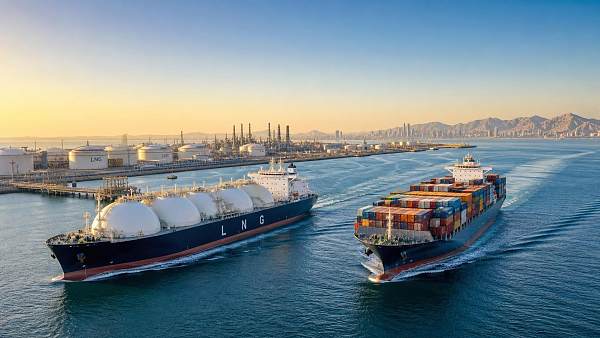
Ocean freight still carries the largest share of global trade, but the maritime side of the global transportation network is becoming smarter, more data-led, and more fuel-sensitive. Route selection increasingly depends on how vessels interact with terminals, energy strategy, and inland evacuation systems.
Smart container ships as operational platforms
Smart container ships improve route quality through AI-supported navigation, better ship-to-shore data exchange, and stronger condition awareness. These capabilities help reduce idle time, optimize speed, and improve ETA accuracy for downstream rail or trucking coordination.
LNG carriers and energy security logistics
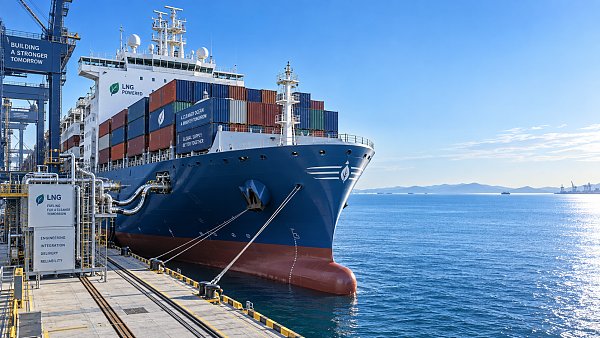
LNG carriers affect freight route strategy indirectly and directly. Directly, they compete for shipbuilding slots, port handling priorities, and maritime service capacity. Indirectly, they influence regional fuel availability and energy security, which can reshape industrial production and cargo origination points.
The comparison below shows how smart shipping and LNG-linked transport factors influence route planning across the global transportation network.
For corporate planners, the implication is clear: vessel intelligence and fuel architecture are no longer background details. They affect whether a lane remains scalable, insurable, and synchronized with inland flows.
How should enterprise buyers evaluate route options and supporting equipment?
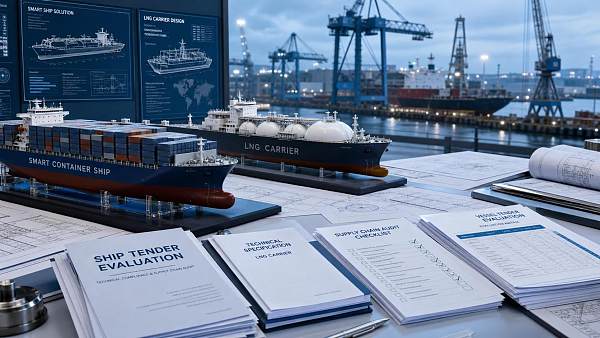
A practical procurement view of the global transportation network should combine corridor analysis with equipment intelligence. This is especially important for manufacturers, EPC contractors, port-linked distributors, and infrastructure investors who must defend route decisions internally.
A five-point evaluation framework
- Assess operational continuity: Check schedule recovery capacity, modal backup options, and maintenance sensitivity across the route.
- Assess equipment fit: Confirm whether rail signalling maturity, electrification conditions, braking profiles, or maritime handling systems suit your cargo and timetable needs.
- Assess compliance burden: Review documentation, safety standards, and cross-border technical acceptance early rather than after tender commitment.
- Assess total landed cost: Include dwell time, energy exposure, inventory carrying cost, and disruption probability instead of using freight price alone.
- Assess strategic flexibility: Prefer routes that can scale or switch mode if regulation, weather, or politics changes rapidly.
The table below can be used as a procurement checklist when evaluating route choices, component relevance, and implementation risk in the global transportation network.
This framework helps buyers move from price comparison to route governance. That shift is often what separates reactive logistics spending from durable transport strategy.
What compliance and technical signals should not be ignored?
In the global transportation network, technical nonconformity can be as damaging as physical delay. Decision-makers should pay attention to safety, interoperability, and documentation signals before selecting a supplier or route-dependent equipment package.
Critical areas to review
- Rail signalling safety architecture, especially where high-density operations require robust integrity levels and dependable fail-safe logic.
- Braking performance consistency under load variation, thermal stress, and repeated duty cycles.
- Marine containment, propulsion, and handling considerations for LNG-linked operations and cryogenic service environments.
- Digital connectivity assumptions, including whether data-sharing expectations across rail and marine systems are realistic for the operating region.
GTOT’s strength is not limited to news monitoring. Its Strategic Intelligence Center interprets trends such as LTE-M use in rail transit, thermal fade behavior in composite brake materials, and structural considerations in LNG containment systems. For buyers, that insight supports more defensible route and equipment decisions.
Common mistakes companies make when reacting to shifts in the global transportation network
Even experienced companies often misread route change signals. The most common issue is treating transport mode selection and equipment capability assessment as separate workstreams.
Frequent decision errors
- Choosing the cheapest corridor without pricing disruption recovery, storage, and schedule slippage.
- Assuming all rail corridors offer similar control reliability and throughput behavior.
- Ignoring how vessel intelligence and fuel strategy affect inland synchronization.
- Leaving technical compliance review too late, especially in restricted tenders or cross-border infrastructure projects.
A better approach is to build route strategy around failure points, not just planned performance. In a volatile global transportation network, resilience has measurable commercial value.
FAQ: practical questions enterprise leaders ask
How should we choose between a rail-priority and sea-priority route?
Start with cargo sensitivity, inventory tolerance, and corridor control quality. Rail-priority routes may suit higher urgency cargo if signalling maturity, power stability, and border handling are strong. Sea-priority routes may fit larger volume and lower unit cost needs if port and vessel schedules are dependable.
What should we review first when a corridor looks attractive on paper?
Review bottleneck behavior, not just average transit time. Check terminal dwell, line capacity, dispatch reliability, equipment compatibility, and compliance lead time. These factors usually determine whether the route can support repeated business use.
Why do technical components matter to route strategy?
Because infrastructure and equipment define actual throughput. In the global transportation network, a corridor with stronger signal control, reliable pantographs, stable braking, and smart vessel integration often delivers better commercial outcomes than a nominally shorter route.
When should we involve a specialist intelligence partner?
Involve one early when entering a new region, preparing tenders, redesigning supply chains, or comparing multimodal corridors. Early intelligence shortens rework cycles and improves internal approval quality.
Why work with GTOT when route decisions require land-sea technical intelligence?
GTOT is positioned for companies that need more than generic transport commentary. Its value lies in connecting freight route decisions with the technical realities of railway control, traction power, braking systems, smart maritime operations, and LNG-linked shipping dynamics.
If your team is evaluating how the global transportation network affects sourcing, distribution, infrastructure bids, or cross-border project delivery, GTOT can support commercially relevant analysis instead of isolated data points.
- Ask for parameter confirmation when you need to understand signalling, traction, braking, or vessel-related technical fit.
- Request product or solution selection guidance when comparing route-dependent equipment options.
- Discuss delivery cycle assumptions when project timing is sensitive to shipbuilding, rail modernization, or tender deadlines.
- Review customized solution pathways when your corridor includes mixed modes, restricted standards, or complex tender documentation.
- Consult on certification expectations, sample support logic, and quotation alignment before committing commercial resources.
For enterprise leaders navigating a changing global transportation network, better route decisions start with better technical intelligence. GTOT helps turn fragmented land-sea information into clearer procurement judgment, stronger corridor planning, and more credible project execution.
Recommended News
 Sep 29, 2026What drives traction systems price differences between rail projects?Traction systems price differences explained: compare duty cycles, voltage compatibility, integration, localization, and lifecycle costs for smarter rail procurement.
 Sep 26, 2026What to assess before selecting an electric traction system manufacturerChoose an electric traction system manufacturer with confidence. Explore key criteria for performance, reliability, safety, integration, energy efficiency, and lifecycle support.
 Sep 25, 2026When do full digitalization systems justify the investment?Full digitalization systems: discover when rail and maritime operators can turn connected data into safer operations, higher availability, and measurable ROI.
 Sep 23, 2026What drives automatic train control systems cost on rail projects?Automatic train control systems cost depends on integration, migration, safety testing, communications, and lifecycle support. Explore the key budget drivers for rail projects.
 Sep 21, 2026How to assess an ocean going vessel builder’s delivery riskAssess an ocean going vessel builder’s delivery risk with proven checks for schedules, capacity, design maturity, critical equipment, quality, and project controls.
 Sep 20, 2026What drives rail safety technology costs over a project lifecycle?Rail safety technology cost goes beyond equipment—explore lifecycle drivers from integration and safety assurance to cybersecurity, commissioning, and obsolescence.
 Sep 16, 2026What to verify before choosing an advanced ocean-going vessels supplierAdvanced ocean-going vessels supplier checklist: verify design authority, build quality, digital systems, delivery reliability, and lifecycle support before you buy.
 Sep 15, 2026What rail safety technology best reduces level-crossing risks in Southeast Asia?Rail safety technology Southeast Asia: discover how fail-safe signalling, barriers, obstacle detection and remote monitoring reduce level-crossing risks.
 Sep 14, 2026How exporters can reduce customs delays in global trade logisticsGlobal trade logistics for exporters: reduce customs delays with accurate data, clearance-ready documents, early filing, and proactive exception management.
 Sep 13, 2026When do global transportation network systems reduce delivery delays?Global transportation network systems reduce delivery delays by improving rail-port-vessel coordination, real-time visibility, and proactive decisions across complex land-sea supply chains.
 Sep 09, 2026When should you choose a rail and maritime manufacturer with dual-sector capability?Rail and maritime manufacturer guide: learn when dual-sector capability reduces integration risk, improves lifecycle support, and strengthens rail-to-port operations.
 Sep 08, 2026What to verify before selecting a railway signalling equipment supplierRailway signalling equipment supplier checklist: verify safety evidence, integration, cybersecurity, delivery capability, and lifecycle support before award.
 Sep 07, 2026How to size a traction power transformer for railway load demandTraction power transformer sizing guide: model railway load demand, peak duty, voltage regulation, harmonics, and contingency capacity for reliable service.
 Sep 07, 2026How do customization options for industrial connectors affect lead times?Customization options for industrial connectors can impact lead times, cost, and compliance. Learn how to specify smarter for rail and marine projects.
 Sep 05, 2026What information should an industrial sourcing guide include?Industrial sourcing information procurement guide: evaluate suppliers, compliance, lifecycle costs, interfaces, and lead times for smarter rail and maritime purchasing decisions.
 Sep 01, 2026How to find reliable maritime tender information before biddingMaritime tender information: learn how to verify sources, define bid-ready scopes, check qualifications, and reduce risk before submitting competitive marine bids.
 Aug 30, 2026How to select railway automation equipment for depots with phased upgradesRailway automation equipment for depots: learn how to plan phased upgrades that improve safety, throughput, integration, and lifecycle control.
 Aug 27, 2026How industrial sourcing intelligence pricing data supports budget approvalIndustrial sourcing intelligence pricing data helps teams benchmark scope, assess supplier risk, and build defensible budget approvals for complex rail and maritime assets.
 Aug 26, 2026When does a marine fuel efficiency solution make financial sense in the Middle East?Marine fuel efficiency solution Middle East: learn when retrofit savings, compliance value, and vessel data align to deliver credible ROI and smarter shipping investment decisions.
 Aug 24, 2026When does maritime automation for tankers deliver a real payback?Maritime automation for tankers delivers real payback when it cuts fuel use, reduces cargo risk, and improves uptime. See how owners can time investment for stronger ROI.
 Aug 23, 2026When do maritime logistics systems in the Middle East justify the costMaritime logistics systems Middle East: discover when rising delays, manual coordination, and poor visibility make system investment the smarter move for regional operators.
 Aug 22, 2026What drives vessel navigation system price for commercial fleetsVessel navigation system price depends on integration, compliance, automation, and support—not just hardware. Learn what drives fleet costs and compare quotes with confidence.
 Aug 21, 2026How to assess shipbuilding maritime tenders before biddingShipbuilding maritime tenders require more than price checks. Learn how to assess technical scope, compliance, supply chain, and commercial risk before bidding with confidence.
 Aug 20, 2026When does working with an ocean-going vessels distributor reduce supply risk?Ocean-going vessels distributor: learn when this partner cuts supply risk through stronger compliance, faster response, and better sourcing resilience in complex maritime procurement.