



Search News
Industry Portal
Popular Tags
Maritime Tenders: Key Risk Checks Before Submitting a Competitive Bid
Author
Time
Click Count
In maritime tenders, the lowest price rarely wins if technical risk, compliance gaps, or lifecycle costs are underestimated. For business evaluators assessing vessel systems, smart shipping solutions, LNG carriers, or related marine technologies, a competitive bid must prove reliability, safety, regulatory alignment, and commercial resilience. This article outlines the key risk checks to complete before submission, helping teams identify hidden liabilities, strengthen bid credibility, and align technical intelligence with procurement expectations in a fast-evolving global shipping market.
Why Maritime Tenders Fail Before Commercial Evaluation
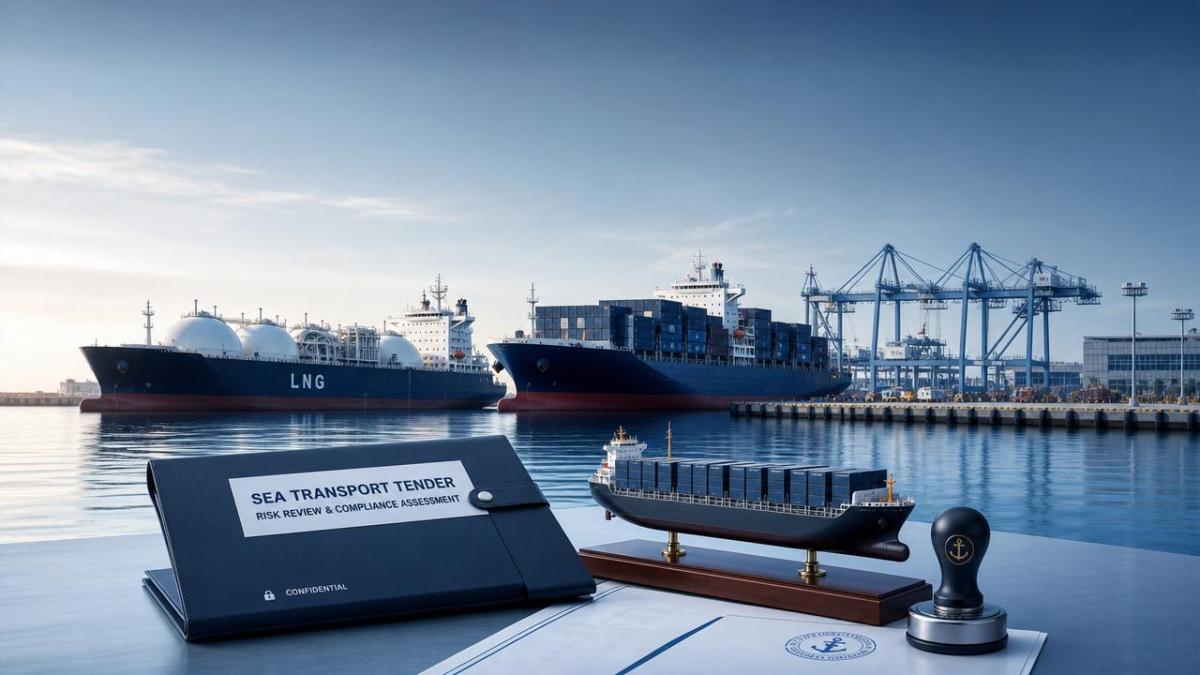
Many maritime tenders fail not because the offer is technically weak, but because the risk narrative is incomplete. Evaluators look for evidence, not confidence statements.
A compliant bid must connect vessel performance, regulatory obligations, delivery capability, and total cost exposure. When these links are unclear, procurement teams often apply risk premiums.
For business evaluators, the challenge is separating attractive claims from bankable solutions. This is especially important for smart container ships, LNG carriers, propulsion upgrades, and digital fleet systems.
The first risk screen should answer four questions
- Does the bid meet the technical specification without hidden deviations or unpriced assumptions?
- Can the proposed solution remain compliant across flag, class, port, and charterer requirements?
- Are delivery milestones supported by realistic manufacturing, integration, inspection, and logistics plans?
- Does the commercial model reflect lifecycle cost, spares, training, software updates, and energy impact?
GTOT approaches maritime tenders through land-sea intelligence stitching: technical depth from advanced vessels, safety logic from rail control, and commercial insight from global transport cycles.
Technical Scope Checks: Is the Bid Actually Comparable?
In maritime tenders, comparable pricing only exists when the technical scope is comparable. Small exclusions can later become change orders, disputes, or operational bottlenecks.
Business evaluators should build a technical compliance matrix before final pricing. The matrix should map each requirement to evidence, deviation, and commercial consequence.
The following table shows risk checks that help evaluators compare marine technology bids without relying on headline price alone.
A strong bid does not simply say “compliant.” It shows where performance is proven, where assumptions sit, and how residual risk will be controlled.
Red flags in technical submissions
- The supplier answers specification clauses with marketing language instead of measurable parameters.
- Integration responsibility is split between shipyard, OEM, and operator without a single accountable owner.
- Performance guarantees exclude real operating conditions such as tropical waters, port congestion, or low-load operation.
Compliance and Certification: Which Obligations Can Block Award?
Regulatory risk is a decisive factor in maritime tenders. A bid may be commercially attractive but unusable if class, flag, environmental, or safety obligations are unresolved.
Evaluators should identify mandatory requirements, optional scoring advantages, and jurisdiction-specific constraints. This prevents late-stage rework after technical clarification meetings.
Use this compliance table as a practical starting point when reviewing maritime tenders for vessels, onboard systems, or smart maritime infrastructure.
The best compliance response is not the longest one. It is a traceable answer that shows the route from requirement to approval, inspection, and operation.
How GTOT strengthens compliance judgment
GTOT’s Strategic Intelligence Center tracks shipbuilding cycles, smart vessel demand, and technical regulation shifts. This helps evaluators interpret requirements before they become bid blockers.
The same discipline used in SIL4 railway signal control supports maritime evaluation: risk must be structured, evidence-based, and linked to operational consequence.
Commercial Risk Checks: Is the Price Sustainable?
A competitive bid in maritime tenders must be affordable at award and sustainable during operation. Evaluators should resist comparing only purchase price.
Lifecycle cost includes energy consumption, spares, crew training, dry-docking implications, warranty exclusions, software subscriptions, and downtime risk during global trade peaks.
Cost areas that often change the ranking
- Fuel or energy impact: even minor efficiency differences can become material across long-haul routes and multi-year operation.
- Spares availability: a low-cost system can become expensive if critical parts require long lead times or exclusive sourcing.
- Software dependence: smart shipping tools may require licenses, connectivity fees, updates, and cybersecurity monitoring.
- Training and change management: crew adoption costs should be included when systems alter navigation, maintenance, or cargo workflows.
The table below helps translate commercial uncertainty into a practical risk comparison for maritime tenders.
When price differences are narrow, lifecycle clarity often becomes the deciding factor. A well-documented cost model reduces negotiation friction and improves bid credibility.
Scenario-Based Evaluation for Smart Ships and LNG Carriers
Maritime tenders should be tested against the real operating scenario, not a generic vessel profile. Cargo type, route volatility, port infrastructure, and fuel strategy change priorities.
For smart container ships, the evaluation focus may be data interoperability, route optimization, weather response, and cargo visibility. For LNG carriers, cryogenic safety dominates.
Application scenarios that require different bid logic
- Newbuild smart vessels require early alignment among shipyard, system integrator, fleet operator, and classification society.
- Retrofit projects need downtime analysis, cable routing checks, compatibility verification, and phased commissioning plans.
- LNG carrier projects require special attention to membrane containment stress, boil-off handling, cryogenic instrumentation, and emergency shutdown logic.
- Port-linked digital solutions need cybersecurity review, shore-side integration, data governance, and service-level expectations.
GTOT’s ocean-going vessel intelligence helps evaluators compare technologies across these scenarios. The goal is not to favor complexity, but to prove operational fitness.
Supplier and Delivery Risk: Can the Bid Be Executed?
Execution risk is often underestimated in maritime tenders. A technically compliant proposal can still fail if manufacturing, inspection, export logistics, or commissioning resources are weak.
Business evaluators should review delivery realism with the same discipline used for technical compliance. Fast schedules need proof, especially for restricted marine equipment.
Delivery assurance checklist
- Confirm long-lead components, including sensors, control cabinets, cryogenic equipment, propulsion parts, and certified materials.
- Check whether factory acceptance tests, class inspections, and buyer witness points are included in the schedule.
- Validate export documentation, packaging for marine environments, port arrival plans, and onboard installation windows.
- Ask for commissioning manpower assumptions, remote support capability, and escalation paths during sea trials.
A practical tender response should convert delivery promises into milestones. Each milestone should have an owner, document output, acceptance rule, and delay mitigation plan.
FAQ: Practical Questions Before Submitting Maritime Tenders
How should evaluators balance price and technical risk?
Use a weighted evaluation model that separates mandatory compliance, scored performance, lifecycle cost, and execution risk. This makes maritime tenders easier to defend internally.
If two bids differ by a small price margin, compare warranty exclusions, fuel impact, integration responsibility, and spares availability before recommending award.
What is the most common mistake in smart vessel bids?
The common mistake is treating digital capability as an add-on. AI routing, remote monitoring, and ship-to-shore data exchange require cybersecurity, data governance, and crew procedures.
A strong bid explains what happens when connectivity is limited, data is delayed, or the onboard system must operate independently.
Which documents should be ready before final submission?
Prepare a compliance matrix, technical datasheets, deviation list, lifecycle cost assumptions, delivery schedule, inspection plan, warranty terms, and integration responsibility matrix.
For LNG carrier-related maritime tenders, include cryogenic safety logic, containment-related assumptions, emergency handling references, and class approval pathway where relevant.
How early should certification risk be reviewed?
Certification risk should be reviewed before commercial pricing is finalized. Late clarification can affect design, inspection cost, delivery dates, and contractual liability.
In maritime tenders involving multiple jurisdictions, map flag, class, port, and environmental obligations separately. Do not assume one approval covers all operating scenarios.
Why Choose GTOT for Maritime Tender Intelligence
GTOT supports business evaluators who need more than supplier brochures. Our focus is high-end equipment intelligence across advanced vessels, rail control, traction systems, and braking technologies.
This cross-domain perspective matters because modern transport projects share the same core concerns: safety integrity, control logic, lifecycle cost, regulatory discipline, and operational resilience.
What you can consult with GTOT
- Parameter confirmation for smart vessel systems, LNG carrier technologies, propulsion-related equipment, and ship-to-shore digital solutions.
- Bid risk review covering technical deviations, compliance gaps, delivery assumptions, lifecycle cost, and supplier execution evidence.
- Procurement comparison support for maritime tenders where evaluators need structured scoring, defensible recommendations, and clearer negotiation points.
- Commercial insight on shipbuilding cycles, decarbonization pressure, smart shipping adoption, and high-restriction transport equipment markets.
Before submitting maritime tenders, engage GTOT to review parameters, certification requirements, delivery schedules, customization needs, quotation logic, and technical credibility. Strong bids are built before the deadline, not repaired after clarification.
Recommended News
 Sep 29, 2026What drives traction systems price differences between rail projects?Traction systems price differences explained: compare duty cycles, voltage compatibility, integration, localization, and lifecycle costs for smarter rail procurement.
 Sep 26, 2026What to assess before selecting an electric traction system manufacturerChoose an electric traction system manufacturer with confidence. Explore key criteria for performance, reliability, safety, integration, energy efficiency, and lifecycle support.
 Sep 25, 2026When do full digitalization systems justify the investment?Full digitalization systems: discover when rail and maritime operators can turn connected data into safer operations, higher availability, and measurable ROI.
 Sep 23, 2026What drives automatic train control systems cost on rail projects?Automatic train control systems cost depends on integration, migration, safety testing, communications, and lifecycle support. Explore the key budget drivers for rail projects.
 Sep 21, 2026How to assess an ocean going vessel builder’s delivery riskAssess an ocean going vessel builder’s delivery risk with proven checks for schedules, capacity, design maturity, critical equipment, quality, and project controls.
 Sep 20, 2026What drives rail safety technology costs over a project lifecycle?Rail safety technology cost goes beyond equipment—explore lifecycle drivers from integration and safety assurance to cybersecurity, commissioning, and obsolescence.
 Sep 16, 2026What to verify before choosing an advanced ocean-going vessels supplierAdvanced ocean-going vessels supplier checklist: verify design authority, build quality, digital systems, delivery reliability, and lifecycle support before you buy.
 Sep 15, 2026What rail safety technology best reduces level-crossing risks in Southeast Asia?Rail safety technology Southeast Asia: discover how fail-safe signalling, barriers, obstacle detection and remote monitoring reduce level-crossing risks.
 Sep 14, 2026How exporters can reduce customs delays in global trade logisticsGlobal trade logistics for exporters: reduce customs delays with accurate data, clearance-ready documents, early filing, and proactive exception management.
 Sep 13, 2026When do global transportation network systems reduce delivery delays?Global transportation network systems reduce delivery delays by improving rail-port-vessel coordination, real-time visibility, and proactive decisions across complex land-sea supply chains.
 Sep 09, 2026When should you choose a rail and maritime manufacturer with dual-sector capability?Rail and maritime manufacturer guide: learn when dual-sector capability reduces integration risk, improves lifecycle support, and strengthens rail-to-port operations.
 Sep 08, 2026What to verify before selecting a railway signalling equipment supplierRailway signalling equipment supplier checklist: verify safety evidence, integration, cybersecurity, delivery capability, and lifecycle support before award.
 Sep 07, 2026How to size a traction power transformer for railway load demandTraction power transformer sizing guide: model railway load demand, peak duty, voltage regulation, harmonics, and contingency capacity for reliable service.
 Sep 07, 2026How do customization options for industrial connectors affect lead times?Customization options for industrial connectors can impact lead times, cost, and compliance. Learn how to specify smarter for rail and marine projects.
 Sep 05, 2026What information should an industrial sourcing guide include?Industrial sourcing information procurement guide: evaluate suppliers, compliance, lifecycle costs, interfaces, and lead times for smarter rail and maritime purchasing decisions.
 Sep 01, 2026How to find reliable maritime tender information before biddingMaritime tender information: learn how to verify sources, define bid-ready scopes, check qualifications, and reduce risk before submitting competitive marine bids.
 Aug 30, 2026How to select railway automation equipment for depots with phased upgradesRailway automation equipment for depots: learn how to plan phased upgrades that improve safety, throughput, integration, and lifecycle control.
 Aug 27, 2026How industrial sourcing intelligence pricing data supports budget approvalIndustrial sourcing intelligence pricing data helps teams benchmark scope, assess supplier risk, and build defensible budget approvals for complex rail and maritime assets.
 Aug 26, 2026When does a marine fuel efficiency solution make financial sense in the Middle East?Marine fuel efficiency solution Middle East: learn when retrofit savings, compliance value, and vessel data align to deliver credible ROI and smarter shipping investment decisions.
 Aug 24, 2026When does maritime automation for tankers deliver a real payback?Maritime automation for tankers delivers real payback when it cuts fuel use, reduces cargo risk, and improves uptime. See how owners can time investment for stronger ROI.
 Aug 23, 2026When do maritime logistics systems in the Middle East justify the costMaritime logistics systems Middle East: discover when rising delays, manual coordination, and poor visibility make system investment the smarter move for regional operators.
 Aug 22, 2026What drives vessel navigation system price for commercial fleetsVessel navigation system price depends on integration, compliance, automation, and support—not just hardware. Learn what drives fleet costs and compare quotes with confidence.
 Aug 21, 2026How to assess shipbuilding maritime tenders before biddingShipbuilding maritime tenders require more than price checks. Learn how to assess technical scope, compliance, supply chain, and commercial risk before bidding with confidence.
 Aug 20, 2026When does working with an ocean-going vessels distributor reduce supply risk?Ocean-going vessels distributor: learn when this partner cuts supply risk through stronger compliance, faster response, and better sourcing resilience in complex maritime procurement.