



Search News
Industry Portal
Popular Tags
Maritime Tenders: How to Compare Bids Without Missing Hidden Risk
Author
Time
Click Count
In maritime tenders, the lowest bid rarely tells the full story. For business evaluation teams, a smart comparison means looking beyond price to uncover technical gaps, lifecycle costs, compliance exposure, and supplier reliability. This guide shows how to compare maritime tenders with greater confidence, reduce hidden risk, and make decisions that protect both project delivery and long-term commercial value.
Why maritime tenders are harder to compare than they first appear
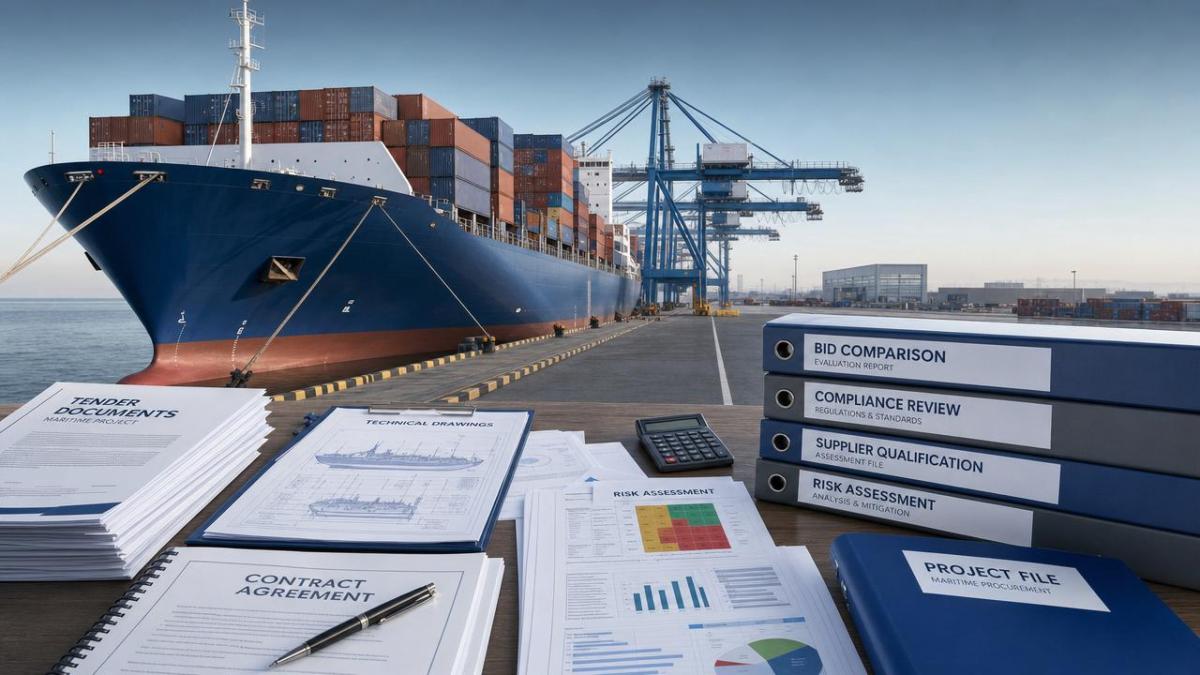
Business evaluators often receive bid packages that look comparable on the surface. Prices are listed, delivery dates are stated, and technical brochures appear complete. Yet maritime tenders involve layered risk that can sit outside the headline offer.
That is especially true when the scope touches smart container ships, LNG carriers, integrated controls, propulsion-adjacent systems, digital monitoring, or other assets where marine engineering, compliance, and operational continuity intersect.
A bid can be cheaper because the specification has been interpreted narrowly, the service boundary has been reduced, the testing scope has been softened, or the supplier has transferred future cost back to the buyer.
For teams working across land-sea infrastructure, GTOT sees a familiar pattern: the more technically restricted the tender, the more likely hidden risk is buried in assumptions rather than line items.
- Commercially similar bids may differ in interface responsibility, commissioning support, or warranty trigger conditions.
- Marine equipment proposals may include different class documentation levels, FAT participation, spare parts packs, or software access rights.
- Delivery promises can vary depending on whether raw material lead time, shipyard slot risk, and export procedures are fully reflected.
How to compare maritime tenders beyond headline price
A disciplined tender comparison starts by separating visible cost from embedded obligation. Business evaluation teams should score each bid against the same commercial and technical baseline before discussing savings.
The table below helps structure maritime tenders around the dimensions that most often change the real value of the offer after contract award.
This framework shifts the conversation from “Which bid is lowest?” to “Which bid carries the most controllable total risk?” That is a more useful question for maritime tenders involving high-value assets and strict schedules.
Build a like-for-like comparison first
Before any scoring, normalize the bids. Remove commercial noise. Align the exact scope, test obligations, software inclusions, onboard attendance, packing requirements, and after-sales support assumptions.
If one supplier includes FAT witness support, commissioning engineers, and interface drawings while another excludes them, the offers are not truly comparable.
Score risk separately from value
Many teams blend technical risk into commercial scoring without making the trade-off visible. A better method is to keep two views: commercial attractiveness and execution exposure.
- Assign a weighted value score for price, payment terms, warranty, and operating cost.
- Assign a separate risk score for compliance gaps, delivery dependency, documentation quality, and supplier track record.
- Review bids that look cheap but show a weak risk-adjusted position.
Which hidden risks are most often missed in maritime tenders?
Not all risks are technical failures. Some are contractual, logistical, or operational. In maritime tenders, missed assumptions can turn into expensive variation orders or delayed vessel delivery.
The following checklist reflects common blind spots seen in marine and intermodal equipment procurement, especially where digitalization, safety, and cross-border supply chains are involved.
- Scope exclusions hidden in footnotes, especially cabling, foundations, interface hardware, or software licenses.
- Acceptance criteria that are defined vaguely, leaving room for dispute during trials or commissioning.
- Long-lead components dependent on a single sub-supplier or region-sensitive shipping route.
- Warranty terms limited by operating profile, crew handling, maintenance record format, or reporting deadlines.
- Cybersecurity and remote support obligations omitted from smart vessel packages.
- Insufficient spare parts strategy for routes where port access and service turnaround are constrained.
GTOT’s cross-domain perspective matters here. The same discipline used to assess SIL4-oriented rail signalling logic or high-speed traction reliability also helps marine evaluators interrogate redundancy, failure response, and interface accountability.
A practical bid comparison matrix for business evaluation teams
When maritime tenders involve multiple stakeholders, a structured matrix reduces internal disagreement. It gives procurement, engineering, finance, and operations a common review language.
Use a weighted decision table like the one below to compare bids more objectively. The exact weighting should reflect vessel criticality, schedule pressure, and operational environment.
A matrix like this is not meant to replace expert judgment. It is meant to make trade-offs visible, document the reasons behind supplier selection, and reduce post-award surprises.
When low price may still be acceptable
A lower-priced offer can still win if the supplier demonstrates full compliance, transparent scope boundaries, realistic lead time, and credible support. The issue is not low price itself. The issue is unexplained low price.
Technical and compliance checks that should never be skipped
In maritime tenders, commercial review cannot be separated from technical validation. That is particularly important for smart vessels and LNG-related systems, where digital interfaces, cryogenic environments, and safety documentation influence both cost and schedule.
Core technical checkpoints
- Operating envelope: sea state, vibration, temperature, humidity, power quality, and continuous duty assumptions.
- Integration logic: data protocol, alarm hierarchy, interface ownership, and remote diagnostics scope.
- Maintainability: access space, replacement intervals, crew skill requirement, and onboard troubleshooting guidance.
Compliance and documentation checkpoints
- Whether the bid states applicable class or flag-related documentation responsibilities clearly.
- Whether FAT, SAT, inspection hold points, and non-conformance handling are defined.
- Whether material traceability and certificate packages match the contract deliverables.
GTOT’s intelligence approach is useful when these checks become highly specialized. Reviewing tender logic through the lens of safety-critical rail systems and advanced marine engineering helps teams ask sharper questions before commercial commitment.
How lifecycle cost changes the outcome of maritime tenders
For business evaluation teams under budget pressure, purchase price is visible and immediate. Operating cost is slower, but often larger. This is why maritime tenders should include a lifecycle cost view, not just a procurement cost summary.
The next table outlines cost categories that commonly reshape bid rankings after a full ownership review.
A supplier that is slightly higher upfront may still present the better commercial outcome if supportability, efficiency, and documentation quality reduce long-term cost and operational interruption.
Common mistakes business evaluation teams make in maritime tenders
Even experienced teams can fall into patterns that weaken tender decisions. Most mistakes are not caused by poor diligence. They are caused by time pressure, fragmented data, or unclear ownership between commercial and technical reviewers.
Frequent decision errors
- Treating compliance as a binary issue instead of measuring the severity of each deviation.
- Accepting aggressive delivery dates without checking sub-supplier and logistics dependencies.
- Ignoring digital support terms in smart maritime systems until after commissioning.
- Underestimating the value of clear documentation in class review and vessel handover.
- Comparing quotations before aligning scope assumptions and service boundaries.
The fix is not more paperwork. It is a sharper evaluation sequence, a documented scoring logic, and earlier technical-commercial alignment.
FAQ: practical questions about comparing maritime tenders
How do I know whether a low bid in maritime tenders is genuinely competitive?
Check whether the supplier has reduced scope, softened performance commitments, shortened warranty reach, or excluded service elements. A credible low bid should still show transparent assumptions, complete documentation responsibility, and realistic delivery planning.
What should business evaluators prioritize when technical teams disagree on bidders?
Prioritize deviation severity, acceptance risk, and lifecycle impact. Ask which gaps could delay vessel delivery, increase recurring cost, or create future claims. This keeps the discussion anchored to commercial consequence rather than preference alone.
Are maritime tenders for smart vessels different from conventional equipment bids?
Yes. Smart vessel tenders usually bring extra layers such as data integration, software rights, cybersecurity responsibilities, remote support, and system interoperability. These items can materially affect both capex and operating continuity.
How early should compliance documentation be reviewed?
As early as the bid clarification stage. Waiting until award or manufacturing can expose missing traceability, unsuitable test plans, or incomplete approval paths. Early review reduces rework and protects delivery milestones.
Why informed intelligence support matters in maritime tenders
Maritime tenders are not decided well by price comparison alone. They require a clear view of technical interpretation, vessel operating context, compliance burden, supply chain timing, and long-term asset value.
GTOT brings a distinctive advantage because its intelligence model spans both advanced ocean-going vessels and demanding transport technologies such as railway signalling, traction, and braking systems. That cross-sector depth helps evaluators think in terms of safety logic, interface discipline, and operational resilience rather than brochure language.
Why choose us for maritime tender evaluation support
If your team is reviewing maritime tenders for smart container ships, LNG carriers, or related marine equipment packages, GTOT can support the decision process with structured commercial and technical intelligence.
- Clarify parameter alignment and identify scope gaps before award.
- Support product selection by comparing compliance, maintainability, and lifecycle cost logic.
- Review delivery schedules against supply chain realism and project milestones.
- Assess documentation expectations for certification, testing, and acceptance readiness.
- Help frame supplier clarification questions on pricing, customization, software support, and spare parts planning.
If you need support with parameter confirmation, bid comparison structure, certification expectations, delivery cycle review, custom solution evaluation, or quotation communication, GTOT can help your business evaluation team move faster with fewer blind spots.
Recommended News
 Sep 29, 2026What drives traction systems price differences between rail projects?Traction systems price differences explained: compare duty cycles, voltage compatibility, integration, localization, and lifecycle costs for smarter rail procurement.
 Sep 26, 2026What to assess before selecting an electric traction system manufacturerChoose an electric traction system manufacturer with confidence. Explore key criteria for performance, reliability, safety, integration, energy efficiency, and lifecycle support.
 Sep 25, 2026When do full digitalization systems justify the investment?Full digitalization systems: discover when rail and maritime operators can turn connected data into safer operations, higher availability, and measurable ROI.
 Sep 23, 2026What drives automatic train control systems cost on rail projects?Automatic train control systems cost depends on integration, migration, safety testing, communications, and lifecycle support. Explore the key budget drivers for rail projects.
 Sep 21, 2026How to assess an ocean going vessel builder’s delivery riskAssess an ocean going vessel builder’s delivery risk with proven checks for schedules, capacity, design maturity, critical equipment, quality, and project controls.
 Sep 20, 2026What drives rail safety technology costs over a project lifecycle?Rail safety technology cost goes beyond equipment—explore lifecycle drivers from integration and safety assurance to cybersecurity, commissioning, and obsolescence.
 Sep 16, 2026What to verify before choosing an advanced ocean-going vessels supplierAdvanced ocean-going vessels supplier checklist: verify design authority, build quality, digital systems, delivery reliability, and lifecycle support before you buy.
 Sep 15, 2026What rail safety technology best reduces level-crossing risks in Southeast Asia?Rail safety technology Southeast Asia: discover how fail-safe signalling, barriers, obstacle detection and remote monitoring reduce level-crossing risks.
 Sep 14, 2026How exporters can reduce customs delays in global trade logisticsGlobal trade logistics for exporters: reduce customs delays with accurate data, clearance-ready documents, early filing, and proactive exception management.
 Sep 13, 2026When do global transportation network systems reduce delivery delays?Global transportation network systems reduce delivery delays by improving rail-port-vessel coordination, real-time visibility, and proactive decisions across complex land-sea supply chains.
 Sep 09, 2026When should you choose a rail and maritime manufacturer with dual-sector capability?Rail and maritime manufacturer guide: learn when dual-sector capability reduces integration risk, improves lifecycle support, and strengthens rail-to-port operations.
 Sep 08, 2026What to verify before selecting a railway signalling equipment supplierRailway signalling equipment supplier checklist: verify safety evidence, integration, cybersecurity, delivery capability, and lifecycle support before award.
 Sep 07, 2026How to size a traction power transformer for railway load demandTraction power transformer sizing guide: model railway load demand, peak duty, voltage regulation, harmonics, and contingency capacity for reliable service.
 Sep 07, 2026How do customization options for industrial connectors affect lead times?Customization options for industrial connectors can impact lead times, cost, and compliance. Learn how to specify smarter for rail and marine projects.
 Sep 05, 2026What information should an industrial sourcing guide include?Industrial sourcing information procurement guide: evaluate suppliers, compliance, lifecycle costs, interfaces, and lead times for smarter rail and maritime purchasing decisions.
 Sep 01, 2026How to find reliable maritime tender information before biddingMaritime tender information: learn how to verify sources, define bid-ready scopes, check qualifications, and reduce risk before submitting competitive marine bids.
 Aug 30, 2026How to select railway automation equipment for depots with phased upgradesRailway automation equipment for depots: learn how to plan phased upgrades that improve safety, throughput, integration, and lifecycle control.
 Aug 27, 2026How industrial sourcing intelligence pricing data supports budget approvalIndustrial sourcing intelligence pricing data helps teams benchmark scope, assess supplier risk, and build defensible budget approvals for complex rail and maritime assets.
 Aug 26, 2026When does a marine fuel efficiency solution make financial sense in the Middle East?Marine fuel efficiency solution Middle East: learn when retrofit savings, compliance value, and vessel data align to deliver credible ROI and smarter shipping investment decisions.
 Aug 24, 2026When does maritime automation for tankers deliver a real payback?Maritime automation for tankers delivers real payback when it cuts fuel use, reduces cargo risk, and improves uptime. See how owners can time investment for stronger ROI.
 Aug 23, 2026When do maritime logistics systems in the Middle East justify the costMaritime logistics systems Middle East: discover when rising delays, manual coordination, and poor visibility make system investment the smarter move for regional operators.
 Aug 22, 2026What drives vessel navigation system price for commercial fleetsVessel navigation system price depends on integration, compliance, automation, and support—not just hardware. Learn what drives fleet costs and compare quotes with confidence.
 Aug 21, 2026How to assess shipbuilding maritime tenders before biddingShipbuilding maritime tenders require more than price checks. Learn how to assess technical scope, compliance, supply chain, and commercial risk before bidding with confidence.
 Aug 20, 2026When does working with an ocean-going vessels distributor reduce supply risk?Ocean-going vessels distributor: learn when this partner cuts supply risk through stronger compliance, faster response, and better sourcing resilience in complex maritime procurement.