



Search News
Industry Portal
Popular Tags
Transportation Infrastructure Costs: What Delays Usually Signal
Author
Time
Click Count
Transportation infrastructure costs rarely escalate for a single reason. In most rail, maritime, and intermodal projects, delays are early warnings of deeper execution weaknesses.
For enterprise decision-makers, the key question is not simply why a schedule slipped. It is what that delay reveals about scope discipline, supplier readiness, compliance exposure, and integration maturity.
When understood correctly, project slowdowns become decision signals. They can indicate whether cost growth is temporary and manageable, or whether the investment model itself needs intervention.
This article explains what delays in transportation infrastructure usually signal, how leaders should interpret them, and where to focus before budget overruns become structural problems.
Why delays in transportation infrastructure matter far beyond the schedule
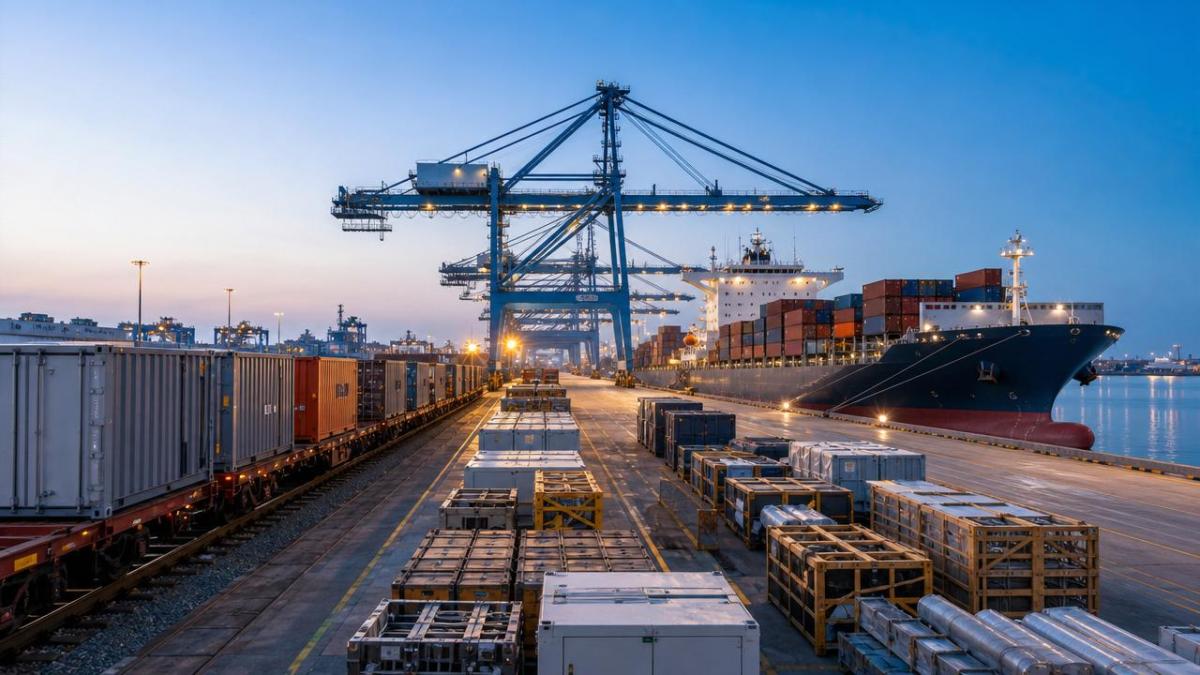
In large transportation infrastructure programs, delays are rarely neutral timing events. They often trigger a chain reaction across financing, procurement, labor allocation, regulatory approvals, and asset commissioning.
A postponed rail signalling upgrade may extend legacy system maintenance costs. A late smart vessel delivery can disrupt fleet deployment assumptions. A delayed LNG terminal interface can affect upstream and downstream commercial commitments.
For decision-makers, the visible delay is only the surface issue. The real concern is whether the delay reflects a contained execution problem or a broader weakness in project design.
That distinction matters because not all delays damage value equally. Some are recoverable through sequencing and governance. Others expose hidden flaws that continue to increase transportation infrastructure costs long after construction resumes.
What delays usually signal at the planning stage
Many delays begin long before construction or manufacturing starts. They often point to optimistic planning assumptions that underestimated site complexity, technical interfaces, approval pathways, or local delivery constraints.
In transportation infrastructure, front-end planning quality strongly predicts downstream performance. If geotechnical uncertainty, utility relocation, marine conditions, or system compatibility were poorly defined, delays are often the first symptom.
Decision-makers should pay close attention when project teams repeatedly revise milestones early. Frequent baseline changes usually signal that the original business case did not adequately reflect delivery reality.
This is especially critical in rail and maritime sectors, where operational environments are tightly constrained. Signal systems, traction power, braking interfaces, vessel automation, and port connectivity all depend on precise early-stage definition.
When planning is weak, costs do not rise only because work takes longer. They rise because teams begin solving design and operational questions during execution, where changes are far more expensive.
When procurement delays reveal supply chain fragility
Procurement-related slowdowns often reveal more than administrative inefficiency. They can indicate overdependence on a narrow supplier base, unrealistic lead-time assumptions, or poor alignment between specifications and market availability.
In transportation infrastructure, specialized equipment such as signalling components, pantographs, braking systems, cryogenic containment materials, and advanced navigation platforms cannot always be sourced quickly or substituted easily.
If procurement timelines slip repeatedly, leaders should ask whether technical requirements were over-customized. Excessive customization can reduce competition, increase qualification demands, and create single-point dependency in the supply chain.
Another warning sign is delayed supplier data submission, factory acceptance testing, or certification documentation. These issues often signal that suppliers were selected on price before execution readiness was fully validated.
For enterprise buyers, the lesson is clear: low bid pricing does not equal low project cost. In complex transportation infrastructure, procurement resilience is often a stronger value driver than initial unit cost.
Compliance and approval delays often indicate underestimated regulatory complexity
Regulatory delays are commonly treated as external obstacles, but they often reflect incomplete preparation. In many transportation infrastructure projects, environmental, safety, maritime, customs, or interoperability requirements were not fully integrated into the schedule.
For rail programs, approvals may involve safety certification, SIL-related validation, network access coordination, and operational disruption controls. For maritime assets, class rules, emissions standards, port requirements, and cargo safety obligations can reshape timelines.
When approvals stall, the deeper issue is often fragmented accountability. Engineering, legal, compliance, and operations teams may be working in sequence instead of in parallel, creating avoidable review loops.
This matters financially because regulatory delay rarely remains isolated. It can postpone testing windows, affect contract milestones, extend standby costs, and weaken confidence among lenders, operators, and commercial partners.
Executives should therefore view compliance delay as a governance issue, not just a permitting issue. If the approval strategy is reactive, transportation infrastructure costs usually rise in ways that are difficult to recover later.
Integration delays often signal the most serious execution risk
Among all delay categories, integration-related slowdowns are often the most important. They suggest the project may have treated components as separate packages rather than as a functioning operational system.
In rail, that might mean signalling, traction power, rolling stock, braking logic, and control software were each procured successfully but not engineered for seamless interoperability. In maritime settings, hull systems, automation, propulsion, and shore interfaces may face similar gaps.
Integration delays are especially dangerous because they often emerge late. Mechanical completion may appear strong, yet commissioning fails because system behaviors under real operating conditions were not fully modeled or tested.
For senior leaders, repeated interface disputes between contractors are a major warning sign. They often indicate blurred responsibility boundaries, weak systems engineering discipline, or contracts that reward package completion rather than operational readiness.
When this happens, cost escalation accelerates quickly. Rework, retesting, software modification, idle teams, and delayed revenue service can materially change the investment return profile.
Labor and contractor delays may signal coordination, not just capacity, problems
It is easy to assume labor delays mean a shortage of workers. In reality, they often point to sequencing failures, low site productivity, unclear work fronts, or ineffective coordination across contractors.
Transportation infrastructure projects involve tightly linked activities. Civil works, electrical installation, control systems, marine outfitting, and testing crews must be scheduled around limited access windows and strict safety constraints.
If teams are waiting on predecessors, revisiting finished areas, or facing recurring design clarifications, the delay is not simply a manpower issue. It reflects weak production planning and interface management.
This distinction is important for executives because throwing more labor at a coordination problem can increase costs without improving output. In some cases, it actually reduces productivity by intensifying congestion and supervision burdens.
The better response is to examine work packaging, decision latency, and responsibility clarity. Transportation infrastructure projects perform better when execution logic is simplified before labor volume is increased.
What cost overruns linked to delays mean for asset value
Not every cost overrun destroys value. The real question is whether the additional spending protects future performance or merely compensates for preventable execution weakness.
For example, extra investment to strengthen digital signalling reliability, improve braking system performance, or enhance vessel energy efficiency may support lifecycle returns. In contrast, repeated redesign, claims settlement, and idle resource costs usually do not.
Enterprise decision-makers should therefore separate productive cost growth from non-productive cost growth. This helps determine whether the project remains strategically sound despite short-term pressure.
In transportation infrastructure, asset value depends on more than completion. It depends on safety, uptime, maintainability, interoperability, and operating efficiency across decades of use.
A delayed project that resolves critical system risks may still be commercially rational. A project delivered quickly but with unresolved integration or compliance weaknesses may create higher lifetime costs.
How enterprise leaders should diagnose delay signals early
Executives do not need to manage every engineering detail, but they do need a clear diagnostic framework. The goal is to identify whether the delay is local, systemic, or strategic.
First, ask where schedule variance is concentrated. If delays cluster around one supplier or one permit, recovery may be possible. If delays appear across design, procurement, testing, and approvals, the issue is likely systemic.
Second, assess whether the critical path is stable. Frequent shifts in the critical path usually indicate poor project controls or unresolved interface dependencies rather than isolated operational setbacks.
Third, review change order patterns. A high volume of late-stage changes often signals incomplete front-end definition. In transportation infrastructure, this is a strong predictor of further cost and schedule deterioration.
Fourth, test the maturity of commissioning readiness. If testing scripts, data environments, operator training, and maintenance documentation are lagging, apparent progress may be misleading.
Finally, examine governance cadence. Slow decision escalation, unclear ownership, and inconsistent reporting are often the hidden conditions that allow small delays to become budget threats.
Practical actions to reduce transportation infrastructure cost exposure
Leaders can reduce exposure by strengthening front-end definition before contract award. That includes interface mapping, regulatory planning, realistic lead-time assessment, and scenario-based contingency design.
Supplier strategy should prioritize execution capability alongside price. For critical equipment, resilience depends on technical maturity, documentation discipline, certification readiness, and service support capacity.
Projects should also adopt stronger systems integration governance. This means assigning clear responsibility for end-to-end operational performance, not just package delivery milestones.
Digital reporting matters as well. Decision-makers need timely visibility into design maturity, procurement status, testing readiness, and emerging bottlenecks rather than summary dashboards that hide interface risk.
Most importantly, delay recovery plans should be economically disciplined. Accelerating work is only justified when it protects long-term asset value or preserves strategic revenue, not simply to restore optics.
What this means for rail, maritime, and intermodal investment strategy
Across rail and ocean sectors, the common lesson is that delays are diagnostic events. They show where operational complexity was underestimated and where management systems may be outpaced by technical ambition.
For organizations investing in signalling, pantographs, braking systems, smart container ships, LNG carriers, or intermodal corridors, the ability to interpret delay signals is now a competitive capability.
The most effective enterprises do not treat transportation infrastructure costs as static estimates. They treat them as outcomes shaped by planning quality, execution discipline, and integration intelligence.
That perspective is particularly important in an environment defined by decarbonization, digitalization, safety regulation, and global supply chain volatility. Complex assets demand sharper early judgment, not just stronger late recovery.
In practice, this means leaders should challenge whether their projects are truly system-ready, supplier-ready, and approval-ready before they are declared schedule-ready.
Conclusion
Transportation infrastructure delays usually signal something deeper than lost time. They may reveal weak planning assumptions, fragile procurement structures, underestimated compliance burdens, or incomplete system integration.
For enterprise decision-makers, the goal is not merely to push projects faster. It is to understand what each delay says about cost trajectory, execution quality, and long-term asset value.
When interpreted early, delays can support better intervention, better capital protection, and better strategic outcomes. When ignored, they often become the mechanism through which avoidable cost growth takes hold.
In high-stakes rail and maritime investments, the smartest response is not to ask whether delay exists. It is to ask what the delay is trying to tell you.
Recommended News
 Sep 29, 2026What drives traction systems price differences between rail projects?Traction systems price differences explained: compare duty cycles, voltage compatibility, integration, localization, and lifecycle costs for smarter rail procurement.
 Sep 26, 2026What to assess before selecting an electric traction system manufacturerChoose an electric traction system manufacturer with confidence. Explore key criteria for performance, reliability, safety, integration, energy efficiency, and lifecycle support.
 Sep 25, 2026When do full digitalization systems justify the investment?Full digitalization systems: discover when rail and maritime operators can turn connected data into safer operations, higher availability, and measurable ROI.
 Sep 23, 2026What drives automatic train control systems cost on rail projects?Automatic train control systems cost depends on integration, migration, safety testing, communications, and lifecycle support. Explore the key budget drivers for rail projects.
 Sep 21, 2026How to assess an ocean going vessel builder’s delivery riskAssess an ocean going vessel builder’s delivery risk with proven checks for schedules, capacity, design maturity, critical equipment, quality, and project controls.
 Sep 20, 2026What drives rail safety technology costs over a project lifecycle?Rail safety technology cost goes beyond equipment—explore lifecycle drivers from integration and safety assurance to cybersecurity, commissioning, and obsolescence.
 Sep 16, 2026What to verify before choosing an advanced ocean-going vessels supplierAdvanced ocean-going vessels supplier checklist: verify design authority, build quality, digital systems, delivery reliability, and lifecycle support before you buy.
 Sep 15, 2026What rail safety technology best reduces level-crossing risks in Southeast Asia?Rail safety technology Southeast Asia: discover how fail-safe signalling, barriers, obstacle detection and remote monitoring reduce level-crossing risks.
 Sep 14, 2026How exporters can reduce customs delays in global trade logisticsGlobal trade logistics for exporters: reduce customs delays with accurate data, clearance-ready documents, early filing, and proactive exception management.
 Sep 13, 2026When do global transportation network systems reduce delivery delays?Global transportation network systems reduce delivery delays by improving rail-port-vessel coordination, real-time visibility, and proactive decisions across complex land-sea supply chains.
 Sep 09, 2026When should you choose a rail and maritime manufacturer with dual-sector capability?Rail and maritime manufacturer guide: learn when dual-sector capability reduces integration risk, improves lifecycle support, and strengthens rail-to-port operations.
 Sep 08, 2026What to verify before selecting a railway signalling equipment supplierRailway signalling equipment supplier checklist: verify safety evidence, integration, cybersecurity, delivery capability, and lifecycle support before award.
 Sep 07, 2026How to size a traction power transformer for railway load demandTraction power transformer sizing guide: model railway load demand, peak duty, voltage regulation, harmonics, and contingency capacity for reliable service.
 Sep 07, 2026How do customization options for industrial connectors affect lead times?Customization options for industrial connectors can impact lead times, cost, and compliance. Learn how to specify smarter for rail and marine projects.
 Sep 05, 2026What information should an industrial sourcing guide include?Industrial sourcing information procurement guide: evaluate suppliers, compliance, lifecycle costs, interfaces, and lead times for smarter rail and maritime purchasing decisions.
 Sep 01, 2026How to find reliable maritime tender information before biddingMaritime tender information: learn how to verify sources, define bid-ready scopes, check qualifications, and reduce risk before submitting competitive marine bids.
 Aug 30, 2026How to select railway automation equipment for depots with phased upgradesRailway automation equipment for depots: learn how to plan phased upgrades that improve safety, throughput, integration, and lifecycle control.
 Aug 27, 2026How industrial sourcing intelligence pricing data supports budget approvalIndustrial sourcing intelligence pricing data helps teams benchmark scope, assess supplier risk, and build defensible budget approvals for complex rail and maritime assets.
 Aug 26, 2026When does a marine fuel efficiency solution make financial sense in the Middle East?Marine fuel efficiency solution Middle East: learn when retrofit savings, compliance value, and vessel data align to deliver credible ROI and smarter shipping investment decisions.
 Aug 24, 2026When does maritime automation for tankers deliver a real payback?Maritime automation for tankers delivers real payback when it cuts fuel use, reduces cargo risk, and improves uptime. See how owners can time investment for stronger ROI.
 Aug 23, 2026When do maritime logistics systems in the Middle East justify the costMaritime logistics systems Middle East: discover when rising delays, manual coordination, and poor visibility make system investment the smarter move for regional operators.
 Aug 22, 2026What drives vessel navigation system price for commercial fleetsVessel navigation system price depends on integration, compliance, automation, and support—not just hardware. Learn what drives fleet costs and compare quotes with confidence.
 Aug 21, 2026How to assess shipbuilding maritime tenders before biddingShipbuilding maritime tenders require more than price checks. Learn how to assess technical scope, compliance, supply chain, and commercial risk before bidding with confidence.
 Aug 20, 2026When does working with an ocean-going vessels distributor reduce supply risk?Ocean-going vessels distributor: learn when this partner cuts supply risk through stronger compliance, faster response, and better sourcing resilience in complex maritime procurement.