



Search News
Industry Portal
Popular Tags
Global Macro-Transportation Risks Affecting New Rail and Port Plans
Author
Time
Click Count
Global macro-transportation risks are reshaping how project managers and engineering leaders evaluate new rail and port plans. From shifting trade routes and energy volatility to safety standards, financing pressure, and digital integration, every decision now demands stronger technical judgment and strategic foresight. This article explores the critical risks influencing cross-border infrastructure planning and what they mean for resilient, future-ready transit and maritime projects.
Why global macro-transportation risk has become a front-end project decision issue
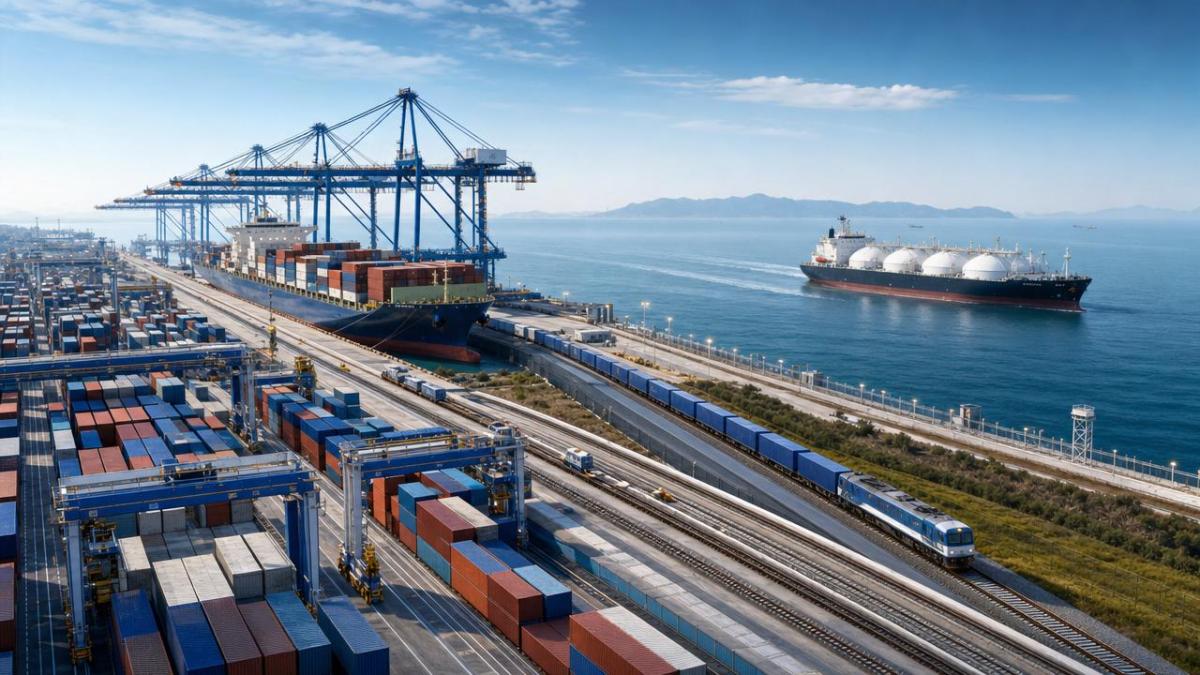
For project managers, global macro-transportation is no longer a background trend. It now directly affects route design, asset selection, financing assumptions, commissioning schedules, and long-term operational resilience.
A new rail corridor can no longer be assessed only by civil engineering feasibility. A new port plan cannot be judged only by berth capacity or dredging depth. Both must be tested against geopolitical disruptions, energy transition pressure, supply chain fragmentation, and rising safety expectations.
This is where GTOT provides practical value. By linking railway signal control systems, pantographs, braking systems, smart container ships, LNG carriers, and strategic intelligence, GTOT helps decision-makers read technical risks and market signals as one connected system.
- Rail projects face stricter requirements for automation integrity, SIL4-oriented safety logic, and interoperability across mixed suppliers.
- Port projects face vessel mix uncertainty, energy bunkering transition, and digital integration demands between shore systems and ship operators.
- Both asset classes must now survive cost escalation, component lead-time volatility, and more demanding compliance review from lenders and authorities.
Which risks matter most in new rail and port planning?
The most important global macro-transportation risks are not isolated. They interact. A fuel shock can change shipping economics, which changes hinterland freight flows, which then alters rail capacity assumptions and terminal utilization models.
The table below helps engineering leaders identify where strategic risk becomes an engineering, procurement, or schedule risk in practice.
The key lesson is simple: in global macro-transportation planning, external shocks often first appear in assumptions, then move into equipment, then into schedule and cost. If risk is reviewed only at board level, the engineering team reacts too late.
Three questions every project owner should ask early
- If cargo, passenger, or energy demand changes by 15% to 25%, does the selected system architecture still make sense?
- Which components have the longest approval, manufacturing, or integration path?
- Are we procuring for current demand only, or for the next compliance and digitalization cycle as well?
How rail system choices change under global macro-transportation pressure
In rail, the most common mistake is treating control, current collection, and braking as separate technical packages. Under present market conditions, they behave as a linked reliability chain.
Signal control systems
Railway signaling sits at the center of capacity, safety, and automation economics. For new corridors, project leaders should review whether the signaling concept supports dense operation, degraded mode recovery, maintainability, and future communications upgrades such as LTE-M-related pathways where relevant.
Pantographs in high-speed and urban conditions
Pantograph selection is increasingly influenced by climate severity, speed targets, and maintenance windows. In global macro-transportation planning, delayed replacement parts or unstable interface design can create hidden commissioning risk, especially when operating above 350 km/h or in complex wind environments.
Braking systems and stopping certainty
Braking decisions should not be reduced to stopping distance alone. Thermal fade behavior, control redundancy, maintenance access, and mixed operating profiles matter. This is particularly important for heavy metro, regional freight-passenger overlap, and high-tonnage trainsets.
- Specify interface responsibilities between signaling logic and braking response clearly.
- Check maintainability under actual depot constraints, not ideal workshop assumptions.
- Prioritize components with a realistic spare strategy for cross-border delivery disruptions.
What makes port plans more exposed than before?
Ports now operate at the intersection of shipping cycles, energy transition, inland connectivity, and digital coordination. That makes them especially sensitive to global macro-transportation shifts.
The challenge is not only building enough infrastructure. It is building the right infrastructure for uncertain vessel types, changing turnaround expectations, and growing data exchange requirements between terminal, ship, customs, and hinterland operators.
Smart container ship compatibility
As smart container ships expand ship-to-shore coordination and route optimization, port planners need better digital architecture. Terminal operating logic, berth assignment, traffic management, and maintenance forecasting must be designed for interoperability rather than isolated automation islands.
LNG carrier and energy corridor implications
Ports serving LNG-related flows must respect specialized handling, cryogenic safety, and support infrastructure compatibility. Even when a port is not an LNG terminal itself, nearby LNG shipping patterns can alter berth demand, tug deployment, and marine traffic planning.
Procurement guide: what project managers should compare before locking the plan
In global macro-transportation projects, procurement decisions must filter technical value from short-term price signals. The comparison below can help engineering leaders evaluate whether a proposed package is robust enough for uncertain delivery and operating conditions.
This comparison shows why low bid alone is rarely the lowest project cost. In many global macro-transportation programs, interface immaturity and compliance delay consume more budget than the original equipment premium.
A practical pre-award checklist
- Confirm whether critical parameters are validated at concept stage or left for later engineering.
- Ask suppliers how they manage cross-system testing, not only component delivery.
- Review spare and service strategy against likely customs, freight, and export control delays.
- Assess whether the chosen architecture supports future digitalization and decarbonization targets.
Compliance, safety, and digital integration: where many plans fail late
Many projects underestimate how fast compliance expectations evolve. In rail, authorities and funders often examine safety integrity, failure logic, electromagnetic compatibility, cybersecurity readiness, and operational fallback methods together.
In port and marine-linked projects, the review may include environmental controls, hazardous materials handling, navigation support, terminal automation safeguards, and digital auditability. These checks are no longer side tasks. They shape procurement sequencing and acceptance milestones.
What GTOT’s intelligence perspective adds
GTOT’s strength lies in interpreting technical detail within market timing. Understanding composite brake pad thermal fade, LTE-M application pathways, or LNG membrane containment stress is useful not as isolated knowledge, but because these details influence project risk, supplier credibility, and tender readiness.
For EPC teams and engineering leaders, this cross-domain view supports better alignment between specification writing, bid evaluation, and long-term asset value.
FAQ: common planning questions in global macro-transportation projects
How should we prioritize risks when both rail and port interfaces are involved?
Start with interfaces that can stop commissioning: control systems, power compatibility, safety logic, and operational handover between transport modes. Then review demand, cost, and expansion scenarios. If one interface can delay multi-system testing, it belongs at the top of the risk register.
What is the biggest procurement mistake under current global macro-transportation conditions?
The most common error is choosing by unit price before verifying integration maturity and support capacity. A cheaper subsystem may create expensive redesign, recertification, or service gaps later, especially in signaling, braking electronics, and digitally connected port systems.
Are smart vessel and rail digitalization trends relevant to conventional infrastructure projects?
Yes. Even conventional projects are affected because operators, regulators, and cargo owners increasingly expect traceability, predictive maintenance visibility, and cleaner operations. Designing without a digital upgrade path can shorten asset relevance and weaken financing confidence.
How early should compliance review begin?
Ideally during concept and specification drafting, not after supplier nomination. Early review helps avoid tender documents that look complete but contain hidden approval conflicts, incomplete test responsibilities, or ambiguous performance definitions.
Why choose us for rail and port planning intelligence
When global macro-transportation uncertainty affects rail and port investment, project teams need more than market headlines. They need connected technical intelligence that links component-level decisions to financing, compliance, and operational outcomes.
GTOT supports project managers, EPC contractors, and engineering leaders with focused insight across railway signal control systems, pantographs, braking systems, smart container ships, LNG carriers, and cross-border infrastructure trends.
- Clarify technical parameters before tender release or supplier comparison.
- Review product selection logic for railway control, traction power interfaces, and braking reliability.
- Discuss indicative delivery cycles and supply risks for critical components.
- Explore tailored information support for compliance requirements, digital integration, and commercial positioning in restricted tenders.
- Request guidance on solution alternatives for changing trade routes, energy transitions, and mixed land-sea logistics scenarios.
If your team is evaluating a new corridor, terminal expansion, equipment package, or bid strategy, contact GTOT to discuss parameter confirmation, product selection, delivery timelines, certification concerns, customized technical intelligence, and quotation-oriented planning support.
Recommended News
 Sep 29, 2026What drives traction systems price differences between rail projects?Traction systems price differences explained: compare duty cycles, voltage compatibility, integration, localization, and lifecycle costs for smarter rail procurement.
 Sep 26, 2026What to assess before selecting an electric traction system manufacturerChoose an electric traction system manufacturer with confidence. Explore key criteria for performance, reliability, safety, integration, energy efficiency, and lifecycle support.
 Sep 25, 2026When do full digitalization systems justify the investment?Full digitalization systems: discover when rail and maritime operators can turn connected data into safer operations, higher availability, and measurable ROI.
 Sep 23, 2026What drives automatic train control systems cost on rail projects?Automatic train control systems cost depends on integration, migration, safety testing, communications, and lifecycle support. Explore the key budget drivers for rail projects.
 Sep 21, 2026How to assess an ocean going vessel builder’s delivery riskAssess an ocean going vessel builder’s delivery risk with proven checks for schedules, capacity, design maturity, critical equipment, quality, and project controls.
 Sep 20, 2026What drives rail safety technology costs over a project lifecycle?Rail safety technology cost goes beyond equipment—explore lifecycle drivers from integration and safety assurance to cybersecurity, commissioning, and obsolescence.
 Sep 16, 2026What to verify before choosing an advanced ocean-going vessels supplierAdvanced ocean-going vessels supplier checklist: verify design authority, build quality, digital systems, delivery reliability, and lifecycle support before you buy.
 Sep 15, 2026What rail safety technology best reduces level-crossing risks in Southeast Asia?Rail safety technology Southeast Asia: discover how fail-safe signalling, barriers, obstacle detection and remote monitoring reduce level-crossing risks.
 Sep 14, 2026How exporters can reduce customs delays in global trade logisticsGlobal trade logistics for exporters: reduce customs delays with accurate data, clearance-ready documents, early filing, and proactive exception management.
 Sep 13, 2026When do global transportation network systems reduce delivery delays?Global transportation network systems reduce delivery delays by improving rail-port-vessel coordination, real-time visibility, and proactive decisions across complex land-sea supply chains.
 Sep 09, 2026When should you choose a rail and maritime manufacturer with dual-sector capability?Rail and maritime manufacturer guide: learn when dual-sector capability reduces integration risk, improves lifecycle support, and strengthens rail-to-port operations.
 Sep 08, 2026What to verify before selecting a railway signalling equipment supplierRailway signalling equipment supplier checklist: verify safety evidence, integration, cybersecurity, delivery capability, and lifecycle support before award.
 Sep 07, 2026How to size a traction power transformer for railway load demandTraction power transformer sizing guide: model railway load demand, peak duty, voltage regulation, harmonics, and contingency capacity for reliable service.
 Sep 07, 2026How do customization options for industrial connectors affect lead times?Customization options for industrial connectors can impact lead times, cost, and compliance. Learn how to specify smarter for rail and marine projects.
 Sep 05, 2026What information should an industrial sourcing guide include?Industrial sourcing information procurement guide: evaluate suppliers, compliance, lifecycle costs, interfaces, and lead times for smarter rail and maritime purchasing decisions.
 Sep 01, 2026How to find reliable maritime tender information before biddingMaritime tender information: learn how to verify sources, define bid-ready scopes, check qualifications, and reduce risk before submitting competitive marine bids.
 Aug 30, 2026How to select railway automation equipment for depots with phased upgradesRailway automation equipment for depots: learn how to plan phased upgrades that improve safety, throughput, integration, and lifecycle control.
 Aug 27, 2026How industrial sourcing intelligence pricing data supports budget approvalIndustrial sourcing intelligence pricing data helps teams benchmark scope, assess supplier risk, and build defensible budget approvals for complex rail and maritime assets.
 Aug 26, 2026When does a marine fuel efficiency solution make financial sense in the Middle East?Marine fuel efficiency solution Middle East: learn when retrofit savings, compliance value, and vessel data align to deliver credible ROI and smarter shipping investment decisions.
 Aug 24, 2026When does maritime automation for tankers deliver a real payback?Maritime automation for tankers delivers real payback when it cuts fuel use, reduces cargo risk, and improves uptime. See how owners can time investment for stronger ROI.
 Aug 23, 2026When do maritime logistics systems in the Middle East justify the costMaritime logistics systems Middle East: discover when rising delays, manual coordination, and poor visibility make system investment the smarter move for regional operators.
 Aug 22, 2026What drives vessel navigation system price for commercial fleetsVessel navigation system price depends on integration, compliance, automation, and support—not just hardware. Learn what drives fleet costs and compare quotes with confidence.
 Aug 21, 2026How to assess shipbuilding maritime tenders before biddingShipbuilding maritime tenders require more than price checks. Learn how to assess technical scope, compliance, supply chain, and commercial risk before bidding with confidence.
 Aug 20, 2026When does working with an ocean-going vessels distributor reduce supply risk?Ocean-going vessels distributor: learn when this partner cuts supply risk through stronger compliance, faster response, and better sourcing resilience in complex maritime procurement.