



Search News
Industry Portal
Popular Tags
Intermodal Transportation Planning: Reducing Delay Risk Across Rail, Port, and Road
Author
Time
Click Count
Intermodal transportation planning is no longer a back-office scheduling task—it is a strategic risk-control discipline for project managers moving cargo across rail, port, and road networks. As capacity constraints, vessel bunching, rail slot volatility, and inland congestion converge, even small delays can cascade into cost overruns and missed milestones. This article explores how integrated planning, data-driven visibility, and smarter coordination across land-sea interfaces can reduce delay risk and strengthen execution confidence for complex infrastructure, energy, and industrial logistics projects.
For engineering project leaders, the challenge is rarely a single late truck or vessel. It is the compound effect of 3–5 handover points, separate control systems, and limited decision time.
Why Intermodal Transportation Delay Risk Has Become a Project-Level Issue
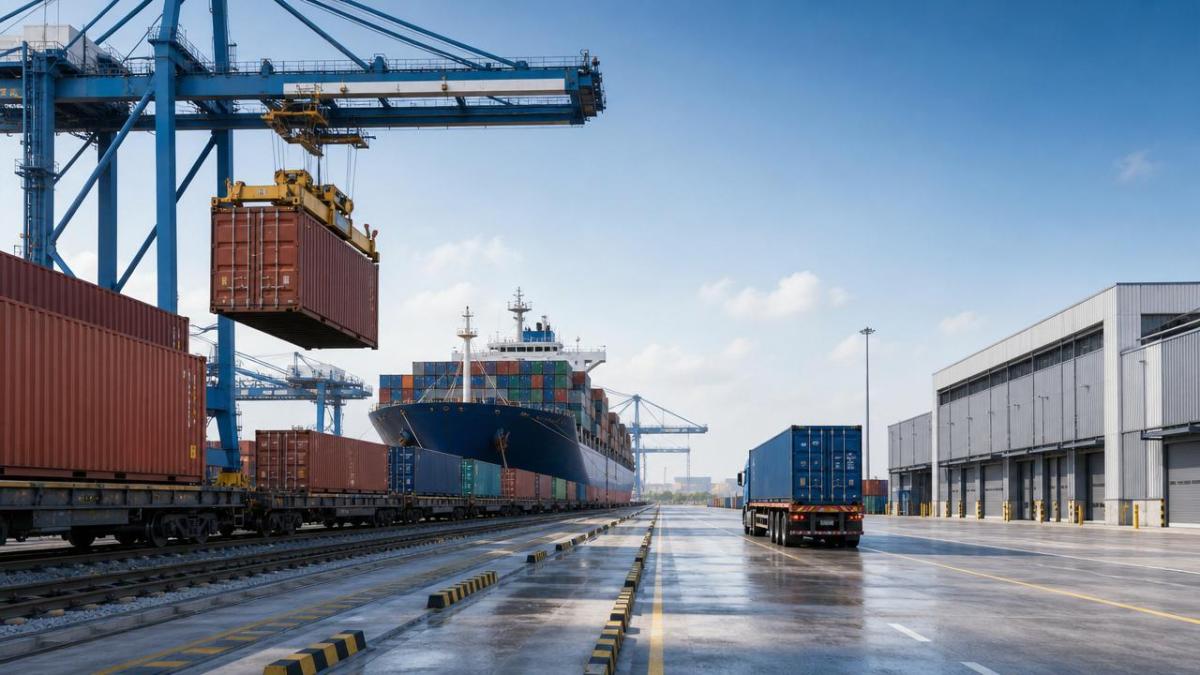
Intermodal transportation connects modes that operate under different clocks. A port berth window may shift by 12 hours, while a rail slot can be missed within 30 minutes.
Project cargo, rail components, LNG equipment, and high-value industrial modules require more than shipment tracking. They require synchronized control across contract milestones, route capacity, and technical constraints.
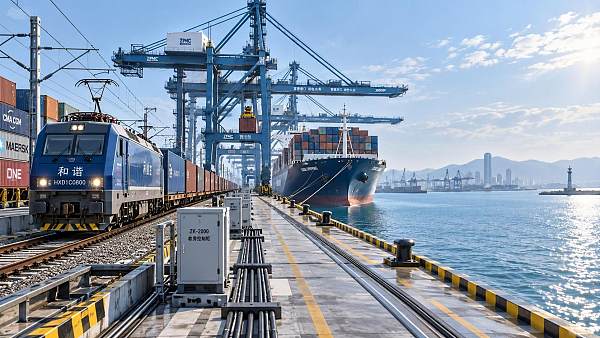
The Delay Chain Across Rail, Port, and Road
A typical international move may include 6 physical events: factory release, inland pickup, terminal entry, vessel loading, port discharge, and final site delivery.
Each event has a different risk profile. Rail depends on slot allocation and signaling reliability, ports depend on crane productivity, and road delivery depends on permits and traffic windows.
The following table summarizes common delay sources and the planning controls project managers should request before awarding logistics work.
The main lesson is simple: intermodal transportation risk should be managed at the interface, not only at the mode level. Most recoverable delays begin between responsibilities.
Why Engineering Cargo Needs Tighter Coordination
Industrial logistics often involves parts with fixed installation sequences. A braking system, traction component, membrane containment module, or switchgear cabinet may have no practical substitute.
When a critical item is delayed by 3 days, the effect may extend to commissioning, acceptance testing, and site labor utilization. Planning must reflect that dependency.
Building a Risk-Control Framework for Intermodal Transportation
A reliable intermodal transportation plan starts with risk mapping, not route selection. Project managers should define what must arrive, when, and under which technical limits.
For high-value equipment, the baseline plan should include at least 3 elements: confirmed capacity, measurable buffers, and escalation authority within a 2-hour decision window.
Step 1: Segment Cargo by Criticality
Not every shipment deserves the same control intensity. Project teams can segment cargo into A, B, and C categories based on installation dependency and replacement difficulty.
- Category A: long-lead equipment, commissioning-critical items, or cargo with no substitute within 7–14 days.
- Category B: important parts that affect work fronts but can tolerate a 2–5 day controlled delay.
- Category C: replenishment cargo, standard consumables, or non-critical items with flexible site demand.
This segmentation prevents over-management of routine freight while ensuring that scarce rail components, vessel systems, or energy equipment receive enhanced visibility.
Step 2: Assign Buffers by Interface, Not by Guesswork
A single global buffer hides the real cause of delay. Better intermodal transportation planning assigns buffers to rail departure, port cut-off, customs release, and final delivery.
For many project routes, practical buffers range from 6–12 hours for road drayage, 24–48 hours for port processing, and 2–4 days for vessel schedule uncertainty.
Practical Buffer Rules for Project Cargo
- Place the largest buffer before the most rigid milestone, usually vessel cut-off or rail path departure.
- Avoid placing all recovery time at final delivery, where cranes, labor, and permits are already fixed.
- Review buffer consumption at least once per day during the final week before shipment execution.
Buffers should be visible in the project schedule, not hidden in a forwarder’s internal plan. This supports transparent reporting to EPC, procurement, and site teams.
Data Visibility: Turning Fragmented Movement Into Actionable Control
Modern intermodal transportation depends on information speed as much as transport speed. A delayed alert received 18 hours late may remove most recovery options.
Project leaders need a control tower mindset: one integrated view of milestones, exceptions, documents, and decision owners across rail, port, vessel, and road legs.
Visibility Metrics That Matter
Tracking a container number alone is insufficient. The plan should measure the events that determine whether the project milestone is still protected.
The table below outlines core visibility metrics for engineering logistics teams managing intermodal transportation across land-sea interfaces.
These metrics convert movement data into control signals. They also make contractor performance easier to compare during tender evaluation and monthly project reviews.
From Tracking to Predictive Coordination
Predictive coordination uses leading indicators. Examples include berth congestion, train slot utilization, weather exposure, customs queue length, and site access readiness.
For smart container ships and LNG carriers, route optimization and ship-to-shore data can support earlier port arrival forecasts within a practical 12–24 hour planning horizon.
For rail, signaling reliability, braking system condition, and traction power stability affect network capacity indirectly. Technical intelligence therefore supports better logistics judgment.
Procurement Criteria for Intermodal Transportation Partners
Project managers should evaluate intermodal transportation providers by their ability to control exceptions, not only by quoted transit time or freight cost.
A low-rate option can become expensive if it lacks rail escalation contacts, port appointment discipline, or experience with oversized and high-value industrial cargo.
Four Evaluation Areas Before Award
- Network depth: verified access to rail, port, carrier, depot, and trucking capacity on the same corridor.
- Technical competence: experience with equipment sensitivity, lifting constraints, packaging limits, and route survey requirements.
- Exception governance: named decision owners, escalation ladder, and response targets such as 2-hour critical issue handling.
- Reporting discipline: milestone dashboards, document status, risk register updates, and weekly executive summaries.
During procurement, request a sample control plan for 1 live lane. The response reveals whether the provider understands execution complexity or only sells capacity.
Contract Clauses That Reduce Ambiguity
Contracts should define handover responsibilities at each interface. Without clear terms, rail delay, terminal storage, demurrage, and waiting time can become disputed costs.
Useful clauses include milestone ownership, data update frequency, document cut-off responsibility, contingency routing triggers, and approval rules for premium recovery services.
Commercial Checks for Project Leaders
- Separate base freight, terminal charges, storage exposure, and special handling in the quotation.
- Confirm whether delay penalties apply to controllable events or only documented negligence.
- Define backup mode approval thresholds, such as switching from rail to road after a 24-hour missed connection.
Clear procurement language improves accountability. It also protects the project team when schedule recovery requires fast commercial approval.
Implementation Roadmap for Project Managers
Intermodal transportation improvement does not require a full system replacement at the start. Many teams can begin with a 5-step planning discipline.
The goal is to create a repeatable operating rhythm that connects engineering, procurement, logistics, site construction, and executive decision-making.
A 5-Step Execution Model
- Map critical cargo against the project schedule and identify milestones with less than 7 days of float.
- Build lane-specific route plans covering rail slots, terminal cut-offs, vessel windows, and road permits.
- Create a shared milestone dashboard with status updates at least every 24 hours during active movement.
- Run weekly risk reviews for upcoming shipments and daily exception calls for Category A cargo.
- Review actual delay causes after delivery and update the corridor playbook for future moves.
This model supports continuous learning. After 3–4 shipment cycles, teams usually gain a clearer view of recurring bottlenecks and practical recovery options.
Where GTOT Intelligence Adds Value
GTOT observes the land-sea equipment ecosystem where transport reliability and technical capability intersect. This perspective is valuable for complex industrial logistics planning.
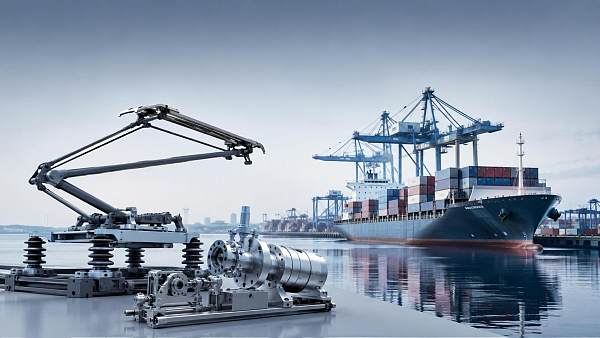
Railway signal control systems, pantographs, braking systems, smart container ships, and LNG carriers all influence capacity, safety, and schedule confidence in different ways.
For project managers, GTOT’s intelligence approach supports better questions in tenders, stronger technical credibility, and earlier recognition of infrastructure or vessel-cycle risks.
Common Mistakes in Intermodal Transportation Planning
Even experienced teams can underestimate delay risk when responsibilities are fragmented. The most costly mistakes often appear reasonable during early planning.
Avoiding these mistakes can protect both schedule and commercial control, especially on projects with installation windows of only 2–3 days.
Mistake 1: Treating Transit Time as the Main KPI
Transit time matters, but milestone reliability matters more. A 20-day route with predictable handovers may outperform a 16-day option with unstable interfaces.
Mistake 2: Ignoring Technical Handling Constraints
Sensitive cargo may require tilt limits, shock monitoring, temperature control, or specific lifting points. These details must be included before carrier selection.
Mistake 3: Escalating Too Late
If escalation begins only after a missed sailing, options are limited. A practical trigger is exception age above 2 hours for critical shipments.
Conclusion: Plan the Interfaces, Protect the Milestones
Effective intermodal transportation planning reduces delay risk by aligning capacity, data, engineering constraints, and decision authority across every handover point.
For project managers moving critical equipment across rail, port, and road, the strongest plans combine measurable buffers, real-time visibility, and disciplined exception management.
GTOT helps decision-makers connect technical intelligence with supply chain execution, from rail control components to smart maritime systems and LNG carrier operations.
To strengthen your next industrial logistics project, explore GTOT’s land-sea intelligence resources, request corridor-specific insights, or contact us to discuss a customized planning approach.
Recommended News
 Sep 29, 2026What drives traction systems price differences between rail projects?Traction systems price differences explained: compare duty cycles, voltage compatibility, integration, localization, and lifecycle costs for smarter rail procurement.
 Sep 26, 2026What to assess before selecting an electric traction system manufacturerChoose an electric traction system manufacturer with confidence. Explore key criteria for performance, reliability, safety, integration, energy efficiency, and lifecycle support.
 Sep 25, 2026When do full digitalization systems justify the investment?Full digitalization systems: discover when rail and maritime operators can turn connected data into safer operations, higher availability, and measurable ROI.
 Sep 23, 2026What drives automatic train control systems cost on rail projects?Automatic train control systems cost depends on integration, migration, safety testing, communications, and lifecycle support. Explore the key budget drivers for rail projects.
 Sep 21, 2026How to assess an ocean going vessel builder’s delivery riskAssess an ocean going vessel builder’s delivery risk with proven checks for schedules, capacity, design maturity, critical equipment, quality, and project controls.
 Sep 20, 2026What drives rail safety technology costs over a project lifecycle?Rail safety technology cost goes beyond equipment—explore lifecycle drivers from integration and safety assurance to cybersecurity, commissioning, and obsolescence.
 Sep 16, 2026What to verify before choosing an advanced ocean-going vessels supplierAdvanced ocean-going vessels supplier checklist: verify design authority, build quality, digital systems, delivery reliability, and lifecycle support before you buy.
 Sep 15, 2026What rail safety technology best reduces level-crossing risks in Southeast Asia?Rail safety technology Southeast Asia: discover how fail-safe signalling, barriers, obstacle detection and remote monitoring reduce level-crossing risks.
 Sep 14, 2026How exporters can reduce customs delays in global trade logisticsGlobal trade logistics for exporters: reduce customs delays with accurate data, clearance-ready documents, early filing, and proactive exception management.
 Sep 13, 2026When do global transportation network systems reduce delivery delays?Global transportation network systems reduce delivery delays by improving rail-port-vessel coordination, real-time visibility, and proactive decisions across complex land-sea supply chains.
 Sep 09, 2026When should you choose a rail and maritime manufacturer with dual-sector capability?Rail and maritime manufacturer guide: learn when dual-sector capability reduces integration risk, improves lifecycle support, and strengthens rail-to-port operations.
 Sep 08, 2026What to verify before selecting a railway signalling equipment supplierRailway signalling equipment supplier checklist: verify safety evidence, integration, cybersecurity, delivery capability, and lifecycle support before award.
 Sep 07, 2026How to size a traction power transformer for railway load demandTraction power transformer sizing guide: model railway load demand, peak duty, voltage regulation, harmonics, and contingency capacity for reliable service.
 Sep 07, 2026How do customization options for industrial connectors affect lead times?Customization options for industrial connectors can impact lead times, cost, and compliance. Learn how to specify smarter for rail and marine projects.
 Sep 05, 2026What information should an industrial sourcing guide include?Industrial sourcing information procurement guide: evaluate suppliers, compliance, lifecycle costs, interfaces, and lead times for smarter rail and maritime purchasing decisions.
 Sep 01, 2026How to find reliable maritime tender information before biddingMaritime tender information: learn how to verify sources, define bid-ready scopes, check qualifications, and reduce risk before submitting competitive marine bids.
 Aug 30, 2026How to select railway automation equipment for depots with phased upgradesRailway automation equipment for depots: learn how to plan phased upgrades that improve safety, throughput, integration, and lifecycle control.
 Aug 27, 2026How industrial sourcing intelligence pricing data supports budget approvalIndustrial sourcing intelligence pricing data helps teams benchmark scope, assess supplier risk, and build defensible budget approvals for complex rail and maritime assets.
 Aug 26, 2026When does a marine fuel efficiency solution make financial sense in the Middle East?Marine fuel efficiency solution Middle East: learn when retrofit savings, compliance value, and vessel data align to deliver credible ROI and smarter shipping investment decisions.
 Aug 24, 2026When does maritime automation for tankers deliver a real payback?Maritime automation for tankers delivers real payback when it cuts fuel use, reduces cargo risk, and improves uptime. See how owners can time investment for stronger ROI.
 Aug 23, 2026When do maritime logistics systems in the Middle East justify the costMaritime logistics systems Middle East: discover when rising delays, manual coordination, and poor visibility make system investment the smarter move for regional operators.
 Aug 22, 2026What drives vessel navigation system price for commercial fleetsVessel navigation system price depends on integration, compliance, automation, and support—not just hardware. Learn what drives fleet costs and compare quotes with confidence.
 Aug 21, 2026How to assess shipbuilding maritime tenders before biddingShipbuilding maritime tenders require more than price checks. Learn how to assess technical scope, compliance, supply chain, and commercial risk before bidding with confidence.
 Aug 20, 2026When does working with an ocean-going vessels distributor reduce supply risk?Ocean-going vessels distributor: learn when this partner cuts supply risk through stronger compliance, faster response, and better sourcing resilience in complex maritime procurement.