



Search News
Industry Portal
Popular Tags
Decarbonization Solutions for Maritime Logistics Compared

Author
Time
Click Count
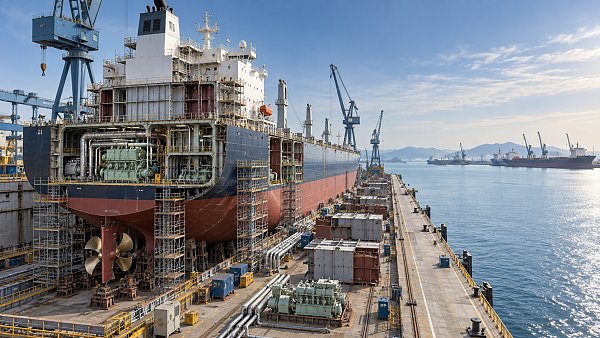
Comparing decarbonization solutions for maritime logistics now requires a wider lens than emissions alone. Fuel volatility, carbon regulation, vessel utilization, retrofit timing, and residual asset value are increasingly linked. In a market shaped by smart container ships, LNG carriers, and digital supply chains, the most credible path is rarely a single technology bet. It is a structured comparison of operational gains, compliance resilience, and capital efficiency across the life of the asset.
Why maritime decarbonization has moved into core business planning
Shipping sits at the center of global trade, so its transition affects freight rates, energy flows, port infrastructure, and equipment investment decisions far beyond the marine sector.
The pressure is building from several directions at once. IMO targets, regional carbon pricing, charterer reporting demands, and lender scrutiny are changing the economics of fleet planning.
That is why decarbonization solutions for maritime logistics are now discussed alongside route optimization, ship automation, and supply chain resilience.
For intelligence platforms such as GTOT, this is not an isolated marine issue. It connects vessel technology, energy security, digital control, and the wider architecture of intercontinental transport.
What counts as a decarbonization solution in maritime logistics
In practice, decarbonization solutions for maritime logistics fall into three broad groups: operational efficiency, transitional fuels, and future low-carbon propulsion systems.
Operational measures include speed management, hull and propeller upgrades, AI-assisted voyage planning, weather routing, and better port coordination.
Transitional fuel strategies often include LNG, biofuel blends, and dual-fuel configurations that reduce near-term emissions while preserving some flexibility.
Longer-horizon options include methanol, ammonia, battery-hybrid systems, wind-assist technologies, shore power integration, and eventually hydrogen-related pathways.
The key point is simple. Not all solutions reduce emissions in the same way, at the same cost, or with the same infrastructure dependence.
A practical comparison of major pathways
The most useful comparison starts with business conditions, not slogans. Different vessel classes, trade lanes, and asset ages change the answer.
This is why comparisons should separate immediate efficiency actions from fuel-transition decisions. They solve different problems and carry different risk profiles.
Why digitalization often delivers the first credible step
Among all decarbonization solutions for maritime logistics, digital tools often produce the clearest early returns.
AI route optimization, predictive maintenance, trim management, and ship-to-shore data visibility reduce wasted fuel without waiting for new bunkering networks.
This is especially relevant to GTOT’s view of smart container ships. Intelligent interconnection is no longer just an efficiency feature. It is part of emissions strategy.
Better data also improves budget control. It makes fuel use, maintenance cycles, and compliance reporting more measurable and easier to compare across fleets.
That matters because weak measurement can turn an attractive retrofit into an accounting disappointment.
Fuel choices: transitional value versus long-term uncertainty
LNG remains important, but not simple
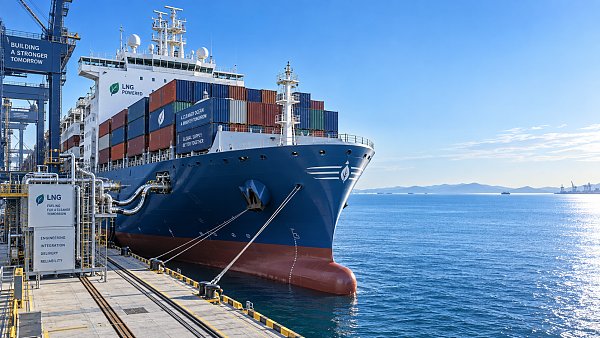
LNG continues to play a visible role in decarbonization solutions for maritime logistics, particularly for large vessels and energy-linked trade corridors.
Its strengths are technical maturity, established engine pathways, and compatibility with parts of current global marine infrastructure.
Still, the business case depends on methane management, future regulation, and route-specific bunkering certainty.
Methanol and ammonia are strategic, not interchangeable
Methanol is attracting attention because handling and storage are more familiar than ammonia, and early vessel programs are already moving.
Ammonia is promising for deeper carbon reduction, yet the safety regime, engine readiness, and fuel supply system are less mature.
For long-life assets, “ready” designs may be sensible. For near-term returns, they can also create stranded premium if conversion never occurs.
How to evaluate the business case without oversimplifying it
A useful assessment of decarbonization solutions for maritime logistics should go beyond headline capex.
- Model fuel savings under multiple price bands, not one forecast.
- Estimate compliance cost exposure under carbon pricing and fuel standards.
- Check off-hire risk during retrofit or commissioning.
- Review charter implications, including cargo owner emissions demands.
- Test residual value assumptions against likely future fuel ecosystems.
- Include crew training, maintenance complexity, and insurance effects.
This broader lens often changes priorities. A lower-emission option may still be unattractive if uptime risk is high or bunkering access is fragile.
By contrast, smaller digital or retrofit measures can create cumulative value while preserving optionality for later fuel decisions.
Where different solutions fit in real operating scenarios
Not every vessel should follow the same transition path. The operating pattern matters more than industry fashion.
Large container vessels on fixed global loops may justify dual-fuel planning and advanced digital routing because scale amplifies both savings and compliance exposure.
LNG carriers have distinct logic. Their technical ecosystem, cryogenic handling, and propulsion integration make fuel strategy part of the cargo system itself.
Short-sea operations often benefit more from battery-hybrid support, shore power, and port-centric energy management.
Older vessels nearing economic turnover may justify only selective retrofits and software-led efficiency gains.
This is where GTOT’s land-sea intelligence perspective becomes useful. Transport decarbonization is increasingly intermodal, connected, and infrastructure-dependent.
A disciplined way to compare options from here
The strongest comparisons of decarbonization solutions for maritime logistics usually begin with a structured screening process.
Start with fleet age, route pattern, fuel access, and drydock schedule. Then overlay carbon regulation, charter expectations, and digital maturity.
From there, separate measures into three buckets: immediate payback, strategic flexibility, and speculative future positioning.
That approach helps avoid a common mistake: paying today for optionality that the operating model may never use.
A practical next step is to build a comparison matrix for each vessel segment, using fuel cost sensitivity, emissions impact, uptime risk, and asset-life fit.
When that matrix is supported by credible technical intelligence and market monitoring, decisions become more resilient. That is the real value behind comparing pathways carefully rather than chasing a single headline solution.
Recommended News
 Sep 29, 2026What drives traction systems price differences between rail projects?Traction systems price differences explained: compare duty cycles, voltage compatibility, integration, localization, and lifecycle costs for smarter rail procurement.
 Sep 26, 2026What to assess before selecting an electric traction system manufacturerChoose an electric traction system manufacturer with confidence. Explore key criteria for performance, reliability, safety, integration, energy efficiency, and lifecycle support.
 Sep 25, 2026When do full digitalization systems justify the investment?Full digitalization systems: discover when rail and maritime operators can turn connected data into safer operations, higher availability, and measurable ROI.
 Sep 23, 2026What drives automatic train control systems cost on rail projects?Automatic train control systems cost depends on integration, migration, safety testing, communications, and lifecycle support. Explore the key budget drivers for rail projects.
 Sep 21, 2026How to assess an ocean going vessel builder’s delivery riskAssess an ocean going vessel builder’s delivery risk with proven checks for schedules, capacity, design maturity, critical equipment, quality, and project controls.
 Sep 20, 2026What drives rail safety technology costs over a project lifecycle?Rail safety technology cost goes beyond equipment—explore lifecycle drivers from integration and safety assurance to cybersecurity, commissioning, and obsolescence.
 Sep 16, 2026What to verify before choosing an advanced ocean-going vessels supplierAdvanced ocean-going vessels supplier checklist: verify design authority, build quality, digital systems, delivery reliability, and lifecycle support before you buy.
 Sep 15, 2026What rail safety technology best reduces level-crossing risks in Southeast Asia?Rail safety technology Southeast Asia: discover how fail-safe signalling, barriers, obstacle detection and remote monitoring reduce level-crossing risks.
 Sep 14, 2026How exporters can reduce customs delays in global trade logisticsGlobal trade logistics for exporters: reduce customs delays with accurate data, clearance-ready documents, early filing, and proactive exception management.
 Sep 13, 2026When do global transportation network systems reduce delivery delays?Global transportation network systems reduce delivery delays by improving rail-port-vessel coordination, real-time visibility, and proactive decisions across complex land-sea supply chains.
 Sep 09, 2026When should you choose a rail and maritime manufacturer with dual-sector capability?Rail and maritime manufacturer guide: learn when dual-sector capability reduces integration risk, improves lifecycle support, and strengthens rail-to-port operations.
 Sep 08, 2026What to verify before selecting a railway signalling equipment supplierRailway signalling equipment supplier checklist: verify safety evidence, integration, cybersecurity, delivery capability, and lifecycle support before award.
 Sep 07, 2026How to size a traction power transformer for railway load demandTraction power transformer sizing guide: model railway load demand, peak duty, voltage regulation, harmonics, and contingency capacity for reliable service.
 Sep 07, 2026How do customization options for industrial connectors affect lead times?Customization options for industrial connectors can impact lead times, cost, and compliance. Learn how to specify smarter for rail and marine projects.
 Sep 05, 2026What information should an industrial sourcing guide include?Industrial sourcing information procurement guide: evaluate suppliers, compliance, lifecycle costs, interfaces, and lead times for smarter rail and maritime purchasing decisions.
 Sep 01, 2026How to find reliable maritime tender information before biddingMaritime tender information: learn how to verify sources, define bid-ready scopes, check qualifications, and reduce risk before submitting competitive marine bids.
 Aug 30, 2026How to select railway automation equipment for depots with phased upgradesRailway automation equipment for depots: learn how to plan phased upgrades that improve safety, throughput, integration, and lifecycle control.
 Aug 27, 2026How industrial sourcing intelligence pricing data supports budget approvalIndustrial sourcing intelligence pricing data helps teams benchmark scope, assess supplier risk, and build defensible budget approvals for complex rail and maritime assets.
 Aug 26, 2026When does a marine fuel efficiency solution make financial sense in the Middle East?Marine fuel efficiency solution Middle East: learn when retrofit savings, compliance value, and vessel data align to deliver credible ROI and smarter shipping investment decisions.
 Aug 24, 2026When does maritime automation for tankers deliver a real payback?Maritime automation for tankers delivers real payback when it cuts fuel use, reduces cargo risk, and improves uptime. See how owners can time investment for stronger ROI.
 Aug 23, 2026When do maritime logistics systems in the Middle East justify the costMaritime logistics systems Middle East: discover when rising delays, manual coordination, and poor visibility make system investment the smarter move for regional operators.
 Aug 22, 2026What drives vessel navigation system price for commercial fleetsVessel navigation system price depends on integration, compliance, automation, and support—not just hardware. Learn what drives fleet costs and compare quotes with confidence.
 Aug 21, 2026How to assess shipbuilding maritime tenders before biddingShipbuilding maritime tenders require more than price checks. Learn how to assess technical scope, compliance, supply chain, and commercial risk before bidding with confidence.
 Aug 20, 2026When does working with an ocean-going vessels distributor reduce supply risk?Ocean-going vessels distributor: learn when this partner cuts supply risk through stronger compliance, faster response, and better sourcing resilience in complex maritime procurement.